

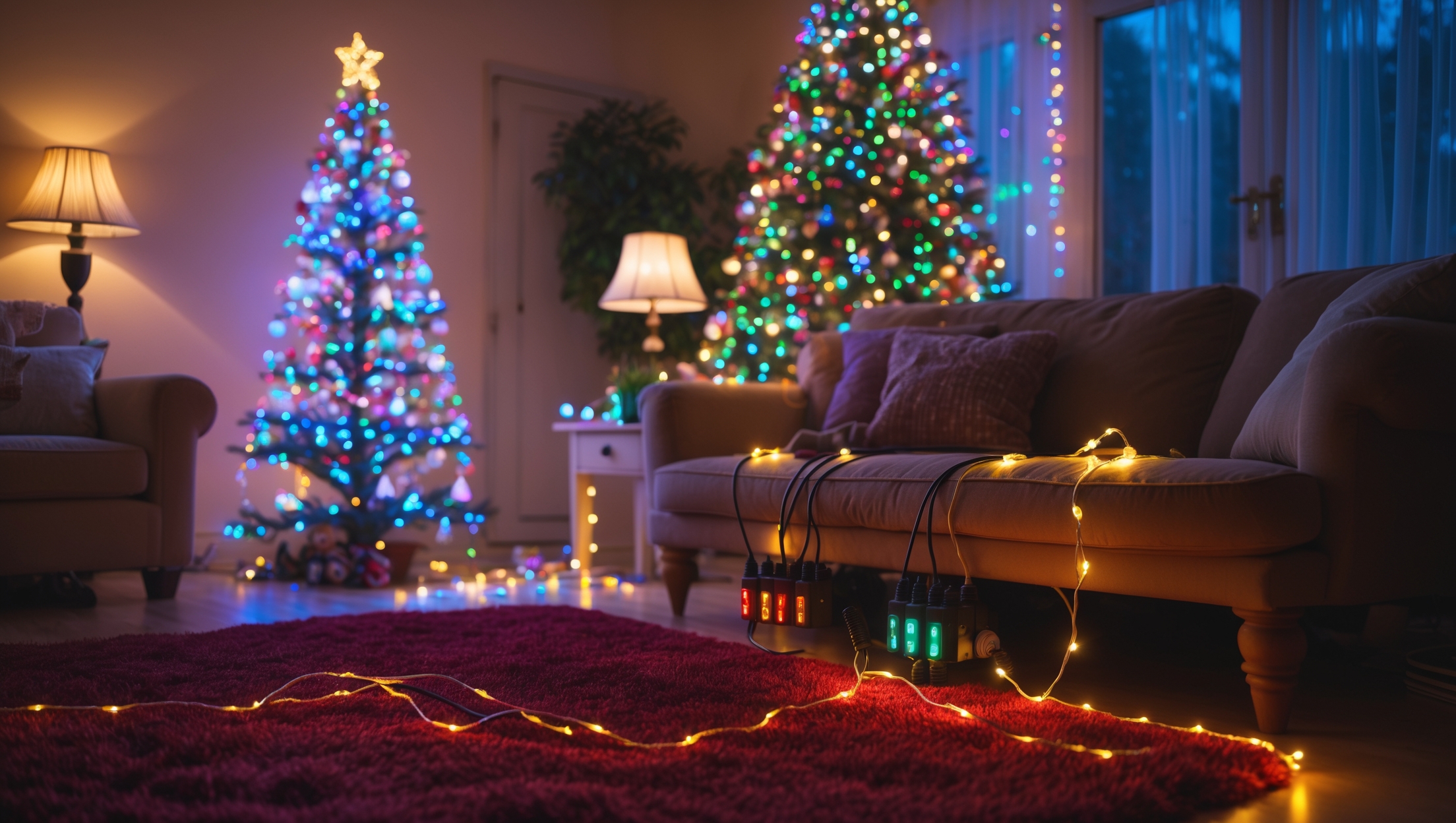
Introduction: Why Electrical Safety Matters During Holiday Decorating
The holiday season brings warmth, togetherness, and a burst of festive energy into our homes. From twinkling fairy lights to illuminated lawn ornaments, electrical decorations play a starring role in creating the holiday magic we cherish. However, with the increased use of extension cords, light strings, and electrical devices, the risk of electrical hazards also rises sharply during this time. According to the National Fire Protection Association (NFPA), nearly one-third of home Christmas tree fires are attributed to electrical problems—and that’s just one piece of the puzzle.
Many homeowners unknowingly overload circuits, use outdated or damaged decorations, or neglect essential safety checks, increasing the risk of fire, electrical shock, and costly power surges. Yet, with a careful, step-by-step approach, you can enjoy a dazzling holiday display without putting your home or loved ones in danger. This comprehensive checklist covers everything you need to know about safe holiday decorating: from inspecting your lights for hidden dangers to choosing the right extension cords, preventing surges, and troubleshooting common issues. Whether you’re a seasoned decorator or new to creating a winter wonderland, follow this expert guide to keep your celebrations safe, bright, and worry-free.
Pre-Decorating: Preparation and Inspection
1. Inspect All Lights and Decorations
- Check for Damage: Examine every string of lights, inflatable, and illuminated ornament for frayed wires, cracked sockets, broken bulbs, or exposed copper. Discard any item with visible damage.
- Test Before Hanging: Plug each light string in to verify all bulbs work and connections are stable. Replace any faulty bulbs with manufacturer-recommended replacements.
- Look for Certification: Only use products labeled by recognized testing laboratories such as UL, ETL, or CSA. This ensures the product meets safety standards.
2. Review Your Home’s Electrical Capacity
- Know Your Circuits: Identify which outlets and rooms are on which circuits. Avoid plugging too many decorations into a single circuit to prevent overloads.
- Check Breaker Panel: Ensure your breaker panel is clearly labeled and accessible. Know how to reset tripped breakers safely.
3. Gather Safe Equipment
- Extension Cords: Use only heavy-duty, outdoor-rated cords for exterior displays. Check for intact insulation and functioning plugs.
- Surge Protectors: Use surge protectors for valuable or sensitive decorations, especially for indoor displays featuring electronics.
- Timers: Set timers to automatically turn decorations on and off, reducing the risk of overheating or forgotten lights.
Indoor Decorating: Safety Best Practices
1. Placement and Setup
- Keep Lights Away from Flammables: Ensure lights and cords are not draped over curtains, furniture, or paper decorations.
- Secure Cords: Use cord clips or tape to keep cords flat and out of high-traffic areas to prevent tripping and damage.
- Don’t Staple or Nail Cords: Fastening cords with nails or staples can pierce insulation and create a fire hazard. Use insulated holders designed for holiday lights.
2. Outlet and Power Strip Safety
- Avoid Daisy-Chaining: Never connect multiple extension cords or power strips together (a practice called daisy-chaining). This increases the risk of fire.
- Don’t Overload Outlets: Check the amp rating of your outlet and decorations. Most home outlets can handle 15 amps; do not exceed this.
- Use GFCI Outlets: For bathrooms, kitchens, and damp areas, plug decorations into Ground Fault Circuit Interrupter (GFCI) outlets for added protection.
3. Tree Lighting Safety
- Water Real Trees: Keep live trees well-watered to prevent them from drying out and becoming a fire hazard.
- Choose LED Lights: LEDs stay cooler and use less energy than traditional incandescent bulbs, reducing the risk of fire and shock.
- Turn Off When Unattended: Always unplug tree lights before leaving the house or going to bed.
Outdoor Decorating: Extra Precautions
1. Use Weather-Resistant Products
- Outdoor-Rated Lights and Cords: Only use products specifically labeled for outdoor use. Indoor lights and cords lack weatherproofing and can fail dangerously when exposed to moisture.
- Sealed Connections: Protect plug connections from snow or rain with weatherproof covers or by elevating them off the ground.
2. Safe Power Distribution
- GFCI Protection: All outdoor outlets should be GFCI-protected to instantly cut power in the event of a ground fault.
- Limit Extensions: Use the shortest extension cord necessary, and never run cords under rugs, doors, or through windows, which can damage insulation.
3. Ladder and Installation Safety
- Use Non-Conductive Ladders: Choose fiberglass or wood ladders rather than metal to reduce the risk of electric shock.
- Check Weather Conditions: Avoid installing lights in wet, windy, or icy conditions.
- Secure Decorations: Make sure all decorations are firmly attached to withstand winter weather and prevent them from falling onto power lines or walkways.
Preventing Power Surges and Circuit Overloads
1. Understanding Power Surges
A power surge is a sudden spike in voltage, which can damage or destroy electronics and decorations. Surges can come from lightning strikes, power outages, or internal sources like large appliances cycling on and off.
2. Surge Protection Best Practices
- Use Surge Protectors: Plug sensitive decorations and electronics into surge-protecting power strips rated for the appropriate voltage and amperage.
- Consider Whole-House Surge Protection: For maximum safety, have a licensed electrician install a whole-house surge protector at your service panel.
- Replace Old Surge Protectors: Surge protectors degrade over time. Replace them every 3–5 years or after a major surge event.
3. Avoiding Circuit Overloads
- Calculate Load: Add up the wattage of all decorations on a circuit. Divide total watts by 120 (volts) to get amps; keep the total under 80% of the circuit capacity (e.g., for a 15-amp circuit, stay under 12 amps).
- Distribute Load: Spread decorations across multiple circuits when possible to balance the load and avoid tripping breakers.
Troubleshooting and Emergency Readiness
1. Identifying Warning Signs
- Tripped Breakers: If a breaker trips repeatedly, unplug decorations and have an electrician investigate.
- Flickering Lights: Flickering or dimming lights may indicate an overloaded circuit or faulty wiring.
- Warm Outlets or Plugs: Outlets, plugs, or cords that feel warm are a clear warning; unplug and replace the offending equipment.
2. Knowing What to Do in an Emergency
- Fire Safety: Keep a UL-rated fire extinguisher in easy reach. Never use water on an electrical fire.
- Shock Response: If someone receives an electric shock, turn off power at the breaker (not by unplugging), and call emergency services immediately.
End-of-Season: Safe Removal and Storage
1. Unplug and Inspect
- Unplug Carefully: Always unplug decorations by the plug, not the cord, to avoid damaging wires.
- Inspect Again: Check each item for damage before storing. Repair or discard any with frayed cords or broken parts.
2. Organized Storage
- Wrap Cords Properly: Coil cords loosely to prevent kinking or internal wire breakage.
- Use Storage Bins: Store lights and cords in weatherproof bins to protect from pests and moisture.
Conclusion: Celebrate Safely and Brightly
Holiday decorating should be a source of joy, not worry. By following this comprehensive electrical safety checklist, you’re ensuring that your celebrations shine brightly—without unnecessary risk. Remember, the most common hazards stem from overlooked details: a frayed wire here, an overloaded outlet there, or a forgotten surge protector. Taking the time to inspect, plan, and use the right equipment not only prevents costly accidents but also protects your loved ones and your home.
Safe holiday decorating is about more than just avoiding disaster; it’s about peace of mind. When you know your lights, cords, and outlets are all up to standard, you can enjoy the festivities with confidence. Encourage family members and guests to help keep cords tidy and unplug decorations when not in use. And if you ever have doubts about your home’s electrical capacity or a specific product, consult a licensed electrician for guidance.
Make safety a tradition as much as decorating itself. With each season, review your setup, invest in quality products, and stay alert to the latest best practices. Here’s to a holiday season filled with sparkling lights, warm memories, and complete safety for everyone under your roof.
You mention that overloading circuits is a common problem during the holidays. Is there a simple way for homeowners to estimate how many light strings or decorations can safely be connected to a single outlet or extension cord?
Absolutely, a simple way to estimate is to check the wattage of all the lights and decorations you plan to use on one circuit. Add those wattages together, and don’t exceed 80% of the circuit’s capacity (for a standard 15-amp circuit, that’s about 1,440 watts). Extension cords and power strips also have their own maximum load ratings, usually listed on a tag—never exceed those limits. This helps prevent overheating and fire hazards.
If I find a light string with one cracked socket but the rest looks fine, is it safe to just remove that bulb and use the rest, or should I discard the entire string as a precaution?
It’s best to discard the entire light string if you find a cracked socket. A damaged socket can expose wires or create a risk of electrical shock and even start a fire, even if the rest of the string appears fine. For safety, replace the whole string rather than trying to use or repair it.
If I accidentally overloaded a circuit while decorating, what immediate steps should I take to minimize any potential damage or danger before calling an electrician?
If you overload a circuit while decorating, first unplug or turn off all devices connected to that circuit to stop the draw on power. Next, check your breaker panel and reset any tripped breakers. Avoid using that outlet or circuit until you know it’s safe. If you notice any burning smells, sparks, or melted outlets, leave the area immediately and contact an electrician right away.
The checklist talks about testing light strings before hanging them up. If some sections of a string are flickering or dimmer than others, what troubleshooting steps would you recommend before deciding to replace the whole set?
If parts of your light string are flickering or dim, first unplug the set and check each bulb to make sure they’re fully seated and not loose or burnt out. Replace any faulty bulbs with ones of the same type and rating. Inspect the wiring for visible damage or fraying. Also, look at the fuses inside the plug—many sets have quick-replace fuses. If these steps don’t resolve the issue, it may be safer to replace the string.
When checking for frayed wires or damaged sockets before putting up decorations, are there any DIY fixes that are actually safe, or should we always throw out any item with visible damage even if it seems minor?
If you notice frayed wires or damaged sockets, the safest option is to stop using those decorations, even if the damage seems small. DIY fixes like tape or glue don’t reliably restore electrical safety and may increase the risk of shock or fire. It’s best to replace any item with visible damage to ensure a safe holiday environment.
If I want to prevent power surges during the holidays, do you recommend a whole-house surge protector or is it enough to use surge-protected power strips for my light displays and electronic decorations?
Using surge-protected power strips for your holiday lights and decorations does offer some protection against minor surges. However, for the best overall safety—especially if you have many valuable electronics throughout your home—a whole-house surge protector is recommended. This device guards all your circuits from large surges caused by lightning or grid issues, providing a higher level of protection than individual power strips alone.
For older holiday light strings that don’t have a UL or ETL certification label but seem to be in good shape, is it still risky to use them if I inspect for damage first, or is upgrading always the safer choice?
Even if older holiday light strings look undamaged, using ones without a UL or ETL certification does carry extra risk. These certifications mean the lights meet current safety standards. While careful inspection helps, older wiring and insulation may not meet today’s requirements and can be more prone to overheating. Replacing them with certified, modern lights is definitely the safest option.
I noticed you mention inspecting every light and decoration for damage and making sure they’re certified by organizations like UL or ETL. Are there any specific warning signs that homeowners often miss during inspection, especially on older light strings?
Homeowners sometimes overlook frayed or cracked wires, loose or missing bulbs, and plugs that feel warm when touched. On older light strings, faded labels or missing certification marks, as well as brittle insulation that flakes off when bent, are common but often unnoticed. Also, look for signs of corrosion on the metal prongs or unusual odors when the lights are plugged in, as these can indicate hidden electrical issues.
Could you clarify what exactly to look for on the label to ensure lights and decorations are certified by UL, ETL, or CSA? Sometimes there are multiple markings, and I don’t want to make a mistake when purchasing new sets for the shop.
To ensure lights and decorations are certified, check for the actual logos or names: UL (Underwriters Laboratories), ETL (Intertek), or CSA (Canadian Standards Association). Look for a clear mark like UL Listed, ETL Listed, or CSA Certified on the packaging or product tag. The mark should not look altered or handwritten. Sometimes you’ll find both the logo and the organization’s name together, which is a good sign. If in doubt, ask the retailer for clarification before buying.
If I accidentally overloaded a circuit last year and tripped the breaker, what specific steps from this checklist would help me avoid making the same mistake when I set up my holiday lights again?
To avoid overloading a circuit again, check the checklist for these key steps: calculate the total wattage of all your holiday lights and decorations, and compare that to the capacity of your circuit. Plug decorations into different circuits if you’re close to the limit. Use only modern lights marked with safety certifications and avoid connecting too many strings together. Finally, check cords for damage and never run extension cords under rugs or furniture.
Do you have any advice for students who live in dorms and want to decorate for the holidays? Are there specific electrical rules or extra precautions we should keep in mind beyond what you mentioned for homes?
For dorm rooms, always check your school’s specific decoration policies, as many have strict rules about lights and extension cords. Use only battery-powered or LED string lights marked for indoor use, and avoid overloading outlets or using multiple plug adapters. Never run cords under rugs or through doors, and unplug decorations when leaving the room. Make sure decorations are flame-retardant and avoid hanging anything from sprinkler heads or fire alarms.
I have a lot of outdoor lights and inflatables I want to use, but I’m worried about overloading my circuits. How can I calculate how much my outlets can handle before I plug everything in for the holidays?
To figure out how much your outlets can handle, first check the circuit breaker for the amperage—most home circuits are 15 or 20 amps. Multiply that by your home’s voltage (usually 120V) to get the maximum wattage (e.g., 15 amps x 120V = 1,800 watts). Add up the wattage of your decorations and make sure the total stays below about 80% of your circuit’s maximum to avoid overloads.
If I find a couple of bulbs not working during the pre-decorating inspection, do I need to replace the whole string of lights, or is it usually safe to just swap out the bad bulbs with the same type?
You don’t need to replace the whole string if just a few bulbs aren’t working. It’s usually fine to just swap out the bad bulbs with new ones of the same type and rating. Make sure the replacement bulbs match exactly, and always unplug the lights before handling them to stay safe.
The article mentions checking for certification labels like UL, ETL, or CSA on holiday lights and decorations. Are there any reliable ways to tell if a product is genuinely certified if I only have online photos or packaging information when buying new decorations?
When shopping online, look for clear, close-up photos showing the certification label (like UL, ETL, or CSA) actually printed on the product or its packaging. Official certification marks should be crisp, not blurry or misspelled. Also, check the product description for specific mentions of certifications. If you’re unsure, you can visit the certification body’s website and search for the product or manufacturer to confirm it’s genuinely certified.
The article talks about preventing power surges during the holidays, but what are some practical ways to protect decorations if my house doesn’t already have a whole-home surge protector? Are individual surge protectors effective for outdoor displays?
Individual surge protectors can definitely help protect your holiday decorations, especially if you don’t have a whole-home system. For outdoor displays, look for surge protectors specifically rated for outdoor use—they’re weather-resistant and designed to handle exposure to moisture and temperature changes. Always check the wattage load and don’t overload the protector, and keep connections off the ground to avoid water contact.
Could you recommend the best practices for preventing circuit overload when decorating a two-story house with lots of exterior lights? I always worry about tripping breakers, especially with older wiring.
To prevent circuit overload in a two-story house with lots of exterior lights, spread your lights across multiple outlets to balance the load. Use LED lights since they consume much less power than traditional bulbs. Avoid daisy-chaining too many light strings together—usually, three sets per outlet is safe. Check your extension cords and power strips for outdoor use and wattage ratings. Before decorating, inspect your home’s electrical system for any signs of wear or outdated wiring, and consider consulting a licensed electrician if you’re unsure about your system’s capacity.
You talk about testing the lights and replacing faulty bulbs with manufacturer-recommended replacements. What should I do if I can’t find the exact replacement bulbs for an older set of lights? Is it risky to use generic bulbs or should I retire the whole string?
If you can’t find the exact replacement bulbs for your older light set, it’s best to avoid using generic bulbs, as they may not match the voltage or wattage requirements, increasing the risk of overheating or electrical hazards. If compatible replacements aren’t available, it’s safer to retire the whole string rather than risk malfunction or fire. Newer light sets are also more energy-efficient and safer overall.
As a business owner who decorates both inside and outside our shop for the holidays, I’m wondering if the same electrical safety checklist applies to outdoor light displays, or are there extra steps I should be taking outdoors besides looking for UL or ETL labels?
When decorating outdoors, you should follow the checklist in the article, but there are a few extra steps to ensure safety outside. Use only lights, extension cords, and decorations rated for outdoor use, and make sure all connections are weatherproof. Secure cords to avoid tripping hazards and keep plugs elevated to prevent water exposure. Always plug outdoor displays into GFCI-protected outlets for added protection.
When checking for damaged light strings as recommended, are there any common warning signs beyond frayed wires or broken bulbs that people often miss? And if I find minor damage, is there an approved way to repair it, or is replacement always safest?
Yes, in addition to frayed wires and broken bulbs, look out for cracked sockets, loose connections, scorch marks, or a burning smell from the light string—these can all indicate hidden issues. If you find damage, even minor, replacement is always the safest choice. Electrical tape or DIY repairs are not recommended, as they may not restore full safety and could pose a fire risk.
When you mention only using products that are UL, ETL, or CSA certified, does that apply to all power strips and extension cords as well? I’ve seen some cheaper ones without any certification at big box stores, and I’m wondering how risky it actually is to use them for holiday lights.
Yes, the recommendation to use only UL, ETL, or CSA certified products does apply to all power strips and extension cords, especially during holiday decorating. Certified products have been tested for safety, reducing the risk of fires, shocks, or power surges. Using uncertified or cheaper options can be quite risky, as they may not meet electrical safety standards and could overheat or fail when overloaded with lights and decorations.
For older homes with fewer grounded outlets, what’s the safest way to handle multiple strings of holiday lights without overloading the circuits? Are there specific power strips or surge protectors you recommend that have certification labels like UL or ETL?
In older homes with limited grounded outlets, it’s safest to plug only a few strings of holiday lights into each outlet—follow the manufacturer’s recommendations on how many can be safely connected. Use UL- or ETL-certified surge protectors or power strips that have built-in circuit breakers. Make sure the total wattage of your lights doesn’t exceed the rating of the outlet or device. Never daisy-chain power strips together, and avoid running cords under rugs or furniture.
When it comes to preventing power surges during the holidays, does the article recommend using surge protectors with all extension cords, or only with certain types of decorations and lights? I want to avoid unnecessary purchases but keep everything safe.
The article suggests using surge protectors especially for high-value electronics and decorations with sensitive components, such as LED holiday lights, rather than with every single extension cord. For basic outdoor string lights or simple decorations, a regular extension cord should be sufficient as long as it’s rated for outdoor use. Focus on surge protection for your more expensive or delicate decorations to balance safety with cost.
Are there any specific surge protection devices you recommend for businesses running multiple displays at once, or best practices to prevent power surges when turning all the decorations on and off each day?
For businesses with multiple holiday displays, it’s best to use commercial-grade surge protectors or power distribution units (PDUs) rated for heavy loads. Look for surge protectors with high joule ratings and UL certification. To avoid surges when turning displays on or off, use timers or smart switches to stagger start times, preventing all devices from powering up simultaneously. Regularly inspect cords and outlets to ensure everything stays safe and reliable.
If I have some older holiday lights that don’t have a certification label but still work, is it worth replacing them right away, or are there specific safety checks I should do first before using them again?
If your older holiday lights don’t have a certification label, it’s safest to consider replacing them, as uncertified lights may not meet current safety standards. However, if you choose to use them, inspect for frayed wires, cracked sockets, or loose connections. Test the lights for unusual heat or flickering, and never overload outlets. Always unplug them when unattended. If you notice any damage or irregularities, it’s best not to use them.
The article mentions looking for UL, ETL, or CSA labels on lights and decorations. Is it unsafe to use holiday lights that only have CE certification, or would those be acceptable for use in the US?
Holiday lights with only a CE certification are not guaranteed to meet US safety standards. The CE mark shows compliance with European requirements, but in the US, UL, ETL, or CSA labels indicate the product has been tested for safety by recognized organizations. For safer decorating and to reduce the risk of electrical hazards, it’s best to use lights and decorations that have one of these US-approved certifications.
When it comes to choosing the right extension cords for outdoor holiday decorations, what specific safety features or certifications should I look for to make sure I am not increasing my risk of electrical hazards?
For outdoor holiday decorations, select extension cords labeled for outdoor use, usually marked as “W” or “weather-resistant.” Look for cords with a UL (Underwriters Laboratories) or ETL (Intertek) certification, which means they meet safety standards. The cord should have a three-prong grounding plug, be heavy-duty enough for your decorations’ power needs, and have built-in strain relief at the plug ends to prevent damage.
When you say to replace faulty bulbs with manufacturer-recommended replacements, is it a big risk if I use similar-looking bulbs from another brand? I’m trying to stay within budget, but I don’t want to ignore important safety steps.
Using bulbs that only look similar to the originals can actually be risky. Manufacturer-recommended bulbs match the voltage and wattage ratings needed for safe performance. Off-brand or mismatched bulbs can cause overheating, short circuits, or even fire hazards. For safety, it’s best to stick with the recommended replacements, even if they cost a little more.
I’m living in a dorm with limited outlets, and I’m worried about overloading circuits with holiday lights. Are there tips for safely using extension cords in smaller spaces, or should I avoid certain decorations altogether?
When using extension cords in a dorm, choose cords rated for indoor use and only plug in as many lights as the cord and outlet can safely handle—usually no more than three strands per cord. Avoid running cords under rugs or behind furniture, and do not use damaged cords. Consider using LED lights, which use less power. If possible, minimize the number of decorations that require electricity to reduce the risk of overloading your circuits.
If I find a string of lights with one or two cracked sockets but the rest seem fine, is it possible to repair or safely isolate those areas, or is it better to dispose of the entire string as the article suggests?
If you notice cracked sockets on your string lights, it’s safest to follow the article’s advice and replace the entire string. Damaged sockets can expose you to electrical shock or fire risk, even if the rest appear fine. Repairs or attempts to isolate sections aren’t recommended, since most consumer holiday lights aren’t designed for safe modification.
When testing lights before hanging them up, is there a way to check for hidden issues like internal wiring problems that might not be visible? I want to avoid any surprises later, but sometimes everything seems fine until they’ve been up for a few days.
You can catch some hidden issues by plugging in the lights and gently flexing sections of the strand while they’re on, watching for any flickers or outages that might indicate loose connections. Another good step is to feel for any spots that get unusually warm. For extra caution, consider using a multimeter to check for inconsistent voltage along the wires, which can sometimes reveal internal wiring problems.
You pointed out the importance of using products certified by UL, ETL, or CSA. Are there any practical tips for quickly spotting these certifications when shopping with kids in tow, or is there a certain labeling format I should look for on the packaging?
When shopping with kids, look for the UL, ETL, or CSA certification marks on the front or back of the product packaging—these are usually small circular or rectangular logos with the letters UL, ETL, or CSA inside. They’re often near the electrical specifications or barcode. A quick scan for these logos before buying can save you time and ensure the product is properly certified.
You suggested testing every string of lights before putting them up, but what if some bulbs don’t work and replacements aren’t available? Is it better to just get rid of that string, or can I still use it safely in some situations?
If you can’t find replacement bulbs for a string of holiday lights with missing or non-working bulbs, it’s safest to stop using that string. Damaged or incomplete light sets can cause power imbalances, increase the risk of overheating, and may create a fire hazard. It’s best to discard faulty strings rather than try to use them, even in less critical areas.
You mentioned tossing out any decorations that have frayed wires or exposed copper. Are there any safe DIY fixes for minor issues, like replacing a damaged bulb socket, or should I always just throw it away and buy new decorations?
For minor issues like a damaged bulb socket, you can sometimes replace the socket if you have the right replacement part and basic electrical know-how. However, if there are frayed wires, exposed copper, or if the damage affects the insulation, it’s safest to discard the decoration. DIY fixes are only safe for small, accessible parts—never attempt repairs if the wiring itself is compromised.
Regarding the checklist, do you have any recommendations for safely decorating older homes that might not have enough outlets or newer wiring? I’m concerned about overloading circuits since our house was built in the 1950s.
For older homes with limited outlets and older wiring, try to spread decorations across different circuits and avoid daisy-chaining extension cords or power strips. Use LED lights, as they draw less power, and unplug decorations when not in use. If you notice flickering lights, warm outlets, or tripped breakers, reduce your load right away. For extra safety, consider having an electrician inspect your system before adding extra holiday lighting.
If I find a string of lights with a frayed wire but the rest of the bulbs work, is there a safe way for a beginner to repair it, or should I always just discard the whole set?
It’s safest to discard the entire string if you find a frayed wire, even if the bulbs still work. Repairing frayed wires can be risky, especially for beginners, and may lead to electrical shocks or fire hazards. For your safety, replace the damaged lights with a new set rather than attempting a repair.
The article mentions overloading circuits as a big risk during the holidays, but how can I tell if I am actually overloading an outlet or power strip before it becomes a fire hazard? Are there warning signs or simple calculations I should be using?
To avoid overloading outlets or power strips, add up the wattage of all the devices you plan to plug in, and make sure the total doesn’t exceed the rating of the outlet or strip, which is usually 1,500–1,800 watts for most household circuits. Warning signs of overload include warm or hot plugs, buzzing sounds, flickering lights, or tripped circuit breakers. If you notice any of these, unplug some devices right away.
You talked about the risk of power surges during the holidays. If I want to avoid expensive surge protectors, are there any basic steps or budget-friendly products you recommend to help prevent surges when plugging in lots of decorations?
You don’t have to spend a lot to add some protection. Try plugging your decorations into power strips with built-in surge protection, which are usually more affordable than whole-home surge protectors. Also, avoid overloading outlets and unplug decorations when you’re not using them. If you want extra peace of mind, consider unplugging sensitive electronics during storms or power fluctuations.
Do you have any advice for people who live in older homes with limited outlets and want to avoid overloading circuits when setting up holiday decorations? I am worried that plugging in multiple light strings and inflatables will trip the breakers or cause problems.
For older homes with limited outlets, it’s important to spread out your decorations across different circuits if possible, rather than plugging everything into a single outlet. Use LED lights, as they draw less power than traditional bulbs. Avoid daisy-chaining extension cords or plugging too many items into one power strip. If you’re unsure about your home’s wiring or circuit capacity, it’s wise to consult an electrician before setting up extensive displays.
Can you explain a bit more about how to tell if an extension cord is actually overloaded? The article mentions not overloading circuits, but as a beginner, I’m not sure what signs to look for or how to calculate what’s safe.
To check if an extension cord is overloaded, pay attention to signs like the cord feeling hot, a burning smell, or devices flickering or shutting off. You can calculate safety by adding up the wattage of all plugged-in devices and making sure it doesn’t exceed the cord’s rating (usually labeled on the cord or packaging). For example, don’t plug in several high-wattage appliances to one cord. When in doubt, use a heavy-duty cord and avoid daisy-chaining several together.
If I have older decorations that don’t have visible damage but also don’t display any certification label, would you recommend replacing them right away for safety, or are there additional steps to verify they’re still safe to use?
If your older decorations lack a certification label, it’s best to be cautious even if they look undamaged. While you don’t have to replace them immediately, you should test them on a GFCI outlet, check for unusual heat, smells, or flickering, and never use them if you notice anything unusual. For peace of mind and maximum safety, consider replacing uncertified items with those that meet current safety standards.
You mention checking for certifications like UL, ETL, or CSA when buying holiday lights and decorations. If I already have older decorations that don’t have these labels, is it automatically unsafe to use them or are there extra steps I can take to make sure they’re still okay?
Not having certification labels doesn’t automatically make older decorations unsafe, but it does mean you should be extra cautious. Check for frayed wires, cracked sockets, or other signs of wear. Make sure plugs and cords aren’t damaged or overheating when plugged in. If anything looks suspicious or functions poorly, it’s best to replace it. Always unplug decorations when not in use, and avoid overloading outlets.
As a small business owner, I often use multiple extension cords for indoor and outdoor holiday displays. Can you clarify how to determine if a particular outlet or circuit is at risk of being overloaded before plugging everything in?
To check if an outlet or circuit might be overloaded, first total the wattage of all devices you’ll plug in, including lights and decorations. Each standard 15-amp circuit can handle about 1,800 watts (120 volts x 15 amps). Avoid plugging multiple high-wattage items into the same outlet or circuit. If you notice warm outlets, tripped breakers, or flickering lights, those are signs you’re overloading the circuit and should unplug some devices immediately.
The article suggests only using products certified by UL, ETL, or CSA. Are these labels usually found on the plug or packaging, and if I have some older decorations without any visible certification, should I stop using them even if they seem to work fine?
Certification labels from UL, ETL, or CSA are most often found on the product’s plug, cord tag, or packaging. If your older decorations don’t display any certification, it’s safest to replace them, even if they appear to work. Items without certification may not meet current safety standards and could pose electrical risks.
When inspecting decorations before hanging them, what’s the best way to check inflatable lawn ornaments for electrical safety? I have some from previous years and want to make sure they’re still safe to use.
To check inflatable lawn ornaments for electrical safety, first inspect the power cord and plug for any cracks, fraying, or exposed wires. Make sure the blower unit and any connections are free of moisture or rust. Plug the ornament in before setting it up to confirm it works properly, but keep an eye out for unusual sounds, sparks, or overheating. If you notice any damage, it’s safest to replace the ornament or its faulty part.
The checklist mentions only using decorations that are certified by labs like UL, ETL, or CSA. If I find decorations I’ve had for years that don’t have any visible certification label, should I assume they aren’t safe to use, or is there a way to inspect them further?
If your decorations don’t have a visible certification label, it’s best to be cautious. While age alone doesn’t make them unsafe, certification ensures they’ve been tested for safety standards. If you still want to use them, carefully inspect for frayed wires, damaged plugs, or loose connections. If anything looks questionable, it’s safest to replace them with certified products.
I’m a little confused about how to tell if I’m overloading a circuit with my holiday lights and inflatables. Are there any signs to watch for, or a simple way to estimate how much is too much for one outlet or power strip?
Overloading a circuit often shows up as warm outlets, frequent tripped breakers, flickering lights, or buzzing sounds. To avoid this, add up the wattage of all lights and inflatables plugged into one outlet or power strip—most outlets handle about 1,500 watts safely. If you’re getting close to that number or noticing warning signs, spread decorations across multiple circuits.
If my kids accidentally plug multiple extension cords together to reach an outdoor inflatable, is that a big hazard? The article mentioned choosing the right extension cords, but is there a safer way to get power outside for decorations when outlets are limited?
Plugging multiple extension cords together, especially outdoors, increases the risk of overheating, electrical fires, and tripping hazards. It’s safer to use a single, heavy-duty extension cord rated for outdoor use that is long enough to reach your decoration. If you often need more outdoor outlets, consider having a licensed electrician install weatherproof outlets where you need them. Always avoid daisy-chaining cords for holiday displays.
I often use several extension cords outside for light displays. Is there a recommended way to prevent power surges and overloading circuits when plugging in multiple decorations, especially with older home wiring?
To prevent power surges and circuit overloads, use outdoor-rated extension cords and surge protectors designed for exterior use. Try to spread your decorations across multiple circuits instead of plugging everything into one outlet. For older wiring, limit the total wattage on each circuit—most can handle about 1,440 watts (15 amps). Regularly check cords and connections for heat or damage, and avoid daisy-chaining multiple extension cords.
You suggest only using lights and decorations with certifications like UL, ETL, or CSA. Are there specific differences between these certifications that homeowners should know about when buying new products for holiday decorating?
UL, ETL, and CSA are all recognized safety certifications that indicate a product has been tested to meet certain safety standards. UL (Underwriters Laboratories) and ETL (Intertek) are both commonly used in the US, while CSA (Canadian Standards Association) is more common in Canada. The main difference is the organization doing the testing, but all three ensure the product is safe for use. For holiday decorating, choosing any of these certifications means the product meets reliable safety standards.
Can you explain what type of extension cords are safest for outdoor decorations versus indoor ones, and whether it’s okay to connect several light strings together for our larger displays?
For outdoor decorations, use extension cords labeled for outdoor use—they have thicker insulation and are weather-resistant. Indoor cords aren’t safe outside as they can’t handle moisture or temperature changes. When connecting light strings, check the manufacturer’s guidelines; most sets specify a maximum number you can connect safely, usually three to five. Overloading can cause overheating and increase fire risk, so always follow these limits.
When checking holiday lights for safety, is there a way to identify if older strings that don’t have a UL or ETL label are still safe to use, or should they always be replaced regardless of condition?
If your holiday light strings lack a UL or ETL safety label, it’s much harder to confirm they meet safety standards. You can visually inspect for frayed wires, loose connections, cracked sockets, or melted insulation, but this doesn’t guarantee electrical safety. For older, unlabeled lights, it’s best to replace them with newer, certified options to reduce fire and shock risks.
When inspecting for frayed wires and cracked sockets, what are the safest ways to actually repair minor damage on light strings, or is it always better to just replace them? I’d prefer not to throw away a whole set for a single bad socket if I can avoid it.
If you spot minor damage like a frayed wire or a single cracked socket on a light string, it’s safest to replace the entire set since holiday lights are not usually designed for repairs, and DIY fixes can increase fire or shock risk. However, if the lights have replaceable sockets or fuses, you may safely replace just those components using parts specified by the manufacturer. For damaged wires, replacing rather than repairing is strongly recommended for safety.
When inspecting holiday lights and decorations for damage, are there any specific signs I should be watching for on older sets? Some of our cords and bulbs are a few years old but seem to work fine, so I’m not sure if I should replace them just because of age.
It’s smart to check older lights, even if they’re still working. Look for frayed or cracked wires, loose or exposed connections, broken or missing bulbs, and any discoloration on plugs or sockets. If you notice a burning smell or feel heat from the cord when plugged in, that’s a sign to stop using them. Age alone isn’t always a reason to replace, but any of these issues mean it’s safer to get new sets.
The checklist talks about checking for damaged wires and bulbs before decorating, but I’m curious about extension cords. Are there specific features or safety ratings I should look for when buying extension cords to handle outdoor lights, especially with big displays?
When choosing extension cords for outdoor holiday lights, make sure they’re labeled for outdoor use—this is usually marked as ‘outdoor’ or ‘weather-resistant.’ Look for cords with a UL (Underwriters Laboratories) or ETL (Intertek) safety rating. Also, check that the cord’s gauge (thickness) is suitable for your light display’s power needs; heavier displays need lower-gauge (thicker) cords. Avoid running cords under rugs or through windows and inspect them for any damage each season.
When checking for certifications like UL, ETL, or CSA on holiday lights and ornaments, do these labels appear on the packaging, the cord itself, or somewhere else? I want to make sure I’m buying and using the right products but sometimes it’s not obvious where to look.
Certification labels like UL, ETL, or CSA can appear in a few places. Most often, you’ll find them on the product packaging, but it’s common for the mark or logo to also be printed directly on the light string’s plug, cord tag, or sometimes on a small label attached to the product itself. If you’re unsure, check both the box and the cord area closely before purchasing or using the lights.
If I want to set up multiple light strings and inflatables outside, how can I tell if I’m overloading my home’s circuits? Is there a straightforward way for homeowners to estimate safe capacity before plugging everything in?
To avoid overloading your circuits, first check the amp rating for your outdoor circuit—most home circuits are 15 or 20 amps. Add up the wattage of all lights and inflatables you plan to use, then divide the total by your circuit’s voltage (usually 120 volts) to get the total amps. Stay below 80% of your circuit’s capacity to be safe. If breakers trip or lights flicker, you’re likely overloading the circuit.
If I need to plug multiple decorations into one outlet, what’s the safest way to do it without overloading the circuit? Should I invest in a surge protector, and are there specific features I should look for in one for holiday decorating?
To safely plug multiple decorations into one outlet, use a surge protector rather than regular extension cords. Choose a surge protector with a high enough joule rating (ideally 600+ joules), overload protection, and spaced outlets for bulky plugs. Always check the total wattage of your decorations and make sure it doesn’t exceed the surge protector’s or circuit’s capacity. Avoid daisy-chaining multiple surge protectors or extension cords.
About looking for certifications like UL or ETL labels—do those apply to all decorative items, or just electrical ones? I have a few older decorations and can’t find any labels on them, so I’m not sure if I should be using those.
UL and ETL certifications specifically apply to electrical items, such as string lights, extension cords, and illuminated decorations. Non-electrical decorations, like ornaments or garlands, usually don’t carry these labels. If your older decorations are electrical and don’t have visible safety labels, it’s safest not to use them, especially if you’re unsure of their condition or origin.
Can you explain a little more about checking extension cords? If my cords don’t feel warm when plugged in, is that a good sign they’re not overloaded, or are there other things I should check to be sure it’s safe?
A cool extension cord is a good sign, but it doesn’t guarantee safety. You should also check for any cracks, fraying, or exposed wires. Make sure the cord is rated for the total wattage of what you’re plugging in, and avoid running cords under rugs or where they could get pinched. Always use cords outdoors only if they’re marked for outdoor use.
When inspecting older decorations for certifications, does the absence of a UL or ETL label automatically mean they’re unsafe to use even if they look undamaged? I’m trying to decide if I need to replace my vintage lights or if there’s a safe way to keep using them.
The absence of a UL or ETL label on older decorations doesn’t automatically mean they’re unsafe, but it does mean they haven’t been tested to current safety standards. Even if they look undamaged, older wiring and insulation can degrade over time. If you want to keep using your vintage lights, carefully check for frayed wires, loose connections, or brittle parts. Consider only using them indoors and unplugging when unattended. If in doubt, replacing them with modern, certified lights is the safest option.
You mentioned that power surges can be a concern during the holidays with extra lights and devices. Would using a standard surge protector for all my indoor holiday lights be enough, or are there safer alternatives homeowners should consider?
A standard surge protector does provide a good first layer of defense for your indoor holiday lights and devices, helping to protect against most common surges. However, for added safety—especially if you have a lot of decorations or sensitive electronics—you might consider a whole-house surge protector, which offers broader protection for all outlets. Also, always avoid overloading surge protectors and check their ratings to ensure they match your setup.
You talked about the risks of overloading circuits during the holidays. Is there a quick way for store owners like me to calculate how many light strings or displays can safely go on one outlet, or should we consult an electrician each year?
To estimate how many light strings or displays can go on one outlet, check the wattage of each item and add them up. Most standard household outlets handle up to 1,500 watts (on a 15-amp circuit). Divide 1,500 by the total wattage to see how many you can plug in safely. If you’re using larger commercial displays or have doubts, consulting an electrician is the safest choice.
You mention that homeowners often overload circuits during the holidays. Is there an easy way to know if you’re putting too many lights or decorations on a single circuit, especially in an older house?
One simple way to check if you’re overloading a circuit is to look for signs like frequently tripped breakers, dimming lights, or warm outlets. In older homes, circuits may handle less load, so try to spread your decorations across different outlets and avoid plugging too many items into one extension cord or power strip. If you’re unsure, a qualified electrician can assess your home’s capacity.
When inspecting old holiday lights, if I find a section with a couple of cracked sockets but the rest of the string looks fine, is it safe to just replace the individual bulbs or should the whole string be discarded?
If you find cracked sockets on your holiday lights, it’s safest to discard the entire string rather than just replacing the bulbs. Cracked sockets can expose wiring, increasing the risk of electric shock or fire, regardless of the rest of the string’s condition. For your safety, it’s best to replace the whole set.
You mention discarding decorations that show signs of frayed wires or exposed copper. If I find just one damaged bulb on a string of lights but the rest seem fine, is it safe to replace only the bulb, or does that indicate the whole set should be replaced?
If the damage is limited to a single bulb—such as a burnt-out or broken bulb—it’s generally safe to replace just that bulb, as long as the wiring and socket are undamaged. However, if you notice frayed wires, exposed copper, or melted parts anywhere on the string, it’s best to replace the entire set for safety. Always unplug the lights before inspecting or replacing bulbs.
The article talks about power surges and choosing the right extension cords. Are there certain types or brands of surge protectors that work best for holiday decorations, or is any surge protector fine as long as I don’t overload it?
For holiday decorations, look for surge protectors that are UL-listed and specifically rated for the total wattage of your lights and devices. Choose models with at least 600 joules of protection. Some surge protectors are designed for outdoor use, which is important if you’re decorating outside. Any reputable brand is generally fine, as long as you avoid overloading and follow the manufacturer’s guidelines.
The checklist talks about preventing power surges during the holidays. Is it worth investing in whole-home surge protection, or are power strip surge protectors usually good enough for typical indoor and outdoor holiday decorations?
For most typical holiday decorations, good quality power strip surge protectors are generally sufficient to guard your lights and electronic displays from common surges. However, whole-home surge protection offers a higher level of defense by protecting all appliances and outlets against larger surges, like those from lightning strikes. If you have expensive electronics or want broader protection, investing in whole-home surge protection could be worthwhile, but it’s not essential for basic holiday decorating.
The checklist mentions using manufacturer-recommended replacement bulbs. If I have a mix of old and new light sets, is it safe to combine them on the same circuit or extension cord, or could that increase the risk of surges or overloads?
Combining old and new light sets on the same circuit or extension cord can be safe, but there are a few things to watch for. Check that the total wattage of all connected lights doesn’t exceed the rating of your extension cord or household circuit. Also, older lights may draw more power or lack modern safety features, so inspect them for damage and consider replacing them if they’re worn. Mixing different types does not directly cause power surges, but overloading the circuit can be a hazard.
If I find a string of lights with a couple of cracked sockets but the rest of it works fine, is it better to replace the whole string or can I safely repair just the damaged section according to the checklist suggestions?
According to the checklist, any decorations with damaged or cracked sockets should be replaced rather than repaired. Cracks can expose wires and create shock or fire hazards. It’s safer to replace the entire string of lights instead of attempting to fix just the damaged section, even if the rest appears to work fine.
When checking for damaged cords or lights, are there certain warning signs that are often missed? For example, is mild discoloration around bulbs something to worry about, or is fraying the main thing to watch for?
Mild discoloration around bulbs shouldn’t be ignored—it can signal overheating or past electrical issues. Besides fraying, also look for cracks in insulation, exposed wires, loose plug prongs, or bulbs that flicker or don’t fit securely. Any of these signs indicate a risk, and you should replace or repair those decorations before using them to stay safe.
When checking for certification labels like UL, ETL, or CSA on holiday lights and decorations, where are those usually found on the packaging or the item itself? I have some older light strings and am not sure how to tell if they meet the recommended safety standards.
Certification labels such as UL, ETL, or CSA are usually printed on the product’s packaging, often near the technical specifications or safety information. On the lights themselves, look for a small tag attached to the cord, or check the plug for an embossed or printed mark. For older strings, if you can’t find any label or marking, it’s safest to assume they may not meet current standards and consider replacing them with certified products.
If I find a string of lights with just one or two cracked sockets, is it possible to safely repair them, or does the whole string need to be thrown out? I’m trying to stay within a tight budget this holiday season.
If you notice cracked sockets on your string lights, it’s safest to replace the entire string. Cracks can expose wiring and create a risk of shock or fire, even if the rest of the lights seem fine. Repairing holiday lights is generally not recommended because it’s difficult to fully restore their safety. Consider looking for budget-friendly new lights or checking for sales.
For businesses that keep decorations up for several weeks, what’s a safe routine for checking cords and lights to prevent hazards mid-season? Is weekly inspection necessary or is there a recommended schedule?
For businesses with decorations up for weeks, inspecting cords and lights weekly is a safe and practical routine, especially in high-traffic areas. Look for frayed wires, loose connections, and signs of overheating. If the decorations are in less-used spaces, every two weeks may be sufficient, but always check after storms or power surges. Keep records of your checks to ensure consistency.
As someone running a retail shop with multiple displays, what would you recommend for monitoring or managing the electrical load to prevent circuit overloads, especially if I’m plugging in several different types of decorations and inflatables throughout the day?
For a retail shop with multiple decorative displays, it’s wise to use surge protectors with built-in load indicators and circuit breakers. Consider plugging each major display into a separate outlet or circuit to spread the load. You can also use smart plugs or outlet watt meters to monitor real-time energy use, ensuring you don’t exceed your circuit capacity. Always check the total wattage of your decorations and compare it to your circuit limits, which are usually listed on your breaker panel.
You mention making sure decorations have UL, ETL, or CSA certification. If a decoration only lists ‘conforms to ANSI standards’ but not those labs, is it just as safe to use, or should I avoid it?
A decoration that only lists ‘conforms to ANSI standards’ may not be as thoroughly safety-tested as one certified by UL, ETL, or CSA. These labs conduct specific testing for electrical safety. ANSI sets standards, but it’s the certification labs that verify products meet them through testing. For the safest option, choose decorations that display a UL, ETL, or CSA mark.
I noticed you mention making sure decorations are approved by UL, ETL, or CSA. Is there a big difference between those certifications, or can I use any product with one of these labels for indoor and outdoor use?
UL, ETL, and CSA are all reputable organizations that test and certify electrical products for safety. Any product with one of these labels has met similar safety standards. However, always check whether the product is specifically rated for indoor or outdoor use, as that makes a big difference for safe installation.
The checklist suggests testing each string of lights before hanging. If some bulbs aren’t working but the rest still light up, does that mean it’s safe to use, or should I be worried about underlying wiring issues?
If a few bulbs aren’t working but the rest of the string lights up, it’s usually safe to use, as most modern holiday lights are designed so that one faulty bulb doesn’t affect the others. However, check for broken bulbs, exposed wires, or burnt sockets—these are signs of potential hazards. Replace any non-working bulbs if possible, and discard the string if you notice any damage to the wiring.
You mentioned only using lights and decorations that have a certification from UL, ETL, or CSA. Are these labels usually visible on the packaging, or do I need to check each individual item? Also, what should I do with decorations that don’t have any certification label at all?
Certification labels from UL, ETL, or CSA are usually printed on the packaging, but you can often find them on the plug or cord of the decoration as well. If a decoration doesn’t have any certification label, it’s safest not to use it, as uncertified products may not meet safety standards and could pose electrical hazards.
You mention checking for frayed wires and cracked sockets on holiday lights. If I find a string with one section that doesn’t light up but the wires look okay, is it still safe to use after replacing the bulbs, or should I just throw it out?
If the wires and sockets look intact and there are no visible signs of damage or burning, it’s usually safe to try replacing the bulbs in the section that isn’t lighting up. Often, a single bad bulb can affect the whole section. However, if the problem persists even after replacing bulbs or if you notice any unusual heat, buzzing, or discoloration, it’s safer to discard the string. Always prioritize safety when troubleshooting holiday lights.
What should I do if I only have older holiday lights that don’t have a certification label, but they seem to be in good working order? Is there a safe way to keep using them, or should I just replace them?
If your older holiday lights lack a certification label, it’s safest to consider replacing them, even if they seem to work fine. Certification labels indicate the lights meet modern safety standards. If you choose to use them, inspect for frayed wires, cracked sockets, or loose connections, and never leave them unattended or use them outdoors if they’re not rated for outdoor use. However, for peace of mind and better protection against hazards, switching to newer, certified lights is recommended.
The article talks a lot about checking for frayed wires and cracked sockets before putting up lights. If I only notice a damaged wire after everything is set up, what’s the safest way to fix or replace it without undoing all my decorations?
If you notice a damaged wire after setting up, first unplug the entire decoration from the power source before touching anything. Carefully remove just the affected item, even if it means gently lifting decorations around it, to prevent further damage. Never use tape or DIY fixes on frayed wires—replace the damaged set completely with a safe one. Safety always comes first, even if it means adjusting some decorations.
The checklist mentions testing light strings before hanging them up. If a couple of bulbs are out but the rest still light up, is it fine to keep using them, or does that increase the risk of something going wrong?
If just a couple of bulbs are out but the rest of the string still lights up, it’s usually safe to use them as long as the wiring isn’t damaged and the light string isn’t getting hot. However, replace any broken bulbs as soon as possible, since empty sockets or damaged bulbs can sometimes cause electrical issues or reduce the lifespan of the whole string.
If I notice some bulbs on a light string aren’t working but the cord looks fine otherwise, is it safe to just replace those bulbs, or should I be concerned about hidden electrical issues with the whole string?
If the cord and plug are in good condition and there are no signs of damage, it’s generally safe to replace just the faulty bulbs. However, if several bulbs are out at once or replacements don’t fix the issue, it could signal a deeper problem with the string. Always unplug before inspecting or replacing bulbs, and if you notice any frayed wires, scorching, or unusual heat, replace the whole string for safety.
You mention that nearly a third of Christmas tree fires are due to electrical problems. Are there any specific types or brands of extension cords or surge protectors you would recommend for large displays to help prevent overloading circuits during the holidays?
When setting up large holiday displays, look for extension cords and surge protectors that are UL-listed and specifically rated for outdoor use if you’re decorating outside. Choose heavy-duty cords with a sufficient amperage rating for your lights. Avoid daisy-chaining multiple extension cords. For surge protectors, select models with built-in overload protection and a high joule rating for added safety. While I can’t recommend specific brands, reputable products from established electrical manufacturers are a good choice.
You talk about preventing power surges during the holidays. I’ve seen surge protectors at different price points—does it really matter which one I use for my indoor lights and inflatables, or are the basic ones just as good?
The type of surge protector you choose can make a difference. For indoor holiday lights and inflatables, a basic surge protector is usually sufficient if it meets safety standards and provides adequate joule protection (look for at least 600 joules). However, pricier models may offer extra features like more outlets, better durability, or indicator lights. As long as you avoid very cheap, uncertified models, a standard surge protector should keep your decorations safe.
Is there a safe way to connect multiple strings of lights together without risking overloading the outlet or causing power surges? Sometimes I have to daisy-chain a few sets to cover my yard, so I want to make sure I’m doing it safely.
To safely connect multiple strings of lights, first check the packaging for the maximum number of sets that can be linked together—manufacturers usually specify this. Use only lights that are UL-listed for outdoor use and avoid mixing different brands or types. Plug everything into a grounded outdoor-rated outlet, ideally with a GFCI outlet for extra protection. If you need more outlets, use a heavy-duty outdoor extension cord and power strip rated for the total wattage. Never exceed the amperage rating of your outlet or extension cord to prevent overloading and surges.
You mentioned that overloading circuits is a common hazard during holiday decorating. How can I tell if I’m actually overloading a circuit before it becomes a fire risk, especially if I’m using multiple extension cords and decorations?
Pay attention if your circuit breakers trip or fuses blow when you plug in decorations—these are clear signs of overload. Also, outlets or extension cords that feel warm, lights that flicker, or buzzing sounds can indicate a problem. Try to avoid plugging too many items into one circuit by spreading decorations across multiple outlets and checking the wattage ratings on your equipment to ensure you’re within safe limits.
What’s the best way for a small business to prevent power surges when plugging in multiple decorations and displays? Are there particular surge protectors you recommend that are budget-friendly but effective for holiday setups?
To prevent power surges when setting up multiple decorations, use surge protector power strips rated for the total wattage you’ll be using. Look for surge protectors with at least 600-1000 joules of protection. Brands like APC and Belkin offer reliable, budget-friendly options with multiple outlets. Avoid daisy-chaining power strips, and distribute decorations across separate circuits if possible to reduce load on any one outlet.
If I discover a string of lights with just one cracked socket but everything else seems fine, is it safe to use if I cover the damaged area, or should I discard the whole set as the checklist suggests?
It’s best to discard the whole set if you find even one cracked socket. Covering the damaged area doesn’t fully prevent electrical hazards, as cracks can let in moisture or cause shorts, increasing the risk of fire or shock. Safety guidelines recommend replacing damaged lights rather than trying to repair or cover them.
I understand the importance of using UL or ETL certified products, but what should I do if some of my older decorations don’t have that labeling? Is it safer to retire those completely, or are there extra checks I could do to use them more safely this season?
For older decorations without UL or ETL labels, it’s safest to retire them, especially if they’re showing signs of wear or damage. However, if you want to use them, inspect them closely for frayed wires, cracked plugs, or loose connections. Only use them indoors, avoid overloading outlets, and never leave them unattended. If you notice any issues, it’s best to stop using them to prevent potential hazards.
Does the checklist recommend any particular type of surge protector for outdoor decorations, especially in areas that get a lot of rain or snow? I’m worried about both power surges and water exposure to my setup.
The checklist suggests using surge protectors that are specifically rated for outdoor use. Look for models with a weatherproof or water-resistant housing to protect against rain and snow. Make sure the surge protector is UL-listed for outdoor environments and keep all connections off the ground to minimize water exposure. This will help keep your decorations safe from both power surges and moisture.
The article says power surges become a bigger issue with all the extra decorations. Could you explain a bit more about how to prevent surges, especially if I’m using several extension cords and power strips in older college housing?
Power surges can happen when too many lights or decorations overload your outlets, especially in older housing where wiring may be outdated. To help prevent surges, avoid plugging too many items into one circuit, use surge protector power strips (not basic extension cords), and never daisy-chain multiple strips together. Always check cords and plugs for damage, and unplug decorations when you leave or go to sleep for added safety.
When checking for damage on light strings and decorations, what’s the best way to handle a few slightly frayed wires? Are there safe repair options, or should I immediately throw them out even if the damage seems minor?
If you notice frayed wires on holiday lights or decorations, it’s safest to avoid using them. Even slight damage can pose a fire hazard or shock risk. While some people consider using electrical tape for minor fixes, this is not a recommended or safe solution for damaged wiring. The best practice is to replace any light strings or decorations with frayed wires to keep your home safe during the holidays.
You talked about testing all the lights before hanging them—do you have tips for what to do if you find a couple bulbs not working but the wires and sockets look fine? Is it still safe to use the rest of the string?
If you find a few bulbs not working but the wires and sockets look fine, it’s best to replace those bulbs with new ones of the correct type and voltage. Many holiday light strings are designed so the rest will still work if one bulb is out, but leaving burned-out bulbs in place can cause others to fail faster. As long as the wiring and sockets are undamaged, it’s generally safe to use the string after replacing the bad bulbs.
I noticed the article talks a lot about extension cords and preventing power surges. Are there specific features I should look for in surge protectors or extension cords for outdoor decorations versus indoor setups during the holidays?
For outdoor decorations, choose extension cords and surge protectors that are labeled for outdoor use and have a weather-resistant or waterproof rating. They should also be heavy-duty and grounded. For indoor use, make sure cords are UL-listed and have built-in surge protection if you’re plugging in multiple lights. Always avoid overloading any cord or surge protector and check for safety certifications.
The article mentions using UL, ETL, or CSA certified products for safety. If I already have older decorations without these labels, is it safer to use them with extra precautions, or should I replace them entirely even if they seem undamaged?
If your older decorations lack UL, ETL, or CSA certification, it’s best to be cautious. Even if they appear undamaged, they may not meet current safety standards. You can use extra precautions like inspecting for frayed wires, loose connections, or damaged plugs, but replacing them with certified products is the safest option, especially for indoor use or around children and pets.
I’m planning to hang a bunch of outdoor lights for the first time and noticed the article says to check for damaged wires and sockets. If I spot a small crack in a plastic socket but the light still works, do I need to throw the whole set away?
If you find a crack in a plastic socket, even if the light still works, it’s safest not to use that set outdoors. Cracks can let in moisture, leading to electrical shorts or even fire hazards. You can try replacing just the cracked socket if possible, but if that’s not an option, it’s best to replace the set to ensure your holiday decorations are safe.
The article talks about testing lights before hanging and replacing bulbs with manufacturer-recommended ones. Is there a risk if I use generic replacement bulbs instead, or is that mostly a precaution to maintain brightness and lifespan?
Using generic replacement bulbs instead of the manufacturer-recommended ones can be risky, especially if they differ in voltage or wattage. This can lead to overheating, blown fuses, or even electrical fires. It’s not just about brightness or lifespan—matching the correct specs ensures your lights stay safe to use throughout the holidays.
When checking for damaged wires or broken bulbs, what’s the best way to safely test decorations that have some minor visible wear but aren’t obviously frayed? Is there a way to repair them, or is it always safer to discard anything questionable?
If your decorations show minor wear but not clear fraying or exposed wires, inspect them closely for any cracks, discoloration, or bent prongs. Plug them in briefly in a safe area and watch for flickering, odd smells, or any heat buildup. Minor issues like a loose bulb can sometimes be safely fixed by tightening the bulb or replacing it. However, if you notice persistent problems or feel unsure, it’s safest to discard the item rather than risk electrical hazards.
Do you have any suggestions for protecting outdoor extension cords from snow and ice buildup? I noticed the article mentions choosing the right cords but was curious about day-to-day weatherproofing steps.
To protect outdoor extension cords from snow and ice, make sure connections are elevated off the ground and covered with a weatherproof box or cord protector. Position cords so water can’t pool around them, and check regularly for damage or moisture. Using outdoor-rated cords and unplugging when not in use can further reduce risks during harsh weather.
I noticed you mention using extension cords and choosing the right ones. Are there specific types or ratings I should look for if I need to run cords outside for lawn decorations? I want to be sure I’m not increasing our risk when it rains or snows.
For outdoor holiday decorations, make sure to choose extension cords labeled for outdoor use—these are often marked as ‘outdoor’ or ‘weather-resistant.’ They should also have a UL listing or similar safety certification. Check the cord’s amperage rating to ensure it matches or exceeds the total load of your decorations. Avoid running cords through standing water or under heavy snow, and use only grounded (three-prong) cords for extra safety.
You talked about the risks with overloading circuits during decorating. How can I figure out if I’m close to overloading a typical living room outlet when using several light strings, inflatable decorations, and maybe a space heater at the same time?
To check if you’re overloading a living room outlet, add up the wattage of everything plugged in (light strings, inflatables, space heater). Most outlets handle about 1,500 watts (on a 15-amp circuit at 120 volts). Check each item’s label for watt usage and stay well below that total to prevent tripping breakers or causing hazards. If you’re close to the limit, consider plugging some decorations into outlets on a different circuit.
When you mention checking for UL, ETL, or CSA certifications on holiday lights and decorations, is there an easy way to spot these on older products that might not have the original packaging? I have a few sets that are several years old, and I’m not sure how to verify their safety.
For older holiday lights and decorations without original packaging, check the cord or plug for a small label or imprint showing a UL, ETL, or CSA mark. These are often printed directly on the wire or on a tag near the plug. If you don’t find any certification and the item looks worn, frayed, or damaged, it’s safest to replace it to avoid electrical hazards.
You mention testing each string of lights before hanging them up. If I notice a few bulbs aren’t working but the rest light up, is it still safe to use the string, or should I replace the whole thing?
If just a few bulbs aren’t working but the rest of the string lights up, it’s usually still safe to use the string, as long as the wiring and remaining bulbs are intact and undamaged. However, you should replace any burnt-out or missing bulbs with the correct type as soon as possible to avoid overheating and possible electrical issues. If you notice frayed wires, cracked sockets, or the lights flicker unpredictably, it’s best to replace the entire string.
If I have a lot of outdoor decorations and only a couple of outlets on my porch, how can I avoid overloading circuits or causing a power surge? Are there best practices for distributing everything safely, or would I need an electrician to add more outlets?
To avoid overloading your circuits, check the wattage of all your decorations and make sure the combined total doesn’t exceed the capacity of your outdoor outlets—usually 15 or 20 amps per circuit. Spread out the decorations between available outlets and use outdoor-rated extension cords and power strips with built-in circuit breakers. If you’re still short on outlets or want to run larger displays, having an electrician add more dedicated outdoor outlets is the safest long-term solution.
I try to be careful with holiday lights, but I’m never sure what the safest way to connect multiple strings together is. How many can I connect end-to-end without risking overloaded circuits, especially if my outlets are a bit older?
When connecting multiple holiday light strings, always check the manufacturer’s recommendations on the box or tag—most modern LED strings allow three to five sets to be connected end-to-end, while older incandescent sets may only allow two or three. With older outlets, it’s especially important not to exceed their limits, so avoid plugging too many lights into one outlet or extension cord. Using power strips with surge protection and spreading lights across multiple outlets can help reduce risk.
Is there a recommended way to avoid overloading circuits when connecting multiple holiday lights and inflatables, especially if you have an older home with limited outlets? I sometimes worry about tripping breakers but still want to decorate my whole yard.
To avoid overloading circuits in an older home, try spreading your holiday decorations across multiple outlets that are on different circuits, if possible. Use energy-efficient LED lights, as they draw less power than traditional bulbs. Check the wattage of your lights and inflatables, and avoid plugging too many into a single outlet or extension cord. Consider using outdoor-rated power strips with built-in circuit breakers for an added layer of safety, and always unplug decorations when not in use.
If one of my light strings has a few cracked sockets but the rest looks fine, is there a safe way to repair or replace just the sockets, or do I need to throw away the whole string? I’m trying to avoid unnecessary waste if possible.
If your light string has cracked sockets, it’s generally safest to replace the entire string. Cracks can expose wiring and increase the risk of shock or fire. While some people attempt socket repairs, this usually isn’t recommended unless you have proper electrical experience and the manufacturer provides replacement parts. For holiday safety, it’s best to retire damaged strings and recycle them where facilities exist.
If my only available extension cords are a few years old, how do I decide whether they’re still safe for outdoor decorations? Should I look for certain kinds of wear, or is there a limit on how many seasons it’s safe to reuse them?
When checking your older extension cords, look for things like cracked or brittle insulation, frayed wires, exposed conductors, and any signs of overheating or discoloration. Make sure the plugs are firmly attached and there are no loose prongs. There isn’t a strict limit on how many seasons they can be used, but if you notice any damage or if they’re not rated for outdoor use, it’s safest to replace them before decorating.
I noticed it’s suggested to test light strings for faulty bulbs before hanging them. If some bulbs are out but the wiring looks fine, is it still safe to use that string, or should I always replace any string with non-working bulbs?
If just a few bulbs are out but the rest of the string lights up and there’s no visible damage to the wiring or sockets, the string is generally still safe to use. However, it’s best to replace any missing or broken bulbs with the correct type to prevent extra strain on the remaining bulbs and reduce the risk of overheating. If sections won’t light up at all or you see any frayed wires, replace the whole string.
If I want to prevent power surges during the holidays, would using a basic power strip be enough, or do I really need a surge protector for my holiday lights and decorations?
A basic power strip only provides extra outlets and does not protect against power surges. For your holiday lights and decorations, it’s safer to use a surge protector. This device helps shield your electronics from sudden spikes in voltage, which can happen during storms or when large appliances turn on and off. Surge protectors offer valuable protection that regular power strips cannot.
I noticed the checklist talks about discarding decorations with damaged wires or sockets. Are there any safe ways to repair string lights with minor issues, or should they always be thrown out? Sometimes it feels wasteful to toss them when it seems like a small fix.
It’s understandable to want to avoid waste, but safety should come first with electrical items. If string lights have minor issues, like a loose bulb or a bent prong, you can sometimes replace the bulb or gently straighten the prong. However, if there are frayed wires, cracked sockets, or exposed copper, it’s best to discard them, as repairs may not restore full safety. For minor, obvious fixes, use only manufacturer-approved replacement parts and never use tape as a long-term solution.
After inspecting and testing all our holiday lights before putting them up, how often should we check them throughout the season? Is it necessary to unplug everything every night, or are there safer ways to leave things plugged in if we use surge protectors?
It’s smart to check your holiday lights every few days, especially if you notice any flickering or if they’re exposed to weather. Unplugging everything at night is the safest option, but if you use surge protectors with built-in timers or smart plugs, you can safely schedule the lights to turn off automatically. Just make sure all cords and devices remain in good condition throughout the season.
What’s the best way to handle power surges if my building already has limited outlets and I’m worried about overloading circuits with extra holiday lighting?
When outlets are limited, use heavy-duty surge protector power strips rated for your lighting’s total wattage, and never daisy-chain them together. Try to distribute lights across multiple circuits if possible, and avoid plugging all decorations into one outlet. Check your breaker panel’s amperage limits and always turn off or unplug decorations when not in use to reduce risk of overload and surges.
The checklist mentions using only products labeled by UL, ETL, or CSA. Are these certifications always printed directly on the plug or tag, or do I need to look up the model number online if I don’t see it right away?
UL, ETL, or CSA certifications are usually printed directly on the product’s plug, cord tag, or sometimes on the packaging. If you don’t spot these marks in those places, it’s a good idea to look up the model number online or check the manufacturer’s website for certification details. Always make sure the product is certified before use, especially for holiday decorating.
In your checklist, you mention using extension cords safely, but I’m wondering if there’s a specific recommendation for how many light strings or devices can be safely connected to one cord or outlet. Is there a general rule homeowners should follow to avoid overloading?
To avoid overloading, most experts recommend plugging no more than three standard light strings into a single extension cord or outlet. Always check the wattage rating on both your extension cord and your lights, and make sure their combined total doesn’t exceed the cord’s capacity. If you’re using larger decorations or multiple devices, distribute them across different outlets to stay safe.
The article mentions checking for UL, ETL, or CSA certification on holiday lights. Does it matter which of these certifications I choose, or are they all equally reliable for safety during holiday decorating?
UL, ETL, and CSA are all reputable safety certification organizations, and any of their marks indicate that the holiday lights have been tested and meet recognized safety standards. For holiday decorating, choosing lights with any of these certifications is considered equally reliable for safety. Just make sure the certification mark is genuine and visible on the packaging or product.
When testing lights before hanging them up, if a string has a couple of bulbs that don’t work but the rest light up, is it safe to use that string after replacing the bad bulbs, or should I replace the whole set just to be sure?
If most of your light string works and only a few bulbs are out, it’s usually safe to replace the bad bulbs with ones of the proper type and rating. After replacing them, test the string again. If all bulbs light up and there are no signs of damage to the wiring, you can use the string. However, if you notice frayed wires, scorch marks, or loose connections, it’s safer to replace the whole set.
You talk about checking every bulb and wire before decorating, but sometimes it’s hard to tell if a bulb is just loose or if the wiring is actually damaged. Are there any tips for figuring out if a string of lights is still safe to use even if a few bulbs are out?
If a few bulbs are out, first try tightening or replacing them to see if they work—often it’s just a loose or burnt-out bulb. However, if you notice frayed wires, cracked sockets, or any exposed copper, the lights aren’t safe to use. Always check for a UL (safety) label and avoid using a set that feels warm to the touch when plugged in. When in doubt, it’s safest to replace older or suspicious-looking strings.
You mention checking for damage and testing each string of lights before hanging them. What’s the safest way to replace a bulb or fix a socket if I find a problem, especially if I’m not very experienced with electrical stuff?
If you notice a damaged bulb or socket, unplug the lights before handling them. For a bulb, gently remove it and insert a replacement of the same type and wattage. If a socket is cracked or melted, it’s safest to replace the whole string—damaged sockets can be a fire risk. If in doubt, consider asking someone with electrical experience for help.
I see you recommend only using decorations tested by UL, ETL, or CSA, but a lot of products I find online don’t always have these certifications visible. Is it dangerous to use items without them, or are there other ways to assess safety?
Using decorations without UL, ETL, or CSA certification carries more risk because these marks show the product has met established safety standards. If you can’t find certification, check for sturdy construction, intact wiring, no sharp edges, and a reputable brand. Avoid items that feel flimsy or have unfamiliar branding. When possible, choose products with clear safety labeling to reduce the chance of hazards.
One thing I’m concerned about is power surges with all the extra holiday lights. Could you explain the best types of surge protectors to use for indoor versus outdoor decorations, and whether basic power strips provide enough protection?
For indoor holiday lights, use UL-listed surge protectors that specifically mention surge or spike protection, as basic power strips without surge suppression won’t safeguard your lights from power surges. For outdoors, look for weatherproof surge protectors rated for outdoor use, which are designed to handle moisture and temperature changes. Always check that the surge protector is suitable for the number of lights and overall wattage you plan to use.
The article mentions using products labeled by UL, ETL, or CSA for safety, but I’ve noticed some cheaper light sets don’t have these labels. Is it really unsafe to use them if they seem to work fine, or is there a way to make them safer if I already own a few?
Using lights without UL, ETL, or CSA labels means they haven’t been tested to meet recognized safety standards. Even if they seem to work fine, there’s a higher risk of fire or electric shock. There isn’t a way to make uncertified lights truly safe, so it’s best to replace them with certified ones. If you must use them temporarily, never leave them unattended or plugged in overnight, and inspect for any signs of damage or overheating.
Could you elaborate on what kind of power surge protection is recommended when using multiple strings of lights and inflatable decorations outdoors? Is a standard surge protector sufficient, or are there specific types designed for outdoor holiday setups?
For outdoor holiday decorations, it’s best to use surge protectors specifically rated for outdoor use. Standard indoor surge protectors aren’t designed to handle moisture or extreme weather. Look for surge protectors that are weather-resistant, have a high joule rating, and include grounded outlets. Always ensure they’re UL-listed for outdoor use and place them off the ground to prevent water exposure. This will provide better protection against power surges and keep your setup safer.
The article mentions making sure all electrical decorations are certified by labs like UL, ETL, or CSA. Is it unsafe to use older decorations that don’t have any visible certification labels, or is there a way to check if they’re still safe to use?
Older decorations without certification labels can be riskier because it’s hard to confirm if they meet current safety standards. If you want to use them, carefully inspect for damaged wires, loose connections, or cracked plugs, and test them only on a GFCI-protected outlet. When in doubt, it’s safest to replace them with newer, certified products to minimize fire or shock hazards.
If I want to avoid overloading my circuits but have a lot of decorations, is there a way to calculate how many light strings or inflatables I can safely plug into one outlet or power strip?
Yes, you can calculate your safe limit by checking the wattage or amperage of each decoration. Most household outlets are rated for 15 amps, which equals about 1,800 watts (at 120 volts). Add up the wattage of all items you plan to plug into one outlet or power strip and make sure the total stays below this limit. Always check the maximum load listed on your power strip as well.
If I find a string of lights with a frayed wire or exposed copper, do you recommend fixing them with electrical tape, or is it safer to just throw them away entirely? I’m trying to save money but don’t want to risk a hazard.
If you find holiday lights with frayed wires or exposed copper, it’s safest to throw them away instead of trying to fix them with electrical tape. Damaged wires can still create a fire or shock hazard, even when taped. For your safety, replacing them with new or properly functioning lights is the best option.
You talk about checking for damaged wires and sockets before hanging lights. What’s the safest way to handle minor issues—like a single cracked socket in an otherwise new string—or should we always discard the whole decoration?
If you notice even a single cracked socket in a string of lights, it’s best not to use that set at all. Damaged sockets can cause shocks or fires, even if the rest appears new. Manufacturers and safety experts recommend discarding decorations with any electrical defects rather than attempting home repairs, as DIY fixes may not restore full safety. Your safest option is to replace the entire decoration.
When inspecting older decorations, how can I tell if the wiring is too outdated or unsafe to use, especially if there’s no visible damage? Are there signs I should look for beyond fraying or cracked sockets?
Even if there’s no obvious damage, older decorations may still be unsafe if their wiring feels stiff, brittle, or sticky to the touch. Outdated plugs without safety features (like polarized or grounded prongs) are another warning sign. Also, a musty or burning smell when plugged in, flickering lights, or warmth around the wires and plugs suggest it’s time to replace them for safety.
I noticed the checklist suggests discarding any decorations with frayed wires or cracked sockets. Is there a safe way to repair minor wire damage or should those items always be thrown out, even if the damage seems small?
Even if wire damage looks minor, it’s best not to attempt repairs on holiday decorations, especially if you’re not trained in electrical repair. Patch jobs or tape might not fully restore safety and could increase the risk of shock or fire. For frayed wires or cracked sockets, it’s safest to discard those items and replace them with new, undamaged decorations.
You mentioned only using lights and decorations that are certified by UL, ETL, or CSA. If I already have light strings that aren’t labeled but don’t appear damaged, is it still risky to use them, or is the certification mostly a precaution?
Using lights without a certification label does carry some risk, even if they look fine. Certification means the product has met specific safety standards and gone through testing. Without that assurance, there could be hidden faults that aren’t visible, like poor wiring or flammable materials. It’s safest to use certified lights, especially around children or flammable decorations, to reduce fire or electrical hazards.
Is there a recommended limit for how many strings of lights or decorations I can safely connect to a single extension cord or outlet? I want to make sure I don’t overload my circuits, especially with outdoor displays.
You should check the maximum wattage rating for both your extension cord and the outlet. Most household circuits can safely handle up to 15 amps (about 1,800 watts). For light strings, follow the manufacturer’s instructions—many recommend connecting no more than 3 to 5 sets end-to-end. Always avoid daisy-chaining multiple extension cords and use outdoor-rated cords and lights for displays outside.
When checking for damage on light strings and extensions, is it safe to repair minor issues like a cracked socket myself, or is it always better to throw them out and buy new ones to avoid any risks?
It’s always safest to replace light strings or extension cords with visible damage like cracked sockets. Even small flaws can lead to electrical shocks or fires. DIY repairs on sockets aren’t recommended, as they might not restore full safety. For peace of mind and to protect your home, it’s best to dispose of damaged decorations and buy new, certified ones.
When inspecting light strings for damage like frayed wires or exposed copper, is it safer to repair them with electrical tape or should I just replace the whole string? I want to be sure I’m not risking a fire by fixing things myself.
It’s safest to replace the entire string of lights if you find frayed wires or exposed copper. Using electrical tape might seem like a quick fix, but it doesn’t restore the original insulation or safety standards. Damaged lights can pose a serious fire risk, so replacing them is the best way to ensure your holiday decorating is safe.
Could you clarify how to tell if extension cords or decorations are truly certified by UL, ETL, or CSA? Sometimes packaging can be misleading or hard to understand. Are there any specific markings or labels I should look for when buying new holiday lights?
When shopping for holiday lights or extension cords, look for official certification marks directly on the product and its packaging. Certified items will display a UL, ETL, or CSA logo—these are typically encircled or in a badge style. The mark should not be a sticker that’s easily removed, but rather printed or embossed on the cord or plug. If you’re unsure, avoid products where the label looks blurry or misspelled, and check for these marks on both the box and the item itself before purchasing.
If I find a frayed wire or broken bulb on a light string, is it ever safe to just repair it myself, or should I always replace the whole thing as you suggest?
If you find a frayed wire or a broken bulb, it’s safest to replace the entire light string as recommended in the article. Even though minor repairs might seem doable, damaged wires or components can increase the risk of electrical shock or fire, especially during holiday use. Manufacturers also typically advise against repairing light strings because proper insulation and safety cannot be guaranteed after a DIY fix.
When checking for certification on lights and decorations, is it OK to use items that only have older UL labels, or should I always look for the latest markings? Sometimes older decorations don’t have current stickers but seem in good shape, so I wonder if they’re still safe to use.
If your decorations have older UL labels and are still in good physical condition—no frayed wires, broken sockets, or other damage—they can usually be used safely. However, newer certifications reflect updated safety standards, so it’s a good idea to prioritize using items with current markings when possible. Always inspect older decorations thoroughly before plugging them in.
I noticed the checklist mentions using extension cords safely, but I’m never sure what gauge or length is best for running multiple light strings outside. Are there specific recommendations to prevent overheating or tripping breakers?
For outdoor holiday lights, use extension cords rated for outdoor use (marked ‘outdoor’ or ‘weather resistant’). Choose a cord with a thicker gauge, like 14 or 12 gauge, especially if you’re running multiple light strings over longer distances. Keep the cord as short as feasible to reduce voltage drop and overheating risk. Never overload the cord’s wattage rating, and check that your total light load doesn’t exceed the circuit’s capacity to avoid tripping breakers.
Regarding the advice to check for certification labels like UL, ETL, or CSA on decorations, are there any common brands or retailers in the US that consistently meet these standards, or should I be wary even when buying from big stores?
Most major US retailers like Target, Home Depot, Walmart, and Lowe’s typically stock holiday lights and decorations from brands that meet UL, ETL, or CSA standards. However, it’s still wise to check for those certification labels on each product, even at big stores. Sometimes imported or off-brand items can slip through, so always inspect packaging to confirm proper certification before purchasing.
When testing holiday lights before hanging them, how can I safely identify if a string is causing issues with the power outlet or circuit breaker? Are there warning signs I should watch for besides bulbs not lighting up?
When testing holiday lights, plug them into an outlet and watch for warning signs like flickering bulbs, a tripped circuit breaker, sparks, buzzing sounds, or a warm plug. If you notice any of these, unplug the lights immediately. Also, check if the outlet still works by plugging in another device—if not, the lights may have triggered an issue with your circuit.
If one of my holiday light strings seems to be working but a few individual bulbs keep burning out, is that a sign of a larger electrical issue, or is it normal and just a matter of replacing the bulbs?
If only a few bulbs on your holiday light string are burning out while the rest work, it’s usually not a sign of a major electrical issue. This often happens if bulbs are old, mismatched, or not securely seated. Try replacing the burnt-out bulbs with ones of the correct rating. If new bulbs continue to burn out quickly, it could indicate a wiring problem in the string, so consider replacing the string for safety.
When checking for certification labels like UL or ETL on holiday lights and decorations, is there a quick way to spot counterfeit markings or tell if a product is actually certified? I worry about ordering decor online and want to avoid unsafe items.
When shopping online, always look for clear product images showing UL or ETL labels—genuine marks usually include a control or file number you can check on the certifying organization’s website. Be wary of blurry logos, misspellings, or labels that look like stickers rather than printed directly on the product or packaging. Buy from reputable retailers to reduce the risk of counterfeits.
If we have kids and pets running around, are there specific safety steps from your checklist that we should prioritize besides checking for damaged wires and certification labels? Sometimes I worry about little hands pulling at decorations.
Absolutely, with kids and pets around, it’s especially important to secure all cords and decorations out of reach, such as taping down wires or using cord covers. Avoid placing decorations where they can be pulled or tripped over. Also, use outlet covers to prevent accidental shocks, and keep extension cords behind furniture if possible to minimize temptation.
When inspecting light strings and decorations for damaged wires or sockets, are there signs that might not be obvious to someone without electrical experience? For example, is discoloration or a slightly loose bulb a serious issue, or just cosmetic?
Discoloration on wires, sockets, or bulbs can be a warning sign—especially if it looks like burning or singe marks, which could mean overheating. A slightly loose bulb isn’t always cosmetic; it can lead to poor connections, sparking, or even electrical arcing. It’s best to tighten loose bulbs and replace any items that show unusual marks, melting, or feel unusually warm, even if the issue seems minor.
You recommend checking every light string and decoration for damage before using them. If I find a string with just one broken bulb but the rest seem fine, is it safe to use if I replace just the bulb, or should I be more cautious?
If you find a light string with only one broken bulb, it’s usually safe to use after replacing the bulb with a correct replacement of the same type and wattage. However, before using it, inspect the entire string for any signs of frayed wires, cracked sockets, or loose connections. If any other damage is present, it’s best to replace the whole string to avoid electrical hazards.
You mention the risk of overloading circuits during the holidays. What’s the best way to figure out if I’m close to overloading an outlet, especially when using multiple extension cords for indoor and outdoor decorations?
To avoid overloading an outlet, add up the wattage of all the devices you plan to plug into the outlet, including any decorations and extension cords. Check the rating on your outlet or circuit, which is usually 15 or 20 amps (that’s about 1800 or 2400 watts at 120 volts). Stay well below that limit, and avoid chaining multiple extension cords, as this can increase the risk of overheating.
When checking holiday lights and decorations for damage as you suggest, is there a safe way to repair minor issues like a cracked bulb socket, or is it always best to discard and replace the whole string?
If you notice a cracked bulb socket on your holiday lights, it’s safest to replace the entire string rather than attempting repairs. Cracked sockets can expose wiring and increase the risk of electrical shock or fire. Most minor electrical damage, especially to sockets or wiring, is best addressed by replacing the damaged item. It’s not recommended to try DIY fixes like tape or glue, as these may not restore proper insulation or safety.
You recommend only using decorations certified by UL, ETL, or CSA. If I already have older lights that don’t have these certifications but seem undamaged, is it still dangerous to use them, or are there steps I can take to improve their safety?
Using older lights without UL, ETL, or CSA certification does carry some risk, even if they look undamaged. These certifications mean the products meet strict safety standards. If you decide to use them, carefully check for frayed wires, loose connections, or cracked sockets. Never overload outlets, and avoid using them outdoors unless they’re marked for exterior use. Consider replacing them if they show any signs of wear or overheating during use.
I’m interested in the section about only using products labeled by UL, ETL, or CSA. As a small retail shop owner, are there affordable ways to verify certification for decorations I already have, or do I need to replace anything that isn’t clearly labeled?
For decorations without clear UL, ETL, or CSA labels, it’s a good idea to check the packaging or any original product documentation for certification marks. If that information is missing, you can sometimes find manufacturer details online by searching the product model. If you can’t confirm certification, it’s safest to replace those items to ensure you meet safety standards and protect your shop.
After noticing that power surges can be a problem, I’m curious if there are affordable surge protectors you’d recommend for multiple sets of lights? Or is it better to use several smaller surge protectors, one for each area?
Affordable surge protectors are widely available and can be a great way to protect multiple sets of holiday lights. A single quality surge protector with enough outlets and the right wattage rating can handle several light sets, as long as you don’t exceed its capacity. For larger displays or different rooms, using several smaller surge protectors can help distribute the load and reduce risk. Always check the total wattage of your lights and match that to the surge protector’s limits.
When checking my holiday lights for damage, I noticed some bulbs are missing but the wires look okay. Is it still unsafe to use the string if I replace the bulbs as recommended, or should I throw it out entirely just in case?
If the wires and sockets are intact with no visible damage or exposed conductors, it’s generally safe to replace the missing bulbs with ones that match the required type and rating for your light string. Make sure all bulbs fit securely and the string works properly when plugged in. However, if you notice any frayed wires, cracked sockets, or if the string doesn’t work after replacing the bulbs, it’s best to discard the lights to avoid any risk.
I noticed you recommend checking for UL, ETL, or CSA certification on decorations. Can you explain if all three are considered equally safe in the US, or is one preferred over the others when buying new lights?
UL, ETL, and CSA are all recognized safety certification marks in the US. They each indicate that a product has been tested to meet specific safety standards. There isn’t a significant difference in safety between them; you can consider products with any of these marks as equally safe for use in your holiday decorating.
The article talked about inspecting and testing lights for damage before hanging them. If I find a string with a single cracked socket or a few exposed wires, is it always safest to throw it out, or are there approved ways to repair minor issues?
You don’t always have to throw out a damaged light string, but repairs must be done safely. For a cracked socket, replacing the socket with an identical, manufacturer-approved part is sometimes possible if you’re comfortable doing electrical repairs. Exposed wires should never be taped over; instead, the string should be properly rewired or replaced. When in doubt, replacing the light string is safest to prevent any fire or shock risks.
Is there a recommended limit to the number of light strings you can safely connect end-to-end on one outlet, or does it depend on the brand or type of lights? I’d like to avoid overloading my circuits but I’m not sure where to draw the line.
The safe number of light strings you can connect end-to-end does depend on the type and brand of lights. Manufacturers typically list a maximum number on the packaging or instruction manual. For traditional incandescent lights, the limit is usually 3 to 5 strings, while many newer LED light strings allow 15 to 20 or more. Always check the label and never exceed the stated maximum to prevent overloading your outlet and circuits.
I noticed you mentioned the importance of using lights with UL, ETL, or CSA certifications. Are there meaningful safety differences between those labels, or is any one just as reliable as the others for holiday decorations?
UL, ETL, and CSA are all reputable safety certification organizations. Products bearing any of these marks have passed strict safety tests and comply with North American safety standards. For holiday decorations, any of these labels is considered equally reliable, so you can confidently use lights certified by UL, ETL, or CSA.
When inspecting older lights for damage before decorating, are there specific signs beyond frayed wires and broken bulbs that indicate a safety hazard? Also, are LED lights generally safer than traditional incandescent ones for holiday decorating?
When checking older lights, also look for cracked sockets, loose connections, scorch marks, and any melted or discolored plastic, as these can signal overheating or electrical issues. Yes, LED lights are generally safer—they run cooler, use less electricity, and are less likely to cause fires compared to traditional incandescent lights. Always discard any lights that show any of these warning signs.
You talk about testing every string of lights before hanging them up. If a few bulbs are out but the rest of the strand works, is that a safety concern, or can I still use the lights safely?
If only a few bulbs are out but the rest of the strand lights up, it’s usually not a major safety concern. Most modern light strings are designed so that a few burnt-out bulbs won’t affect overall function. However, you should still inspect the strand for damaged wires, cracked sockets, or loose connections, since these are the real safety hazards. Replace any broken bulbs if possible, and don’t use the lights if you spot any damage to the wiring.
When it comes to plugging in multiple strings of lights, how do I know if I’m overloading a circuit? Is there a simple calculation or rule of thumb homeowners can use to avoid tripping breakers or creating a fire hazard?
To avoid overloading a circuit with holiday lights, add up the wattage of everything plugged into the outlet (check the light packaging or tags for wattage info). Most home circuits are rated for 15 or 20 amps, which means a safe maximum of about 1,440 watts (for 15 amps) or 1,920 watts (for 20 amps). Stay well below these limits, and if possible, spread your lights across different outlets on separate circuits.
The checklist mentions testing all lights and replacing faulty bulbs before hanging. Are there certain types of replacement bulbs that are safer or more reliable than others, especially for older decorations I still have from previous years?
When replacing bulbs for older holiday decorations, try to use LED bulbs if your light strings are compatible. LEDs are safer because they produce less heat and use less electricity than traditional incandescent bulbs. Always match the bulb type, size, and voltage to what your string requires—mixing mismatched bulbs can cause short circuits or overheating. For very old decorations, check the manufacturer’s guidance or consider updating to newer light sets with modern safety features.
You mention the importance of using products that are UL, ETL, or CSA certified. Is there a significant safety difference between these certifications, or are they all equally reliable for holiday decorations?
UL, ETL, and CSA are independent testing labs that certify electrical products meet safety standards. There’s no significant safety difference between these marks—they all indicate the product has passed rigorous testing and meets recognized standards. For holiday decorations, choosing any product with one of these certifications means you can trust it’s been evaluated for safe use.
If I find a string of lights with one cracked socket but the rest seem intact, is it safe to just remove the faulty bulb or should I discard the whole strand as the article suggests?
If you discover a cracked socket, it’s safest to discard the entire string of lights as the article advises. A cracked socket can expose wiring, increasing the risk of electrical shock or fire, even if the other bulbs appear fine. Removing just the faulty bulb doesn’t eliminate the hazard from the damaged socket itself.
We have a lot of older light strings from past years, and I’m wondering at what point should we stop reusing them, even if they seem to still work? Are there signs besides visible damage that show it’s time to replace decorations for safety?
Even if your older light strings seem to work, it’s wise to check for things like flickering bulbs, a burning smell, or warmth when plugged in—these can all be signs of underlying problems. If the cords feel brittle, the plugs are loose in outlets, or you can’t find a certification label (like UL or ETL), it’s safer to replace them. Aging insulation and outdated wiring standards can increase fire risk, so regular replacement is recommended.
If I find a string of lights with one broken bulb but the wire looks fine, is it safe to just replace that bulb, or should I replace the entire string to be safe? Also, does it matter if the replacement bulb is a different brand but the same wattage?
If the wire and sockets are undamaged, it’s generally safe to just replace the broken bulb. Be sure to use a replacement bulb with the same wattage and voltage as the original. It’s okay if the bulb is a different brand, as long as the specifications match. If you notice any fraying wires or loose connections, it’s best to replace the entire string for safety.
If I end up finding a string of lights that has one broken bulb but the rest work, is it safe to use the strand if I can’t find the exact replacement bulb right away, or should I avoid plugging it in at all?
If you notice a broken bulb on a string of lights, it’s safer not to use the strand until you can replace the bulb. A missing or broken bulb can expose wiring, increasing the risk of electrical shock or fire. Even if the rest of the lights work, avoid plugging it in until all bulbs are intact and properly in place.
One thing I worry about is using extension cords outdoors for our lawn ornaments. Does the checklist offer specific guidance on what kind of extension cords are safest to use in wet or snowy conditions? I never know what is really considered weatherproof.
The checklist recommends using only extension cords that are specifically rated for outdoor use when decorating your lawn. These cords are labeled as ‘outdoor’ or ‘weather-resistant’ and are built to withstand wet, snowy, and cold conditions. Make sure the label clearly states they are suitable for outdoor environments, and avoid using indoor-only cords outside, even temporarily.
If some of our older decorations seem to work fine but show slight wear like minor cracking on sockets, is there a way to repair them safely, or should we always replace anything with visible damage to avoid electrical hazards?
If you notice minor cracking or visible damage on sockets or other parts of your decorations, it’s safest to replace them rather than attempt repairs. Even small cracks can expose wiring or lead to electrical shorts, increasing the risk of fire or shock. For your safety and peace of mind, use only decorations in good condition and discard anything that shows signs of wear or damage.
I noticed you mention using lights and decorations that have certifications like UL, ETL, or CSA. As a business owner who decorates both indoors and outdoors, could you clarify if there are different safety requirements or certifications I should prioritize for commercial spaces versus home use?
For commercial spaces, it’s important to prioritize lights and decorations specifically labeled for commercial use, as these products usually meet more rigorous standards for durability and safety compared to residential options. Certifications like UL, ETL, or CSA are still key, but ensure the product description or packaging states it is rated for commercial or heavy-duty applications, especially for outdoor installations. This helps comply with local codes and provides better protection for your business environment.
You mentioned only using decorations certified by labs like UL, ETL, or CSA. Is it risky to use decorations without those labels if they look fine, or are there specific hidden dangers that can’t be seen during inspection?
Decorations without UL, ETL, or CSA certification may look perfectly normal but can pose hidden risks, such as faulty wiring, poor insulation, or materials that catch fire easily. These issues aren’t always visible and could lead to electrical shocks or fires. Certified products have passed safety tests, so using uncertified ones is a gamble, even if they appear fine.
If I’ve already hung my holiday lights but just realized some of the wires look worn or frayed, what should I do? Is there a safe way to repair minor damage, or should I just replace the whole string immediately?
If you notice worn or frayed wires on your holiday lights, it’s safest to unplug and remove the string immediately. Damaged wires can pose a serious fire or shock risk. Minor repairs with electrical tape are not recommended for exposed wires, especially outdoors. Replacing the entire string ensures your decorations remain safe throughout the season.
If some bulbs on a light string have stopped working, does that mean the whole set is potentially unsafe, or can I just replace the faulty bulbs and keep using it? The article mentioned troubleshooting issues, but I’m not sure how strict to be about retiring decorations.
If some bulbs on your light string have stopped working, you can usually replace just the faulty bulbs, as long as the wiring and sockets are still in good condition. Check for any frayed wires, cracked sockets, or signs of overheating—if you spot any of these, it’s safest to retire the set. Otherwise, replacing burnt-out bulbs is fine and will keep your decorations safe and bright.
You mentioned only using products labeled by testing labs like UL or CSA. I sometimes see holiday lights at big box stores without these labels—are those always unsafe, or are there exceptions for commercial use? Just trying to make sure my storefront displays are compliant.
Holiday lights and decorations without labels from recognized testing labs like UL or CSA haven’t been independently tested for safety. For a storefront display, it’s especially important to use only certified products to meet fire codes and insurance requirements. Even if some products are marketed for commercial use, they should still have an approved safety label. This helps ensure your display is safe and compliant with regulations.
Does using surge protectors with my indoor holiday decorations actually help prevent electrical hazards, or are they more for protecting expensive electronics? I want to be cautious without going overboard on gear.
Using surge protectors with your indoor holiday decorations adds an extra layer of safety, especially if you’re plugging in multiple strings of lights or animated displays. While surge protectors are best known for protecting expensive electronics from power spikes, they can also help reduce the risk of electrical shocks or short circuits by providing overload protection. However, if your decorations are low-wattage and your outlets aren’t overloaded, basic power strips with built-in circuit breakers are often sufficient. Prioritize quality decorations and avoid daisy-chaining extension cords for the safest setup.
If I plug in my holiday lights and a few bulbs don’t work, is it always necessary to replace those bulbs with the exact same type from the manufacturer, or are there safe, more affordable alternatives that work just as well for most decorations?
You don’t have to use bulbs from the original manufacturer, but it’s important to match the voltage, wattage, and base size of the faulty bulb. Many stores sell compatible replacements that fit most standard holiday light strings. Just avoid mixing LED and incandescent bulbs within the same strand, and ensure the replacements are designed for your specific lighting type to keep things safe.
Does using a power strip with a surge protector actually make a big difference when plugging in multiple strings of holiday lights, or is it just as safe to plug them directly into a wall outlet if I’m careful not to overload the circuit?
Using a power strip with a surge protector does add an extra layer of safety compared to plugging lights directly into a wall outlet, even if you’re careful not to overload the circuit. A surge protector helps guard your lights and other devices from sudden voltage spikes, which can happen during storms or when large appliances cycle on and off. It’s especially helpful during the holiday season when electrical usage tends to go up.
I saw that you recommend replacing bulbs with manufacturer-recommended replacements. Is it dangerous to mix bulbs from different brands on the same string, or is that mostly about aesthetics?
Mixing bulbs from different brands on the same string isn’t just about looks; it can actually be a safety concern. Different brands may have slightly different wattages, voltages, or fit, which can lead to overheating, short circuits, or even fire hazards. It’s safest to use the manufacturer-recommended bulbs to ensure proper electrical compatibility and safe operation.
Your checklist mentions using only UL, ETL, or CSA certified products. How can I quickly verify these certifications for older light strings I already own, and is it risky to use decorations that only have foreign markings?
To check older light strings, look for certification labels or stamps directly on the plug, cord, or packaging—UL, ETL, and CSA symbols should be clearly marked. If those specific marks are missing and you only see unfamiliar or foreign labels, it’s best to avoid using them. Products without recognized North American certifications may not meet important safety standards, increasing the risk of fire or electric shock.
You talk about preventing power surges during holiday decorating. Are there any specific surge protectors you recommend for outdoor versus indoor decorations, or do regular power strips work just as well?
For holiday decorating, it’s important to use surge protectors specifically rated for their environment. Indoors, look for UL-listed surge protectors with a joule rating of at least 600. For outdoor use, choose surge protectors labeled as weatherproof or outdoor-rated, with covers to shield outlets from moisture. Regular power strips aren’t designed to handle surges or outdoor conditions, so they’re not a safe substitute. Always check the packaging for suitability and safety certifications.
You recommend testing each string of lights before hanging them. If I find a string with one or two faulty bulbs but no visible damage to the wires or sockets, is it sufficient to just replace the bulbs, or could there be deeper electrical issues I should worry about?
If the wires and sockets look intact and only a couple of bulbs are faulty, replacing the bulbs is usually sufficient. However, if new bulbs don’t fix the problem or if lights flicker, stay dim, or trip breakers, there may be an underlying electrical issue. In that case, it’s safest to stop using the string and consider replacing it entirely.
If I have some older holiday light strings that don’t have a certification label like UL or ETL but they still seem to work, is it really unsafe to use them? Or are there any extra steps I can take to make them safer?
Using older light strings without a certification label like UL or ETL is riskier, since they may not meet current safety standards. Even if they seem to work, the insulation or wiring could be worn or unsafe. If you do use them, inspect for any frayed wires or broken sockets, avoid overloading outlets, and never leave them unattended. However, replacing them with newer, certified lights is the safest option.
You mention the risk of overloading circuits during holiday decorating. How can I tell if my circuit is getting close to being overloaded, especially with several extension cords plugged in for indoor and outdoor lights?
To check if your circuit is nearing overload, pay attention to signs like circuit breakers tripping, outlets or plugs feeling warm, or lights flickering when decorations are on. Avoid plugging multiple extension cords into one outlet, and try to balance your lights across different circuits. If unsure, check the amperage of your decorations and the circuit to make sure you’re not exceeding its safe limit, typically 15 or 20 amps for most home circuits.
When it comes to preventing power surges during the holidays, do you recommend using surge protectors for all displays, or are there situations where a basic power strip is sufficient? I’m curious how to balance cost and safety for both indoor and outdoor decorations.
For optimal safety, surge protectors are best for both indoor and outdoor displays, especially for high-value electronics or LED setups. Basic power strips only provide additional outlets and do not protect against surges. Indoors, if you’re plugging in low-cost, non-electronic lights, a basic strip may suffice, but surge protectors add peace of mind. Outdoors, always use surge protectors rated for outdoor use and weather resistance to safeguard against unexpected surges from storms or faulty wiring.
If I notice just a couple of cracked bulbs on a string of lights, is it still okay to use that string if I replace the bad bulbs, or should I throw out the whole thing even if the wires seem fine?
If you notice cracked bulbs, replacing them with new ones of the correct type is usually safe as long as the wires and sockets look undamaged and there’s no exposed wiring. However, if you spot any frayed wires, scorch marks, or loose connections, it’s safer to discard the entire string to avoid any risk of electrical hazards.
When checking my holiday lights for damage like frayed wires or cracked sockets, is there a safe way to repair minor issues, or should I always throw them out and buy new ones? I don’t want to be wasteful but also want to stay safe.
It’s understandable to want to avoid waste, but safety should always come first with electrical items. If you find frayed wires or cracked sockets, it’s best to replace the lights rather than trying to repair them yourself, as DIY fixes can increase the risk of shocks or fire. For minor issues like a loose bulb, you can safely replace the bulb. Otherwise, err on the side of caution and buy new lights.
I always get confused about how many light strings I can safely connect together on one outlet before overloading a circuit. Could you provide some guidelines or a formula for figuring out the maximum number I should use?
To determine how many light strings you can safely connect, check the wattage on each string and add them up. Most household circuits are 15 or 20 amps. For a 15-amp circuit, don’t exceed about 1,440 watts (120 volts x 12 amps for a safety margin). Divide your circuit’s safe wattage by the wattage of one string to find the maximum number. Always read the manufacturer’s instructions, as some LED lights allow more strings than incandescent.
For preventing power surges, do you recommend using surge protectors for outdoor holiday displays as well as indoor ones, or are there different safety measures needed when plugging decorations in outside?
Yes, surge protectors are recommended for both indoor and outdoor holiday displays to help prevent power surges. However, it’s important to use surge protectors that are specifically rated for outdoor use, as they are designed to withstand moisture, temperature changes, and other outdoor conditions. Make sure any extension cords and outlets you use outdoors are also weatherproof and properly rated for exterior use.
The article mentions checking for UL, ETL, or CSA labels on holiday lights and decorations. Are these certifications typically listed on the packaging, or should I be looking for markings on the actual plugs and wires themselves?
You can usually find UL, ETL, or CSA certification marks both on the product packaging and directly on the lights, plugs, or cords themselves. It’s a good idea to check both places, as genuine products will clearly display these marks in at least one spot. If you don’t see a certification on either, it’s best to avoid using that decoration.
When inspecting my holiday lights for damage like frayed wires or cracked sockets as you suggest, is there a safe way to repair minor issues, or should anything with visible wear always be thrown out?
If you notice visible wear like frayed wires or cracked sockets, it’s safest to replace the lights rather than attempt repairs. Damaged lights can pose fire and shock risks, even with minor issues. While some minor repairs are possible for experienced individuals, most holiday lights aren’t designed to be safely fixed at home. Discard any damaged sets to keep your decorations safe.
If I find a string of holiday lights with a cracked socket or one exposed wire, is it possible to safely repair them, or is replacement really the only safe option? Are there any repair techniques you’d recommend?
If you discover a cracked socket or exposed wire on a string of holiday lights, replacement is the safest option. Damaged wiring or sockets can pose serious shock or fire hazards, and most repairs are not reliable for household electrical items. While some people might attempt electrical tape fixes, it’s not recommended for safety. Always discard damaged lights and use new ones certified for safety.
When inspecting light strings for faults before hanging, what’s the best way to identify subtle issues like loose connections or hidden frayed wires? Are there particular tools or techniques you recommend to help catch problems that aren’t immediately visible?
To catch subtle issues in light strings, gently flex and inspect the entire length for any spots where the insulation feels thinner or wires seem exposed. Pay close attention to plugs and sockets for looseness. A multimeter can be very helpful for checking continuity and confirming there are no broken or loose wires inside. Also, plug the lights in before hanging and look for flickering or dim sections, which often signal hidden faults.
When it comes to extension cords for outdoor decorations, is there a big difference between the more expensive heavy-duty options and the cheaper ones, as long as they’re rated for outdoor use? I’m trying to stick to a budget but want to be sure we’re safe.
If both extension cords are rated for outdoor use, the main difference is usually durability and the amount of power they can safely carry. Heavy-duty cords handle higher wattages and are better protected against wear and weather. If your decorations don’t draw a lot of power, a standard outdoor-rated cord should be safe. Just make sure not to overload it, and check that all connections stay dry.
I have a lot of older holiday lights that don’t have any modern certification labels. Is it safer to replace them all, or are there specific signs besides frayed wires and broken bulbs that should tell me they’re no longer safe to use?
It’s definitely safer to use lights that meet modern safety standards, but if you decide to use your older lights, inspect them carefully. Besides frayed wires and broken bulbs, watch for loose connections, cracked sockets, a brittle or stiff cord, or any signs of discoloration or melted areas. If you notice any of these issues, it’s best to replace the lights to lower the risk of fire or shock.
The checklist mentions only using holiday lights and decorations that are certified by UL, ETL, or CSA. Can you clarify if it’s safe to use older decorations that might not have these certifications if they appear to be in good condition, or is replacement always recommended?
It’s best to use holiday decorations that have UL, ETL, or CSA certifications, as these ensure the products meet safety standards. Even if older decorations look fine, they may not have built-in safety features or might have hidden damage. For maximum safety, especially with electrical items, replacement with certified products is recommended.
With all the extension cords and lights plugged in during the holidays, I’m always worried about overloading outlets. Are there any inexpensive tools or tips you recommend for making sure I don’t exceed the safe limit, especially in older homes with fewer outlets?
To avoid overloading outlets, consider using a simple outlet wattage meter or a plug-in circuit analyzer to check how much power you’re drawing. Also, check the labeling on extension cords and light strings for their wattage, and keep the total below 80% of your outlet’s circuit capacity (usually 15 amps in older homes, which is about 1800 watts). Spreading decorations across multiple outlets and avoiding daisy-chaining extension cords will also help keep things safe.
I noticed you mentioned using extension cords and making sure they’re the right type. How do I tell if an extension cord is safe and suitable for outdoor decorations, and is there a big difference between indoor and outdoor cords?
To check if an extension cord is safe for outdoor use, look for labels like ‘outdoor,’ ‘weather-resistant,’ or a ‘W’ marking on the cord or packaging. Outdoor cords are made with thicker insulation and materials that resist moisture, sunlight, and temperature changes. Indoor cords don’t have this protection, so it’s important never to use them outside, as they can become a safety hazard in wet or cold conditions.
The article talks about power surges being a hazard during decorating. Are regular surge protectors enough for outdoor decorations, or do you recommend any specialized equipment to prevent surges when using lots of lights outside?
Regular indoor surge protectors aren’t designed for outdoor use because they can’t handle moisture or extreme temperatures. For outdoor holiday lights, use surge protectors or extension cords specifically rated for outdoor conditions. These are built to withstand weather and help protect against surges. Always check the packaging for a ‘weather-resistant’ or ‘outdoor use’ label to be sure you’re using the safest option.
When you mention testing each string of lights before hanging them, do you have any tips for what to do if only part of a string lights up or if you can’t find where the fault is? I always struggle with figuring out if I should try to fix it or just toss the whole thing.
If only part of your string lights up, start by checking if any bulbs are loose or visibly broken—replacing these can often restore the whole strand. Some light sets come with a bulb tester or a replacement fuse, which can help you pinpoint the problem. If you still can’t find the faulty spot after trying these steps, it’s safest to retire the strand to avoid electrical risks.
I’ve got some outdoor extension cords, but I’m not sure how to tell if they’re still safe after a few years in storage. Is there a checklist I can follow to inspect cords beyond just looking for obvious frays or damage?
Absolutely, there’s more you can do to check your cords. Inspect the entire length for any cracks, brittle spots, or exposed wires. Check both plug ends for loose prongs, burns, or corrosion. Gently wiggle the plugs to ensure they’re firmly attached. Make sure the cord’s insulation is flexible, not stiff or sticky. If you notice any overheating, strange smells, or hear buzzing when plugged in, replace the cord right away.
If someone discovers that they’ve already hung several light strings and only then notices that one is not UL listed or is missing a certification label, what’s the safest next step—should they remove and replace it, or are there additional checks that can confirm it’s still safe to use?
If a light string isn’t UL listed or lacks a certification label, it’s safest to remove and replace it, even if no problems are visible. Certified products meet safety standards that reduce fire and shock risks. Using uncertified lights can be risky, especially indoors or left unattended. There aren’t reliable home tests to confirm their safety, so replacing them is the best way to ensure your holiday decorating stays hazard-free.
When inspecting holiday lights for damage, how can I tell the difference between normal wear and something that’s actually a safety hazard, especially if the wires look a little worn but not broken? Would using electrical tape be enough for minor issues or is it safer to discard those?
If the wires on your holiday lights appear worn—even if they’re not fully broken—it’s best to err on the side of caution. Look for any cracks, exposed copper, melted spots, or brittle insulation. These are definite safety hazards. Electrical tape can cover very minor nicks, but it isn’t a long-term fix for wear on light strings. If you see multiple spots needing tape or any exposed wire, it’s safest to replace the lights rather than risk a fire or shock.
When you talk about preventing power surges during holiday decorating, do you recommend using surge protectors with outdoor displays, or are there different best practices for indoors versus outdoors?
For outdoor holiday displays, it’s best to use surge protectors specifically rated for outdoor use, as they can withstand weather and moisture. Indoor surge protectors should only be used inside. Make sure all extension cords and power strips used outdoors are also designed for outdoor conditions. This helps protect your decorations and home from power surges and related hazards.
Since the checklist talks about preventing power surges, do you suggest investing in whole-home surge protectors during the holidays, or are plug-in surge strips sufficient for typical holiday lighting setups?
For most typical holiday lighting setups, high-quality plug-in surge strips are usually sufficient to protect your decorations from power surges. Whole-home surge protectors offer broader protection for all your electronics and appliances, which is great if you want extra peace of mind. If your holiday display is particularly large or elaborate, or if you live in an area prone to frequent surges, a whole-home solution could be worth considering.
Could you offer tips for troubleshooting when some sections of a newly purchased light string don’t turn on during the pre-hanging test? I’m never sure if it’s the bulbs, the wiring, or something else.
If part of your new light string isn’t lighting up, first check that all bulbs are firmly seated in their sockets—loose bulbs often cause sections to go out. Try replacing any bulbs that look damaged or aren’t lighting. If that doesn’t work, inspect the wiring for visible damage or breaks. It’s also worth plugging the string into a different outlet to rule out power issues. If only one section is out, the problem is likely a faulty bulb or a broken connection in that part.
Regarding the recommendation to use certified products like those labeled UL, ETL, or CSA, is there a significant difference in safety between these certifications, or are they considered pretty much equivalent for holiday decorations?
UL, ETL, and CSA certifications all indicate that a product has been tested for electrical safety and compliance with established standards. For holiday decorations, these certifications are generally considered equivalent in terms of safety. The main difference is simply the testing organization. As long as your lights or decorations have any of these marks, you can feel confident they meet safety requirements.
Before I start decorating, I want to double-check my extension cords. Are there any specific warning signs I should look for, especially if the cords are a few years old and get used just for the holidays?
It’s wise to inspect your extension cords before using them for holiday decorating, especially older ones. Look for cracks, fraying, or exposed wires in the insulation. Check that the plugs aren’t loose, bent, or discolored, and ensure the cord isn’t stiff or brittle. Also, avoid cords with missing or damaged grounding pins. If you spot any of these warning signs, it’s safest to replace the cord to avoid hazards.
I see you recommend testing all lights before hanging them up and replacing any faulty bulbs. If I have a string where just a couple of bulbs don’t light, is it safe to still use the string if I can’t find the exact manufacturer-recommended replacements?
It’s not a good idea to use a string of lights with missing or nonworking bulbs, especially if you can’t replace them with the correct type. Using the wrong bulbs or leaving sockets empty can cause overheating or uneven voltage, which increases fire risk. It’s safest to replace the string or only use bulbs that match the manufacturer’s specifications.
If I find a string of lights with one or two broken bulbs but the wiring looks okay, is it enough to just replace the bulbs, or should the whole set be replaced to prevent fire hazards?
If the wiring and sockets are intact and only the bulbs are broken, you can safely replace just the bulbs with ones of the correct type and wattage. However, if you notice any frayed wires, exposed parts, or damage to the sockets, it’s best to replace the whole set to avoid fire hazards. Always unplug the lights before inspecting or replacing bulbs.
You mentioned that it’s important to check for certification labels like UL, ETL, or CSA on decorations. Are these certifications required for all holiday lights sold in the US, or can some products be on the market without them? How strict should I be when checking labels?
Not all holiday lights sold in the US are required by law to have UL, ETL, or CSA certification, but these labels show the product has been tested for safety. Some less reputable products may not carry any certification, so it’s best to be strict—always check for a recognized certification label before buying. This helps ensure your lights are less likely to pose fire or shock hazards.
When inspecting light strings for frayed wires or cracked sockets as suggested, what’s the safest way to repair minor issues if replacement isn’t immediately possible, or is it always best to discard and replace?
If you find frayed wires or cracked sockets on holiday light strings, the safest option is to replace them. Temporary repairs, such as using electrical tape, are not recommended because they can still pose a fire or shock risk. If replacement isn’t immediately possible, unplug and set aside the damaged lights until you can safely dispose of and replace them. Safety should always come first with electrical decorations.
I noticed the article emphasizes checking for certification labels like UL, ETL, or CSA on holiday lights and decorations. Are there certain certifications that are safer or more reliable than others, especially when buying from big box stores or online retailers?
UL, ETL, and CSA are all widely recognized and respected safety certifications. They each require products to meet rigorous safety standards, so any of these labels indicate a reliable level of safety. No one certification is necessarily safer than the others. When buying from big box stores or online, just make sure at least one of these marks is present and that packaging or product information isn’t counterfeit.
You talked about the risk of power surges during the holidays. Is it better to invest in a full-home surge protector, or are individual surge-protecting power strips good enough for typical Christmas lights and decorations?
For most holiday lights and typical decorations, surge-protecting power strips are usually sufficient and convenient. They provide localized protection where you plug in your lights. However, if you have valuable electronics throughout your home or want broader protection against larger surges (like those caused by lightning), a whole-home surge protector offers greater security. For general holiday decorating, quality surge protectors at your outlets should be adequate.
I often struggle with knowing how many light strings can be safely connected end-to-end on one outlet. Does your checklist include any guidance for calculating the load limit based on circuit capacity to prevent overloading?
Our checklist does mention the importance of not overloading outlets, but it doesn’t provide a detailed formula for calculating load limits. To stay safe, check the wattage on your light strings and the amperage of your circuit (usually 15 or 20 amps). Divide the total wattage by the circuit’s voltage (typically 120V) to ensure you don’t exceed 80% of the circuit’s capacity. This helps prevent overloading.
Can you clarify how to tell if an extension cord is rated for outdoor holiday use? We have a mix of cords, and I want to avoid accidentally using an indoor cord for our yard decorations.
To check if an extension cord is rated for outdoor use, look for markings like ‘Outdoor Use’ or the letter ‘W’ printed on the cord or its packaging. Outdoor cords usually have thick, durable insulation and are often bright orange or green. If the cord is thin, lightweight, or labeled for ‘indoor use only,’ it’s not suitable for outdoor decorations as it won’t handle moisture and temperature changes safely.
The article mentions looking for certification from UL, ETL, or CSA on all electrical decorations. Is there a way to check if older decorations that don’t have labels still meet current safety standards, or is it safest to replace them entirely?
If your older decorations are missing UL, ETL, or CSA labels, it’s difficult to confirm if they meet current safety standards. Over time, wiring and insulation can degrade, increasing the risk of hazards. For peace of mind and safety, it’s best to replace unlabeled or very old decorations with new, certified ones. If you do keep older items, inspect them for frayed wires, loose connections, or other damage before use.
You say to test every light string before hanging them up. If some bulbs are out but the rest of the strand still lights up, is it safe to use them? Or could that still lead to electrical issues or fire hazards during the holidays?
If just a few bulbs are out but the rest of the light strand works, it’s generally still safe to use. However, check for any cracked sockets, frayed wires, or loose connections—these are bigger fire risks than missing bulbs. If the strand looks damaged or you notice flickering or a burning smell, replace it right away. Always use lights according to the manufacturer’s safety instructions.
The checklist talks about testing your light strings before hanging them up. What should I do if I find a string with one or two non-working bulbs? Is it safe to use that string if the rest work, or could that cause electrical issues?
If you find a string with one or two non-working bulbs, check if the bulbs are simply loose or need replacing—many light strings come with spare bulbs for this purpose. If the rest of the string lights up, it’s generally safe to use, but leaving burned-out bulbs in place can sometimes cause the rest of the string to overheat or fail sooner. For best safety and longevity, replace any non-working bulbs before using the string.
The article talks about preventing power surges during holiday decorating. Are standard surge protectors typically enough to protect multiple light strings and inflatables, or do I need to look for higher-rated devices for outdoor setups?
Standard surge protectors can handle basic indoor holiday lights and a few decorations, but outdoor setups with multiple light strings and large inflatables often require surge protectors rated for heavier loads and weather resistance. For outdoor use, look for surge protectors specifically labeled for exterior environments and check their maximum load rating to ensure they can handle your decorations safely.
Can you give some advice on how to avoid overloading circuits if I live in an older apartment with limited outlets? I want to put up a lot of lights but am worried about tripping breakers or causing hazards.
In older apartments with limited outlets, it’s important to spread your holiday lights across different circuits if possible. Use LED lights since they draw less power, and avoid plugging too many light strings into a single outlet or extension cord. Never daisy-chain multiple power strips or use old, damaged cords. Consider using a heavy-duty extension cord rated for indoor use, and always check that you’re not exceeding the wattage limits posted on your apartment’s breaker panel. If you’re unsure, plug in lights one section at a time to see if breakers trip, and unplug some if they do.
You mention only using lights and decorations certified by organizations like UL or ETL. How can I double-check if something I bought online really meets those safety standards and isn’t a counterfeit?
To verify if your lights or decorations are genuinely UL or ETL certified, check for the certification mark directly on the product or its packaging. Authentic marks will include the organization’s logo and sometimes a control or file number. You can also visit the UL or ETL websites to search their product databases using this number. If the mark looks unusual, misspelled, or is only shown in online photos but not on the actual item, that’s a red flag for a counterfeit.
You mention looking for UL, ETL, or CSA certifications on decorations, but I sometimes see products with different labels or no markings at all. If I already have decorations without these labels, are they unsafe to use, or are there steps I can take to check their safety?
Decorations with UL, ETL, or CSA labels have been tested for safety, so products without them do carry some risk. If your decorations lack these marks, inspect them closely for frayed wires, damaged plugs, or loose connections before use. Avoid overloading outlets, and never use damaged items. When in doubt, replace old or suspicious decorations with certified ones to stay safe.
The checklist mentions only using lights and decorations with labels from testing labs like UL or ETL. Are there certain types of labels or markings to watch out for if I’m not sure a product is certified? Is this information usually found on the packaging or the cord itself?
Look for certification marks like UL (Underwriters Laboratories) or ETL (Intertek) on the product or its packaging. These are usually displayed as a small logo, often with the letters UL or ETL in a circle or rectangle. You can typically find these marks on the light string’s tag near the plug, on the cord, or somewhere on the box. If you don’t see any of these certifications, it’s safer to choose a different product.
I noticed you mention only using lights and decorations certified by organizations like UL, ETL, or CSA. For a small business putting up a larger outdoor display, are there particular certifications or labels we should prioritize to handle potentially heavier electrical loads?
For a larger outdoor display, it’s important to look for lights and decorations labeled as UL Listed or ETL Listed specifically for outdoor use, as these indicate the product is tested for weather resistance and safe handling of higher electrical loads. Also, check that extension cords and power strips are rated for outdoor, heavy-duty use and have the proper certification mark. CSA certification is also reliable, particularly for products sourced from or sold in Canada.
I’m curious about the recommendations on surge protection. Are there particular types of surge protectors or power strips that are best suited for handling the extra load from holiday lights and inflatables, especially if I have limited outlets?
For holiday lights and inflatables, look for surge protectors or power strips that are UL-listed and specifically rated for outdoor use if you plan to use them outside. Choose models with higher joule ratings (at least 600 joules or more) for better surge protection. Make sure not to overload the strip’s total wattage limit, and avoid daisy-chaining multiple strips together. If you have limited outlets, consider a heavy-duty surge protector with multiple spaced-out sockets to safely handle larger plugs.
You say to inspect for cracked sockets and exposed copper before putting up decorations. If I only find a single frayed spot on a cord, is there a safe way to repair it, or should I always discard the entire string?
If you find even a single frayed spot or exposed wire on a cord, it’s safest to discard the entire string rather than trying to repair it. Tape or DIY fixes may not fully restore the integrity of the insulation and could increase the risk of fire or electric shock. It’s best to replace damaged lights to ensure your holiday decorating stays safe.
Do you have any tips for people living in older houses where the wiring might not be up to modern standards, especially when it comes to plugging in multiple holiday lights without risking an overload?
If you live in an older house, it’s best to avoid plugging too many holiday lights into a single outlet, since older wiring can get overloaded more easily. Use LED lights, which draw less power, and spread your decorations across different circuits if possible. Avoid using multiple extension cords or daisy-chaining power strips. If your outlets get warm or fuses trip, unplug some lights immediately and consider having an electrician check your wiring.
After testing my lights and replacing a few bulbs, sometimes the whole string still won’t come on. Is there a troubleshooting step I should try before I just throw them out, or do you think old wiring is too risky to mess with?
If your light string still won’t turn on after replacing bulbs, try checking the fuse in the plug—many light strings have a small, replaceable fuse inside the plug housing. Also, inspect the wiring for visible damage like frays or cuts. If you notice any damaged wires, it’s safest to replace the string since old or damaged wiring can pose a fire risk.
If I want to avoid overloading my outlets when putting up a lot of decorations, do you suggest using a surge protector or should I be plugging certain things directly into the wall? I’m a bit confused about the best approach for safely managing multiple cords.
To avoid overloading your outlets, it’s usually best to plug high-wattage decorations, like large lights or inflatable displays, directly into the wall. For smaller, low-power items, a surge protector can help prevent power surges and organize cords. Always check the total wattage of what you’re plugging in, and never exceed the outlet or surge protector’s limits.
For those of us using older decorations that may not have UL, ETL, or CSA labels, is there a recommended way to test their safety, or is it best to replace them entirely with newer, certified products?
If your older decorations lack UL, ETL, or CSA labels, it’s best to inspect them carefully for frayed wires, cracked sockets, or loose connections. While there are plug-in testers for basic electrical function, they don’t ensure full safety. For peace of mind and best protection, it’s recommended to replace old, uncertified items with newer, certified products designed to meet current safety standards.
Your suggestion to check for recognized certifications like UL, ETL, or CSA on decorations caught my eye. What should I do if I have some older decorations without these labels, but they look undamaged? Is it still risky to use them if everything seems to be working?
If your older decorations don’t have UL, ETL, or CSA labels, even if they appear undamaged, they may not meet current safety standards. It’s possible they lack important safety features like flame resistance or proper insulation. If you choose to use them, inspect cords and plugs closely for any wear, fraying, or heat buildup during use, and never leave them unattended or plugged in overnight. For peace of mind, consider replacing them with certified, modern options.
When inspecting holiday lights for damage as suggested, what’s the safest way to test a questionable string you’re not sure about? Should I always replace old lights, or is there a reliable way to repair minor issues like a cracked socket?
If you notice damage like frayed wires, cracked sockets, or loose connections, it’s best not to plug the lights in at all. Testing damaged lights can be a fire or shock risk. Minor issues like a single loose bulb can sometimes be safely replaced, but cracked sockets or exposed wires usually mean you should replace the whole string. For safety, err on the side of caution and avoid repairs to electrical parts unless you have proper experience.
If I’m setting up several illuminated ornaments and extension cords outside my store, what’s the best way to prevent power surges or overloaded circuits, especially since I don’t always know the age or load rating of each decoration?
To prevent power surges or overloaded circuits, plug illuminated ornaments and extension cords into a GFCI outdoor outlet, and use a heavy-duty surge protector rated for outdoor use. Avoid daisy-chaining extension cords or overloading a single outlet. If you’re unsure of the load rating, try not to exceed 80% of the circuit’s usual capacity, and spread decorations across multiple circuits if possible to reduce risk.
When inspecting decorations for damage every year, is there a certain age after which, even without visible wear, you’d suggest retiring older lights or extension cords as a precaution?
Even if your holiday lights or extension cords appear undamaged, it’s wise to consider replacing them after about 5 to 7 years. Over time, internal wiring and insulation can degrade, increasing the risk of electrical hazards. Manufacturers often recommend updating old decorations within this timeframe, especially if they’ve been used frequently or stored in less-than-ideal conditions.
If I want to decorate both indoors and outdoors, how do I know which extension cords are safe for each area? The article mentions choosing the right cords, but I’m not sure what to look for when shopping.
When shopping for extension cords, check the packaging or label for the words ‘indoor’ or ‘outdoor.’ Outdoor cords are designed to handle weather and have thicker insulation, while indoor cords are lighter and not safe for outside use. For outdoor decorating, always choose cords marked for outdoor use. Also, make sure the cord’s power rating matches what you’ll be plugging in to avoid overloading.
When inspecting older light strings, is it safer to try replacing individual bulbs or is it best to just discard the whole set if I find one broken or missing bulb? I’m trying to balance safety with not creating unnecessary waste.
If you find a broken or missing bulb in an older light string, first check if the set is designed for bulb replacement—many newer strings are. If the wiring and sockets are in good shape and you have the correct replacement bulb, swapping it is safe and avoids waste. However, if the string shows signs of frayed wires, cracked sockets, or corrosion, it’s best to discard the entire set for safety, even if only one bulb is faulty.
I noticed you mentioned using extension cords safely during holiday decorating. Are there specific features or ratings I should look for when buying extension cords for indoor versus outdoor decorations to make sure they’re safe and can handle the extra holiday load?
When choosing extension cords for holiday decorating, check the label to see if they’re rated for indoor or outdoor use—outdoor cords have thicker insulation for weather resistance. Also, look for the cord’s wattage rating and make sure it matches or exceeds the total wattage of your decorations. Grounded, three-prong cords add extra safety, and cords with built-in circuit breakers offer protection against overloads.
You talk about inspecting lights for damage and replacing faulty bulbs with manufacturer-recommended ones. If I can’t find the exact replacements, are there safe alternatives or should I avoid using those decorations at all?
If you can’t find the exact replacement bulbs recommended by the manufacturer, it’s safest not to use those decorations until you do. Using the wrong type of bulb can cause overheating, electrical shorts, or even fire hazards. Manufacturers recommend specific bulbs because they’re tested for compatibility and safety. It’s best to wait for the right replacements or consider replacing the decoration if none are available.
When inspecting older decorations, if the plug seems a bit loose in the outlet but there is no visible damage to the wire or socket, is it still necessary to replace it, or are there safe ways to repair it for temporary use?
If the plug feels loose in the outlet, even without visible damage, it can still pose a fire or shock risk. Loose connections can cause overheating or arcing. It’s best to replace older decorations with loose plugs rather than trying to repair or continue using them, even temporarily. This ensures your holiday setup remains safe for everyone.
I noticed you talk about not overloading circuits and extension cords, but it can be tough to know how much is too much when plugging in multiple decorations. Is there an easy way for a busy parent to estimate if we’re close to overloading a circuit during the holidays?
A practical way is to check the wattage on each decoration and add them up—most household circuits can safely handle about 1,800 watts (15 amps at 120 volts). If your total is well below that number, you should be fine. Also, if you notice warm outlets, flickering lights, or tripped breakers, that’s a sign you’re getting close to the limit and should unplug a few items.
When testing each light string before hanging, are there specific signs I should look out for besides broken bulbs? For example, is a buzzing noise or heat buildup always a warning sign, even on new decorations?
Yes, besides broken or missing bulbs, there are other warning signs to watch for when testing light strings. If you hear buzzing, crackling, or see flickering, that’s often a sign of faulty wiring or poor connections. Heat buildup, even on new decorations, is a red flag and may indicate an electrical issue. Discontinue use of any lights that show these symptoms to prevent hazards.
If I have older holiday lights that don’t have a UL or ETL label but still seem to work fine, is it really unsafe to use them, or are there ways to make them safer until I can replace them?
Older holiday lights without a UL or ETL label may not meet modern safety standards, even if they still work. They can pose a higher risk of electrical shock, fire, or short-circuiting. If you must use them temporarily, check for frayed wires, damaged sockets, or loose connections, and never leave them unattended. Avoid overloading outlets and always unplug them when not in use. Replacing them with certified lights as soon as possible is still the safest option.
I’m curious about power surges during the holidays. Besides using surge protectors, are there practical ways to prevent surges caused by plugging in a lot of lights and inflatables at once, especially in older homes with limited outlets?
To help prevent power surges beyond using surge protectors, try spreading decorations across different circuits in your home instead of using a single outlet or power strip. Avoid daisy-chaining extension cords, and consider turning on large displays one at a time to lessen sudden demand. In older homes, it’s also wise to have an electrician inspect your wiring and outlets to ensure everything can safely handle added holiday loads.
The article mentions that many people overload circuits when decorating. How can I tell if I’m about to overload a typical outlet or circuit in my apartment when plugging in multiple strings of lights and decorations?
To avoid overloading an outlet or circuit, check how many devices and lights are plugged into the same outlet or power strip. Most household circuits handle 15 to 20 amps, which is about 1800 to 2400 watts. Look at the wattage listed on your light strings and decorations, add them up, and make sure the total stays well below your circuit’s limit. If lights flicker or breakers trip, that’s a warning sign you’re close to overloading.
You mention testing all bulbs and cords before hanging them up, but I never seem to have the right replacement bulbs on hand. Is it okay to mix bulbs from different brands as long as they fit, or does that affect safety?
Mixing bulbs from different brands is usually safe, as long as the replacement bulbs match the required voltage and wattage for your lights. Always check the specifications on your light string and the new bulbs to ensure compatibility. Using the wrong type or rating can cause overheating or even a fire risk. If you’re unsure, it’s best to use bulbs specifically recommended for your light set.
When you say to discard lights or decorations with visible damage, is there a safe way to recycle these items, or should they just be thrown away with regular trash? I want to make sure I dispose of them properly.
It’s great that you’re thinking about proper disposal. Many holiday lights and electrical decorations can be recycled, especially if they contain metal wiring or electronic parts. Check with your local recycling center or municipality—some offer seasonal programs for string lights and electronics recycling. Avoid putting them in regular trash if recycling is available, as this helps reduce environmental impact.
When checking my holiday lights for damage, what’s the best way to tell if a wire is too frayed or exposed to be safe? Sometimes it’s just the outer layer that’s worn—does that always mean I should throw them out or is there a safe fix?
If you see any fraying that exposes the inner copper wires, it’s safest to replace the lights, as exposed wiring can cause shocks or fires. If only the outer insulation is slightly nicked but inner wires are still well-covered, you can use electrical tape as a temporary fix—but this should be for minor wear only. When in doubt, replacing the strand is the safest choice.
We often rely on multiple extension cords to set up all our holiday lights, both indoors and outside. How do I know if I’m at risk of overloading a particular circuit, and are there easy steps I can take to prevent power surges in a busy retail setting?
To avoid overloading a circuit, add up the wattage of all connected lights and devices, and make sure it’s well below the circuit’s amperage rating (usually 15 or 20 amps; multiply amps by 120 volts to get the total wattage). Use surge protectors designed for heavy-duty or commercial use, and avoid daisy-chaining extension cords. Spreading decorations across different circuits and unplugging unused devices can also help reduce risks.
The article mentions that one-third of Christmas tree fires are caused by electrical issues. Is there a recommended maximum number of light strings or wattage you should use per outlet to avoid overloading circuits, especially in older homes?
To prevent overloading circuits, especially in older homes, it’s generally recommended not to connect more than three standard light strings end-to-end per outlet. As a rule of thumb, try to keep the combined wattage on one outlet under 1,440 watts (or 12 amps on a 120-volt circuit). Always check both the lights’ packaging and your electrical panel for specifics, and use LED lights for lower power draw.
For preventing power surges during the holidays, do you suggest using regular surge protectors with extension cords, or is there a specific type or rating I should look for when plugging in multiple decorations?
When plugging in multiple holiday decorations, it’s best to use surge protectors specifically rated for the total wattage you’ll be using. Choose surge protectors with a high joule rating and make sure they’re UL-listed for safety. Avoid daisy-chaining extension cords or plugging surge protectors into each other, as this can create fire risks. Extension cords should also be heavy-duty and rated for indoor or outdoor use, as needed.
You mention the importance of using certified products like those labeled UL, ETL, or CSA—how do I find these certifications when shopping online for new decorations? Are there certain brands or types of products you recommend for small business owners?
When shopping online, check the product descriptions and photos for certification logos such as UL, ETL, or CSA—these are usually displayed on packaging images or listed under product details. If you don’t see this information, use the site’s Q&A or contact the seller to confirm. For small business owners, well-known brands like Philips, GE, and Sylvania are reliable for safety-certified holiday lighting and decorations.
I noticed you recommend discarding any damaged electrical decorations. Are there safe ways to recycle or dispose of old light strings and cords, or should they be put in regular household trash?
Old light strings and electrical cords should not be placed in regular household trash, as they can contain materials that are harmful to the environment. Many local recycling centers accept these items as electronic waste, and some home improvement stores offer seasonal recycling programs for holiday lights. Check with your local waste management or recycling facility for specific drop-off locations and guidelines.
If I find some of my old light strings don’t have UL, ETL, or CSA labels but have worked for years, is it still risky to use them? Should I just replace everything that isn’t certified, or are there safe ways to check first?
It can be risky to use old light strings without UL, ETL, or CSA certification, even if they’ve worked in the past. Over time, insulation and wiring can degrade, increasing fire and shock risks. If the lights lack certification, inspect them closely for frayed wires, damaged plugs, or loose connections. If you notice any issues, it’s safest to replace them. When in doubt, certified replacements provide better peace of mind and safety.
The checklist talks about choosing the right extension cords, but I’m unsure how to tell if a cord is actually rated for outdoor use or high wattage decorations. Are there specific markings or features I should look for at the store?
When shopping for extension cords, look for labels or packaging that specify ‘outdoor use’ or have a ‘W’ or ‘WA’ marking, which means the cord is weather-resistant. For high wattage decorations, check the cord’s amperage or wattage rating, which is usually printed on the cord itself or its tag. Make sure this rating meets or exceeds the total wattage of your decorations.
I noticed you mention using extension cords for holiday decorations, but is there a specific type or rating we should look for, especially if we’re running lights outside versus indoors? My kids love inflatables, and I want to make sure we’re plugging them in safely.
For outdoor holiday decorations and inflatables, use extension cords clearly labeled for outdoor use—they’ll say ‘outdoor’ or have a ‘W’ marking. These cords are designed to withstand moisture and temperature changes. Also, check the cord’s amperage rating to ensure it can handle the total load of your lights and inflatables. Indoors, use regular extension cords, but never overload them or run them under carpets. Always plug outdoor decorations into a GFCI outlet for extra safety.
I noticed you mentioned only using products certified by UL, ETL, or CSA. Is there a big safety difference between these labels, or would any one of them be good enough for holiday lights and decorations?
Any of the UL, ETL, or CSA certifications indicate that a product has been independently tested and meets recognized safety standards. For holiday lights and decorations, choosing any one of these labels is sufficient. There isn’t a significant safety difference between them, so you can feel confident using products certified by any of these organizations.
For someone on a tight budget, are there any affordable options for surge protection that still meet safety standards? I want to follow your recommendations for preventing power surges but need to keep costs down this season.
You can definitely find affordable surge protectors that meet safety standards. Look for models with a UL or ETL listing, which indicates they’ve been tested for safety. Many reputable brands offer basic surge protector power strips for under $20. Even these budget-friendly options will help protect your holiday decorations from power surges, as long as you use them according to the manufacturer’s instructions.
If I find a string of lights with one or two cracked sockets but the rest seems okay, is it safe to just cover the damaged part with electrical tape, or should the whole set be discarded for safety?
It’s best to discard the entire string of lights if you find cracked sockets. Even if you cover the cracks with electrical tape, moisture or debris can still get in, increasing the risk of electrical shock or fire. For your safety, replace damaged sets rather than trying to repair them.
About the step to inspect each light string and replace faulty bulbs with manufacturer-recommended replacements—if original bulbs aren’t available, are there guidelines for choosing safe substitutes, or is it best to discard the whole string?
If you can’t find original replacement bulbs, check the light string’s packaging or tag for details like voltage and wattage. Only use bulbs that match these specifications. Avoid mixing bulb types, as mismatched replacements can cause overheating or electrical issues. If you can’t find compatible bulbs, it’s safest to replace the entire string to prevent any risk of hazards.
When it comes to preventing power surges with all the extra holiday decorations, is using a basic power strip with a built-in circuit breaker sufficient, or do you recommend investing in a dedicated surge protector for the best protection during the holidays?
A basic power strip with a circuit breaker mainly protects against overloads but doesn’t offer much defense against power surges. For the best protection, especially with lots of holiday lights and decorations, it’s better to use a dedicated surge protector. Surge protectors are designed to shield your devices from voltage spikes, which are more common during the holiday season.
As a small business owner who decorates our storefront every holiday season, I’m wondering if you have specific tips for handling larger commercial light displays? Are there extra inspections or precautions we should take beyond what’s recommended for homeowners?
For commercial displays, it’s wise to have a licensed electrician inspect your setup, especially if you’re using high-wattage or multiple circuits. Use commercial-grade extension cords and lighting, ensure outlets aren’t overloaded, and regularly check for frayed wires or damaged plugs. Consider installing surge protection for your main panel and schedule periodic inspections during the display period to catch any issues early.
When it comes to testing every light string before putting them up, do you have any tips for troubleshooting ones that only partially light up? I hate to just toss the whole string if only a section isn’t working.
If only part of your light string is working, start by unplugging it and checking each bulb in the unlit section to make sure they’re firmly seated and not broken. Sometimes a single bad bulb can stop a whole section from lighting. If bulbs look fine, try replacing one at a time with a known good bulb. Also, inspect the wiring for any visible damage or loose connections. If the issue persists, a cheap light tester tool can help pinpoint the faulty bulb.
You mention overloading circuits as a big source of holiday electrical hazards. How can I figure out if my family’s usual setup is too much for our outlets, especially with all the inflatables and lights my kids like to add every year?
To check if your holiday setup is overloading outlets, add up the wattage of all the decorations plugged into each outlet. Most standard household outlets handle up to 1,800 watts (15 amps). If your combined total is close to or over this limit, split decorations between different outlets or circuits. Also, watch for warning signs like flickering lights, tripped breakers, or warm outlets, which indicate overloads.
The article suggests testing all light strings before hanging them up, but what should I do if only part of a light string is working? Is it usually safe to just replace the bulbs, or is there a risk of hidden wire damage?
If only part of a light string is working, start by unplugging it and checking for any loose or broken bulbs—sometimes, replacing these will fix the issue. However, if bulb replacement doesn’t work or you notice any frayed wires, melted areas, or scorch marks, it’s safest to stop using the string. Damaged wiring can pose a fire risk, so consider replacing the entire string if there’s any sign of wire damage.
You mention that many homeowners unknowingly overload circuits during holiday decorating. How can I tell if a particular circuit in my home is at risk of being overloaded when plugging in multiple light strings and decorations?
To check if a circuit is at risk of being overloaded, pay attention to signs like circuit breakers tripping, outlets feeling warm, or lights flickering when decorations are plugged in. You can also add up the wattage of all devices on the same circuit—make sure the total does not exceed 80% of the circuit’s rated capacity (usually 15 or 20 amps). If unsure, consider using fewer decorations per outlet or consulting an electrician.
If my extension cords are a few years old but seem to be in good shape, do I still need to replace them, or is checking for fraying and damage enough to be safe during the holidays?
If your extension cords are a few years old but show no signs of fraying, cracking, or damage, it’s generally safe to keep using them. Regularly inspect the cords for wear, including at the plug ends and along the length. As long as there’s no visible damage and they function properly, replacement isn’t necessary just because of age.
I noticed you mentioned only using decorations certified by labs like UL or ETL. If I have some older light strings that don’t have those labels but seem to work fine, is it still dangerous to use them if I check for visible damage first?
Even if your older light strings appear undamaged, they may not meet modern safety standards for things like insulation quality or fire resistance. Over time, wiring can degrade internally, increasing the risk of short circuits or overheating. For maximum safety, especially during the holidays when lights may be left on for hours, it’s best to use decorations with current UL or ETL certification.
The article talks about overloading circuits and using the right extension cords. Is there a simple way for a busy parent to figure out if too many decorations are plugged into one spot, especially when lots of holiday lights are involved?
A simple way is to check if the circuit breaker trips or if extension cords and outlets feel warm to the touch—these are warning signs of overloading. Try to spread decorations across multiple outlets in different rooms, avoid daisy-chaining extension cords, and use only one high-wattage item per outlet. If possible, read the packaging on your lights for wattage info and keep the total under the outlet’s rating, usually 1,500 watts for most household circuits.
As a small business owner who decorates our storefront every year, should we be using commercial-grade extension cords and light strings, or are residential products with certifications like UL or CSA sufficient for outdoor displays?
For your storefront, it’s best to use commercial-grade extension cords and light strings designed for outdoor and heavy-duty use. While UL or CSA-certified residential products offer safety for home settings, commercial-grade products are built to handle greater electrical loads and frequent use, making them safer and more durable for business displays. Always check that any product you use is rated for outdoor use and has the appropriate safety certifications.
You mention the risks of overloading circuits during holiday decorating. How can I tell in advance if my existing outlets can safely handle several strings of lights and inflatables, or should I consider consulting an electrician before plugging everything in?
To determine if your outlets can safely handle your decorations, first check the total wattage or amperage of all the lights and inflatables you plan to use. Compare this with the circuit’s capacity, usually 15 or 20 amps (labeled in your breaker box). Avoid exceeding 80% of the circuit’s rating for safety. If you’re unsure about your home’s wiring or if you notice warm outlets or tripped breakers, consulting an electrician is a good idea.
When inspecting my lights, I found a couple of strings with a few broken bulbs, but the wires look fine. Is it safe to just replace the bulbs, or should the whole set be thrown away even if the rest looks okay?
If the wires and sockets are undamaged and you haven’t noticed any exposed wiring, it’s generally safe to replace the broken bulbs with new ones of the correct type and wattage. However, if the string is old, shows signs of wear, or repeatedly develops problems, it’s wise to consider replacing the whole set for added safety. Always unplug lights before inspecting or changing bulbs.
I know you recommend testing all the lights before hanging them, but are there any warning signs besides visible damage that something could be wrong with the wiring, like flickering or a weird smell?
Absolutely, besides visible damage, there are other warning signs to watch for. Flickering lights can point to loose bulbs or faulty wiring. If you notice any buzzing, crackling, or a burning smell, that’s a strong indicator something’s wrong and the lights should not be used. Also, warm or hot plugs and wires can signal an unsafe electrical issue. Always unplug and inspect any decorations that show these symptoms.
Our shop puts up quite a few outdoor lights each year, and I noticed you mentioned checking for UL, ETL, or CSA labels. If some of our older decorations don’t have these certifications but seem to be in good condition, should we still avoid using them?
Even if your older decorations look fine, it’s safest to use only lights and decorations with UL, ETL, or CSA certifications, especially for outdoor use. These labels mean the products have been tested for electrical safety. Decorations without certification may not meet current safety standards and could pose a risk, so it’s best to replace them with certified items.
When it comes to preventing power surges with all the lights and decorations plugged in, is a regular power strip sufficient, or should I invest in a surge protector? Also, are there any specific features I should look for in a surge protector for holiday use?
A regular power strip only provides extra outlets and does not protect against power surges. For holiday lights and decorations, it’s best to use a surge protector, which guards your devices from voltage spikes. Look for a surge protector with a high joule rating (at least 600 joules), indicator lights to show it’s working, and a UL safety certification. If decorating outdoors, choose a surge protector rated for outdoor use.
After inspecting my lights and finding a couple of frayed wires, what is the safest way to dispose of damaged holiday decorations? Are there recommended recycling options for electrical items, or should they go in regular trash?
If you’ve found frayed wires on your holiday lights, it’s best not to toss them in your regular trash. Many communities offer electronic waste (e-waste) recycling programs where you can safely dispose of damaged electrical decorations. Check with your local recycling center or waste management authority for drop-off locations or special collection events. This helps prevent environmental harm and ensures safe handling of electrical materials.
As a small business owner who decorates both inside and outside the shop for the holidays, do you recommend using different types of extension cords or surge protectors for outdoor setups versus indoor ones? If so, what should I look for to ensure maximum safety in each area?
Yes, it’s important to use different types of extension cords and surge protectors for indoor and outdoor holiday decorations. For outdoor setups, always choose extension cords and surge protectors labeled for outdoor use—they are weather-resistant and have heavier insulation. Indoors, use cords meant for indoor use only. In both cases, check for UL or ETL safety certifications, avoid overloading circuits, and make sure all cords are free from damage before use.
When you talk about inspecting everything before decorating, how much time should I set aside for this whole process if I’ve got a medium-sized house and several boxes of holiday decorations?
For a medium-sized house with several boxes of decorations, plan to spend about 1 to 2 hours on a thorough inspection before decorating. This will give you enough time to check all lights, cords, and plugs for damage, make sure everything works, and ensure your outlets aren’t overloaded. If you work with another person, the process may go a bit faster.
If I find a string of lights with one or two broken bulbs but the wires seem fine, do I really need to replace the whole set, or is it usually safe to just swap out those bulbs as long as I use the manufacturer’s replacements?
You don’t need to replace the whole string if the wires and sockets are undamaged. It’s generally safe to just swap out the broken bulbs, as long as you use the correct replacements specified by the manufacturer. Be sure to unplug the lights before replacing bulbs, and if you notice any frayed wires or damaged sockets, it’s best to discard the set for safety.
The article points out the importance of using products certified by UL, ETL, or CSA. Is there an easy way for homeowners to verify these certifications on products they already own, or should older items automatically be replaced if their certification is unclear?
You can typically find UL, ETL, or CSA marks directly on the product itself or its power cord, often as a small logo or label. If you can’t locate a certification mark on an older item, it’s safer to stop using it for holiday decorating, especially if it shows signs of wear. Replacement isn’t always mandatory, but prioritizing certified products helps keep your home safe.
You mentioned the importance of using lights and decorations labeled with certifications like UL, ETL, or CSA. Are there major differences between these certifications, or is it safe to trust any of them equally when buying holiday lights?
UL, ETL, and CSA are all recognized safety certification organizations. While they are different companies and might have slightly different testing procedures, their standards for electrical safety are very similar. Holiday lights with any of these labels have been tested for safety, so you can trust them equally when choosing decorations.
In the article, you talk about testing lights before hanging them. What should I do if a few bulbs in a string are out, but the rest work? Is it safe to use the string, or could that lead to bigger electrical problems?
If only a few bulbs are out but the rest of the string works, it’s usually safe to use, as many modern light strings are designed to keep functioning even if some bulbs fail. However, replace any burned-out bulbs as soon as possible, since missing bulbs can sometimes cause extra stress on the remaining ones or create a risk of overheating. Always check that the wiring isn’t damaged before hanging the lights.
I own a small gift shop and we decorate our windows heavily for the holidays. You mentioned only using products with UL, ETL, or CSA certifications—do you have advice for quickly spotting these labels when buying new light strings or decorations?
When buying new light strings or decorations, check the packaging near the bottom or back for certification marks like UL, ETL, or CSA—they’re usually printed as small logos. You can also look directly on the cord or plug for these marks. If you’re shopping in a store, ask staff to point you to certified products. Online, check the product description or zoom in on product photos to spot these labels before purchasing.
I noticed you mentioned using only lights and decorations certified by UL, ETL, or CSA. Are there any significant safety differences between these certifications, or is one recommended over the others for holiday decorating?
UL, ETL, and CSA are all nationally recognized testing laboratories, and their marks indicate that a product has met rigorous safety standards. For holiday decorating, there is no significant safety difference between these certifications. Any of them is acceptable, as each ensures the lights or decorations have been tested for electrical safety. Simply check that your products have one of these marks.
If I find a string of lights with just one cracked bulb but the rest looks fine, is it safe to just replace that bulb, or should I get rid of the whole string to be cautious?
If you find a cracked bulb on a string of lights, it’s generally safe to replace just the damaged bulb, as long as the wiring and sockets appear intact and there’s no exposed wire or signs of overheating. Make sure to use a replacement bulb with the correct rating. However, if you notice any other damage such as frayed wires or melted sockets, it’s best to discard the entire string for safety.
The article mentions using certified products like those with a UL, ETL, or CSA label. If I already have decorations that don’t have these labels but seem to work fine, is it still unsafe to use them, or are there other ways I can check if they’re safe?
While decorations without UL, ETL, or CSA labels aren’t necessarily unsafe, those labels mean the items were tested to meet safety standards. If your decorations lack these labels, you can still check their safety by inspecting for damaged wires, loose plugs, or signs of overheating. Always unplug them when not in use, and avoid overloading outlets. If you’re unsure or the decorations are old, it’s wise to replace them with certified products for extra peace of mind.
When checking all my holiday lights and decorations, is there a way to tell if a string of lights is outdated or unsafe even if there isn’t obvious visible damage like frayed wires or broken bulbs?
You can check if your holiday lights are outdated or unsafe by looking for a certification label from a safety organization, such as UL or ETL, on the tag or packaging. If the lights lack this certification, are over 7-10 years old, or feel warm to the touch when plugged in, it’s safer to replace them, even if there’s no visible damage.
You mentioned testing each string of lights before hanging them. Is it okay to replace only the broken bulbs, or can damaged sockets and wires sometimes be repaired safely at home?
Replacing broken bulbs in your holiday lights is perfectly fine, as long as you use the correct type and wattage. However, if you find damaged sockets or frayed wires, it’s safest not to attempt repairs at home. These issues can create shock or fire hazards, so it’s best to replace the entire string to ensure your decorations remain safe.