

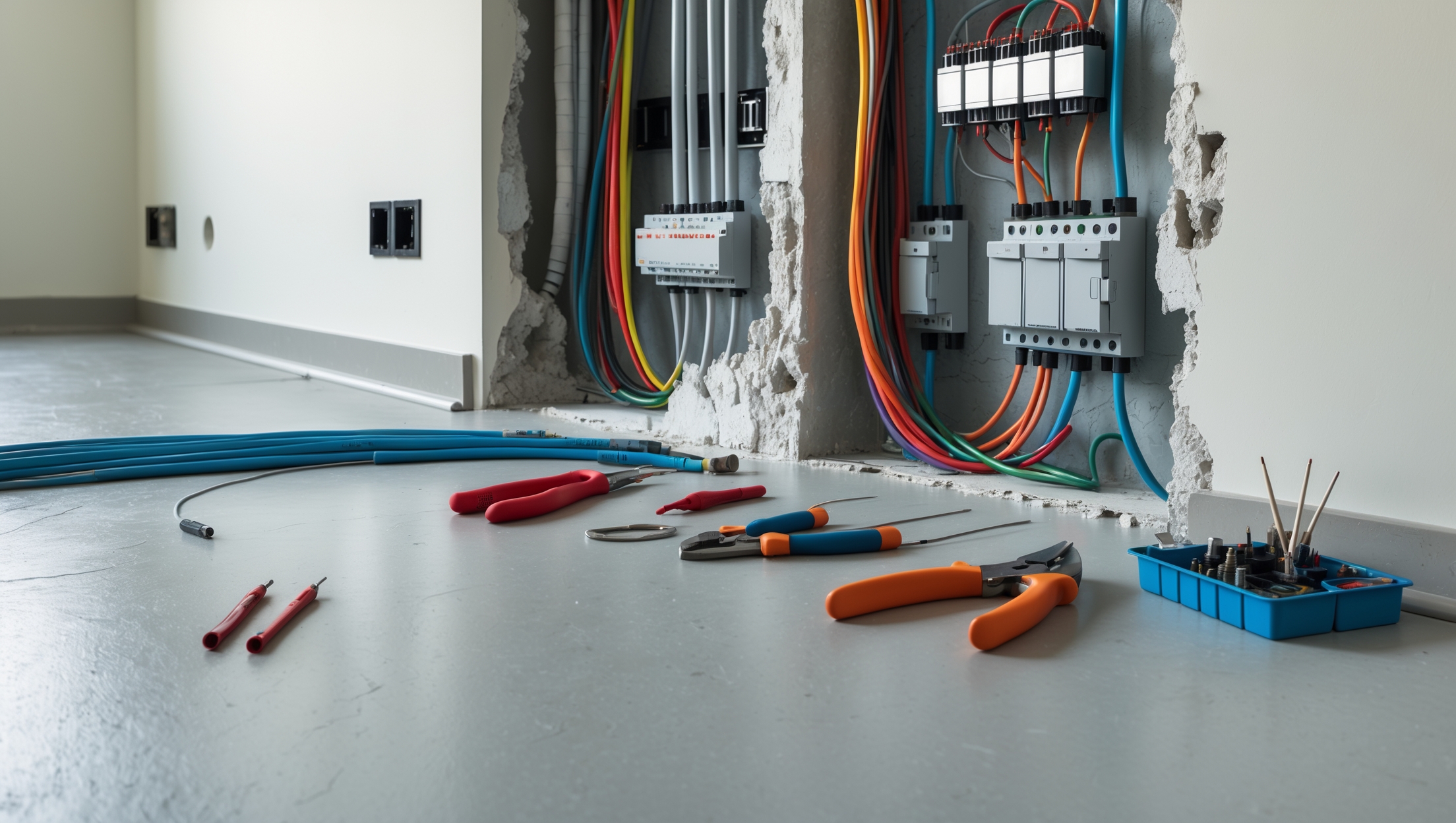
Introduction: Why Whole-House Rewiring is a Smart Move
Many homeowners only think about electrical upgrades when a switch stops working or a breaker trips too often. But for homes built before the 1980s—or those with known wiring issues—completely rewiring the house is one of the most impactful improvements you can make. Outdated wiring isn’t just a nuisance; it’s a major safety risk, contributing to thousands of house fires annually. Whole-house rewiring modernizes your home’s electrical backbone, enhances safety, supports today’s high electrical loads, and is a significant value booster if you ever sell. But the process is complex, often disruptive, and represents a major financial investment. In this comprehensive guide, you’ll learn how to plan every phase: from budgeting and hidden costs, to minimizing disruption, choosing materials, key safety and code considerations, and how to work with the right professionals. If you’re contemplating a home rewiring project, this step-by-step walkthrough will empower you to make confident, informed decisions and avoid the most common pitfalls.
Is Your Home a Candidate for Whole-House Rewiring?
Common Signs Your Wiring Is Outdated or Unsafe
- Frequent breaker trips or blown fuses
- Flickering or dimming lights
- Discolored or warm outlets and switches
- Two-prong (ungrounded) outlets throughout the home
- Aluminum wiring or knob-and-tube wiring present
- Noticeable burning smell or buzzing from outlets
If you notice any of these symptoms, or your home is over 40 years old and has never been upgraded, a whole-house rewiring should be strongly considered for safety and insurance compliance.
Insurance and Compliance Triggers
Some insurers refuse coverage on homes with known hazardous wiring types (like aluminum or knob-and-tube). Local codes may also require upgrades when major renovations are planned. Proactively rewiring can avoid costly last-minute surprises during permits or sales.
Budgeting for a Whole-House Rewire: What to Expect
Typical Cost Ranges
Costs vary based on home size, layout, and regional labor rates. As of 2024, here’s what homeowners can expect:
- Small homes (under 1,500 sq ft): $8,000–$14,000
- Medium homes (1,500–2,500 sq ft): $13,000–$25,000
- Large homes (2,500+ sq ft): $20,000–$40,000+
These estimates include labor, new wiring, outlets, switches, and basic patching, but not upgrades like a new electrical panel, smart home devices, or high-end finishes.
Factors Affecting the Final Price
- Accessibility: Homes with finished walls and ceilings cost more than those with exposed framing (such as during renovations).
- Number of circuits and outlets: More circuits mean more labor and materials.
- Type of wiring being replaced: Removing old knob-and-tube or aluminum wiring can add significant labor.
- Geographic location: Urban areas and regions with high labor costs will see higher prices.
- Permits and inspections: Vary by municipality and can add hundreds to thousands to the total.
Hidden and Indirect Costs
- Wall and ceiling repairs: Patching and repainting after electrical work is often needed.
- Temporary accommodations: In some cases, you may need to stay elsewhere for a few days.
- Upgrading electrical service panel: Sometimes required to handle modern loads.
Planning and Preparation: What to Expect Before Work Begins
Initial Electrical Assessment
Engage a licensed electrician to conduct a thorough inspection. They will evaluate:
- Existing wiring type and condition
- Panel capacity and grounding
- Outlet and switch locations
- Code compliance gaps
This assessment is the foundation of your project scope and estimate.
Choosing the Right Electrician or Contractor
- Verify licensing, insurance, and experience with whole-house rewires.
- Request references from recent customers.
- Get a detailed, written quote including materials, labor, timeline, and cleanup.
- Check for warranty on workmanship and materials.
Designing Your New Electrical System
Modern lifestyles require more power and convenience. When planning your new system, consider:
- Dedicated circuits for kitchens, laundry, bathrooms, and home offices
- USB outlets and smart switches
- Future-proofing for EV chargers or solar installations
- Outdoor and security lighting
- Surge protection and whole-home safety devices
Share your needs and wish list with your electrician to tailor the new system.
Permits, Codes, and Inspections
Permit Process
Most jurisdictions require permits for full rewires. Your electrician typically handles the application, but verify this in your contract. Expect permit fees, plan submission, and sometimes zoning reviews.
Key National and Local Code Requirements
- Use of grounded, insulated wiring (typically NM-B or conduit for certain areas)
- Arc-fault and ground-fault protection in required rooms
- Minimum outlet spacing (no point along a wall more than 6 feet from an outlet)
- Dedicated circuits for heavy appliances
- Proper bonding and grounding for all outlets and panels
Code requirements are updated frequently; make sure your electrician is up to date.
Inspection Stages
- Rough-in inspection: Before walls are closed, wiring and boxes are checked.
- Final inspection: After completion and wall repairs, ensuring everything is safe and code-compliant.
Project Timeline and Minimizing Disruption
Typical Timeline
- Planning and permitting: 1–4 weeks
- Rewiring work: 5–15 days (varies by home size and complexity)
- Inspection and repairs: 2–7 days for final checks and wall patching
Expect a total project span of 3–6 weeks from initial planning to completion.
Staying in Your Home vs. Temporary Move-Out
Many homeowners can remain at home, but you’ll lose power in sections as work progresses. For extensive rewires, especially in older homes, relocating for a few days may be safer and less stressful. Discuss phasing and temporary solutions (like portable power) with your contractor.
Protecting Your Belongings and Home
- Move furniture away from walls and cover with drop cloths.
- Remove valuables and electronics from work zones.
- Seal off rooms not being worked on to reduce dust.
Safety Considerations: What Every Homeowner Should Know
Choosing Safe, Code-Compliant Materials
Insist on modern, high-quality copper wiring (NM-B or equivalent). Avoid aluminum wiring, even if local codes permit it. Ensure tamper-resistant outlets, GFCI protection in wet areas, and arc-fault circuit interrupters in living spaces.
Fire Prevention Measures
- Install interconnected smoke and carbon monoxide detectors.
- Discuss surge protection options with your electrician.
- Verify all splices and junctions are in accessible, covered boxes.
Dealing With Hazardous Old Wiring
Properly removing and disposing of knob-and-tube or aluminum wiring is essential. If asbestos or lead paint is encountered, certified abatement may be required—never attempt DIY removal.
After the Rewire: Restoration, Testing, and Documentation
Wall and Ceiling Repairs
Most rewiring projects require cutting into drywall. Confirm with your contractor who is responsible for patching and painting. Some electricians include basic repairs, but you may want a professional finisher for a seamless look.
System Testing and Walk-Through
- Test every outlet, switch, and lighting fixture.
- Verify GFCIs and AFCIs function and reset properly.
- Confirm labeling on new breaker panel is clear and accurate.
Request a final walk-through with your electrician to address any concerns and ensure you understand your new system.
Documentation and Future Proofing
- Keep copies of permits, inspection reports, and contractor warranties.
- Request updated electrical diagrams for future reference.
- Photograph wiring before walls are closed for future troubleshooting.
Frequently Asked Questions
Can I rewire my house in phases?
Yes, it’s possible to rewire one floor or section at a time, but this can increase labor costs and project duration. Discuss pros and cons with your electrician.
How long does new wiring last?
Modern copper wiring is expected to last 50+ years if installed correctly and not damaged by pests or water.
Will my insurance costs decrease?
Many insurers offer discounts for homes with new, code-compliant wiring. Notify your agent after the project and provide proof of completion.
Conclusion: Investing in Safety, Value, and Peace of Mind
Whole-house rewiring is a significant project—one that demands careful planning, a realistic budget, and an experienced professional to get right. While the process can disrupt your daily life, the long-term rewards are substantial: a safer, more reliable electrical system that supports modern technology, increases your home’s value, and provides peace of mind for decades. By understanding the real costs, preparing for every phase, and insisting on best practices in materials and installation, you protect your home from electrical hazards and future-proof it for evolving needs. Don’t wait for a major incident or a failed inspection to address outdated wiring. Take proactive steps, work with trusted experts, and you’ll enjoy the comfort and security that comes from knowing your home’s most critical system is built to last. If you’re ready to start, use the guidance in this article to confidently plan your project, ask the right questions, and ensure a successful, code-compliant outcome. Your family’s safety—and your home’s future—are worth the investment.
You mention that insurance companies may refuse coverage for homes with knob-and-tube or aluminum wiring. If I plan to eventually sell my house but I haven’t had insurance issues yet, should I prioritize rewiring now, or only when I hit a compliance trigger during renovations?
If you plan to sell your home in the future, addressing outdated wiring like knob-and-tube or aluminum ahead of time can make your property more attractive to buyers and prevent last-minute surprises. While you might not have insurance issues today, future buyers or their lenders could face difficulties getting coverage. Rewiring proactively can also improve safety and potentially increase your home’s value, even if you haven’t hit a compliance trigger yet.
Regarding budgeting for a whole-house rewire, are there hidden costs that commonly surprise homeowners beyond labor and materials, like permit fees or patching up walls afterward? I’m trying to get a realistic sense of the all-in expenses before moving forward.
Yes, there are often extra costs that catch homeowners off guard during a whole-house rewire. In addition to labor and materials, you should factor in permit fees, expenses for patching and repainting walls and ceilings after wiring, potential upgrades to your electrical panel, disposal of old materials, and any temporary accommodations if the power needs to be off for an extended period. Including these in your budget will help you avoid surprises.
I saw you mentioned that insurance companies might refuse coverage due to knob-and-tube or aluminum wiring. At what point during a home sale or renovation do insurers typically check for this, and could it delay closing if they find outdated wiring?
Insurance companies usually review the home’s wiring type during the application process for a new policy, which often happens when a property changes hands or is being renovated. If outdated wiring like knob-and-tube or aluminum is found, they might require upgrades before issuing coverage. This can delay closing if the insurance requirement isn’t met, so it’s wise to address wiring concerns early in the sale or renovation process.
When budgeting for a whole-house rewire, how should homeowners account for possible hidden costs, like plaster or drywall repair after running new wires? Are there common expenses people tend to overlook in the planning stage?
When planning a whole-house rewire, it’s wise to set aside extra funds for plaster or drywall repair, since electricians often need to cut into walls and ceilings to run new wires. Homeowners often overlook costs like repainting, permit fees, temporary housing if the work is extensive, and potential upgrades to outdated electrical panels. Adding a contingency of 10–20% to your budget can help cover these surprises.
I noticed you mentioned budgeting for hidden costs with a whole-house rewire. Are there common unexpected expenses that tend to catch homeowners off guard, and what are some ways to plan for or minimize these extra charges?
Common unexpected expenses during a whole-house rewire include repairing drywall or plaster after wiring, updating outdated electrical panels, and accommodating code upgrades required by inspectors. Sometimes, older homes may have unforeseen issues like knob-and-tube wiring or asbestos, which require special handling. To plan for these, ask your electrician for a detailed estimate that covers possible contingencies, and set aside an extra 10–20% of your budget for surprises. This helps reduce stress if unexpected costs arise.
I saw you mentioned insurance companies refusing coverage for homes with aluminum or knob-and-tube wiring. In your experience, does the rewiring process usually resolve those insurance issues right away, or are there often extra inspections or paperwork after the work is done?
Once your home has been completely rewired and all the old aluminum or knob-and-tube wiring has been removed, most insurance companies are more willing to offer coverage. However, they often require proof that the work was done to code, such as copies of permits, final inspection reports, or a certificate of completion from your electrician. It’s a good idea to contact your insurer ahead of time to confirm exactly what documentation they’ll need after the rewiring is finished.
If my building is a small business constructed in the 1970s and I’m noticing flickering lights and occasional breaker trips, would the rewiring process be significantly different than for a residential home? Are there extra compliance steps for a commercial property?
The rewiring process for a small business is often more complex than for a residential home. Commercial properties must meet stricter building codes and safety regulations, which may include additional permits, inspections, and compliance with accessibility standards. Electrical loads in businesses may also require upgraded wiring and panels. It’s important to work with a licensed electrician experienced in commercial projects to ensure all compliance steps are properly handled.
The article mentions budgeting for hidden costs when planning a full rewire. Are there any specific unexpected expenses that small business owners should look out for if they’re converting an older house into a workspace?
When converting an older house into a workspace, small business owners should watch for costs like upgrading the electrical panel to meet business codes, installing additional outlets or dedicated circuits for office equipment, and addressing outdated or unsafe wiring found during the project. There may also be expenses for bringing the property up to ADA compliance, smoke and carbon monoxide detectors, and possible repairs to walls or ceilings after wiring work.
You mentioned insurance companies sometimes won’t cover homes with aluminum or knob-and-tube wiring. If I just replace the most hazardous sections instead of a full rewire, will that usually satisfy insurance requirements, or do they look for a complete upgrade?
Insurance companies often have strict requirements when it comes to older wiring like aluminum or knob-and-tube. In many cases, they prefer or even require a full upgrade to modern wiring before providing coverage. Simply replacing the most hazardous sections might not be enough to satisfy them, though some insurers may accept partial upgrades if the work is certified safe by a licensed electrician. It’s best to check directly with your specific insurer to confirm their policy.
If my house was built in the late 1970s but I haven’t noticed any breaker issues or burning smells, should I still be worried about needing a full rewiring, or can I just upgrade outlets and a few circuits for safety?
Since your house was built in the late 1970s and you haven’t seen warning signs like breaker trips or burning smells, a full rewiring may not be urgent. However, upgrading old outlets, especially to GFCI in kitchens and bathrooms, and updating a few key circuits can improve safety. It’s a good idea to have a licensed electrician inspect your wiring to identify any hidden risks before deciding on the scope of upgrades.
If my house is over 40 years old but I haven’t noticed any obvious signs like flickering lights or burnt outlets, is there a way to check if a whole-house rewiring is actually necessary, or should I still seriously consider it for safety?
Even without obvious signs, it’s wise to be cautious with older wiring. You can hire a licensed electrician to perform a thorough inspection. They’ll check the type and condition of your wiring, outlets, and circuit panel, and look for hidden issues. This assessment will help you decide if rewiring is needed or if your current system is still safe.
I noticed you mentioned insurance companies may refuse coverage for homes with outdated wiring. Can you provide more detail on how the rewiring process affects existing homeowners insurance policies and whether rates typically change once the upgrade is complete?
When you upgrade your home’s wiring, it often has a positive impact on your homeowners insurance. Most insurers see new wiring as reducing fire risk, so they may continue coverage and sometimes even lower your premium after the work is finished. Be sure to notify your insurer once the rewiring is complete and provide any requested documentation or inspection reports to potentially qualify for reduced rates.
You talk about how whole-house rewiring can be disruptive and costly. Is there any way to minimize the disruption to daily life during the project, especially if the home needs to remain occupied throughout the process?
To minimize disruption during a whole-house rewiring, consider working with your electrician to create a phased plan—rewiring one section at a time so other areas remain usable. Clear communication about daily schedules can help you plan around outages. Cover furniture and sensitive electronics to protect them from dust, and set up temporary living spaces if needed. Electricians can often provide temporary power to essential rooms as well.
You mentioned that rewiring is sometimes required by insurance companies or local codes, especially if hazardous wiring is present. What’s the best way to find out if my current insurance policy or city regulations actually require this upgrade before I start budgeting?
To check if rewiring is required, start by contacting your home insurance provider and asking them directly about their electrical requirements and any conditions tied to your policy. For local regulations, call your city or county building department, or browse their official website for electrical code information. This way, you’ll know exactly what’s needed before planning your budget.
What should a business owner expect in terms of operational disruption during a whole-building rewiring project? Are there ways to minimize downtime while still fully complying with code and safety requirements?
A business owner should anticipate some operational disruption during a whole-building rewiring, such as temporary power outages, limited access to certain areas, and possible noise or dust. To minimize downtime, work can often be scheduled in phases, after hours, or on weekends. Clear communication with your electrician about your business hours and needs helps ensure safety compliance while reducing impact on productivity.
When budgeting for a whole-house rewire, how should I factor in hidden costs like drywall repair and possible code updates beyond just the electrical system itself? Any tips for keeping the process on track without unexpected expenses spiraling?
When budgeting, it’s wise to set aside extra funds for repairs like drywall patching, repainting, and any required upgrades to meet current building codes—these often aren’t included in the electrician’s estimate. Ask your contractor for a detailed breakdown, including possible add-ons. Having a written contract and clear communication helps avoid surprises. Contingency funds of 10–20% of the project cost can cover unexpected expenses and keep your project on track.
If my house still has two-prong outlets throughout but no obvious signs like burnt outlets or breaker trips, is it still urgent to consider a full rewire, or are there situations where just updating outlets could be enough for insurance and safety?
Even without visible signs of trouble, two-prong outlets typically mean your wiring lacks grounding, which modern safety standards require. Simply replacing outlets may not meet insurance requirements or provide full protection—some insurers may actually insist on a full rewire. However, if your wiring is otherwise in good shape, a licensed electrician can sometimes install GFCI outlets as an interim solution. It’s best to have an electrician inspect your wiring to determine what’s needed for both safety and insurance compliance.
Could you explain a bit more about what makes aluminum and knob-and-tube wiring especially risky? Are there interim safety measures you can take if you’re not ready to commit to a full house rewire yet?
Aluminum wiring is risky because it’s more prone to overheating, loosening at connections, and oxidizing, which can lead to fires. Knob-and-tube wiring lacks grounding and often has insulation that deteriorates with age, increasing shock and fire hazards. If you’re not ready for a full rewire, consider replacing outlets and switches with safer, modern ones, installing arc fault circuit interrupters (AFCIs), and having a licensed electrician inspect and secure any problem areas.
The article mentions that local codes might require electrical upgrades during major renovations. Can you clarify what kinds of home projects typically trigger this requirement? Are there specific improvements or permit types that almost always lead to a mandatory whole-house rewire?
Major renovations that often trigger the need for electrical upgrades include adding new rooms, significantly expanding square footage, or remodeling kitchens and bathrooms. Projects that involve opening up walls, changing layouts, or upgrading HVAC systems can also require rewiring. Pulling permits for large remodels, additions, or converting attics and basements almost always prompts code officials to assess your existing wiring. If your current system is outdated or unsafe, a whole-house rewire may be mandated.
The article says that whole-house rewiring is a significant financial investment. Can you provide more guidance on what hidden costs homeowners should watch out for when planning their budget? I’m especially curious about unexpected expenses that tend to come up during older home upgrades.
When rewiring older homes, unexpected costs often include repairing plaster or drywall after wiring runs, upgrading the electrical panel to meet current codes, and addressing outdated or unsafe wiring discovered during the project. You might also find the need to update outlets, switches, or fixtures that aren’t compatible with modern wiring. Additionally, be prepared for possible permit fees and increased labor costs if access behind walls or in attics is difficult. Building a contingency fund into your budget can help handle these surprises.
When planning a major renovation, how can I coordinate the timing of a whole-house rewiring to minimize disruption? Should the rewiring happen before other projects like drywall or painting, or is it better to wait until certain steps are completed?
For major renovations, it’s best to schedule whole-house rewiring before installing drywall, painting, or finishing other surfaces. This allows electricians to access walls and ceilings without damaging new finishes. Once the wiring is completed and inspected, you can move on to drywall, painting, flooring, and other finishing steps. Coordinating in this order helps avoid unnecessary rework and minimizes disruption.
I noticed the article lists frequent breaker trips and flickering lights as signs that rewiring might be needed. Are there diagnostic tests or checklists homeowners can use to confirm when a house truly requires a complete rewire versus targeted repairs?
Homeowners can use a basic checklist to assess wiring issues, such as checking for outlets or switches that feel warm, inspecting for frayed wires, and noting persistent electrical smells. For a clearer diagnosis, an electrician can perform tests like circuit load analysis, insulation resistance testing, and an inspection for outdated wiring (like knob-and-tube). These steps help determine if you need a full rewire or just specific repairs.
If my house is showing signs like frequent breaker trips and warm outlets, but the wiring isn’t quite 40 years old yet, is it still necessary to do a complete rewire, or are there situations where targeted repairs make sense?
Frequent breaker trips and warm outlets are warning signs that should not be ignored, even if your wiring is less than 40 years old. In some cases, targeted repairs—like replacing faulty circuits, outlets, or breaker panels—can address the issues if the rest of your wiring is in good condition. However, it’s essential to have a licensed electrician inspect your system to determine if localized fixes will be safe and effective, or if a full rewire is needed.
How disruptive is the whole rewiring process on a day-to-day basis? Are there strategies to minimize how long parts of the house are without power, especially if I’ll be working from home during the upgrade?
Whole-house rewiring is quite disruptive since it often requires cutting into walls and shutting off power to sections of your home. Electricians may need to turn off electricity room by room, but you can ask them to schedule outages during times that least impact your work. Some homeowners set up a temporary work area in a part of the house with power or coordinate with the crew to keep essential circuits running as long as possible. Sharing your work-from-home needs in advance helps the electrician plan accordingly.
If I’m planning a major renovation soon, does it make sense to budget for a full rewire at the same time? Are there ways to minimize the disruption this might cause to daily life during the project?
Including a full rewire during a major renovation is often practical, as walls and ceilings may already be open, making the electrical work less disruptive and potentially less expensive. To minimize disruption, consider staying elsewhere during the most intensive phases, or ask your contractor to work in sections so some areas of your home remain usable. Effective planning and clear communication with your contractor will help the process go more smoothly.
You mentioned that insurance companies might refuse coverage for homes with aluminum or knob-and-tube wiring. If my house has some rooms with updated wiring but others with older types, would insurers still require a full rewiring, or are partial upgrades enough for compliance?
Insurance companies often require the entire home to meet modern wiring standards, especially if there are sections with aluminum or knob-and-tube wiring. Partial upgrades usually aren’t enough to meet their guidelines, as the risk persists where old wiring remains. It’s best to check with your specific insurer, but in most cases, a full rewiring is needed to guarantee coverage and compliance.
You mentioned insurance companies might not cover homes with aluminum or knob-and-tube wiring. How do I find out what kind of wiring is in my walls if I have an older house and there are no obvious signs?
To determine your home’s wiring type, you can start by checking your electrical panel or any exposed wiring in basements, attics, or crawl spaces for clues. Aluminum wiring often looks silver rather than copper, and knob-and-tube wiring has ceramic knobs and tubes guiding the wires. If you’re not sure or don’t see anything obvious, it’s a good idea to hire a licensed electrician for an inspection. They can safely identify your wiring and let you know if any updates are needed.
My house built in the 1970s has two-prong outlets and sometimes flickering lights, but no burning smells so far. How urgent is it to address these signs, and would rewiring be required immediately for insurance, or only if I’m planning a major renovation?
Two-prong outlets and flickering lights in a 1970s home suggest outdated wiring that may not meet current safety standards. While not having burning smells is good, it’s still important to have an electrician inspect your system soon. Most insurance companies don’t require rewiring unless it’s part of a major renovation, but some might limit coverage or charge higher premiums for older wiring, so check your policy. Addressing these issues sooner can help ensure safety and possibly avoid insurance complications.
The article talks about the disruption and financial investment involved in a whole-house rewire. For a typical 1,500 square foot home from the 1960s, how long should I realistically expect the project to take, and can I live in the house during the process?
For a 1,500 square foot home from the 1960s, a whole-house rewiring project usually takes about 5 to 10 days, depending on accessibility and any unforeseen issues. You can often stay in your home during the process, but expect some inconvenience, such as having power turned off in different areas at times, dust, and restricted access to certain rooms. Clear communication with your electrician can help minimize disruptions.
You mentioned insurance companies sometimes refuse coverage for homes with knob-and-tube or aluminum wiring. If I start the rewiring process, are there temporary coverage options insurers typically offer until the work is finished?
Some insurers may offer limited or conditional coverage while your home is being rewired, but this varies between companies. Options might include temporary coverage with higher premiums or specific exclusions for electrical-related incidents. It’s best to inform your insurer about your rewiring plans in advance, as they can explain what’s available and what documentation or inspections may be required during the process.
When budgeting for a whole-house rewire, what are some hidden costs that often catch homeowners off guard beyond the basic labor and wire expenses? I’m particularly wondering about permits, wall repairs, or any code upgrades that might not be immediately obvious.
When planning for a whole-house rewire, hidden costs can include permit fees, which vary by location but are almost always required. Wall and ceiling repairs after the wiring is installed can add up, especially if plaster needs patching or repainting. You may also need to upgrade your electrical panel to meet current codes, install new outlets or smoke detectors, or address grounding and bonding issues. Some older homes require additional safety upgrades to comply with modern electrical standards.
When budgeting for a rewiring job, what kinds of hidden costs tend to catch homeowners off guard? I’m trying to plan for the whole project and want to avoid unexpected financial surprises, like extra permit fees or wall repairs.
Homeowners are often surprised by costs beyond just the wiring itself. These can include permit fees, the price of repairing or repainting walls and ceilings after wires are installed, and sometimes unexpected electrical upgrades if your panel or outlets aren’t up to code. There’s also potential for extra charges if old wiring contains hazardous materials like asbestos. It’s a good idea to ask your electrician for a detailed estimate that includes these possible expenses.
For budgeting purposes, what are some of the most common hidden costs people run into during a whole-house rewire? Are there unexpected issues with insurance or permits that first-timers often overlook?
Some common hidden costs during a whole-house rewire include repairing walls or ceilings after wiring is replaced, upgrading your electrical panel to meet code, and bringing outdated outlets or grounding up to current standards. People often overlook the extra fees for permits and inspections, which can add up. Also, insurance companies may require electrical work to be completed by licensed professionals and could ask for proof before renewing or issuing a policy, so be sure to plan for these requirements.
You mentioned that whole-house rewiring can be pretty disruptive. In your experience, how long does the typical rewiring project take for an average-sized house, and are there ways to keep parts of the home functional during the process?
For an average-sized house, whole-house rewiring usually takes between 5 to 10 days, depending on the home’s size, age, and complexity. It’s common for electricians to work in stages, allowing you to use some areas while others are being rewired. Let your electrician know which rooms you need most, so they can try to schedule work to keep those spaces functional as long as possible. Planning ahead and communicating priorities helps minimize disruption.
I see you mentioned that insurance companies might refuse coverage for homes with aluminum or knob-and-tube wiring. How can I find out if my current insurance policy has this restriction before I start a rewiring project?
To find out if your insurance policy restricts coverage for homes with aluminum or knob-and-tube wiring, review your policy documents for any exclusions or special conditions related to electrical systems. If it’s unclear, contact your insurance agent directly. They can explain your policy’s stance on older wiring types and let you know if a rewiring project might affect your coverage or premiums.
Can you explain a bit more about how insurance companies decide to refuse coverage on older wiring types like aluminum or knob-and-tube? What documentation or proof do they usually require if I decide to upgrade?
Insurance companies worry about older wiring types like aluminum or knob-and-tube because they have a higher risk of electrical fires or faults. As a result, some insurers may refuse coverage or raise premiums if these systems are present. If you upgrade your wiring, insurers usually want proof such as a copy of the electrician’s invoice, a certificate of electrical inspection, or photos showing the completed work. Always check with your insurer for their specific documentation requirements before starting the upgrade.
If the home doesn’t show any obvious signs like frequent breaker trips but still has original wiring from the 1960s, would you recommend a proactive rewire just based on age? Or should homeowners wait until specific issues arise before investing in a whole-house project?
Even if there aren’t obvious warning signs, wiring from the 1960s may not meet modern safety standards and could pose hidden risks, especially if it’s aluminum or cloth-insulated. A proactive electrical inspection by a licensed electrician is wise. Based on their assessment, you can decide whether a full rewire or targeted updates are needed, rather than just waiting for problems to appear.
You mentioned that insurance companies might refuse coverage if a home still has aluminum or knob-and-tube wiring. If someone discovers these kinds of wiring during a renovation, how do you go about getting insurance approval after a whole-house rewiring is finished?
After completing a whole-house rewiring, you should get documentation from your licensed electrician, such as a completion certificate or inspection report showing the new wiring meets current code. Share these documents with your insurance company, along with any permits or inspection results. Most insurers will then re-evaluate the property and, assuming all standards are met, approve coverage or reinstate your policy.
What are some hidden costs that homeowners often overlook when budgeting for a full rewire, especially in older homes with plaster walls or unique layouts?
Homeowners often overlook costs like repairing or replacing plaster walls after wires are installed, which can be more expensive than fixing drywall. Unique layouts may require extra labor for accessing hard-to-reach areas. Other hidden costs include updating old electrical panels to meet code, permitting fees, and temporary accommodations if power needs to be shut off for an extended period. Budgeting for these contingencies can help avoid surprises.
You mentioned insurance companies might refuse coverage for homes with outdated wiring. If I’m planning a major renovation, should I expect my premiums to drop after a whole-house rewire, or does it just prevent denial of coverage?
A whole-house rewire typically makes your home safer and brings it up to current electrical standards, which most insurance companies require for coverage. While this upgrade can prevent being denied coverage or facing non-renewal, it doesn’t always guarantee a premium reduction. Some insurers may offer discounts for improved safety, so it’s a good idea to check with your provider about possible savings after the rewiring.
The article mentions the process can be very disruptive. For someone working from home, are there any specific planning tips to minimize downtime or inconvenience during a whole-house rewiring?
Rewiring can definitely disrupt your routine, especially when working from home. To minimize inconvenience, discuss your work schedule with the electrician so they can prioritize wiring in your home office first. If possible, set up a temporary workstation in a room that won’t be worked on right away. You might also arrange for work to be done while you’re away or after hours if the contractor allows it. Clear communication and planning can help keep your downtime to a minimum.
You mentioned the process can be disruptive—what can families do to minimize downtime, especially if we’re working from home or have kids? Are there ways to stage the work so parts of the house stay functional?
To minimize disruption during whole-house rewiring, you can coordinate with your electrician to stage the work room by room or by zones. This helps keep some spaces functional while others are being worked on. Set up a temporary workspace in an unaffected area, and communicate any critical needs—like internet access or a quiet office—to your contractor. It’s also helpful to schedule the most disruptive tasks for times when your family can be out of the house if possible.
Can you give an idea of how much disruption to daily life to expect during a whole-house rewire? For example, is it usually possible to stay in the home during the process, or do most homeowners need to relocate temporarily?
A whole-house rewire can be quite disruptive, as it typically involves cutting into walls, temporarily turning off power, and moving furniture. Many homeowners do choose to stay, but you may be without electricity in parts of the house for several days at a time. If you work from home or have young children, it could be difficult. Some people prefer to relocate temporarily, especially for a major rewire.
We own a 1970s house with two-prong outlets and a few circuits that trip regularly. How disruptive is a whole-house rewiring project for families living in the home during the work, and are there ways to minimize the mess and downtime?
Whole-house rewiring can be quite disruptive, especially in an older home, as electricians often need to access wiring behind walls, ceilings, and floors. This usually means moving furniture, some wall patching, and periods without power in certain rooms. To minimize mess and downtime, consider planning the work in stages, sealing off work areas to contain dust, and coordinating with your electrician to maintain power in key parts of the house when possible.
If my house is over 40 years old but I’m not having obvious electrical issues yet, should I wait until signs show up, or is it safer—and possibly cheaper in the long run—to plan for a proactive full rewire now?
With a house over 40 years old, wiring may not meet modern safety standards, even if you haven’t noticed issues yet. Proactively rewiring can prevent fire risks and unexpected outages, and it’s often less costly than emergency repairs after a problem arises. An electrician can assess your current system to help you decide if immediate rewiring is necessary or if you can safely wait.
If my home was built in the early 1970s and has two-prong outlets but no obvious signs like burning smells or frequent breaker trips, how urgent is it to consider a full rewire? Could swapping outlets be enough for now, or does insurance still have concerns?
Homes from the early 1970s with two-prong outlets likely lack proper grounding, which is a safety issue even without visible problems. Simply swapping outlets for three-prong types doesn’t add grounding or resolve underlying risks. Many insurance companies consider ungrounded wiring a concern and may limit coverage or require upgrades. A full rewire is not always urgent if everything functions safely, but it’s smart to get a licensed electrician’s assessment to understand your specific risks and potential insurance complications.
Can you explain how disruptive a whole-house rewiring usually is in terms of daily living? I’m wondering if people generally need to move out during the process, or if there are ways to minimize inconvenience given how comprehensive the job sounds.
Whole-house rewiring is typically quite disruptive because electricians need to access wiring behind walls, ceilings, and floors, which often involves moving furniture and possibly cutting into drywall. Power may be off for extended periods in parts of the home. Some homeowners stay during the project, but it’s common to move out, especially if the work is extensive or done all at once. If you want to minimize inconvenience, you can ask your electrician about phasing the work room by room so parts of the house remain livable.
I’m starting to budget for a possible rewiring, but I’m not sure if my home has aluminum or knob-and-tube wiring. Are there simple ways for a homeowner to identify these wiring types before calling in a professional?
You can often do a basic check yourself. Aluminum wiring is usually marked ‘AL’ or ‘Aluminum’ on the outer jacket of exposed wires in your attic, basement, or electrical panel. Knob-and-tube wiring consists of ceramic knobs and tubes with single wires running separately, not bundled like modern cables. If you see either, take photos for a professional to review. Always be careful—never touch exposed wiring.
Regarding budgeting, what are some hidden costs that tend to surprise homeowners during a rewiring project? For example, are permit fees or wall repairs usually included in electrician quotes, or should those be budgeted separately?
Homeowners are often surprised by costs like permit fees, drywall repairs, and repainting, which are not always included in standard electrician quotes. It’s common for quotes to cover only the electrical work itself. You should ask your electrician exactly what is covered, and plan a separate budget for permits, patching walls, repainting, and any necessary upgrades to meet code requirements.
My house was built in the late 1970s and has some two-prong outlets, but no obvious issues like breaker trips or burning smells. In situations like this, is a complete rewire always necessary, or are there less invasive options for bringing things up to code?
A complete rewire isn’t always required if your wiring is intact and functioning safely. For homes with two-prong outlets, electricians can often upgrade just the outlets to grounded three-prong versions or install GFCI outlets for better safety and code compliance. An electrical inspection will help determine if your existing wiring is safe or if more extensive updates are needed. Addressing only specific areas can be a less invasive solution.
You mention that the process is often disruptive. Are there best practices for minimizing daily life interruptions during a whole-house rewiring, especially for families who need to remain in the home during the project?
Absolutely, there are several ways to reduce disruptions during a whole-house rewiring. Work with your electrician to create a clear schedule and designate work zones, so only parts of your home are affected at a time. Setting up a temporary living area with essential appliances and internet access can help keep daily life functioning. Communicate any special needs, like children’s nap times or remote work requirements, so the crew can plan accordingly. Keeping pathways clutter-free and covering furniture will also help minimize mess and stress during the process.
You mentioned insurance companies sometimes won’t cover homes with old wiring like knob-and-tube or aluminum. How can I find out if my current policy is affected, and can I get insurance coverage during the rewiring process itself?
To find out if your policy is affected by old wiring, review your insurance documents or call your insurance agent directly and ask if they have restrictions regarding knob-and-tube or aluminum wiring. If you plan to rewire, let your insurer know in advance—some companies will provide coverage during the work if you show proof that licensed electricians are handling the project, but requirements vary by provider, so clear communication is key.
Could you provide more detail on how insurance companies verify whether a home has outdated wiring during the underwriting process? I’m curious if certain inspections are required or if proof of rewiring needs to be submitted for compliance.
Insurance companies usually start by asking about the age and type of your home’s wiring on application forms. They may request a recent electrical inspection report, especially for older homes, or proof of rewiring—like permits or contractor invoices. Some companies send inspectors to verify the wiring or require licensed electrician certification to confirm compliance. Requirements vary by insurer and location, so it’s always best to check with your provider for their specific process.
You mentioned that insurance companies might refuse coverage if hazardous wiring is present. How does the rewiring process usually affect home insurance rates, and are there steps I should take to update my policy after the work is done?
After rewiring your home, insurance rates often improve or stay stable since the risk of electrical fires decreases. It’s important to notify your insurer once the work is complete. Provide documentation, such as an electrician’s certification and inspection reports, to update your policy. This helps ensure your coverage reflects the new, safer wiring and can make future claims smoother.
If my house still has a lot of two-prong outlets but no flickering or burning smells, is a full rewiring really necessary, or could I just update the outlets and meet code that way? I want to modernize but also keep costs reasonable.
If your house has two-prong outlets but no immediate danger signs, full rewiring may not be strictly necessary. However, simply updating to three-prong outlets without proper grounding doesn’t meet modern electrical code and may pose safety risks. You could install ground fault circuit interrupter (GFCI) outlets as a safer, code-compliant upgrade in some cases. Consulting a licensed electrician will help you find the safest and most cost-effective solution for modernizing.
When it comes to minimizing disruption during a whole-house rewiring, does the guide have any recommendations for families who need to continue living in the home while the work is being done? Are there best practices for temporarily setting up essential areas like kitchens or bedrooms?
The article suggests coordinating closely with your electrician to plan the rewiring in stages, so key areas like the kitchen, bathrooms, or at least one bedroom remain usable as much as possible. Setting up a temporary kitchen with essentials such as a microwave, fridge, and table in a room not being worked on can help. Covering furniture, moving valuables, and sealing off work zones with plastic sheeting are also recommended to limit dust and disruption.
You mentioned rewiring can be disruptive and a major investment. Can you provide any tips for minimizing downtime or disruption to a home-based business during the project?
To minimize disruption during whole-house rewiring, try scheduling the work in phases, so only certain parts of your home are affected at a time. Coordinate with the electricians to prioritize wiring in your workspace first or last, depending on your needs. Set up a temporary working area outside the main rewiring zones if possible, and ask about working during off-hours or weekends to reduce interference with your business operations.
If my house was built in the late 70s but I haven’t noticed flickering lights or breaker trips, should I still consider a full rewiring for insurance purposes, or is it mainly needed if I see the warning signs listed here?
Even if you haven’t noticed warning signs like flickering lights or breaker trips, it’s still wise to check your home’s wiring, especially since houses from the 70s may have outdated materials. Some insurance companies do require updated wiring for coverage or better rates, so you might want to consult your insurer and have a licensed electrician assess your system before deciding on a full rewire.
If my home was built in the late 1970s but has had some minor electrical work done over the years, how do I know if I need a full rewire or just targeted upgrades? Are there specific warning signs that mean a whole-house job is unavoidable?
For homes from the late 1970s, it’s important to check for certain signs that might indicate the need for a full rewire, such as frequent circuit breaker trips, flickering lights, discolored outlets, or outlets that feel warm to the touch. If your wiring is still the original aluminum type, or if you notice persistent electrical issues despite past repairs, a whole-house rewire could be necessary. Otherwise, targeted upgrades may suffice. Having a licensed electrician inspect your system is the best way to assess what’s needed.
I own an older commercial property and am wondering if the insurance and compliance issues you mentioned for homes also apply to small business buildings. Are there different code requirements or triggers I should be aware of before planning a full rewiring?
Insurance and compliance issues can definitely apply to small business buildings, but commercial properties often face stricter or different electrical codes and permitting requirements than homes. Triggers for mandatory upgrades may include changes in building use, significant renovations, or occupancy type. Before planning your rewiring, check your local commercial electrical codes and consult your insurer, as commercial policies may have specific standards or documentation requirements for electrical systems.
If I’m planning a major renovation soon, should I try to coordinate the rewiring with that project, or is it better to get the electrical work done beforehand? I’m curious how timing the two might impact permits and overall project planning.
Coordinating the rewiring with your major renovation is usually the best approach. Doing both projects together helps reduce costs, avoids redundant work, and makes it easier for inspectors to assess everything at once. You can include the rewiring in your overall permit application, streamlining approvals and inspections. Planning both projects together also minimizes disruption and keeps your timeline more manageable.
My house was built in the early 1970s, and I’ve noticed some light switches get warm and the circuit breaker trips a few times a month. If my outlets are all three-prong but the wiring is older, does that mean it’s definitely safe, or should I still consider a full rewire?
Even though your outlets are three-prong, that doesn’t guarantee the wiring behind them is grounded or up to current safety standards. Warm switches and frequent breaker trips are warning signs that the wiring may be unsafe. It’s wise to have a licensed electrician inspect your system—rewiring could be necessary to ensure your home’s safety.
How disruptive should I expect rewiring to be for daily life, especially if I have plaster walls? Are there practical ways to minimize mess or do most homeowners end up needing some patching and repainting afterwards?
Rewiring a house with plaster walls can be quite disruptive since electricians often need to create openings to run new wiring. Even with careful work, dust and debris are common, and most homeowners do need some wall patching and repainting after. Covering furniture, sealing off work areas, and planning the project in stages can help limit mess and make daily life a bit easier during the process.
You touched on budgeting and hidden costs—can you clarify if outdated wiring in harder-to-reach areas, like behind finished walls or in attics, tends to increase the overall project costs significantly? If so, how should homeowners plan for those additional expenses?
Yes, outdated wiring in difficult-to-access areas like behind finished walls or in attics usually increases the overall cost. This is because electricians may need more time and effort to reach and replace wiring, possibly requiring wall removal or special equipment. Homeowners should budget extra for labor and potential repairs to walls or ceilings afterward, and ask their electrician for a contingency estimate to cover these hidden challenges.
I’m trying to put together a rough budget before I call an electrician. Are there any common hidden costs I should be aware of, especially in older homes with things like knob-and-tube or aluminum wiring?
Absolutely, older homes can present hidden costs during rewiring. If your house has knob-and-tube or aluminum wiring, expect possible expenses for safe removal and disposal. Upgrading electrical panels, fixing code violations, repairing walls after wire installation, and addressing outdated fixtures or outlets can also add costs. It’s wise to set aside a contingency fund of 10–20% above the initial estimate for these surprises.
I noticed you mentioned insurance companies might refuse coverage for homes with aluminum wiring. If someone discovers this type of wiring during a renovation, what are the immediate options for staying insured while planning a full rewire?
If aluminum wiring is found, the homeowner should notify their insurance company right away. Some insurers may allow continued coverage if certified aluminum-to-copper connectors (called pigtailing) are professionally installed as a temporary safety upgrade. This can buy time until a full rewire is completed. Always check what solutions your insurer requires and get documentation of any repairs.
When planning for a whole-house rewire, what’s a realistic estimate for how long we might be without power in sections of the home? I’m coordinating with family members who work from home, so minimizing downtime is a big factor.
During a whole-house rewire, you can expect power to be disrupted in different areas of your home for several hours to a couple of days per section, depending on the home’s size and the complexity of the work. Many electricians will work room by room or in zones to limit overall downtime. It’s helpful to discuss your family’s work-from-home needs with your electrician in advance so they can schedule outages around your most critical times.
You mention that insurance companies may not cover homes with knob-and-tube or aluminum wiring. Is it usually necessary to provide documentation or proof of rewiring to your insurer after the upgrade, and if so, what kind of paperwork is typically required?
Yes, most insurance companies will want proof that outdated wiring like knob-and-tube or aluminum has been replaced. Typically, they may ask for a copy of the electrical permit, a sign-off from a licensed electrician, or an inspection certificate showing the work meets current codes. It’s a good idea to keep these documents handy and provide copies to your insurer if they request them.
I’m curious about the insurance aspect you mentioned. If my house still has some knob-and-tube wiring but hasn’t had any recent issues, will most insurers still require a complete rewire to maintain coverage, or are there partial upgrade options that satisfy their requirements?
Most insurance companies view knob-and-tube wiring as a higher risk due to its age and safety concerns, so many will require a full rewire to continue providing coverage. However, some insurers might accept partial upgrades if the work addresses the most critical areas, particularly kitchens and bathrooms, or if safety measures like updated circuit breakers are added. It’s important to check with your specific insurer, as requirements can vary widely.
As a parent, minimizing disruption is a big concern for me. When planning a whole-house rewire, is it possible to stay in the home during the process if we have young kids, and how long does the work typically take for an average-sized older house?
Staying in your home during a whole-house rewire is possible, but it can be challenging, especially with young children. Expect dust, noise, and areas with limited power. Some families choose to stay elsewhere for a few days during the messiest phases. For an average-sized older house, rewiring typically takes 5 to 10 days, depending on the home’s size and complexity. It helps to discuss a schedule with your electrician so you can plan around the most disruptive parts.
How disruptive is the process of rewiring a whole house while people are still living there? I’m concerned about what daily life will look like during this kind of project, especially since I work from home and have young kids.
Rewiring a whole house while living there can be quite disruptive. Electricians often need to access most rooms, move furniture, and cut into walls, which creates dust and noise. Power may be shut off in parts of the house at different times, affecting internet and appliances. If you work from home, you might need to plan for quiet workspaces or arrange for temporary power solutions. Families with young kids should be mindful of exposed wiring and equipment. Communicating with your electrician about your schedule helps minimize disruptions.
The article mentions that rewiring can be disruptive and a major financial investment—could you elaborate on any steps homeowners can take to minimize daily life disruptions during the project, especially if the house will be occupied throughout?
Homeowners can minimize disruptions during rewiring by working with their electrician to schedule the project in phases, so only certain areas are affected at a time. Setting up a temporary kitchen or living space away from active work zones can help maintain routines. Covering furniture and sealing off rooms with plastic sheets will reduce dust and debris. Communicate clearly with your contractor about daily start and end times, and try to plan the work during a period when household activity is lower, if possible.
You mentioned that some insurance companies may deny coverage for homes with aluminum or knob-and-tube wiring. Are there any tips for navigating insurance updates or finding coverage during and after a major electrical upgrade like this?
When planning a major electrical upgrade, contact your insurer early to discuss your plans and understand their requirements for updated coverage. Ask if they require inspections or specific certifications once the work is done. You can also shop around for insurers who are familiar with renovated homes and willing to cover upgraded wiring. Keep all permits and electrician documentation, as insurers often request proof of compliant work after rewiring.
The article mentions that insurance companies may refuse coverage for homes with aluminum or knob-and-tube wiring. If I plan to rewire my home for insurance reasons, is there a preferred timeframe or process to notify my insurer and minimize gaps in coverage during the project?
If you’re rewiring to address insurance requirements, contact your insurance company before starting the project. Let them know the planned start and estimated completion dates. Some insurers may provide provisional coverage during the rewiring if you show proof of scheduled upgrades and use a licensed electrician. After completion, submit documentation confirming the upgrade so your policy reflects the safer wiring immediately, minimizing any coverage gaps.
If my home has some two-prong outlets but no obvious signs like burning smells or frequent breaker trips, how urgently should I consider a complete rewire versus just replacing those outlets? I’d like to get a sense of how to prioritize upgrades based on the issues listed.
If your home has two-prong outlets but no signs of electrical problems like burning smells, frequent breaker trips, or flickering lights, a full rewire may not be immediately urgent. However, two-prong outlets lack grounding, which can be a safety issue. Replacing those outlets with grounded types or adding GFCIs can be a practical first step. Consider a complete rewire if you plan major renovations or notice other warning signs in the future.
I see that insurance companies may refuse coverage if certain old wiring types are present. If I plan to renovate only one part of my house, do most local codes require me to upgrade the entire wiring system or just the area under renovation?
Most local electrical codes only require you to bring the wiring up to current standards in the specific area being renovated, not the entire house. However, if inspectors find safety hazards or if your insurance company has stricter requirements, you may be asked to address additional issues. It’s wise to check with your local building department and your insurer before starting work.
When budgeting for a complete rewire, are there specific hidden costs that people often overlook—like wall repairs or permit fees? I’d like to get a clearer sense of what can impact the final price beyond just the electrical work itself.
Absolutely, there are several hidden costs that can impact your total budget for a whole-house rewire. Beyond the electrician’s labor and materials, people often overlook expenses like repairing or repainting walls after wiring is installed, permit and inspection fees, possible upgrades to electrical panels, and even temporary housing if the home becomes unlivable during the process. Factoring in these additional costs ahead of time will help you avoid surprises.
For homes built before the 1980s, are there any specific code upgrades or material choices you recommend beyond just copper wiring? Also, do most local codes require GFCI or AFCI outlets throughout during a full rewire, or does that depend on the region?
For homes built before the 1980s, it’s wise to consider upgrading your electrical panel to meet current load demands, install tamper-resistant outlets, and ensure proper grounding and bonding. Local codes often now require GFCI protection in kitchens, bathrooms, garages, and outdoor areas, and AFCI protection in many living spaces. The exact requirements can vary by region, so check with your local building department or a licensed electrician to be sure you’re compliant.
Our house was built in the late 70s and still has a lot of two-prong outlets, but we don’t notice frequent breaker trips. Is rewiring still something we should prioritize, even if we haven’t had obvious problems yet?
Even without frequent breaker trips, two-prong outlets can be a safety concern since they lack grounding protection, which modern electronics and appliances require. Homes from the late 70s may also have outdated wiring insulation. Rewiring isn’t always urgent if you haven’t had issues, but upgrading to grounded outlets does improve safety and compatibility with newer devices. An electrician can assess your system to help you decide how soon to act.
If my house only has some of the warning signs mentioned, like a couple of two-prong outlets and the occasional breaker trip, but it was built in the late 1970s, should I consider a partial rewire, or is a full upgrade usually needed in cases like this?
In homes from the late 1970s, having just a few two-prong outlets and occasional breaker trips doesn’t always mean a full rewire is needed. A licensed electrician can inspect your system to see if a targeted update—like upgrading those outlets or addressing specific circuit issues—will suffice. A full rewire is usually only necessary if there are widespread problems, outdated wiring types, or safety hazards.
How do I budget realistically for surprise costs you mentioned, like code upgrades or hidden wiring issues behind the walls? I’m worried about the total expense getting out of hand once the work starts.
To budget realistically for surprise costs during a whole-house rewiring, set aside a contingency fund—typically 15–20% of your main estimate. Before work begins, ask your electrician to conduct a detailed inspection, which can help identify some hidden issues early. Make sure your contract clearly states how unforeseen expenses will be handled so you’re not caught off guard if upgrades or surprises pop up.
If my house was built in the early 1970s but hasn’t shown serious issues like warm outlets or frequent breaker trips, should I still prioritize a full rewire, or is it safe to address problems as they come up?
Since your house was built in the early 1970s, it’s possible that the wiring may not meet modern safety standards, even if you haven’t noticed obvious issues. While addressing problems as they arise can work short term, older wiring can deteriorate unseen, posing fire risks. It’s a good idea to have a qualified electrician do a thorough inspection. They can advise whether a full rewire is necessary now or if targeted upgrades and regular checkups will keep your home safe.
You mentioned that rewiring can be pretty disruptive. What are some realistic ways to minimize the mess or interruptions for families who need to live in the house during the process?
To reduce disruption during a whole-house rewiring, try coordinating with your electrician to work on one section of the house at a time so some rooms remain usable. Move furniture and cover belongings with plastic to limit dust. If possible, schedule noisy or especially messy work for times when your family can be out of the house. Clear communication with your contractor about your household’s needs can also help minimize inconvenience.
If a home still has knob-and-tube wiring but hasn’t shown any obvious safety issues yet, would insurance companies require a full rewire before renewing coverage, or is it more about local code enforcement during renovations?
Insurance companies often have strict policies regarding knob-and-tube wiring, even if no problems are visible. Many insurers may refuse to renew or issue coverage until the wiring is replaced, regardless of local code enforcement or renovation plans. Local authorities typically enforce upgrades only during permitted renovations, but insurance requirements can be stricter. It’s a good idea to check directly with your insurance provider for their specific stance.
I’m concerned about the disruption to daily life during a whole-house rewiring, especially with kids at home. How long does the process typically take for an average-sized home, and are there ways to make it less invasive for families who can’t easily move out temporarily?
A whole-house rewiring project usually takes 5 to 10 days for an average-sized home, depending on the home’s size and layout. To minimize disruption, you can work with your electrician to schedule work room by room, so not all areas are affected at once. Covering furniture, sealing off work zones, and setting up temporary living spaces in unaffected rooms can also help your family maintain routine during the project.
You mention that rewiring can be disruptive and costly. How long does a typical whole-house rewiring project actually take, and are there ways to minimize the amount of time my family would need to be out of the house?
A whole-house rewiring project usually takes anywhere from 5 to 10 days, depending on your home’s size and complexity. To reduce the time your family needs to be out, you can coordinate with your electrician to work in stages—focusing on one area at a time—so parts of your home remain usable. Planning the project during vacations or less busy weeks can also help minimize disruption.
I saw that rewiring can be pretty disruptive and costly. Are there any ways to minimize the impact on daily life during the project? For example, is it possible to have certain parts of the house rewired while others remain functional?
Yes, it’s often possible to rewire a house in phases, keeping certain areas functional while work is done elsewhere. Electricians can create a plan to work room by room or floor by floor, allowing you to maintain power in parts of your home. Be sure to discuss your needs with your contractor ahead of time so they can minimize disruptions and ensure safety throughout the project.
I saw you listed budgeting and hidden costs as major factors in planning a rewiring project. Besides the actual electrical work, what are some of the less obvious expenses that might come up during the process, like patching walls or meeting code requirements?
Some less obvious expenses during a whole-house rewiring can include repairing or repainting walls and ceilings that get opened up, upgrading your electrical panel if required, and possibly bringing your home up to the latest code standards. Permit fees, inspection costs, and even temporary accommodation if the work is extensive are other potential hidden costs to consider. Factoring these into your budget can help prevent surprises.
I have a 1960s home and notice the lights sometimes flicker, but my outlets aren’t warm or discolored. Would that still be a strong sign I need a whole-house rewire, or could it just be a smaller electrical issue?
Flickering lights in a 1960s home can be caused by several issues, not just old wiring. While it could indicate a need for rewiring, it might also be due to a loose connection, overloaded circuit, or problems with your light fixtures. Since your outlets aren’t showing signs of overheating, it’s a good idea to have a licensed electrician inspect your system before considering a full rewire.
The article lists both aluminum and knob-and-tube wiring as safety risks needing attention. If my house has a mix of both, is it advisable to rewire everything at once, or can addressing one type first actually improve safety or help with insurance in the meantime?
If your home has both aluminum and knob-and-tube wiring, it’s safest and often most cost-effective to rewire everything at once, since both types pose significant risks. Addressing only one type may not fully satisfy insurance requirements, and your overall safety would still be compromised. However, if a full rewire isn’t feasible right away, replacing knob-and-tube wiring first can provide some safety improvement, as it’s generally considered the higher risk. Always consult a licensed electrician for recommendations tailored to your home’s condition.
When planning for a whole-house rewire, how much disruption should I expect to daily life? Is it safe to continue living in the house during the project, or do most people need to make alternate arrangements?
A whole-house rewire can be quite disruptive, as electricians typically need to access walls, ceilings, and floors throughout your home. Expect dust, noise, and areas that may be temporarily inaccessible. Some people stay in their homes, but you may have limited power and shifting work zones. For safety and comfort—especially if you have children, health concerns, or work from home—many people find it easier to arrange alternate accommodations until the project is finished.
Could you elaborate on the hidden costs homeowners might encounter during a whole-house rewiring? For example, are there common surprises during the permitting or inspection phases that tend to drive up the final budget beyond initial quotes?
Homeowners often face hidden costs during whole-house rewiring, especially if outdated wiring or code violations are discovered after work begins. Permitting fees can be higher in some areas, and inspectors might require unexpected upgrades, such as adding more outlets or upgrading your electrical panel. Sometimes, repairing walls or ceilings after wiring also adds to expenses. It’s wise to set aside a contingency budget of 10–20% for these surprises.
When planning a whole-house rewiring project, how long should homeowners typically expect the process to take, especially for homes that are around 2,000 square feet? Any tips on minimizing the disruption to daily life during the work?
For a 2,000 square foot home, rewiring usually takes about 5 to 10 days, depending on the home’s layout and any unforeseen issues. To minimize disruption, consider staying elsewhere if possible, or coordinate with your electrician to work in sections so parts of your home remain usable. Cover furniture and valuables to protect them from dust, and plan meals ahead in case your kitchen will be inaccessible.
My house was built in the late 1960s and I’ve noticed some flickering lights, but the outlets aren’t discolored or warm. How can I tell if I really need a full rewiring, or if just updating a few circuits would be enough?
Flickering lights can suggest loose connections or overloaded circuits, but not always a need for full rewiring. Since your outlets aren’t discolored or warm—a good sign—it might just be a few problematic circuits. An electrician can test your wiring, check for aluminum wires (common in the 1960s), and identify areas needing updates. A full rewiring is usually necessary only if there are widespread issues, outdated materials, or safety hazards.
How disruptive is the rewiring process day-to-day? I’m trying to plan ahead and want to know if it’s realistic to live in the house while the work is being done, or if that’s not recommended.
Rewiring a whole house can be quite disruptive to daily life. Electricians usually need to access most rooms, open walls, and temporarily shut off power. Dust, noise, and limited access to certain areas are common. Some homeowners do live in their house during the process, but it can be inconvenient. If possible, staying elsewhere or arranging to be out during the day will make things easier and safer.
I’m curious about budgeting for a whole-house rewire, especially considering hidden costs. Beyond the materials and labor, what are some commonly overlooked expenses that homeowners should set aside funds for during the planning process?
When planning your budget, don’t forget to account for expenses like permits, possible repairs to walls or ceilings after wiring, temporary accommodation if you need to leave your home, and the cost of bringing your electrical system up to current code. You might also face fees for disposing of old materials and extra charges if unexpected issues, like outdated or damaged wiring, are discovered during the project.
Regarding budgeting, does the guide provide any advice on how to minimize disruption during a rewiring project, especially for families who need to stay in the house while the work is being done?
Yes, the guide does touch on ways to minimize disruption during a whole-house rewiring project. It suggests coordinating closely with your electrician to plan the work in stages, allowing you to keep access to essential rooms as much as possible. The article also recommends setting up temporary living spaces and clearing work areas in advance to help your family maintain a functional routine while staying at home.
You mentioned that rewiring can be pretty disruptive. Can you give an idea of how long a full-house rewiring project typically takes and what steps homeowners can take to keep their daily life as normal as possible during the process?
A full-house rewiring project usually takes anywhere from 5 to 10 days, depending on the home’s size and complexity. To minimize disruption, consider setting up a temporary living space away from the work zones, covering furniture to protect from dust, and discussing with your electrician which rooms can remain powered each day. Planning meal prep and bathing schedules ahead of time also helps keep daily routines manageable during the project.
Could you clarify how disruptive the rewiring process tends to be on daily life? For example, do homeowners usually need to move out for a few days during the project, or can work be done room by room while we stay in the house?
Whole-house rewiring is certainly disruptive, but most homeowners don’t have to move out entirely. Electricians can usually work on the house room by room, allowing you to stay, though you may need to relocate temporarily within your home as rooms are worked on. Expect some noise, dust, and limited power in affected areas. Sensitive electronics and furniture should be moved or covered for protection.
If my house was built in the late 1970s but doesn’t have obvious aluminum wiring or knob-and-tube, should I still consider a total rewire, or are targeted upgrades usually enough for insurance and safety compliance?
If your house doesn’t have aluminum or knob-and-tube wiring and hasn’t shown signs of electrical problems, targeted upgrades are often enough for insurance and safety compliance. Focus on updating outlets, the service panel, and any circuits showing wear or not meeting modern needs. It’s smart to have a licensed electrician inspect your system—they can identify any safety or code issues and recommend whether a full rewire is needed.
I noticed you mentioned ungrounded outlets and flickering lights as warning signs. If my house only has one or two of these issues, would targeted repairs be enough, or does that usually mean the whole house should be rewired?
If you only have one or two ungrounded outlets or occasional flickering lights, targeted repairs may be enough for now, especially if the rest of your wiring is in good condition. However, these signs can indicate wider problems in older homes. It’s wise to have a licensed electrician inspect your system to determine if spot repairs are safe or if a full rewiring is recommended.
Can you give a rough idea of how disruptive the rewiring process actually is for families with kids at home? Are there ways to minimize the mess and time without compromising on safety or code compliance?
Whole-house rewiring can be quite disruptive, especially for families with kids. There will be dust, noise, and areas of the home may be off-limits while work is done. To minimize disruption, consider scheduling work in stages, sealing off active work areas, and temporarily relocating children during the messiest phases. Clear communication with your electrician about safety and timelines will help ensure code compliance and reduce stress.
You mention that rewiring can be disruptive and a big investment. Is there a typical timeline homeowners can expect for a whole-house rewire in, say, a 2,000 square foot home? I’d love a ballpark to help with planning and budgeting.
For a 2,000 square foot home, a whole-house rewire typically takes about 5 to 10 days, depending on the home’s layout, accessibility, and whether you’re living in the house during the project. More complex jobs or older homes with plaster walls can take a bit longer. Planning for at least a week is a good starting point for both scheduling and budgeting.
If my home has aluminum wiring but I haven’t noticed any obvious issues like flickering lights or frequently tripped breakers, should I still consider a complete rewiring, or are there safer, less disruptive options available?
Even if you haven’t noticed problems, aluminum wiring can still pose hidden safety risks over time, such as overheating at connections. You don’t always need a full rewiring right away. A licensed electrician can assess your system and may recommend safer, less disruptive options like installing special connectors (Al/Cu pigtailing) or replacing outlets and switches with aluminum-rated ones. Regular inspections are also important to catch any developing issues early.
The article says rewiring can be disruptive and a major financial investment. How long does a typical whole-house rewiring project take for an average 2,000-square-foot home, and are there ways to stay in the house safely during the process?
For a 2,000-square-foot home, a whole-house rewiring project usually takes about 5 to 10 days, depending on the home’s layout and any unforeseen issues. It’s often possible to stay in the house during the process if your electricians work in stages, shutting off power only in certain areas at a time. Clear communication with your contractor will help you plan around any temporary outages and ensure safety.
Can you give more insight into how the age of a home affects the total cost of a whole-house rewire? For example, is rewiring a 1920s house with plaster walls significantly more expensive than a 1970s house with drywall?
Yes, the age of a home can have a big impact on rewiring costs. A 1920s house with plaster walls is usually more expensive to rewire than a 1970s house with drywall. Plaster is harder to cut and patch, making labor more intensive and sometimes requiring special techniques to preserve the walls’ appearance. Older homes may also have more outdated wiring, hidden issues, or need additional electrical upgrades, all of which can add to the total cost.
You mentioned that insurance companies might refuse coverage for homes with aluminum or knob-and-tube wiring. Can you clarify if there are regional differences in these insurance requirements or is it generally a nationwide standard?
Insurance requirements regarding aluminum or knob-and-tube wiring can vary by region and even by individual insurance companies. While many insurers across the country are hesitant to cover homes with these types of wiring due to fire risks, some local regulations and insurer policies might be stricter or more flexible depending on the area. It’s always best to check with local insurance providers to understand the specific requirements in your region.
I noticed you mentioned insurance companies sometimes refuse coverage for homes with knob-and-tube or aluminum wiring. If my house only has a small section with that old wiring, can I just update that part for insurance, or do I need to do a full rewire?
Insurance requirements can vary a lot depending on the company and local regulations. Some insurers may accept updated sections if you fully replace all visible or accessible knob-and-tube or aluminum wiring, while others require a complete rewire throughout the home. It’s best to check directly with your insurance provider to see what they require for coverage so you can plan the right updates.
If my house is almost 50 years old but I haven’t noticed any obvious issues like flickering lights or burnt outlets, is it still recommended to do a full rewire for safety and insurance reasons?
Even if you haven’t noticed any issues, wiring in a 50-year-old home may not meet current safety standards and could have hidden wear. Many insurers do require updated wiring for coverage, so it’s wise to have a licensed electrician inspect your system. They can let you know if a full rewire is necessary or if targeted upgrades will suffice.
You mention that insurance companies might refuse coverage for homes with aluminum or knob-and-tube wiring. Do most insurers check this during policy renewal, or only when a claim is filed or the house is sold?
Most insurers typically ask about your home’s wiring type when you first apply for coverage or when you make updates to your policy, such as after major renovations or a sale. Some may also request an inspection during renewal, especially for older homes. However, many issues come to light only during a claim investigation or a home sale. It’s best to be proactive and inform your insurer if you know your home has outdated wiring.
I have an older home with some two-prong outlets and occasional breaker trips, but no burning smells or visible wiring issues. Do you recommend a full rewire in a case like this, or are there less invasive upgrades that could improve safety and insurance compliance?
Since you’re experiencing breaker trips and have two-prong outlets, your home’s wiring may be outdated, but a full rewire isn’t always necessary if there are no burning smells or visible damage. Upgrades like installing GFCI outlets, adding grounded outlets, and updating the electrical panel can significantly improve safety and meet insurance requirements. An electrician can assess whether targeted upgrades or a full rewire best suit your home’s needs.
You mentioned rewiring can be disruptive and expensive. Is there a way to phase the project room by room to minimize the impact on our daily routine, or do insurance and code requirements usually require everything to be done at once?
You can often rewire your house in phases, room by room, which can help reduce disruption and spread out the cost. However, this depends on the condition of your overall wiring, local building codes, and your insurance policy. Some codes or insurers may require the whole house to be brought up to standard at once, especially if the wiring is unsafe. It’s best to consult with a licensed electrician to develop a plan that meets both safety regulations and your needs.
Can you share more about how disruptive the rewiring process typically is day-to-day? For example, do I need to move out during the project, or are there ways to minimize the impact on my living spaces while the work is ongoing?
Whole-house rewiring can be quite disruptive since electricians may need to cut into walls, floors, and ceilings to access wiring. You don’t always have to move out, but expect dust, noise, limited power, and some rooms to be off-limits at times. To minimize impact, some homeowners choose to section off work areas or stay elsewhere for parts of the project. Planning and clear communication with your contractor can help reduce daily inconvenience.
You mention that insurance companies might refuse coverage for certain types of old wiring. If I’m planning to rewire for compliance, are there specific certifications or documentation I should ask the electrician for to satisfy insurance requirements?
When rewiring your home, you should ask your electrician for proof of their license and insurance, as well as a certificate of compliance or completion once work is finished. Also, request a copy of the electrical inspection report, since many insurance companies require this documentation to verify the work meets current safety codes. Before starting, clarify with your insurer if they need specific forms or details.
You mention budgeting and some hidden costs—could you give a rough idea of what unexpected expenses tend to come up most often during a whole-house rewiring project? I want to avoid being caught off guard when planning.
Unexpected expenses during a whole-house rewiring often include repairing drywall and repainting after wires are run, upgrading your electrical panel to meet modern code, addressing outdated or unsafe wiring discovered during the project, and sometimes dealing with hidden water damage or pest issues inside walls. It’s also common to need permits or city inspections, which can add fees. Setting aside an extra 10–20% of your budget for surprises can help keep things on track.
If my house has a mix of old knob-and-tube wiring in some areas but newer wiring in others, do I need to completely rewire the whole place, or is it possible to just update the outdated sections for both safety and insurance purposes?
You don’t always have to rewire the entire house if only certain areas still use knob-and-tube wiring. Updating just the outdated sections can be a safe and cost-effective option, especially if the newer wiring meets current codes. However, some insurance companies may still require full replacement before offering coverage or lower rates, so it’s a good idea to check with your provider. Also, an electrician can assess whether partial updates are suitable for your home’s safety needs.
If my house was built in the late 1970s but hasn’t really shown any of those warning signs yet, should I still consider rewiring soon, or is it okay to wait until something actually starts acting up?
Even if your house hasn’t shown obvious electrical issues, wiring from the late 1970s may not meet current safety standards and could be more prone to hidden problems. It’s wise to have a licensed electrician inspect your system to assess its condition. They can let you know if rewiring is necessary soon or if you can safely wait while continuing with regular checkups.
Can you give an idea of how much time a complete rewiring usually takes for a typical three-bedroom house? I’m trying to plan around my kids’ school schedule and want to minimize the disruption if we move forward with this.
For a typical three-bedroom house, a complete rewiring job generally takes about 5 to 10 days, depending on the size of the home and how accessible the wiring is. If your home is occupied, it may take a bit longer to keep things safe and organized. Let your electrician know about your kids’ school schedule—they may be able to plan noisy or disruptive work for when the house is empty.
Since insurance companies may refuse coverage for certain wiring types, is it better to upgrade the wiring before starting any other major renovations, or can I wait until I actually run into a problem with my current coverage?
Upgrading outdated wiring before starting other major renovations is usually best, especially if your current wiring type could impact your insurance coverage. Some insurers may deny claims or refuse renewal if the wiring doesn’t meet their safety standards. Addressing wiring first can prevent project delays, ensure safety, and help you secure or maintain insurance without unexpected issues.
If my house was built in the early 1970s but doesn’t have obvious issues like buzzing outlets or frequent breaker trips, should I still consider a full rewiring for insurance purposes, or is updating specific circuits usually enough to meet requirements?
If your house wiring is intact and you aren’t experiencing issues, many insurance companies may only require updates to specific circuits—especially if unsafe materials like aluminum wiring are present. Full rewiring is usually necessary only if your insurer requests it or if the wiring is outdated or unsafe. It’s best to consult your insurer directly and have a licensed electrician assess which upgrades are needed for compliance.
If we have mostly two-prong outlets but haven’t noticed any burning smells or buzzing, does that mean our wiring is still unsafe, or is the risk lower if we haven’t had other issues yet? I’m trying to decide how urgent it is to consider whole-house rewiring.
The absence of burning smells or buzzing is a good sign, but two-prong outlets still indicate your wiring is likely outdated and lacks grounding, which can pose safety risks, especially with modern appliances. Even if you haven’t had issues yet, older wiring can deteriorate over time. It’s wise to have a licensed electrician inspect your system to assess safety and help you prioritize rewiring if needed.
You note that rewiring is often disruptive and can be a major investment, especially for older homes. What are some strategies recommended for minimizing disruption to daily life during a whole-house rewiring project?
To minimize disruption during a whole-house rewiring, consider planning the work in stages so only certain areas are affected at a time. If possible, temporarily relocate to another part of the home or stay elsewhere during the most intensive periods. Clear out rooms ahead of time to speed up the process and reduce dust. Communicate clearly with your electrician about schedules and daily clean-up routines to keep your living spaces as functional as possible.
If a home only shows some of the warning signs you list, like flickering lights but no frequent breaker trips or burning smells, would a partial rewire be a practical option, or is it usually more cost-effective and safer to commit to a full rewiring?
A partial rewire can be practical if the issues are limited to specific circuits or areas, especially in newer parts of the house. However, it’s important to have a licensed electrician assess the situation to ensure there aren’t hidden problems elsewhere. Sometimes, a full rewire is safer and more cost-effective in the long run if your wiring is outdated or showing multiple warning signs.
Can you clarify how much the presence of aluminum wiring versus just older ungrounded wiring might impact both insurance rates and the urgency to rewire? Our house might have both issues and I’m trying to understand what triggers the biggest risks or compliance problems.
Aluminum wiring is generally viewed as a greater risk by insurance companies compared to just older ungrounded wiring. Aluminum wiring is more prone to overheating and fire, making insurers more likely to raise rates or even deny coverage until it’s replaced. Ungrounded wiring is also a safety concern, but not usually as urgent unless there’s visible damage or insufficient protection. If you have both, aluminum wiring should be prioritized for rewiring, as it most strongly affects both risk and insurance compliance.
Your article mentions that whole-house rewiring is a significant financial investment. For an older home around 1,800 square feet, what would be a realistic cost range in 2024, including any hidden expenses homeowners might not initially consider?
For a typical 1,800-square-foot older home in 2024, whole-house rewiring often costs between $10,000 and $18,000. Factors like plaster wall repairs, upgrading the electrical panel, bringing wiring up to current code, and unforeseen issues (like outdated knob-and-tube wiring or hidden damage) can add to the total. Permits, inspections, and potential temporary housing during the job are additional expenses homeowners sometimes overlook.
If my home still has some two-prong outlets and occasional flickering lights but no other obvious issues, would a partial rewire be possible, or is a whole-house approach typically required for safety and insurance compliance?
A partial rewire might address specific concerns like replacing two-prong outlets and fixing circuits causing flickering lights, especially if most wiring is in good shape. However, insurance companies and safety codes often require that all outdated wiring be brought up to current standards. An electrician can assess whether a targeted update is sufficient or if a whole-house rewire is necessary to ensure safety and meet insurance requirements.
You mention that rewiring a whole house can be pretty disruptive. For families with young kids, are there ways to minimize the impact day-to-day, or steps we should take to keep everyone safe during the process?
Absolutely, rewiring can disrupt daily routines, but there are ways to make it safer and less stressful for families with young kids. Try to section off work areas with temporary barriers, and keep children out of those zones. Discuss a work schedule with your electrician to avoid major work during nap times or bedtime. Make sure tools and materials are never left accessible, and remind kids about the dangers of wires and construction areas. If possible, plan short family outings when the most intrusive work is happening.
You mention insurance might not cover homes with knob-and-tube or aluminum wiring. Before I start budgeting, how can I confirm exactly what type of wiring my house has and whether my insurer will require a full rewire?
To find out what wiring you have, check your electrical panel and attic or basement for visible cables—knob-and-tube wiring has ceramic knobs and tubes, while aluminum wiring is usually labeled on the insulation. For certainty, a licensed electrician can inspect and identify your wiring type. Once you know, call your insurer to ask if they require a full rewire for coverage; they may even request a written electrical inspection report.
I’m curious about how long a whole-house rewiring project typically takes and how disruptive it is daily. Do residents usually need to move out, or can you plan the rewiring in sections so that people can still live at home during the project?
A whole-house rewiring project usually takes anywhere from 5 days to 2 weeks, depending on the home’s size and complexity. The process can be disruptive, involving wall openings, power shut-offs, and work crews moving throughout the house. Some homeowners choose to stay, especially if the work is done in sections, allowing parts of the home to remain livable. However, for safety and convenience, others prefer to move out temporarily until the job is complete.
You mention both aluminum and knob-and-tube wiring as safety concerns that can impact insurance coverage. In cases where only a portion of the house has these older wiring systems, is it ever acceptable to do a partial rewire, or do insurers require a full upgrade throughout the home?
Whether a partial rewire is acceptable depends on both your local building codes and your insurance company’s policies. Some insurers may approve coverage if all hazardous wiring is replaced in key areas, while others require a full upgrade throughout the home before issuing or renewing a policy. It’s best to check with your insurer first, as their guidelines can vary, and document any upgrades done for future reference.
If my home has a mix of old and newer wiring, do I still need to rewire the entire house, or can certain rooms be updated separately to meet safety and insurance requirements?
You don’t always have to rewire the entire house if some rooms already have newer, safe wiring. Many homeowners update only specific areas—like kitchens, bathrooms, or additions—especially if that’s what insurance or local codes require. However, it’s wise to have a licensed electrician assess your home’s overall wiring to ensure safety and compliance. They can help determine which areas need immediate attention and which are already up to standard.
You mention that older homes built before the 1980s are strong candidates for rewiring. If my house was partially updated in the 1990s but still has some original wiring, do I need a full rewire or can I focus on just the older sections?
If your home was partially updated in the 1990s and still has some original wiring, you may not need a full rewire. It’s often possible to focus on replacing just the older sections, especially if the newer wiring meets current safety standards. However, it’s best to have a licensed electrician inspect your system to assess the condition and ensure seamless integration between old and new wiring.
I’m wondering how insurance companies determine which wiring types are too hazardous to cover. If my home has some aluminum wiring but no problems yet, will upgrading just those sections help with insurance or do I need to plan for a full rewire?
Insurance companies typically assess wiring types based on fire risk and historical safety data. Aluminum wiring, especially from the 1960s and 70s, often raises concerns even if there are no visible problems. Some insurers might accept targeted upgrades—like replacing connections with approved connectors—while others may require full rewiring. It’s best to check with your provider about their specific requirements, as this can vary. Upgrading only the aluminum sections might improve your situation, but be prepared that a full rewire could still be recommended for coverage.
The article mentions that insurance companies might refuse coverage for homes with aluminum or knob-and-tube wiring. If a homeowner discovers these wiring types during a renovation, what are the typical steps for bringing the home up to code immediately to satisfy insurance requirements?
If you find aluminum or knob-and-tube wiring, the first step is to hire a licensed electrician to inspect the entire electrical system. They will likely recommend a full or partial rewiring, replacing outdated wires with modern copper wiring that meets current codes. Once the upgrades are complete, you should get the work inspected and approved by your local building authority, and keep documentation to show your insurance provider.
The article mentions that whole-house rewiring can be disruptive. Can you provide any practical tips for minimizing day-to-day disruption for families who have to remain living in their home during the process?
To minimize disruption during a whole-house rewiring, try designating ‘safe zones’ where work isn’t taking place so your family has a retreat. Coordinate with the electricians to set a clear daily work schedule, allowing you to plan around noisy or messy periods. Protect furniture and electronics with plastic sheeting, and make sure essentials like bathrooms and kitchens remain accessible whenever possible. Communicating daily with the crew helps address any immediate concerns quickly.
My house was built in the late 1970s and I noticed some two-prong outlets plus the occasional breaker trip. Do you think that’s enough reason to consider a full rewire, or are there scenarios where partial upgrades might be more cost-effective and still meet insurance requirements?
Given your home’s age and the presence of two-prong outlets, plus breaker trips, it may be wise to have a licensed electrician assess your wiring. Sometimes, targeted upgrades—like adding grounding to key outlets, updating the panel, or replacing certain circuits—can address safety and insurance needs without a full rewire. An inspection will clarify the safest and most cost-effective approach for your situation.
You mention that rewiring can significantly increase a home’s value when selling. Do you have any ballpark figures or examples of how much of the rewiring cost can typically be recouped in resale value, especially for older homes built before the 1980s?
While numbers can vary by location and housing market, homeowners often recoup around 50% to 80% of the rewiring cost when selling, especially in older homes built before the 1980s where outdated wiring can be a concern for buyers. For example, if rewiring costs $10,000, you might see your home’s value increase by $5,000 to $8,000, plus improved appeal and fewer inspection issues during the sale.
My house was built in the late 1970s, and I have some two-prong outlets and occasional flickering lights, but I’ve never had issues with breakers tripping. Would that still warrant considering a full rewire, or are partial upgrades sometimes a good option?
Since your home still has two-prong outlets and flickering lights, it may be experiencing outdated or deteriorating wiring, even if breakers haven’t tripped. A full rewire can address all safety and reliability concerns, but partial upgrades—like replacing two-prong outlets with grounded ones or updating circuits in high-use areas—can sometimes be sufficient. It’s best to have a licensed electrician assess your home’s wiring to recommend whether targeted improvements or a complete rewire is needed.
If my house was built in the early 1970s and still has a mix of old and somewhat newer wiring, do I need to rewire the whole place immediately or can I just upgrade certain sections to meet insurance requirements?
If your insurance company only requires specific updates, it may be possible to upgrade just those sections instead of rewiring the entire house right away. However, houses from the 1970s often have outdated or unsafe wiring like aluminum or knob-and-tube, so a licensed electrician should inspect everything to identify risks. Upgrading the most problematic areas first is often acceptable, but having a full plan in place will help you meet safety and insurance needs over time.
If we decide to go ahead with a full house rewire, how long does the process usually take for an average-sized family home, and will we need to completely move out during the work or is it possible to stay in the house with kids?
A typical whole-house rewire for an average-sized family home usually takes about 5 to 10 days, depending on the home’s size and complexity. While you don’t always have to move out, living in the house during the work can be challenging, especially with children, due to dust, power outages, and exposed wiring. Many families choose to stay elsewhere for at least part of the project for comfort and safety.
If my house was built in the 1970s and has both two-prong outlets and some breakers that trip a lot, does that mean I definitely need a full rewire, or are there situations where partial upgrades are enough to meet safety and insurance requirements?
Having two-prong outlets and frequent breaker trips suggests that your home’s wiring may be outdated or overloaded. While a full rewire is the most thorough solution, sometimes targeted upgrades—like adding grounding, replacing certain circuits, or updating the main panel—can address safety and insurance needs. The best course is to have a licensed electrician assess your situation, as requirements can vary based on local codes and your insurer’s policies.
Our house was built in the late 1970s and still has some two-prong outlets, but we haven’t noticed obvious signs like burning smells or frequent breaker trips. Is it still necessary to consider a full rewiring for safety and insurance reasons, or can we just update the outlets?
Having two-prong outlets often means your wiring may not be grounded, which can be a safety and insurance concern even if you aren’t seeing obvious problems. Simply swapping to three-prong outlets won’t fix the grounding issue. It’s a good idea to have a licensed electrician assess your wiring. Sometimes, targeted upgrades rather than full rewiring can address safety and insurance requirements, but a professional evaluation is the safest first step.
I have a house from the 1970s that still has two-prong outlets, but I haven’t noticed things like flickering lights or breaker trips. Should I still consider a full rewiring even if I’m not seeing the obvious warning signs, or can I just upgrade the outlets?
Even without visible issues, two-prong outlets in a 1970s house indicate your wiring may lack proper grounding, which is a safety concern. Simply swapping to three-prong outlets won’t resolve this and might not meet electrical code. A licensed electrician can evaluate if rewiring is needed or if safer, code-compliant upgrades are possible. It’s best to have a professional assessment to ensure your home’s safety.
The article mentions that homes with aluminum or knob-and-tube wiring often have insurance issues. If I only have a small section of knob-and-tube left in my house, is it possible to replace just that part, or will insurance companies require a full house rewire?
You can usually replace just the remaining knob-and-tube section rather than rewiring the entire house, especially if most wiring is already updated. However, insurance companies have different policies. Some may accept partial replacement if all old wiring is removed, while others might still want a full rewire. It’s best to check with your specific insurer before starting work to be sure your home will qualify for coverage.
When it comes to rewiring older homes, how much extra time and cost should I expect if I have plaster walls instead of drywall? The idea of minimizing disruption sounds good, but I’m curious how realistic that is with those construction types.
Rewiring a home with plaster walls generally takes more time and costs more than with drywall. You might see labor costs increase by 15–30% due to the care needed to avoid damaging the plaster and the extra work to patch it afterward. Minimizing disruption is challenging—professionals can use methods like fishing wires through existing cavities, but some wall damage is almost inevitable.
My house was built in the early 1970s and I’ve noticed some flickering lights, but I don’t see any obvious signs of burning smells or hot outlets. Based on your list, should I be proactively considering a whole-house rewire, or are there ways to assess if it’s truly necessary before committing to such a big project?
Flickering lights in a house from the early 1970s can signal wiring issues, but it’s not always a definite sign you need a full rewire immediately. It’s best to have a licensed electrician perform a thorough inspection. They can check for outdated materials like aluminum wiring, loose connections, or overloaded circuits and advise if targeted repairs or a full rewire are necessary. This approach helps you avoid unnecessary work while ensuring your home’s safety.
How long should I expect an average whole-house rewiring project to take on a 1,600 square foot single-story home, and are there ways to speed up the process without compromising on safety or code compliance?
For a 1,600 square foot single-story home, a whole-house rewiring project typically takes anywhere from 5 to 10 days, depending on factors like the home’s layout and accessibility. You can help speed up the process by clearing furniture and belongings away from walls, ensuring clear access to outlets, and discussing the project scope with your electrician in advance. However, always prioritize proper permits and inspections to ensure safety and code compliance.
You mentioned budgeting for hidden costs during a whole-house rewire. Could you give some examples of what these hidden costs might be, and how much extra I should realistically plan for beyond the main labor and materials?
Hidden costs in a whole-house rewire can include repairing drywall after wiring is installed, updating old electrical panels, permit fees, and potential upgrades to outlets or fixtures if current ones don’t meet code. You might also need to pay for temporary relocation if the work is extensive. It’s wise to set aside an extra 10–20% of your main estimate to cover these unplanned expenses.
You mentioned budgeting for a whole-house rewire, but I’m curious what hidden costs homeowners most often overlook beyond just the labor and materials. Are there permits, wall repairs, or even temporary housing expenses that I should factor in?
Homeowners often overlook costs like permit fees, which can vary depending on your location, and repairs to walls, ceilings, or floors that need cutting for new wiring. You might also need to budget for repainting or patching afterward. In some cases, especially if the job takes several days and disrupts power, temporary housing or meals out can add up, so it’s smart to consider those possibilities in your total budget.
The article mentions that rewiring can be disruptive and costly. Is it possible to break the project down into phases, maybe starting with the most at-risk circuits, or is it generally more efficient to do the entire house at once?
You can break whole-house rewiring into phases, especially if budget or minimizing disruption is a priority. Many electricians will start with the oldest or most at-risk circuits, like those in kitchens, bathrooms, or areas with visible issues. However, doing the whole house at once is often more efficient and cost-effective, since it avoids repeated labor and allows for a more streamlined process.
For homes over 40 years old, how do I know if a simple upgrade will satisfy insurance and code requirements, or if a full rewiring is necessary? Are there specific checks or assessments I should request from an electrician before planning?
For homes over 40 years old, it’s best to have a licensed electrician perform a thorough electrical inspection. Ask for an assessment of your main panel, wiring insulation, circuit capacity, and grounding. The electrician can then advise if targeted upgrades meet current code and insurance standards or if full rewiring is needed. Request a written report detailing their findings and recommendations, so you have documentation for insurance or future planning.
I’ve got two-prong outlets and some flickering lights, but haven’t noticed any burning smells or buzzing. How urgent would you say a full rewire is in that situation? Also, does updating the outlets alone offer any safety improvements before tackling a whole-house project?
Flickering lights and two-prong outlets are signs your electrical system may be outdated, even if there are no burning smells or buzzing. While it’s not an emergency yet, scheduling a professional inspection soon is wise. Updating outlets to grounded, three-prong versions can improve safety, but it doesn’t address wiring behind the walls. For full protection, especially if your wiring is old, a complete rewire is the best long-term solution.
I know rewiring can be disruptive, but how long does the whole process usually take? Are there ways to minimize the amount of time parts of my house will be without power while the work is being done?
A whole-house rewiring project typically takes anywhere from 3 to 10 days, depending on your home’s size, age, and complexity. To minimize time without power, electricians can rewire one section at a time, restoring power to finished areas before moving on. Planning ahead and discussing a phased schedule with your contractor will help ensure you’re not left without electricity in key parts of your home for long.
If a home has aluminum wiring but hasn’t shown any of the warning signs you listed, is it still necessary to do a full rewire, or are there safer, less expensive alternatives that insurance companies will accept?
If your home has aluminum wiring but no warning signs have appeared, a full rewire isn’t always necessary. Many insurance companies will accept approved retrofit solutions, such as installing special connectors (like COPALUM crimps or AlumiConn lugs) at connections. These upgrades can reduce fire risk and are much less expensive than a complete rewire. Always confirm with your insurer and hire a licensed electrician for any work.
Is it possible to rewire a whole house in phases, like doing one floor at a time, or does everything usually have to be torn out at once? I’m concerned about how disruptive this will be if we’re living in the home during the project.
You can definitely rewire a house in phases, such as focusing on one floor or section at a time. This approach helps minimize disruption, especially if you’re living in the home during the project. Just make sure to coordinate with your electrician so each phase is planned safely and meets code requirements. Some areas may need temporary power adjustments, but full-house tear-outs aren’t always necessary.
The article mentions that insurance companies may not cover homes with aluminum or knob-and-tube wiring. How can I find out what type of wiring is in my walls before starting a big rewiring project?
To find out what type of wiring is in your walls, you can start by checking your electrical panel and any visible wiring in your basement, attic, or unfinished areas. Look for clues like silver-colored wires (aluminum) or old ceramic knobs and tubes (knob-and-tube). For a thorough and safe assessment, hiring a licensed electrician to inspect your home’s wiring is the most reliable approach before planning any major rewiring work.
The article mentions that some insurance companies refuse coverage on homes with aluminum or knob-and-tube wiring. If I’m preparing to sell my house and suspect it has this older wiring, should I get a professional inspection first, or start budgeting for a full rewire right away?
If you suspect your house has aluminum or knob-and-tube wiring, scheduling a professional inspection is a smart first step. An electrician can confirm the type and condition of your wiring, which will help you understand the scope of any issues. This way, you’ll know whether a full rewire is truly needed, or if targeted upgrades might meet safety and insurance requirements.
When you mention that some insurers refuse coverage on homes with aluminum or knob-and-tube wiring, does that mean I’ll need to rewire immediately if I want to switch insurance companies, or can coverage be conditional during the process?
Insurers often have different rules, but many will require homes with aluminum or knob-and-tube wiring to be fully rewired before they’ll issue a new policy. Some companies may offer temporary or conditional coverage if you provide a timeline for upgrading the wiring, but this isn’t always guaranteed. It’s best to check directly with prospective insurers to understand their specific requirements and whether conditional coverage during rewiring is possible.
You mentioned that insurance companies may refuse coverage on homes with knob-and-tube or aluminum wiring. If a homeowner proactively rewires for safety and compliance, how soon after completion can insurance policies typically be renewed or updated to reflect the safer electrical system?
Once the rewiring is complete and passes inspection, homeowners can usually contact their insurance company right away to update their policy. Most insurers will require proof, such as an inspection certificate or paperwork from a licensed electrician. As soon as this documentation is submitted and verified, policy updates or renewals can typically happen within a few days to a couple of weeks, depending on the insurer’s process.
I’m concerned about the disruption and costs mentioned here. Are there any strategies for minimizing how long parts of the house are without electricity during a rewire, or ways to break the project into more manageable phases?
You can certainly minimize disruption by working with your electrician to plan the project in stages. For example, rewiring can be done room by room or by sections of the house, so only certain areas are without power at any time. Temporary power supplies or extension cords can also be set up to keep essential appliances running. Clear communication with your contractor about your daily needs can help ensure the process fits your schedule as smoothly as possible.
What are the main differences between aluminum wiring and knob-and-tube wiring in terms of safety risks and insurance issues? If my house has a mix of both, would it affect how complicated or expensive a rewire project gets?
Aluminum wiring can overheat at connections and is prone to loosening, which raises fire risks. Knob-and-tube wiring lacks grounding and isn’t designed for modern electrical loads, also making it a fire hazard. Both types often cause difficulties with homeowners insurance, with some insurers requiring replacement before coverage. If your home has both types, rewiring can be more complex and costly, since electricians need to carefully remove different systems and address unique challenges like access and code updates.
My house was built in the early 1970s and still has a lot of two-prong outlets, but I haven’t noticed things like warm outlets or burning smells. Should I still consider a full rewiring or would partial upgrades be safer and more cost-effective?
Even without clear signs of electrical issues like warm outlets or burning smells, two-prong outlets in an older home can still pose safety and convenience concerns. You may not need a full rewiring if your wiring is in good condition, but upgrading targeted circuits and replacing two-prong outlets with grounded three-prong ones or adding GFCI outlets in key areas can improve safety and functionality. A licensed electrician can assess your current system and recommend whether partial updates will meet your needs or if a full upgrade is warranted.
How much does the cost usually increase if my home has both aluminum and some knob-and-tube wiring, and do insurance companies treat those two types equally when deciding whether to require a full rewire?
If your home has both aluminum and knob-and-tube wiring, the cost usually rises compared to homes with only one outdated wiring type, mainly because removal and replacement are more complex. Insurance companies often view knob-and-tube as riskier than aluminum wiring and are more likely to require a full rewire for knob-and-tube, while some may allow repairs or approved fixes for aluminum. Policies vary, so it’s wise to check with your insurer.
My house still has some two-prong outlets and I’ve noticed a few flickering lights recently. If I’m on a limited budget, is it ever possible to rewire just part of my home, or is a full rewire usually required for older houses to meet safety codes?
It’s often possible to rewire specific areas of your home, especially if you’re focusing on rooms with outdated wiring or safety concerns. However, a partial rewire may not bring your entire house up to current safety codes, and local regulations might require more comprehensive upgrades. For budget reasons, some homeowners start with the most critical circuits, like kitchens or areas with two-prong outlets, then plan phased upgrades over time. A licensed electrician can assess your situation and help prioritize the work within your budget.
My house was built in 1975 and still has a lot of two-prong outlets and occasionally the lights flicker in some rooms. The article mentions insurance companies might refuse coverage for old wiring—how do I find out if my current wiring is a problem for my insurance, and what’s the first step to get started on a rewire?
To find out if your current wiring is a problem for your insurance, contact your insurance provider and ask if your policy has restrictions or higher premiums for older wiring types, such as two-prong outlets or aluminum wiring. For rewiring, the first step is to schedule an inspection with a licensed electrician. They can assess the safety of your existing wiring and provide a detailed estimate for a full or partial rewire.
I’m interested in what the disruption actually looks like during a full house rewiring. Based on what you described, how long should a typical project take for an average-sized home, and are there strategies to minimize the amount of time we’d have to be out of the house?
During a whole-house rewiring, expect significant disruption—walls may be opened, furniture moved, and power shut off in different areas. For an average-sized home, this process usually takes about 5 to 10 days, depending on the home’s size and wiring complexity. To minimize time out of the house, coordinate with your electrician to work in stages, allowing partial access to certain rooms, and ask if temporary power solutions can be set up in key areas like the kitchen or bathroom.
My house is about 45 years old with some flickering lights and two-prong outlets, but the breakers don’t trip that often. How urgent would you consider a full rewire in this case, or are there certain warning signs where it becomes an emergency?
Flickering lights and two-prong outlets in a 45-year-old home suggest outdated wiring that may not meet current safety standards. While the absence of frequent tripped breakers is good, it’s still wise to act sooner rather than later. Warning signs needing urgent attention include burning smells, warm outlets, buzzing sounds, or frequent blown fuses. If you notice any of these, call an electrician immediately. Otherwise, consider planning a rewire to improve safety and accommodate modern electrical needs.
The article talks about budgeting for hidden costs during a whole-house rewire. In your experience, what are the most common unexpected expenses business owners should plan for, and are there any ways to minimize the disruption if I’m running my business from home during the project?
Business owners often encounter unexpected expenses like repairing wall damage, upgrading outdated electrical panels, or resolving code compliance issues after the work begins. Sometimes, rewiring uncovers hidden problems like old plumbing or pest damage that also need fixing. To minimize disruption while working from home, consider scheduling the rewiring in phases, temporarily relocating key workspaces, and clearly marking off-limits areas with the electricians. Communication with your contractor about your business needs can help them plan around your busiest hours.
Our house was built in the late 1960s and still has a lot of two-prong outlets, but we haven’t noticed any burning smells or buzzing. Should we still consider whole-house rewiring, or is upgrading the outlets enough from a safety and insurance standpoint?
Even if you haven’t noticed obvious warning signs, homes from the 1960s with two-prong outlets likely have outdated wiring that may not meet modern safety standards. Simply upgrading the outlets often isn’t enough, as the underlying wiring may lack proper grounding. Whole-house rewiring is the safest option, especially for insurance compliance, but at the very least, have a licensed electrician assess your wiring before making upgrades. They can advise if targeted improvements or full rewiring are needed.
The article notes that rewiring can be disruptive and expensive. Are there ways to phase the project room by room to help manage the cost and inconvenience, or is it generally recommended to do the whole house at once for safety or code reasons?
It is possible to rewire your home room by room to spread out costs and minimize disruption, especially if budget is a concern. However, doing the entire house at once is often recommended for safety and code compliance. Older wiring in untouched areas could still pose risks, and partial upgrades might not satisfy local electrical codes. Consulting with a licensed electrician can help you find the best approach for your situation.
If my house was built in the 1970s but I haven’t had any of the warning signs like breaker trips or warm outlets, does it still make sense to consider a full rewiring just for insurance compliance?
If your 1970s house hasn’t shown warning signs like frequent breaker trips or warm outlets, that’s a good sign, but some insurance companies still require updated wiring for coverage. It’s worth checking your policy or asking your insurer directly. Even if you haven’t had issues, older wiring like aluminum or knob-and-tube can be a concern for insurance compliance, so confirming with your provider is the best step.
When setting a budget for rewiring an older home, are there any hidden costs mentioned here that surprised homeowners the most? I’d like to plan ahead but don’t want to overlook common extra expenses.
One commonly overlooked cost is repairing walls or ceilings after the rewiring work, since electricians often need to cut into them. Homeowners are also surprised by permit and inspection fees, which can add up. If your home has outdated wiring like knob-and-tube, or if the electrical panel needs upgrading, these can increase costs significantly. Planning for these extras helps avoid budget surprises.
You mentioned that homes with aluminum or knob-and-tube wiring may have issues with insurance coverage. If my house has both older wiring and some recent upgrades in certain rooms, would I still need to rewire the entire house to satisfy insurance and code requirements, or can partial rewiring be enough?
Whether partial rewiring is enough depends on your local electrical codes and your insurance provider’s policies. Some insurers require all hazardous wiring, like knob-and-tube or aluminum, to be replaced throughout the entire home before they’ll offer or renew coverage. Even if some rooms have been upgraded, areas with outdated wiring could still pose a safety or insurance issue. It’s wise to consult both a licensed electrician and your insurance agent to clarify what’s required in your situation.
You mentioned that budgeting for a whole-house rewire involves understanding hidden costs. Can you give some practical examples of these unexpected expenses, and any advice for setting aside a contingency fund to avoid budget overruns?
Some practical hidden costs in whole-house rewiring can include repairing walls after wiring work, upgrading your electrical panel, addressing unexpected code compliance issues, or rerouting wiring due to obstacles like plumbing or HVAC systems. To protect your budget, consider setting aside a contingency fund of 10–20% of your total estimated cost. This extra buffer will help cover surprises without causing financial stress.
You mentioned insurance companies might refuse coverage for homes with knob-and-tube or aluminum wiring. If I want to sell my home in a couple of years, is partial rewiring ever an option or do buyers and insurers expect a full upgrade?
Partial rewiring is sometimes done, especially if only certain areas have outdated wiring. However, most buyers and insurers prefer or even require a full upgrade to modern wiring for safety and insurability. If your home still has significant knob-and-tube or aluminum wiring, a full rewiring will likely make your property more appealing and easier to insure or sell in the future.
If my home only shows one or two of the warning signs you listed, like flickering lights in certain rooms, could targeted repairs be enough, or is it safer (and maybe more cost-effective long term) to do the full rewire all at once?
If you’re only noticing one or two issues like flickering lights in specific rooms, targeted repairs might resolve the problem—especially if your wiring is otherwise in good condition and up to code. However, if your home is older or you discover underlying widespread wiring problems during those repairs, a full rewire could be safer and more cost-effective in the long run. It’s a good idea to have a licensed electrician do a thorough inspection before deciding.
When budgeting for this kind of project, what are some of the hidden costs that people often overlook? For example, do repairs to walls or ceilings after the rewiring usually add a significant amount to the overall price?
Yes, repairs to walls and ceilings after rewiring can definitely add to the total cost, as electricians often need to cut into drywall to access wiring. Other often-overlooked expenses include permit fees, upgrading electrical panels, and the need to temporarily relocate or store furniture. You might also need to repaint or refinish surfaces once repairs are complete, so it’s wise to factor in these additional costs when setting your budget.
How disruptive is a full rewire for a family still living in the home? Are there ways to minimize the impact on daily routines, or should we plan to temporarily move out during the process?
A full rewire can be quite disruptive, as electricians may need to access walls, ceilings, and floors throughout the house. Dust, noise, and power outages in different areas are common. To minimize the impact, consider rewiring one area at a time and setting up a designated ‘safe zone’ for daily living. However, if you have young children or work from home, temporarily moving out could be more comfortable and efficient.
If my 1970s house has some flickering lights and a few two-prong outlets but hasn’t had major issues yet, would you recommend a partial rewire focused on problem areas, or is a full-house upgrade generally more cost effective and safer long term?
If your house has flickering lights and outdated two-prong outlets, those are signs the wiring may be aging or inadequate for modern needs. While a partial rewire can address immediate trouble spots, a full-house upgrade is generally safer and more cost-effective in the long run. It ensures your whole system meets current codes, reduces fire risk, and adds value to your home.
When planning out a whole-house rewire like described here, what is typically the most disruptive part for people living in the home, and are there reliable ways to minimize that disruption without sacrificing safety or quality?
The most disruptive part of a whole-house rewire is usually the need to cut into walls and ceilings to access old wiring and install new cables. This can create dust, noise, and limit access to certain rooms. To minimize disruption, consider doing the work in phases, temporarily relocating to another part of the home, and discussing dust-control measures with your electrician. However, safety and code compliance should always come first, so some inconvenience is unavoidable.
I know the article talks about budgeting for hidden costs in a whole-house rewire, but could you explain what some of those unexpected expenses typically are? I’m trying to figure out how much extra cushion we should be planning for beyond the initial quote.
Some common hidden costs during a whole-house rewire can include repairing walls or ceilings that need to be opened up, upgrading your electrical panel if it’s outdated, dealing with unexpected code upgrades, or discovering outdated wiring or other hazards that weren’t visible during the initial inspection. You might also need to pay for permits or temporary living arrangements if the work is especially disruptive. Setting aside an extra 15-20% of your initial quote is usually a good cushion for these surprises.
My house was built in the early 70s and I’ve noticed flickering lights and a few two-prong outlets, but my breaker rarely trips. How urgent is it to consider a full rewire if there are only some of the warning signs mentioned?
Flickering lights and two-prong outlets are definite signs that your electrical system may be outdated, even if your breaker doesn’t trip often. Electrical safety standards have changed since the 70s, and older wiring can pose hidden risks. It’s wise to have a licensed electrician assess your system soon to check for hazards and determine if a full or partial rewire is needed before issues worsen.
You mention that rewiring can be really disruptive and costly. Are there any ways to minimize how much of the walls need to be opened up, or techniques that can keep the mess and expense down during a whole-house rewire?
Yes, there are some ways to reduce disruption during a whole-house rewire. Electricians can sometimes fish wires through existing walls using specialized tools, which limits the need to open up large areas. Planning the rewire in phases, focusing on one part of the house at a time, can also help keep things manageable. Clear communication with your electrician about your priorities and asking about minimally invasive techniques can make a big difference.
If my home has a mix of old and newer wiring in different rooms, does the whole-house rewiring process require removing all the existing wiring, or can some updated parts be safely left as-is?
If parts of your wiring are up to current code and in good condition, those sections may not need to be replaced during a whole-house rewiring. Electricians will typically inspect each area and may recommend keeping newer, compliant wiring while replacing outdated or unsafe parts. Be sure to discuss this with your electrician so they can assess what can safely remain and what needs updating.
I’m curious about the insurance aspect. If I upgrade just a few circuits in an older home instead of rewiring the whole house, would that be enough to satisfy most insurers and local code requirements, or do they usually require a full rewire?
Upgrading a few circuits might improve safety, but many insurers and local codes still expect a full rewire if the existing wiring is particularly outdated, like knob-and-tube or aluminum. Insurers often want documentation showing the entire system is up to current standards. It’s a good idea to check with your insurance provider and local building department for their specific requirements before proceeding.
You mention budgeting and hidden costs for a whole-house rewire. Are there common unexpected expenses homeowners should set aside money for, like damage to walls or needing to upgrade the main electrical panel at the same time?
Yes, there are several common unexpected expenses to consider during a whole-house rewire. Homeowners often encounter costs for repairing drywall, repainting, or patching walls after wiring is installed. Upgrading the main electrical panel is also frequently necessary, especially in older homes, to meet modern electrical loads or code requirements. Other possible expenses include bringing grounding and outlets up to code or addressing unforeseen issues with old wiring or circuits. Setting aside a contingency fund, typically 10-20% of your total budget, is a smart way to prepare for these surprises.
When budgeting for a whole-house rewiring project, what are some hidden or unexpected costs that tend to catch homeowners off guard? I’m trying to avoid financial surprises and would love more insight on what typically pushes the final price higher.
Some hidden or unexpected costs in whole-house rewiring often include repairing or patching drywall after the electrical work, upgrading your electrical panel to handle increased load, obtaining permits, and dealing with old wiring or code violations discovered during the project. If your house contains hazardous materials like asbestos or knob-and-tube wiring, remediation can add to expenses. Also, if electricians need to work around tight spaces or obstacles, labor costs can increase. Factoring these possibilities into your budget can help you avoid surprises.
You mentioned that some insurers refuse coverage for certain wiring types. How can I find out if my current homeowner’s insurance policy has these kinds of restrictions before I start planning for the rewiring?
To find out if your homeowner’s insurance policy restricts coverage for specific wiring types, review your policy documents for any exclusions related to electrical systems. If it’s unclear or not mentioned, call your insurance agent or provider directly and ask about coverage for older wiring types like knob-and-tube or aluminum. They can clarify any restrictions and let you know what updates might be required for coverage.
If my house has mostly three-prong outlets but a few rooms still have two-prong and I’ve never had any major issues like frequent breaker trips, is a full rewiring really necessary or are there partial upgrade options that would still satisfy insurance requirements?
You may not need a full rewiring if your home’s wiring is generally in good shape and you haven’t had safety issues. Many insurance companies accept partial upgrades, such as replacing old two-prong outlets with grounded three-prong ones or installing GFCI outlets where grounding isn’t possible. It’s a good idea to consult a licensed electrician to assess your wiring and discuss which upgrades would bring your home up to code and satisfy insurance requirements.
If my house was built in the late 1970s but hasn’t shown obvious signs like frequent breaker trips or burnt outlets, how can I know for sure if it actually needs a full rewiring, or if just upgrading a few circuits would be enough?
Since your home isn’t showing obvious electrical issues, a full rewiring might not be necessary. The best way to know for sure is to have a licensed electrician perform an inspection. They’ll check the wiring condition, breaker panel, and outlets, and can then advise whether only certain circuits need upgrading or if a complete rewiring is required for safety and compliance.
For homeowners trying to minimize disruption during a whole-house rewiring, are there any strategies or scheduling tips you recommend to avoid being without power for days at a time, especially if you need to live in the house during the process?
To minimize disruption, you can work with your electrician to rewire the house in sections or phases. This allows parts of your home to remain powered while other areas are updated. Clear communication about your daily routines and essential spaces helps the crew plan their work efficiently. Also, scheduling major work while you’re out for the day or using temporary power solutions can further reduce inconvenience.
I saw you mentioned insurance companies might not cover homes with knob-and-tube wiring. How do I find out what type of wiring is in our 1970s home, and if so, will most electricians inspect it for free before we commit to a full rewire?
To find out what type of wiring you have, check your electrical panel or look at exposed wiring in your basement or attic—knob-and-tube usually features ceramic knobs and tubes. For a thorough assessment, most electricians offer inspections, but some may charge a service fee, especially if the visit is solely for evaluation. It’s a good idea to ask about inspection costs when you call for quotes.
You mention that the rewiring process can be disruptive. Can you give more detail on what daily life looks like during a whole-house rewire—how long might we need to be out of certain rooms, and is it ever possible to stay in the house while work is happening?
During a whole-house rewire, electricians usually work room by room, shutting off power and moving furniture as needed. Each room can be off-limits for a day or two, depending on your home’s size and the project’s scope. It’s often possible to stay in your house, but expect some noise, dust, and occasional power outages. You may need to coordinate with the electricians about which rooms are available each day and might want to plan meals and activities around limited kitchen and power access.
My house still has some two-prong outlets and a few rooms with flickering lights, but I have not noticed any burning smell or buzzing. Does that mean I need to rewire immediately, or could targeted upgrades be enough?
If your home still has two-prong outlets and flickering lights, it does suggest some aging or outdated wiring, but the absence of burning smells or buzzing is a good sign. You may not need a full rewiring right away. Targeted upgrades—like replacing two-prong outlets with grounded ones and addressing rooms with flickering lights—can improve safety and function. However, it’s wise to have a licensed electrician assess your system to determine if more extensive rewiring is needed.
If my house shows a couple of signs like occasional breaker trips and some older two-prong outlets, but no major problems, is a full rewire always recommended, or are there circumstances where targeted electrical upgrades might be enough to satisfy safety and insurance requirements?
A full rewire isn’t always necessary if there are only minor signs like occasional breaker trips and some two-prong outlets. In many cases, targeted upgrades—such as replacing old outlets with grounded ones, updating faulty circuits, or adding GFCI protection—can address safety and insurance concerns. It’s wise to have a licensed electrician evaluate your system to determine which improvements are needed for safety and compliance.
If my house still has a lot of two-prong outlets but I don’t notice flickering or breaker issues, should I still prioritize a full rewire, or are there safer, less intrusive upgrades that meet code and insurance standards?
Even if you don’t notice obvious electrical problems, two-prong outlets indicate your house may lack grounding, which is a safety concern and can affect code compliance and insurance. You don’t always need a full rewire immediately—a licensed electrician can often upgrade outlets to grounded three-prong types using GFCIs or install grounding where feasible. However, a professional assessment is important to determine the safest, most cost-effective upgrade path for your situation.
You mention insurance companies might refuse coverage for homes with aluminum or knob-and-tube wiring. Are there specific upgrades or partial rewiring projects that insurers will accept, or do they typically require a complete rewire to offer a policy?
Insurance companies often have strict policies regarding aluminum or knob-and-tube wiring, and many will require a complete rewire before issuing or renewing a policy. However, some may consider partial upgrades if critical circuits—like kitchens or high-load areas—are rewired or protected with approved connectors. It’s best to check directly with your insurer, as requirements can vary widely. Documenting any upgrades with permits and inspection reports can also help your case.
You talk about hidden costs in whole-house rewiring. For homeowners who still have knob-and-tube wiring but haven’t experienced any of the warning signs like flickering lights, what kind of unexpected expenses or complications should we be prepared for if we decide to rewire?
If your home still has knob-and-tube wiring, even without obvious warning signs, you might face hidden costs when rewiring. These can include repairing or patching walls and ceilings after old wires are removed, updating electrical panels, dealing with asbestos or lead paint if found, and possibly upgrading grounding or outlets to meet current codes. Access issues in finished walls or tight spaces can also add labor time and costs.
When budgeting for whole-house rewiring, what are some hidden costs homeowners frequently overlook besides just the electrician’s labor and materials? For example, should we plan for drywall repairs or permit fees as part of the total project estimate?
Homeowners often miss several extra costs during whole-house rewiring. Besides labor and materials, you should definitely budget for drywall or ceiling repairs where electricians access wiring, permit fees required by your city, potential electrical panel upgrades, and even temporary lodging or storage if areas of your home need to be vacated. Also consider costs for repainting, cleanup, and possible disposal of old materials.
If my house was built in the late 1970s and has a mix of old and newer wiring, how do I know if I actually need a full rewiring, or if partial upgrades would meet safety and insurance requirements?
Since your house has both old and newer wiring, you’ll want a licensed electrician to perform a full inspection. They can identify if the older wiring, like aluminum or knob-and-tube, poses safety risks or doesn’t meet current code. Sometimes, only the outdated sections need replacement, but insurance companies may have their own requirements. Getting a professional assessment ensures you only upgrade what’s necessary and remain compliant.
When it comes to budgeting for a whole-house rewire, could you provide more specific guidance on what kinds of hidden costs homeowners might encounter? For example, are there common expenses related to permits or repairing walls after new wiring is installed?
Hidden costs during a whole-house rewire often include permit fees, which can vary depending on your local regulations. Homeowners frequently also face expenses for repairing or repainting walls and ceilings after the new wiring is installed. If your home has outdated electrical panels or wiring that doesn’t meet current codes, upgrading these can add to the cost. Unexpected issues like discovering outdated insulation or pest damage may also require additional repairs.
If my house still has some two-prong outlets but no obvious problems like flickering lights or breaker trips, does that mean a full rewiring is necessary, or could partial upgrades be an option?
Having two-prong outlets typically means your wiring may lack grounding, which is less safe by modern standards. If the rest of your electrical system is performing well, you might not need a full rewire immediately. Partial upgrades, such as replacing two-prong outlets with grounded ones or adding GFCI protection, can be a good interim solution. However, it’s wise to have a licensed electrician assess your home’s wiring to ensure safety and compliance.
You mentioned that insurance companies may refuse coverage for homes with aluminum or knob-and-tube wiring. If I plan to rewire my house, does the article discuss whether I need to notify my insurance company before starting, or only after the upgrade is complete?
The article highlights that insurance companies may deny coverage for homes with outdated wiring, but it doesn’t specify whether you should notify your insurer before or only after rewiring. It’s a good idea to check with your insurance provider ahead of time, as some may require advance notice or documentation once the upgrade is finished for continued or improved coverage.
If my home has two-prong outlets and occasional flickering lights but isn’t showing burning smells or hot outlets, how urgent is it to consider a full rewire? Are there interim steps I could take before going all in?
Two-prong outlets and flickering lights point to an outdated electrical system, which can pose safety risks even without obvious signs like burning smells. While a full rewire is the safest long-term fix, you can take interim steps: have a licensed electrician inspect your system, consider upgrading critical circuits or adding GFCI protection, and avoid overloading outlets. These measures can improve safety while you plan for a complete upgrade.
If my house has mostly three-prong outlets but a few two-prong ones left, does that mean the whole place needs rewiring, or could I get away with upgrading just the problem areas?
If most of your outlets are already three-prong, your house may not need a full rewiring. You can often upgrade just the areas with two-prong outlets, but it’s important to have an electrician check if those circuits have a proper ground. Sometimes, older wiring behind two-prong outlets can’t support grounding, which may require more extensive updates in those sections.
If my house was built in the late 1970s and still has many two-prong outlets, am I likely to run into insurance issues if I don’t rewire soon, even if I haven’t had any breaker problems yet?
Having two-prong outlets in a home built in the late 1970s can be a concern for insurers, even if your breakers seem fine. Many insurance companies view older electrical systems as higher risk and may limit coverage, raise premiums, or require updates before renewing your policy. It’s a good idea to check with your insurance provider directly to see if rewiring is necessary for your specific situation.
You mentioned insurance companies sometimes refuse coverage for homes with knob-and-tube or aluminum wiring. How can I find out if my current policy is at risk, and do insurance rates typically go down after a full rewiring?
To determine if your policy is at risk, review your current home insurance documents or contact your insurance provider directly to ask how they handle knob-and-tube or aluminum wiring. Insurers often require disclosure of these older electrical systems. After a full rewiring, many insurance companies consider your home lower risk, which can lead to reduced premiums. Be sure to inform your provider of the update and ask if you qualify for a rate adjustment.
If my house has a mix of old two-prong outlets and some newer three-prong outlets, does that necessarily mean a full rewiring is needed, or could just updating the outlets be enough to meet safety and insurance requirements?
Having a mix of two-prong and three-prong outlets suggests your home’s wiring may be inconsistent and not fully grounded in some areas. Simply replacing two-prong outlets with three-prong ones doesn’t guarantee improved safety or compliance. For both safety and insurance requirements, it’s important to have an electrician assess whether the wiring behind all outlets is properly grounded. You may only need partial rewiring, but an inspection is essential to determine the best course of action.
Our home still has two-prong outlets and was built in the late 1960s, but we haven’t had any major electrical problems so far. Based on your checklist, would you still recommend a complete rewire now, or should we wait until we start seeing more obvious issues?
Having two-prong outlets in a 1960s home suggests your wiring may not be grounded, which can be a safety concern even if you haven’t noticed problems yet. While you might not need to rush into a full rewire, it’s wise to have a licensed electrician assess your system. They can check for hidden risks, advise on grounding options, and help you decide when a rewire would be most appropriate.
I’m curious about the budgeting section—what are some hidden costs people frequently overlook during whole-house rewiring projects? Does the guide discuss how to estimate those or ways to avoid surprise expenses?
The article highlights that homeowners often overlook costs like repairing walls or ceilings after rewiring, upgrading electrical panels, and obtaining permits. It also mentions temporary relocation expenses if the home can’t be lived in during the work. The guide suggests discussing all potential costs with your electrician upfront and building a contingency fund into your budget to help avoid unexpected expenses.
How much should I budget for hidden costs when planning a whole-house rewiring? For example, are there common unexpected expenses besides materials and labor, like repairs to walls or permit fees, that tend to catch homeowners off guard?
When budgeting for whole-house rewiring, it’s wise to set aside an extra 10–20% of your total estimate for hidden costs. Common unexpected expenses include repairing drywall or plaster after wiring work, permit and inspection fees, possible upgrades to your electrical panel, and fixes for any code violations uncovered during the project. These costs can add up, so having a contingency budget helps avoid surprises.
The article notes that local codes may require electrical upgrades if I plan a major renovation. Could you clarify what qualifies as a ‘major renovation’ in this context, and whether smaller remodels might trigger similar rewiring requirements?
A ‘major renovation’ usually refers to projects that significantly alter a home’s structure or layout, such as adding rooms, changing walls, or gutting kitchens and bathrooms. These often require bringing electrical systems up to current code. Smaller remodels, like repainting or minor fixture swaps, typically don’t trigger full rewiring unless you’re opening walls or adding circuits. However, requirements can vary, so it’s wise to check with your local building department before starting any project.
My house was built in the late 70s and still has some two-prong outlets, but I haven’t noticed any burning smells or warm switches. Should I be worried enough to consider a full rewiring, or is it safe to just update the outlets themselves?
Having two-prong outlets in a house from the late 70s usually means your electrical system may lack proper grounding, which is important for safety. Even if there are no obvious signs of trouble, it’s a good idea to have a licensed electrician inspect your wiring. Sometimes, updating to three-prong outlets is possible without a full rewire, but only if the wiring and grounding meet current code. An inspection will help you decide the safest and most cost-effective approach.
We have an older home with two-prong outlets and I’m noticing occasional flickering lights. Is it usually possible to rewire just certain rooms at first, or do most electricians recommend tackling the whole house all at once for safety and compliance?
Electricians can often rewire specific rooms or circuits as a temporary solution, especially if those areas are used most or have frequent issues. However, for safety and code compliance, most professionals recommend a full-house rewiring when signs of aging wiring and problems like flickering lights are present. This ensures consistent grounding and reduces fire hazards, but your electrician can discuss phased approaches based on your home’s condition and budget.
If my house still has a mix of two-prong outlets and some older knob-and-tube wiring in a few rooms but hasn’t had any major electrical problems yet, would a partial rewire be an option or is a full whole-house rewire always recommended for insurance and code compliance?
A partial rewire can address immediate safety concerns in specific areas, but many insurers and local codes require all outdated wiring, including knob-and-tube and two-prong outlets, to be replaced for full coverage and compliance. It’s best to consult a licensed electrician to assess your home’s wiring and check local regulations before deciding between a partial or full rewire.
For homes that have some but not all of the warning signs you listed, like just a few ungrounded outlets but no breaker issues, is a partial rewire possible, or does it usually make sense to do the entire house at once?
A partial rewire is possible if the issues are limited to certain areas, like just a few ungrounded outlets. Electricians can update specific circuits or rooms without rewiring the whole house. However, if your wiring is very old or shows multiple warning signs, a full rewire may be more cost-effective and safer in the long run. An inspection by a licensed electrician can help you decide what’s best for your situation.
How much disruption should I expect during a whole-house rewiring project if I’m currently living in the house? Are there strategies to minimize the mess and downtime, especially if I can’t move out temporarily?
During a whole-house rewiring, you can expect significant disruption, including dust, noise, and frequent power shut-offs. Electricians will likely need access to every room and may cut into walls or ceilings to run new wiring. To minimize mess and downtime, try setting up a temporary living zone away from active work areas, cover furniture and floors with plastic sheets, and coordinate with your contractor to work on one section at a time so parts of the house remain usable. Clear communication with your electricians about your needs can also help manage the process more smoothly.
My house was built in the 1970s and still has a lot of the original wiring. How do I know if I actually need a full rewire, or if upgrading just certain circuits would be enough to meet current safety standards?
Since your home has 1970s wiring, a full electrical inspection is the best starting point. Warning signs like frequent breaker trips, flickering lights, or outlets that feel warm may indicate bigger issues. An electrician can assess whether targeted upgrades—like grounding ungrounded circuits or updating outlets—will meet safety codes, or if a whole-house rewire is necessary. Sometimes, only specific circuits need attention, especially if most of your wiring is in good condition.
The article mentions that some insurers may refuse coverage on homes with aluminum or knob-and-tube wiring. If someone rewires their home, are there specific documentation requirements or inspections they should be prepared for to prove compliance to insurance companies?
When you rewire your home, insurance companies typically want proof that the work meets local electrical codes. You should keep copies of the electrical permit, the inspection report showing approval by the local building authority, and any certificates of completion from your licensed electrician. These documents demonstrate that your new wiring is compliant and safe, which helps with insurance approval.
I know rewiring is a big investment, but how should I prioritize it if I’m also planning a kitchen remodel? Should I try to combine both projects for permitting or do them separately, and will rewiring usually add significant delays to an overall renovation timeline?
When planning both a kitchen remodel and whole-house rewiring, it’s usually best to combine the electrical work with the remodel. This approach streamlines permitting and ensures all updates meet current codes, especially since kitchen renovations often require electrical upgrades. Doing both together may extend the overall timeline slightly, but it prevents having to reopen walls later. Be sure to discuss coordination and scheduling with your contractor for a smoother project.
If you want to minimize disruption during a whole-house rewire, are there certain materials or wiring methods that help keep the process smoother, especially for families living in the home during work? Also, how do you handle patching up walls after the wiring is done?
To reduce disruption during a whole-house rewire, electricians often use surface-mounted conduit or fish new wiring through existing walls wherever possible, which lessens the need to open up large drywall sections. Flexible wiring methods, like using armored cable (MC), can also help in tight spaces. After the wiring is completed, any holes or openings made in the walls are usually patched with drywall compound, sanded smooth, and then painted to match your existing walls. Staggering work room by room also helps families manage during the project.
You mentioned that rewiring is often needed in homes built before the 1980s, especially if they have aluminum or knob-and-tube wiring. How disruptive should we expect the process to be in terms of opening up walls, and are there methods to minimize the mess in an older finished house?
Rewiring an older home usually involves opening up sections of walls, ceilings, or floors to access old wiring, which can be disruptive. However, experienced electricians often use methods like fishing wires through existing cavities or making small, strategic cuts to minimize the mess. Dust barriers, careful planning, and prompt patching and repainting can also help keep disruption and cleanup to a minimum.
Can you give some examples of hidden costs that homeowners commonly run into during the rewiring process? I’m trying to set a realistic budget for my 1960s house and want to avoid surprises.
Homeowners often face hidden costs like repairing walls and ceilings after wiring is installed, upgrading the electrical panel to meet current codes, and dealing with unexpected issues such as outdated or unsafe wiring materials. You may also need to update outlets, switches, or even bring parts of the system up to code if inspectors find deficiencies. If your home contains asbestos or lead paint, safe removal can add to expenses.
My home was built in the late 1960s and still has a lot of two-prong outlets, but I haven’t had frequent breaker trips or any burning smells. Is rewiring still necessary, or could updating just the outlets and a few circuits be a safer, more budget-friendly option?
If your home still has two-prong outlets, it likely means there is little or no grounding, which can be a safety concern even if you haven’t experienced obvious issues. In some cases, upgrading specific circuits and replacing outlets with grounded (three-prong or GFCI) versions can offer some improvement and may be more budget-friendly. However, a full evaluation by a licensed electrician is important—they can check if your wiring is safe or if more extensive rewiring is needed to meet current safety standards.
You mentioned insurance companies might refuse coverage due to knob-and-tube or aluminum wiring. At what point during the rewiring process do I need to notify my insurance provider, and will my premium go down after the upgrade?
It’s best to notify your insurance provider before starting the rewiring project, as they may have specific requirements or documentation they need. Once the upgrade is complete and inspected, provide them with proof of the new wiring. Many insurers will consider lowering your premium since newer wiring reduces fire risk, but changes aren’t guaranteed—be sure to ask your agent directly.
If I decide to rewire my whole house, how disruptive is the process day-to-day? Should I expect to move out for a while, or can most projects be done while living in the home, especially for a house that’s around 1,500 square feet?
Whole-house rewiring can be quite disruptive, as it often involves opening up walls, shutting off power at times, and creating dust and noise. For a 1,500 square foot home, some people choose to stay, but it can be challenging. If possible, arrange to stay elsewhere for at least part of the project, especially if you have young children or work from home. Discuss a schedule with your electrician to minimize downtime in essential areas.
If my house still has a lot of two-prong outlets but I haven’t noticed issues like flickering lights or breakers tripping, is it still necessary to do a full rewiring, or are there safer partial upgrade options that might be acceptable to insurers?
Even if you aren’t seeing obvious electrical problems, insurers often prefer homes to have updated wiring and grounded outlets. In many cases, you can partially upgrade by installing GFCI outlets in place of two-prong ones or adding grounding to specific circuits. This can improve safety and sometimes satisfy insurance requirements, but it’s a good idea to consult both an electrician and your insurance provider before deciding.
When budgeting for a whole-house rewiring project, are there specific hidden costs that commonly surprise homeowners, like wall repairs or permit fees? I’m trying to plan as accurately as possible before contacting any electricians.
Yes, there are a few hidden costs that often catch homeowners off guard. In addition to the electrician’s labor and materials, you should budget for permit fees, which can vary by location. Wall repairs and repainting are also common expenses since rewiring usually involves cutting into drywall. Depending on your home’s age or local regulations, you might need to update your electrical panel or bring other systems up to code, which adds to the cost. Factoring in these extras upfront will help you plan more accurately.
I noticed you talked about both aluminum wiring and knob-and-tube wiring being flagged by insurers. Are there different rewiring strategies or costs depending on which type of outdated wiring a house has?
Yes, the rewiring approach and costs can vary between aluminum wiring and knob-and-tube wiring. Aluminum wiring often requires replacing connections or full rewiring, but may be less invasive if the wiring is newer. Knob-and-tube typically demands a complete removal and replacement because it can’t handle modern loads, which often makes it more labor-intensive and expensive. An electrician can give you a more precise estimate based on your home’s specific wiring.
Could you give a rough idea of how long a whole-house rewiring project typically takes from start to finish? I’m trying to figure out how much disruption to expect, especially since we work from home most days.
A whole-house rewiring project usually takes anywhere from 5 to 10 days, depending on the size and age of your home, as well as any unexpected issues that arise. Since you work from home, expect some disruption—power may be turned off in sections of the house during the workday. Clear communication with your electrician can help you plan which areas will be impacted each day so you can coordinate your work schedule accordingly.
If my house was built in the late 1970s but doesn’t seem to have any visible signs like flickering lights or breaker trips, is it still something I should consider getting inspected for potential whole-house rewiring, especially with insurance requirements changing?
Even if your home isn’t showing obvious electrical issues, it’s a good idea to have an inspection if it was built in the late 1970s. Electrical codes have changed since then, and older wiring—like aluminum or outdated breaker panels—may not meet current safety standards. Many insurance companies now require updated wiring, so an inspection can help you plan ahead and avoid surprises with coverage.
The article mentions budgeting for hidden costs. Could you elaborate on what some of those hidden expenses usually are, and if there are ways to avoid surprises during the rewiring process?
Hidden costs in a whole-house rewiring project often include repairing walls or ceilings after wires are installed, updating old electrical panels, handling unexpected code upgrades, and addressing previously unknown issues like faulty wiring or pest damage. To avoid surprises, ask your electrician for a detailed quote that includes possible contingencies, and consider setting aside an extra 10-20% of your budget for unforeseen expenses. A thorough inspection before starting can also help uncover hidden problems early.
You listed aluminum wiring as a concern, but is it always necessary to replace aluminum wiring or are there safe ways to keep it if it’s still in good condition? What are electricians or insurers looking for specifically when evaluating older wiring types?
Aluminum wiring doesn’t always have to be replaced if it’s still in good condition. Electricians usually look for signs of overheating, corrosion, or loose connections. Some safe alternatives include using approved connectors or installing copper pigtails at connections. Insurers and electricians focus on safety upgrades, code compliance, and whether any past modifications were done properly. Regular inspections and professional assessments are important with older wiring.
Our building is over 45 years old and still has a mix of aluminum and knob-and-tube wiring. The article mentioned insurance companies sometimes won’t cover these types. How should I go about confirming if our current policy is at risk, and do most insurers require proof of a full rewire?
To confirm if your insurance policy is at risk, contact your insurance provider directly and ask if they have restrictions regarding aluminum or knob-and-tube wiring. Many insurers do require proof of updated wiring, such as an electrical inspection report or certification of a full rewire. It’s a good idea to clarify your provider’s specific requirements and, if needed, discuss your plans for upgrading your electrical system.
If my house is over 50 years old and still has two-prong outlets but no visible burning smells or warm outlets, should I consider rewiring right away or would upgrading just the outlets be a safe short-term fix?
Even if you aren’t noticing burning smells or warm outlets, two-prong outlets often indicate outdated wiring without a ground, which can pose safety risks. Simply upgrading to three-prong outlets without updating the wiring doesn’t resolve these issues. For safety, it’s best to have a licensed electrician assess your home’s wiring before making any upgrades. They can determine if rewiring is needed now or if a short-term solution is safe.
If my home is over 40 years old but I’ve only noticed minor issues, like occasional flickering lights, how do I decide whether a full rewire is necessary or if targeted repairs would be enough? What are the risks of waiting?
Since your home is over 40 years old, even minor issues like flickering lights can suggest aging or deteriorating wiring. A licensed electrician should inspect your system to check for outdated materials, damage, or code violations. Targeted repairs might be enough for isolated problems, but if larger issues are found, a full rewire could be safer. Delaying upgrades increases risks of electrical fires, power loss, and costly damage, so a professional assessment is the best next step.
My house was built in the late 1970s and I noticed my insurance rates went up after I disclosed having some aluminum wiring. If I start rewiring just part of the house, would that satisfy insurance companies, or do they usually require a full upgrade?
Insurance companies often require that all aluminum wiring be addressed before lowering rates or renewing policies, as partial rewiring may not eliminate the associated fire risk. Some may accept certified remediation measures—like AL-CU connectors—but many still prefer a full upgrade to copper. It’s best to discuss specifics with your insurer to see if partial rewiring or remediation would meet their requirements.
You mention that rewiring is often disruptive and can be a major financial investment. Can you give an idea of how long the process typically takes and what parts of daily life are most affected while the work is going on?
Whole-house rewiring usually takes anywhere from 5 to 10 days for an average-sized home, depending on its age and complexity. During this time, parts of your house might have limited power or exposed walls, and furniture may need to be moved. Daily routines can be disrupted, especially in areas like kitchens, bathrooms, and bedrooms, because electricians need access to outlets and wiring throughout the home.
You mentioned that rewiring is a major financial investment and can involve hidden costs. Besides the obvious expenses, what are some unexpected costs homeowners should prepare for when planning a whole-house rewiring, like repairs to walls or permitting fees?
In addition to the main rewiring expenses, homeowners often encounter extra costs like repairing drywall, repainting walls and ceilings, and replacing trim that gets removed during the process. Permitting fees can also add up, depending on your local regulations. If your home’s electrical panel or outlets aren’t up to code, upgrades may be required. Sometimes, you may need to temporarily move out or arrange storage, especially if the job is extensive.
If my house has a mix of old knob-and-tube wiring in some rooms and updated wiring elsewhere, does it make sense to only rewire the outdated sections or is a full whole-house rewire usually required for safety and insurance reasons?
If your home has both knob-and-tube and modern wiring, it’s usually safest and most practical to rewire the entire house rather than just the outdated sections. Many insurance companies require full replacement of knob-and-tube for coverage, and leaving mixed wiring can create safety and inspection issues. A complete rewire ensures consistent safety standards and can prevent problems down the line.
We’re planning a major renovation and I noticed you mentioned that local codes might require wiring upgrades during big remodels. Can you clarify how this usually works? Does every room being renovated have to be updated, or does it trigger a requirement for the entire house?
When you undertake a major renovation, most local codes require that any wiring in areas being remodeled must be brought up to current standards. This typically applies only to the rooms or areas under renovation, not the entire house. However, if the project is extensive—like gutting a large portion of the home—inspectors might require more widespread updates. It’s important to check with your local building department to understand exactly what’s required in your area before you start.
The article touches on disruption during the process—how long does a whole-house rewire typically take for an average-sized home, and are there any tips for minimizing the impact on daily routines while the work is happening?
A whole-house rewire for an average-sized home usually takes about 5 to 10 days, depending on the home’s size and complexity. To minimize disruption, consider setting up a temporary living area away from the main work zones, and ask your electrician if they can stage the work room by room so some areas remain usable. Cover furniture and valuables to protect from dust, and plan meals or activities away from home if possible during the noisiest phases.
I see that whole-house rewiring can be pretty disruptive. Are there ways to minimize the impact, especially if you need to live in the house during the project? How long does the average rewiring job take for a standard-sized older home?
It’s possible to live in your house during a rewiring, though it can be disruptive. You can minimize impact by working with your electrician to plan the project room by room, so only certain areas are out of use at a time. Cover belongings to protect from dust, and set up a temporary kitchen or sleeping area if needed. For a standard older home, rewiring usually takes 5 to 10 days, depending on size and complexity.
I’m trying to budget for a full rewire but am worried about surprise costs. Besides the obvious materials and labor, what hidden expenses should a first-timer like me look out for during a whole-house rewiring project?
It’s smart to plan for hidden costs with a whole-house rewiring. Common surprises include repairing drywall or plaster after wiring is installed, upgrading your electrical panel, and bringing older systems up to current code. You may also need to pay for permits, temporary accommodations if the home is uninhabitable during work, and even incidental damage to flooring or fixtures. Factoring in a contingency of 10–20% can help cover these unexpected expenses.
You mention that the process can be disruptive and financially significant. For a small shop operating out of a 1960s property, is it possible to rewire in phases to minimize downtime, or is a full shutdown usually required?
Rewiring in phases is definitely possible, especially for a small shop. An electrician can plan the work so only certain sections are taken offline at a time, allowing you to keep some areas running. Full shutdowns are usually needed only during key steps like main panel upgrades or safety checks, but these can often be scheduled for off-hours to reduce impact.
What’s a realistic timeframe for a whole-house rewire in a typical 2,000-square-foot home, and are there ways to minimize how long the power will need to be shut off during the process?
A whole-house rewire for a 2,000-square-foot home usually takes about 5 to 10 days, depending on factors like the home’s age and complexity. The power isn’t off the entire time—electricians often work room by room, restoring power as they go. Planning with your electrician can help further minimize downtime, such as scheduling work in sections or during times when you use less electricity.
If my home still has some two-prong outlets but most of the wiring was updated in the 1990s, is it necessary to rewire the whole house for insurance and code compliance, or would selectively upgrading outlets be enough?
If most of your wiring was updated in the 1990s, a full rewire is probably not needed. However, replacing remaining two-prong outlets with grounded three-prong ones—or installing GFCI outlets where grounding isn’t possible—can improve safety and help with insurance and code compliance. It’s wise to check with your local building department and insurer to confirm their specific requirements.
When budgeting for a whole-house rewiring, how do hidden costs like wall repairs or code upgrades typically compare to the main electrical work itself? Are there ways to anticipate or minimize these extra expenses?
Hidden costs such as wall repairs, code upgrades, and even permit fees can sometimes add 10% to 30% or more to your overall rewiring budget. These costs vary depending on your home’s age and condition. To anticipate them, ask your electrician for a detailed, itemized quote that includes probable repairs and necessary upgrades. Minimizing surprises is possible by having a thorough inspection done beforehand and discussing code compliance with your contractor early in the planning stage.
I noticed you mentioned hidden costs in the rewiring process. Can you elaborate on what some of these unexpected expenses might be in an older home, particularly regarding permits or repairing walls after the work is done?
Hidden costs in rewiring an older home often include permit fees, which can vary depending on your local regulations and may be higher for older homes needing extra inspections. Another common expense is repairing walls, ceilings, or floors that electricians need to cut into for running new wiring; this can mean extra costs for drywall repair, repainting, or even patching plaster. Sometimes, outdated electrical panels or unsafe wiring discovered during the job can also add to the final bill.
You mention that rewiring can be disruptive and complex. For homeowners who have to stay in the house during the process, what are some practical ways to minimize daily disruptions, especially in older homes?
To minimize disruptions during whole-house rewiring, try coordinating with your electrician to rewire one section of the house at a time. Set up a temporary living space in an area not being worked on, and cover furniture and floors to protect them from dust. If possible, schedule work during daytime hours when family members are out. Clear out closets and storage areas near electrical panels to speed up the process, and communicate daily with your contractor about which rooms will be affected next.
You mentioned that some insurance companies refuse coverage if a house has knob-and-tube wiring. If I replace only the visible old wiring but leave some in the walls, would that still affect my insurance, or is a partial rewire ever acceptable?
Insurance companies typically require that all knob-and-tube wiring be fully replaced to maintain coverage or secure a new policy. Even if you update visible wiring, any remaining knob-and-tube hidden in walls could still be a problem. Most insurers will not accept a partial rewire, so it’s important to confirm with your provider before proceeding. Full replacement is usually needed for compliance and safety.
The article mentions that certain insurance companies may refuse coverage for homes with aluminum or knob-and-tube wiring. How can homeowners find out whether their current policy is at risk, and are there recommended steps to avoid a lapse in coverage during the rewiring process?
To find out if your insurance is at risk due to aluminum or knob-and-tube wiring, contact your insurance provider directly and ask about their requirements for electrical systems. Before starting rewiring, notify your insurer about your plans and request written confirmation that coverage will continue during the project. Some companies may require documentation from a licensed electrician or periodic inspections to maintain your policy, so be proactive in communicating and gathering any needed paperwork.
My house was built in the 1970s and still has a lot of two-prong outlets, but I haven’t noticed things like flickering lights or warm outlets. Based on your list of warning signs, would you still recommend a full rewiring, or are partial upgrades sometimes enough?
If your home’s wiring isn’t showing active warning signs like flickering lights or warm outlets, a full rewiring may not be immediately necessary. However, two-prong outlets do limit grounding protection and can be less safe for modern electronics. Many homeowners opt for partial upgrades, such as converting key outlets to three-prong with proper grounding or adding dedicated circuits. A licensed electrician can inspect your system and recommend whether targeted updates or a full rewire is best for your needs and budget.
When budgeting for a whole-house rewire, what sort of hidden costs should I watch out for beyond just the materials and labor? For example, are there often unexpected expenses tied to permits or fixing wall damage?
When budgeting for a whole-house rewire, it’s smart to plan for more than just materials and labor. Common hidden costs include permits, which can vary by location, and repairing walls or ceilings that electricians may need to open. You might also need to update your electrical panel, move or replace outlets, or pay for temporary housing if the work is extensive. Always ask your contractor for a detailed estimate that includes these possibilities.
You mention that rewiring is a major investment—are there hidden costs during the process that catch people off guard, like patching walls or permit fees, and how can I plan for those up front?
Yes, hidden costs can definitely come up during a whole-house rewiring. Common surprises include repair work like patching and repainting walls after wiring is run, permit and inspection fees, and possible upgrades if your panel or outlets aren’t to code. To plan ahead, ask your electrician for a detailed estimate that covers permits, repairs, and any potential upgrades. Setting aside a contingency fund of 10-20% of the project cost can help cover unexpected expenses.
When budgeting for a full rewire, are there hidden costs beyond just the labor and materials that homeowners often overlook—like patching drywall or upgrading the electrical panel? I’d love to hear real-world experiences on how much extra to budget for unexpected expenses.
Homeowners often overlook costs like repairing walls and ceilings after wiring is installed, repainting, permit fees, and sometimes upgrading the main electrical panel or adding more outlets to meet current codes. Many people find that these extras can add 10–25% to the original estimate. It’s wise to set aside a contingency fund for surprises, since older homes in particular may reveal wiring or structural issues once work begins.
For homes with aluminum wiring, do you usually have to replace every single wire during a whole-house rewire, or are there approved methods to just retrofit connections for safety and insurance compliance?
With aluminum wiring, total replacement isn’t always required. There are approved retrofit methods—such as installing special connectors called COPALUM crimps or AlumiConn connectors at junctions and outlets—that can make existing aluminum wiring safer and help meet insurance or code requirements. However, some insurance companies and electricians still recommend or require full replacement for maximum safety, so it’s wise to consult both your insurer and a licensed electrician before deciding.
If my house has a mix of old wiring and some rooms that have already been updated, do I still need to rewire the entire home to meet safety standards and satisfy insurance companies, or can I just address the remaining outdated sections?
You don’t always need to rewire your entire home if some rooms already have updated wiring. Many electricians and insurance companies only require that all outdated or unsafe wiring be brought up to code. However, you should have a licensed electrician inspect your home to identify exactly which areas still need updating to meet safety standards and satisfy insurance requirements.
If my house was built in the early 1970s and still has a lot of two-prong outlets but no obvious burning smells or hot outlets, is a full rewire still necessary for insurance or safety reasons, or could targeted upgrades be enough?
Having two-prong outlets in a 1970s home suggests the wiring may lack grounding, which is a safety concern. While a full rewire offers the highest safety and may satisfy insurance requirements, targeted upgrades—like installing GFCI outlets or grounding circuits in key areas—can improve safety and may be accepted by some insurers. It’s best to consult a licensed electrician and your insurance provider to determine the right approach for your situation.
You mentioned that insurance companies sometimes refuse coverage for older or hazardous wiring. If I’m planning to rewire mainly for insurance purposes, are there specific code requirements or wiring types I should request to ensure I’m fully compliant and get the best rates?
If you’re rewiring for insurance reasons, ask your electrician to use modern copper wiring and ensure everything complies with the current National Electrical Code (NEC). Many insurers require grounded outlets, AFCI and GFCI protection where needed, and no outdated wiring like knob-and-tube or aluminum. It’s wise to check with your insurance provider first—they may have specific requirements for coverage or discounts.
When budgeting for a full rewire, what hidden costs tend to surprise homeowners most frequently? Are there inspection fees or unexpected drywall repairs that can really add up beyond the quoted electrical work?
Homeowners are often surprised by costs that aren’t always included in the initial electrical quote. These can include permit and inspection fees required by local authorities, as well as repairing or repainting drywall after the wiring is done. In some cases, upgrades to your electrical panel or bringing older wiring up to code can also increase expenses. It’s wise to ask your electrician for a detailed breakdown and clarify what’s covered before you start.
When planning a whole-house rewire in an older home, how long does the process usually take from the initial evaluation to completion, and is it possible for homeowners to stay in the house during the work, or is moving out recommended?
A whole-house rewire in an older home typically takes one to two weeks, depending on the home’s size and complexity, but larger or more intricate jobs can take longer. Some homeowners choose to stay in the house, but it can be disruptive, with power shutoffs and areas sealed off for safety. If possible, arranging to stay elsewhere can make the process smoother and more comfortable.
I’m curious about budgeting for a full home rewire. Besides the obvious costs like materials and labor, what kind of hidden expenses should I expect that could catch homeowners off guard during this kind of project?
When budgeting for a full home rewire, some hidden expenses can include the cost of repairing walls or ceilings after wiring is installed, permit fees, and temporary accommodations if the home becomes unlivable during the project. You might also face unexpected charges if outdated wiring or code violations are discovered, or if your electrical panel needs upgrading to meet modern standards.
Could you provide more info on how disruptive a whole-house rewiring project really is for someone living in the home during the work? For example, are there ways to sequence the job so you’re not without power everywhere at once, or do people generally need to move out for a bit?
A whole-house rewiring can be quite disruptive, especially since electricians often need access to every room and may open up walls or ceilings. However, it’s possible to sequence the work room by room, so you won’t lose power to the entire house at once. Many people stay home during the project, but you should expect some noise, dust, and temporary inconvenience in different areas as the work progresses.
You noted insurance companies sometimes refuse coverage for homes with knob-and-tube or aluminum wiring. How can I confirm exactly what type of wiring I have and whether my home insurer will require me to rewire before renewing my policy?
To confirm your wiring type, check your electrical panel and exposed wiring in basements or attics—knob-and-tube uses ceramic knobs and tubes, while aluminum wiring is usually labeled ‘AL’ or ‘aluminum’ on the insulation. For insurance requirements, contact your insurer directly and ask if they have specific policies about older wiring. They may also require a licensed electrician’s report before making a decision about coverage.
I noticed you referenced issues with aluminum and knob-and-tube wiring. Are there situations where it’s possible to partially update these problematic systems, or is a full rewire generally required for both safety and insurance compliance?
Partial updates to aluminum or knob-and-tube wiring might be possible in limited cases, such as replacing just the most hazardous sections or upgrading connections with approved devices. However, for both safety and insurance purposes, a full rewire is often recommended or even required. Many insurers will only cover homes with outdated wiring if a complete replacement has been done, and partial fixes may not sufficiently reduce fire risk.
If my house has mostly two-prong outlets but I haven’t noticed any flickering lights or breaker issues, is it still considered risky enough to need a full rewire, or are there safer, less expensive upgrades I could consider?
Two-prong outlets usually mean your wiring isn’t grounded, which can increase the risk of shock and limit protection for electronics. If you’re not experiencing other issues, a full rewire isn’t always necessary right away. You might consider upgrading critical outlets to GFCI or installing grounding where it matters most, like kitchens and bathrooms, as a safer, more affordable interim step. An electrician can help assess your specific situation.
If my house still has a mix of knob-and-tube and newer wiring, do I have to do a full whole-house rewire at once, or can it be phased room by room without running into insurance or code problems?
You can often rewire a house in phases, tackling one room or section at a time, which can help manage costs and disruption. However, some insurance companies may require removal of all knob-and-tube wiring to maintain coverage, and local electrical codes might set specific requirements. It’s best to check with your insurer and local permitting office before starting, so you can plan a compliant, safe upgrade schedule.
The article talks about disruptions during whole-house rewiring. Can you give some tips on how to minimize these disruptions, especially if people need to live in the house while the work is being done? How do most homeowners manage day-to-day life during the process?
To minimize disruptions during a whole-house rewiring, homeowners often section off work areas so only parts of the home are affected at a time. Setting up a temporary kitchen or living space away from the work zone helps maintain daily routines. Communicate with your electrician to plan the schedule and know when power will be off in certain areas. Cover furniture and seal doors to reduce dust, and if possible, arrange for some family members to stay elsewhere during the noisiest or most disruptive phases.
The article lists frequent breaker trips and two-prong outlets as signs my home might need rewiring. Are there any temporary safety measures I can take while planning and saving up for a full rewiring project?
Yes, there are some temporary steps you can take. Try to avoid overloading outlets by limiting how many devices are plugged in, especially in older two-prong outlets. Use power strips with built-in surge protectors and unplug appliances when not in use. Never use extension cords as permanent wiring. If you notice outlets or switches feeling warm or see any sparks, stop using them immediately and consult an electrician for urgent issues.
You mention that rewiring can be complex and disruptive. Can you give some examples of what kinds of disruptions I’d face during a whole-house rewire, and if it’s possible to remain living in the house during the process?
During a whole-house rewire, you can expect disruptions like having walls or ceilings opened to access wiring, power being shut off in parts or all of your home for periods of time, noise, dust, and workers moving equipment through your living spaces. While it is sometimes possible to remain in the house, it can be uncomfortable, especially if the work takes several days. Some homeowners choose to stay elsewhere temporarily, particularly if key utilities like electricity are unavailable overnight.
The article says rewiring is a big investment for older homes, but doesn’t mention much about timeframes. On average, how long does it take for a professional crew to finish rewiring a typical single-family house, and are there ways to speed up the process during renovations?
A professional crew typically takes 5 to 10 days to rewire a standard single-family home, depending on the home’s size and complexity. The process can move faster if the house is already under renovation, as open walls and ceilings give electricians easier access to wiring. Clearing out furniture and providing clear workspaces can also help speed things up.
When budgeting for a full rewire, are there any hidden costs like upgrading the service panel or patching drywall that I should expect? I want to avoid any surprises, especially since my house was built in the 1960s and hasn’t had many electrical updates.
Yes, when budgeting for a full rewire, there are often extra costs beyond just replacing wires. Since your home is from the 1960s, you may need to upgrade the service panel to handle modern electrical loads, which adds to the expense. Also, electricians usually have to cut into walls, so drywall patching and repainting are common additional costs. Sometimes, you might need new outlets or switches, and permits may add to the total. It’s wise to discuss these with your contractor upfront to get a complete estimate.
You mentioned that some insurance companies might not cover homes with aluminum or knob-and-tube wiring. If I plan to upgrade the wiring, how long does the rewiring process usually take, and will my insurance be notified automatically once it’s done?
The rewiring process for an entire house typically takes between 5 and 10 days, depending on the home’s size and accessibility. Your insurance provider won’t be automatically notified when the work is complete, so it’s important to contact them yourself with documentation of the upgrade. They may request proof, such as a certificate from a licensed electrician or inspection records, before updating your coverage.
I’m concerned about the disruption you mentioned during a whole-house rewire. Are there specific steps I can take while planning to minimize how long parts of my home are inaccessible or without power?
You can work with your electrician to create a detailed schedule, rewiring the house in stages so only certain rooms are affected at a time. Move essential furniture and set up temporary living spaces in areas that will have power. Let the contractor know which rooms you need most, like bedrooms or your kitchen, so they prioritize those. Good communication with your electricians about your daily routines can really help limit inconvenience.
If my house only has a couple of the warning signs listed, like an occasional breaker trip and some warm outlets, does it make sense to do a partial rewire, or is a full rewire always recommended in older homes? How do I decide which approach is safest and most cost-effective?
If you’re only seeing a few warning signs like occasional breaker trips and warm outlets, you may not need a full rewire just yet. Start by having a licensed electrician inspect your wiring—they can pinpoint whether only certain circuits need updating or if broader issues exist. A partial rewire can be a cost-effective option if the problems are limited. Ultimately, the safest and most economical approach depends on your home’s overall wiring condition and the electrician’s professional assessment.
If my home has aluminum wiring but I haven’t experienced any obvious issues yet, how urgent is a full rewire for insurance or safety reasons? Are there any temporary fixes until I’m able to budget for the whole project?
Homes with aluminum wiring can be at higher risk for electrical fires, even if you haven’t noticed problems yet. Many insurance companies may require updates or may charge higher premiums until it’s addressed. As a temporary measure, you can have an electrician install special connectors (COPALUM crimps or AlumiConn connectors) at outlets and switches to improve safety. However, a full rewire is still the most reliable long-term solution.
We have a home built in the late 1970s, and although we haven’t had major electrical issues, some outlets still don’t have a ground. Would it make sense to consider a whole-house rewiring for insurance and safety, or are there less invasive options if we’re not doing a full renovation?
If your home still has ungrounded outlets, it’s wise to think about safety and insurance implications. Whole-house rewiring is the most comprehensive solution, but you might not need it if your wiring is otherwise in good shape. An electrician can sometimes upgrade just the ungrounded outlets or add GFCI protection as a less invasive, code-compliant alternative. Have a licensed electrician assess your system to recommend the safest and most cost-effective option for your situation.