

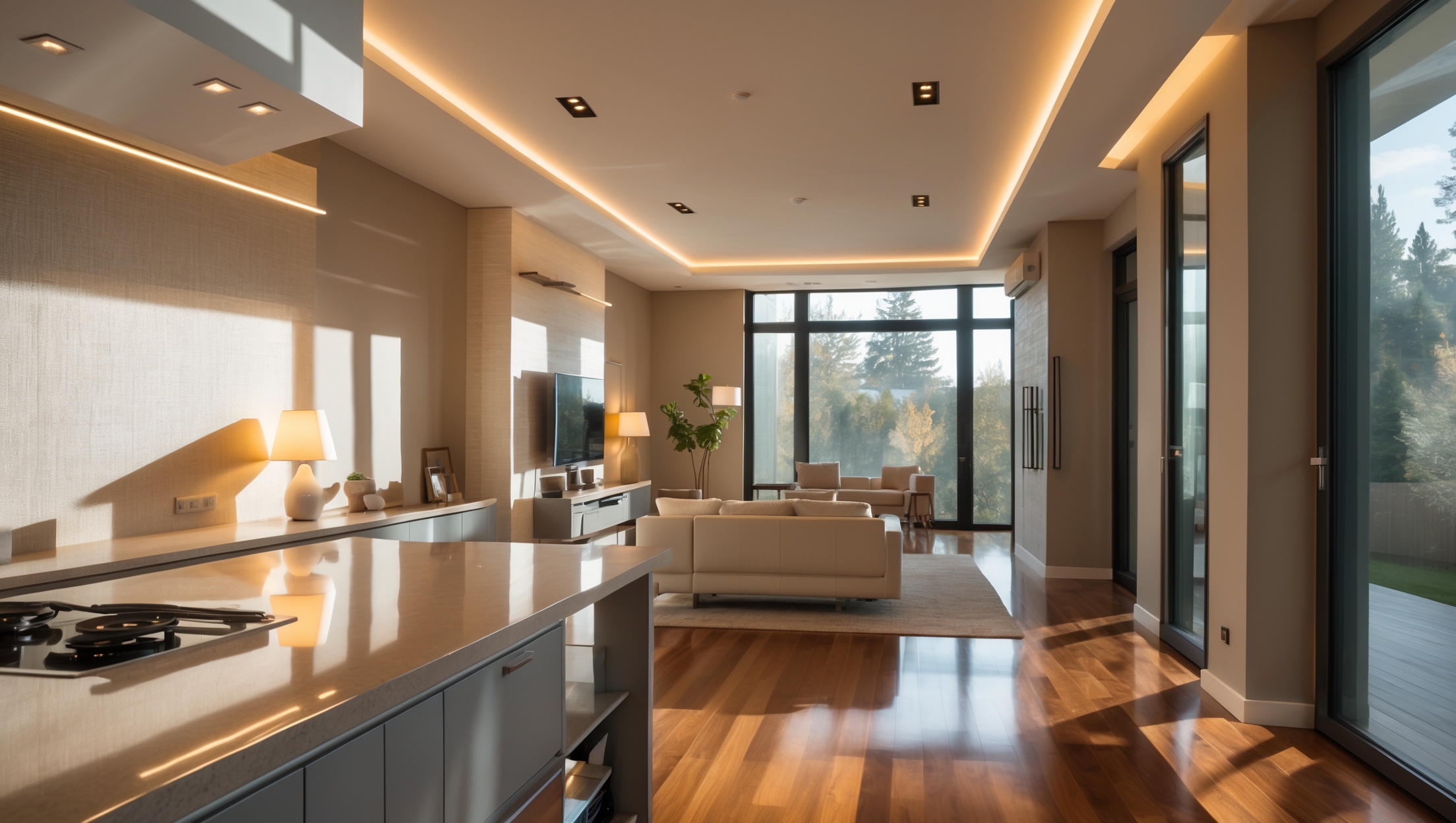
Introduction: Why Room-by-Room Lighting Planning Matters
Lighting is one of the most powerful tools for transforming your home’s comfort, safety, and energy efficiency. While many homeowners know to swap out old bulbs for LEDs, few realize that a truly energy-efficient home requires a strategic, room-by-room lighting plan. This approach does more than cut electric bills—it enhances functionality, creates ambiance, and prevents the common pitfalls of under- or over-lighting. Whether you’re building new, renovating, or simply seeking to upgrade, understanding how to tailor lighting solutions to each room’s purpose can have a huge impact on your comfort and your wallet. In this detailed guide, we’ll walk you through practical steps and considerations to develop an energy-efficient lighting plan for every space, from kitchens to bedrooms, including fixture selection, placement tips, controls, and accurate cost breakdowns. Let’s shed light on smarter illumination, one room at a time.
Understanding the Basics: Key Principles of Efficient Home Lighting
Layered Lighting: The Foundation
Effective lighting design employs three layers:
- Ambient lighting: General illumination, usually from ceiling fixtures or recessed lights.
- Task lighting: Focused light for activities like reading, cooking, or grooming.
- Accent lighting: Highlights artwork, architectural features, or provides a decorative touch.
Balancing these layers with energy efficiency in mind ensures both functionality and savings.
Lumens, Watts, and Color Temperature
- Lumens: Measure of brightness. More lumens = more light. For energy efficiency, choose higher lumens per watt.
- Watts: Measure of energy usage. Modern LEDs provide the same brightness as traditional bulbs at a fraction of the wattage.
- Color Temperature: Measured in Kelvins (K). “Warm” whites (2700-3000K) suit living spaces; “cool” whites (3500-5000K) are better for task-oriented areas.
Lighting Controls and Automation
Smart switches, dimmers, motion sensors, and timers help reduce waste and optimize comfort. Choosing the right controls for each room will further enhance efficiency.
Room-by-Room Lighting Strategies
Living Room
The living room is multi-functional—used for relaxing, reading, entertaining, and more. Energy-efficient lighting here means flexibility and control.
- Ambient: Use dimmable LED ceiling fixtures or a combination of recessed lights. Opt for 2700-3000K bulbs for a cozy feel. Aim for 1,500-3,000 lumens total.
- Task: Floor and table lamps with LED bulbs can be moved as needed. Adjustable-arm lamps are ideal for reading nooks.
- Accent: Use LED strip lighting on bookshelves or spotlights for artwork. LEDs are ideal for low-heat, long-lasting accent lighting.
Cost Insights: Expect to spend $200–$500 on quality LED fixtures and bulbs for a medium-sized living room, with potential for higher upfront costs if adding smart controls.
Kitchen
Kitchens demand bright, focused lighting for safety and efficiency, but also benefit from ambiance for entertaining.
- Ambient: Install high-output LED recessed lights or flush-mount fixtures (3500-4500K, 3,000–6,000 lumens total). Space fixtures for even coverage.
- Task: Under-cabinet LED strips or puck lights illuminate counters and prep areas. Pendant LEDs over islands provide targeted lighting and style.
- Accent: Toe-kick or cabinet-top LED strips add dimension and safety for nighttime navigation.
Controls: Dimmer switches and occupancy sensors help conserve energy during off-peak hours.
Cost Insights: Full LED upgrades typically range $350–$900, depending on kitchen size and complexity.
Bedroom
Bedrooms require soft, relaxing light with the option for brighter illumination when needed.
- Ambient: LED ceiling fixtures or dimmable flush mounts (2700K, 1,000–2,000 lumens).
- Task: Bedside table or wall-mounted reading lamps with directional LED bulbs.
- Accent: LED strip lights behind headboards or inside closets for gentle, indirect lighting.
Smart tip: Use smart bulbs or plug-in timers to automate morning wake-up and bedtime routines.
Cost Insights: $100–$300 for quality LED upgrades; add $50–$150 for smart controls or dimmers.
Bathroom
Bathrooms need bright, shadow-free lighting for grooming, but not harshness.
- Ambient: Moisture-rated LED ceiling or vanity fixtures (3000-4000K, 1,500–3,000 lumens total).
- Task: Vertical LED sconces on both sides of the mirror for even facial illumination.
- Accent: Waterproof LED strips under vanities for subtle night lighting.
Controls: Motion sensors or timers for exhaust fans and lights can reduce energy waste.
Cost Insights: $150–$400 for full LED retrofit; higher for premium fixtures.
Home Office
Visual comfort is essential for productivity. Efficient lighting reduces eye strain and energy costs.
- Ambient: Overhead LED fixture (3500–4000K, 1,500–3,000 lumens).
- Task: Adjustable LED desk lamp with high color rendering index (CRI 90+).
- Accent: Wall-mounted LED uplights for decorative effect.
Controls: Daylight sensors or smart plugs can automatically adjust lighting based on natural light levels.
Cost Insights: $100–$350 for a well-lit, efficient workspace.
Hallways and Staircases
These areas are often overlooked but crucial for safety and navigation.
- Ambient: LED flush mounts or wall sconces (2700K, 800–1,500 lumens).
- Accent: LED step lights or motion-activated strips for stairs add safety at night.
Controls: Motion sensors are highly recommended to ensure lights are only on when needed.
Cost Insights: $80–$250 per hallway, depending on fixture quality and controls.
Outdoor Spaces (Porch, Patio & Pathways)
Exterior lighting increases security, safety, and curb appeal, but can be a major source of wasted energy if not designed efficiently.
- Ambient: LED wall lanterns or ceiling fixtures (3000K, 1,000–2,000 lumens).
- Task: Focused LED floodlights for driveways or entrances.
- Accent: Solar-powered LED path lights or spotlights for landscaping features.
Controls: Photocell sensors (dusk-to-dawn), motion detectors, and smart timers are essential for minimizing unnecessary use.
Cost Insights: $150–$500 per zone for high-quality, weatherproof LED solutions. Solar options can reduce wiring and installation costs.
Fixture Selection: What to Look for in Efficient Lighting
LEDs: The Gold Standard
When it comes to efficiency, LEDs outperform every other option. Look for Energy Star-certified bulbs and fixtures, which are independently tested for performance and longevity.
- Wattage: Choose fixtures that provide required lumens with the lowest wattage.
- Dimmability: Not all LEDs are dimmable; verify compatibility with your controls.
- CRI: Higher CRI (80+) ensures true color representation, important for kitchens, bathrooms, and offices.
Fixture Types and Placement Tips
- Recessed lights: Space 4–6 feet apart for even coverage; use adjustable trims for accenting.
- Wall sconces: Mount at eye level (about 5.5–6 feet from the floor) for balanced illumination.
- Pendants: Hang 28–36 inches above tables or counters for effective task lighting.
- Under-cabinet: Install at the front edge of cabinetry to reduce shadows on counters.
- Strip and tape lights: Great for indirect, low-wattage accenting in coves, shelves, and closets.
Fixture Lifespan and Maintenance
LEDs typically last 15,000–50,000 hours—10–20 years of normal use. Select fixtures with easily replaceable bulbs or integrated LEDs backed by solid warranties. Periodically dust and clean fixtures to retain brightness and efficiency.
Smart Controls and Automation: Maximize Efficiency and Comfort
Types of Controls
- Dimmers: Adjust light levels to match activities and mood, reducing energy usage.
- Motion sensors: Automatically turn lights on/off based on occupancy. Ideal for hallways, bathrooms, and garages.
- Timers: Ensure lights are off during the day or after a set period.
- Daylight sensors: Automatically dim or turn off lights when sufficient natural light is present.
- Smart switches and bulbs: Control lights remotely via smartphone or voice assistant; schedule or automate based on routines.
Integration Tips
- Choose controls compatible with existing fixtures and wiring.
- Group lights by zone or activity for easy adjustment.
- Use platforms like Google Home, Amazon Alexa, or Apple HomeKit for unified control.
- Prioritize rooms with the highest usage or where lights are often left on.
Cost Considerations
- Basic dimmers: $15–$40 each (plus installation if needed).
- Smart switches: $25–$60 each.
- Smart bulbs: $10–$30 each.
- Motion sensors/timers: $20–$50 each.
Installation may require an electrician, especially if new wiring is needed. However, plug-and-play smart bulbs and plug-in controls are easy DIY upgrades.
Budgeting for an Energy-Efficient Lighting Plan
Upfront Costs vs. Long-Term Savings
While efficient lighting often costs more upfront, the payback period is usually short thanks to lower energy bills and fewer bulb replacements. Here’s a rough breakdown for a typical 3-bedroom, 2-bath home:
- LED bulbs and fixtures: $500–$1,200 (whole home)
- Smart controls: $200–$600 (select rooms/zones)
- Installation (if needed): $200–$800 (varies by scope)
Annual energy savings: $100–$250, depending on previous usage and local rates.
Payback period: 2–5 years, often less if replacing old incandescent or halogen systems.
Cost-Saving Tips
- Upgrade most-used rooms first (kitchen, living room, exterior).
- Look for utility rebates or incentives for Energy Star lighting.
- Consider DIY installation for smart bulbs and plug-in controls.
- Buy LEDs in multipacks for bulk discounts.
- Phase upgrades over time to spread out expenses.
Common Home Lighting Efficiency Mistakes (and How to Avoid Them)
- Overlighting: Using more light than needed wastes energy and creates glare. Stick to recommended lumen levels for each space.
- Poor fixture placement: Placing lights too close together or too far apart leads to uneven illumination and inefficiency.
- Ignoring controls: Skipping dimmers, sensors, or timers means higher bills and wasted potential.
- Mismatched color temperatures: Mixing warm and cool bulbs in the same space can feel uncomfortable and disjointed.
- Neglecting maintenance: Dusty or yellowed fixtures reduce output and efficiency.
Planning ahead and following the guidelines above helps ensure your lighting upgrade pays off in both comfort and efficiency.
Step-by-Step: How to Develop Your Lighting Plan
- Assess current lighting: Walk through each room at night. Note any dark spots, glare, or wasted light.
- Determine needs by activity: List how each room is used and what lighting is required (reading, cooking, relaxing, etc.).
- Calculate required lumens: Use online calculators or follow these guidelines:
- Living room: 10–20 lumens/sq ft
- Kitchen: 30–40 lumens/sq ft
- Bedroom: 10–20 lumens/sq ft
- Bathroom: 70–80 lumens/sq ft (vanity)
- Select fixtures and bulbs: Prioritize Energy Star-rated LEDs, matching color temperature to room function.
- Plan controls: Choose dimmers, timers, or smart devices as needed for flexibility and efficiency.
- Set a budget: Price out products and installation. Look for rebates where available.
- Install and test: Upgrade in phases, starting with high-impact rooms. Test controls and adjust placement for best results.
Conclusion: Illuminate Your Home Efficiently and Effectively
Creating an energy-efficient lighting plan is more than swapping bulbs—it’s about understanding how each room functions and tailoring illumination to meet those needs without waste. By layering ambient, task, and accent lighting, selecting high-quality LED fixtures, integrating smart controls, and carefully budgeting for upgrades, you’ll achieve a home that’s both brilliantly lit and cost-effective. The benefits extend beyond lower energy bills: improved safety, enhanced comfort, and a more inviting atmosphere for you and your guests.
Whether you take a phased approach or embark on a whole-home upgrade, the strategies outlined here will help you make informed choices. Don’t overlook the details—placement, color temperature, and controls all play crucial roles. Remember, the most efficient lighting is the one that delivers the right amount of light, only when and where you need it. With careful planning, a modest investment, and attention to your family’s unique routines, you can enjoy a brighter, greener future—one room at a time.
Could you clarify how to estimate the number of lumens needed for different rooms, like bedrooms versus kitchens? I’m confused about how to balance brightness with energy savings without making the space feel too dim or too harsh.
To estimate needed lumens, multiply the room’s square footage by a recommended lumens-per-square-foot value. Bedrooms typically need 10–20 lumens per square foot for a comfortable, relaxing atmosphere. Kitchens, where tasks demand more light, usually require 30–40 lumens per square foot. Use LEDs for efficiency and consider layering ambient, task, and accent lighting, so you can adjust brightness as needed without wasting energy or making the room uncomfortably bright.
I noticed you talked about accurate cost breakdowns—can you give an idea of what the average upfront cost might be to upgrade all the lighting in a mid-sized home to LED with smart controls, and how long it typically takes to recoup that investment through energy savings?
Upgrading all lighting in a mid-sized home to LED with smart controls typically costs between $1,500 and $3,500 upfront, depending on fixture choices and the number of rooms. Most homeowners see noticeable energy savings, and the investment is often recouped in about 2 to 4 years through lower electricity bills, especially if you replace older incandescent or halogen bulbs.
You mentioned using different color temperatures for living spaces versus task areas. How do you recommend mixing warm and cool lights in an open-plan area like a combined kitchen and family room so it feels cohesive?
In an open-plan space like a combined kitchen and family room, it helps to use warm white lights (around 2700K–3000K) in the family or relaxation zones, and cooler white lights (3500K–4000K) in kitchen or work areas. To keep the look cohesive, choose fixtures in similar styles or finishes, and avoid abrupt shifts by using dimmers or blending transitional areas with a neutral color temperature (like 3000K–3500K) so the difference is subtle but functional.
The article mentions choosing higher lumens per watt for energy efficiency—can you suggest a simple way to compare LED bulb choices at the store to make sure I’m picking the best option for both light quality and electricity savings?
When shopping for LED bulbs, check the package for both lumens (brightness) and watts (energy used). To compare efficiency, divide lumens by watts—higher numbers mean better efficiency. For good light quality, look for bulbs with a color rendering index (CRI) of 80 or above and choose a color temperature (measured in Kelvins) that matches your preference, like warm (2700K–3000K) or cool (4000K–5000K).
You mentioned that cool white LEDs (3500-5000K) are better for task-oriented areas like kitchens. Have you found that switching color temperature between rooms noticeably impacts your energy savings, or is it mainly about comfort and preference at that point?
Switching color temperature between rooms mainly affects comfort and the overall atmosphere rather than energy savings. The energy use of an LED bulb is determined by its wattage and efficiency, not its color temperature. So, choosing cool or warm white LEDs won’t noticeably impact your power bill—focus on what feels best for each space while using efficient bulbs throughout your home.
Could you give more detail about the actual cost breakdown when switching an entire home to LEDs and smart controls? I want to estimate the upfront investment versus monthly savings, especially for someone upgrading a standard single-family house in the US.
Switching a typical single-family home (with about 40–50 light fixtures) to LEDs usually costs between $100 to $300 for quality bulbs, depending on brand and features. Adding smart controls like dimmers or switches can add another $30–$100 per room, or $400–$1,000 for the whole house. Upfront investment can range from $500 to $1,300. Monthly electricity savings typically reach $10–$25, so most homeowners see payback within 2–4 years, depending on usage and local rates.
When planning lighting for my small retail store, should I focus more on task lighting or accent lighting to create an inviting yet energy-efficient atmosphere? The article mentions layering, but I’m unsure which layers matter most for a commercial setting.
For a small retail store, a good balance is important, but task lighting should be your main focus since it ensures products and key areas are well-lit for customers and staff. Accent lighting can then be added to highlight displays and create an inviting atmosphere. Layering both, but prioritizing task lighting, will help you achieve energy efficiency and a welcoming environment.
You mention including accurate cost breakdowns for energy-efficient lighting plans. Could you provide a ballpark estimate for upgrading an average-sized home using the strategies in your article, including smart controls and fixture changes?
Upgrading an average-sized home (about 2,000 square feet) with energy-efficient bulbs, smart controls, and updated fixtures typically costs between $1,000 and $3,000. Most of this goes toward quality LED bulbs, smart switches or dimmers, and replacing older fixtures in key areas. The upfront investment varies based on fixture style and smart features, but you can expect significant energy savings over time.
When choosing between smart switches and traditional dimmers for controlling LED lights, are there specific compatibility or reliability issues to watch out for? Any advice on which option gives better long-term energy savings in practice?
When choosing between smart switches and traditional dimmers for LED lights, ensure that your LED bulbs are labeled as dimmable and compatible with the specific dimmer or smart switch you select. Some traditional dimmers may cause flickering or buzzing with certain LEDs. Smart switches can offer more precise control, automation, and energy monitoring, which often leads to better long-term energy savings. If you want flexibility and future-proofing, smart switches are usually the better investment, provided all components are compatible.
You talk about accurate cost breakdowns and fixture selection for an energy-efficient plan. Could you give an example of the expected upfront costs and estimated yearly savings if I swap out old incandescent fixtures for LED options in a three-bedroom home?
Swapping out old incandescent fixtures for LEDs in a three-bedroom home typically costs between $150 and $400 upfront, depending on how many fixtures you replace and the types of LED bulbs selected. On average, you can expect to save about $100 to $150 per year on your energy bill, since LEDs use up to 80% less energy and last much longer than incandescents. Over several years, these savings really add up.
When planning a lighting update, how can I estimate the actual cost savings of moving to LEDs and smart controls versus just upgrading to LEDs alone? Is there a typical payback period for adding automation features on top of efficient bulbs?
To estimate your cost savings, compare your current energy use with the projected use for LEDs alone and then for LEDs plus smart controls. Smart controls (like dimmers or motion sensors) can cut lighting energy use by an extra 20–30% beyond LEDs. The payback period for smart automation features varies, but is often around 2–4 years, depending on how much you use them and local energy costs.
The article talks a lot about balancing ambient, task, and accent lighting for each room. If I have a small apartment with mostly open-concept spaces, how would you recommend applying those layers without making the space feel too bright or cluttered?
In an open-concept small apartment, choose multi-functional fixtures that provide both ambient and task lighting, like dimmable ceiling lights or track lighting. Use floor or table lamps for accent lighting in specific zones, such as near a reading chair or artwork. Stick to a consistent style and limit the number of fixtures to avoid clutter, and always opt for dimmers to adjust brightness based on your needs and time of day.
For a homeowner on a tight budget, do you have any insights into the average upfront cost difference between basic LED bulb swaps versus upgrading to smart switches and dimmers as suggested in the article?
Swapping basic bulbs for LEDs is usually the most affordable step, costing about $2–$6 per bulb. In contrast, upgrading to smart switches and dimmers typically ranges from $20–$50 per device, plus installation if you hire an electrician. If budget is a concern, starting with LED bulbs gives you immediate savings, while smart controls offer added convenience and efficiency but at a higher initial cost.
When creating a room-by-room lighting plan as described, how do the upfront costs of upgrading to efficient fixtures and controls typically break down for an average-sized home in the US? Are there common surprises in the budget homeowners should watch out for during the process?
For an average-sized US home, upgrading to energy-efficient fixtures and controls can cost between $1,500 and $3,500, depending on fixture quality and the number of rooms. Labor can add to the total, especially if wiring or new controls are involved. Homeowners are sometimes surprised by the costs of dimmers, smart controls, or specialty bulbs, as well as any necessary electrical upgrades if the home is older. It’s wise to include a buffer in your budget for these unexpected expenses.
You talked about using layered lighting—ambient, task, and accent—but I’m not sure how to figure out exactly how much lighting each room actually needs. Are there any simple calculations or tools to help avoid over-lighting or under-lighting when making a plan?
A useful way to estimate your lighting needs is by using lumens, which measure light output. Start by looking up recommended lumens per square foot for each room type (for example, living rooms usually need around 10-20 lumens per square foot, kitchens may need 70-100). Multiply the room’s square footage by the guideline to get your target lumens. There are also free online lighting calculators where you input your room size and purpose, which can help fine-tune your plan and balance the layers.
You mention using different color temperatures for various rooms—how important is it to stick to the recommended ranges for spaces like bedrooms versus home offices? Will it really make a noticeable difference in comfort or productivity?
Sticking to the recommended color temperatures does make a real difference. Warmer tones (around 2700K–3000K) in bedrooms promote relaxation and better sleep, while cooler tones (4000K–5000K) in home offices boost alertness and focus. Using the right color temperature helps set the right mood and can noticeably improve comfort and productivity over time.
I’m trying to figure out how to pick the right color temperature for each room like you mentioned. Is there ever a situation where using a cooler white in living areas would make sense, or should I always stick to warm whites for comfort?
Using cooler white lighting (4000K–5000K) in living areas can make sense if you want a more energizing or modern feel, or if the space is used for tasks like reading or hobbies that benefit from brighter, crisper light. However, most people find warm whites (2700K–3000K) more inviting and relaxing for living rooms. If your living area doubles as a workspace or you prefer a contemporary aesthetic, cooler whites can work well. It really depends on your preferences and how you use the room.
When it comes to color temperature, you suggest cooler whites for task areas and warmer for living spaces. For a shop that doubles as both retail and workshop, do you recommend using a mix of color temperatures or sticking to one throughout each room?
For a space that serves both as retail and a workshop, using a mix of color temperatures can be very effective. Cooler white lights (4000K–5000K) are ideal over workstations for clarity and focus, while warmer whites (2700K–3500K) create a welcoming atmosphere in retail areas. You might use separate lighting zones or fixtures, allowing you to tailor the ambiance to each activity.
The guide talks about accurate cost breakdowns for energy-efficient lighting, but I’m wondering how much I should realistically budget to update all the lighting in a three-bedroom house. Are there any cost-saving strategies besides just swapping out bulbs for LEDs?
For a three-bedroom house, updating to energy-efficient lighting can range from $300 to $1,000 or more, depending on fixture choices and whether you hire an electrician. Besides switching to LEDs, consider using dimmer switches, motion sensors, and smart timers to reduce energy use. Replacing old fixtures with ENERGY STAR-rated options and installing task lighting can also save costs in the long run.
When choosing the color temperature for different rooms, does it make a noticeable difference in comfort or energy efficiency if I mix ‘warm’ and ‘cool’ lights within the same space, like in a kitchen with both task and ambient lighting?
Mixing warm and cool lights in the same space, such as a kitchen, can noticeably impact comfort by creating different moods or helping you perform specific tasks better. Warm lights tend to make a space feel cozier, while cool lights enhance alertness and visibility. However, the choice of color temperature doesn’t significantly affect energy efficiency—efficiency mostly depends on the bulb type and wattage. So, mixing them is fine for comfort and function, as long as you use energy-efficient bulbs throughout.
Could you give some guidance on how to estimate the upfront cost versus long-term savings when swapping out traditional bulbs for LEDs in larger spaces like open-concept living rooms? The article mentions a cost breakdown, but I’m unsure how to calculate the payback period in these situations.
To estimate the payback period, first calculate the total upfront cost of replacing all traditional bulbs with LEDs in your living room. Next, determine your yearly energy savings by finding the difference in wattage between old and new bulbs, multiplying by usage hours and your electricity rate. Divide the upfront cost by the annual savings to find how many years it takes for the LEDs to pay for themselves. This method helps you compare initial investment with long-term benefits.
I get the idea of using different types of lighting layers like ambient, task, and accent, but how do you figure out how many lumens you actually need for each room? Are there any quick rules or formulas you recommend?
A simple guideline is to multiply your room’s square footage by a lumen factor: for living rooms, use about 10-20 lumens per square foot; kitchens and bathrooms need more, around 70-80 lumens per square foot. Measure your room, calculate the total area, and multiply by the appropriate number. This estimate helps you choose the right bulbs and fixtures to achieve balanced, effective lighting for each space.
When you talk about accurate cost breakdowns for upgrading to an energy-efficient lighting plan, do you have a ballpark estimate of initial costs versus long-term savings for an average-size home? I’m trying to figure out how long it typically takes to see payback on the investment.
For an average-size home, upgrading to energy-efficient LED lighting usually costs between $100 and $300 upfront if you replace all bulbs. The typical savings on your electricity bill can be $75 to $150 per year, depending on usage. Most homeowners see a full payback within 1 to 3 years, with continued savings after that.
When developing a room-by-room lighting plan, how do you recommend balancing ambient, task, and accent lighting in an open-concept layout so that energy savings are maximized without sacrificing functionality for different areas?
In an open-concept layout, zone the space by layering ambient lighting for general illumination, then add targeted task lighting only where needed, such as over workspaces or reading areas. Accent lighting should highlight features selectively to avoid excess use. Use dimmers and LED bulbs throughout so you can adjust brightness based on activity and time of day, which helps save energy while keeping each area functional.
When it comes to fixture placement, is there a general guideline for how far apart to install recessed lights in a kitchen to avoid both dark spots and wasted overlap? I want to make sure I’m getting the most efficient coverage without over-lighting.
For kitchens, a common guideline is to space recessed lights about 4 to 5 feet apart, measured from the center of one fixture to the next. Make sure each light is around 2 to 3 feet away from the walls to reduce shadows. This layout helps ensure even, efficient coverage and avoids both dark spots and excessive overlap.
The article mentions accurate cost breakdowns for implementing a room-by-room lighting plan. Are there any specific estimates or ranges for upfront costs and long-term savings, especially when switching all fixtures to LEDs and adding smart controls?
The article provides some general figures: switching all fixtures to LEDs typically costs between $4 and $15 per bulb, with smart controls ranging from $15 to $60 per switch or bulb. The upfront investment for a whole home can vary widely but often totals several hundred dollars. In terms of savings, households can expect to reduce lighting energy use by up to 75%, with payback periods ranging from 1 to 3 years depending on usage and local energy rates.
When planning lighting for each room, is it better to prioritize fixture placement first or select the type of bulbs and controls before deciding where everything should go? I want to make sure I avoid wasting money on unnecessary rewiring or redundant light sources.
It’s most effective to focus on fixture placement first, considering how each room is used and where light is needed most. Once you know where fixtures should go, you can then select the most efficient bulbs and controls for each location. This approach helps avoid extra rewiring and ensures every light source serves a clear purpose, saving you money and energy in the long run.
You talked about layering ambient, task, and accent lighting for energy efficiency, but I’m wondering if focusing on just ambient and task lighting would still work if I’m on a tight budget. Is accent lighting really necessary for most rooms?
Focusing on just ambient and task lighting is perfectly fine if you’re on a tight budget. These two layers will cover most practical needs, ensuring spaces are well-lit and functional. Accent lighting is more about enhancing visual interest or highlighting specific features, so it’s not essential for most rooms. You can always add accent lighting later if you want to enhance the atmosphere as your budget allows.
The article mentioned avoiding under- or over-lighting by focusing on a room-by-room strategy. What are some signs that a room is over-lit or under-lit, and are there easy fixes for those situations without having to rewire everything?
Signs of over-lit rooms include glare, harsh shadows, and lights feeling uncomfortably bright, while under-lit rooms often feel gloomy or make it hard to see tasks clearly. Easy fixes include switching to lower wattage bulbs, adding dimmer switches, or using lamps and task lighting to supplement or reduce light without rewiring. Rearranging furniture to maximize available light can also help.
You talked about layering ambient, task, and accent lighting for functionality and efficiency. Are there any specific recommendations for choosing affordable fixtures or brands that combine these layers well without breaking a student budget?
For a student budget, look for multipurpose fixtures like LED floor lamps with adjustable heads, which can provide both ambient and task lighting. Brands such as IKEA, Mainstays, and Philips offer affordable options that let you layer light effectively. Clip-on desk lamps or battery-powered puck lights are great for accent lighting without a big investment. Shopping during sales or at secondhand stores can also help you find good deals.
The article notes that color temperature can impact the suitability of lighting in different rooms. Are there any best practices for selecting dimmable or tunable LEDs if a room is used for multiple purposes, like a home office that doubles as a guest room?
For rooms with multiple uses, like a home office that also serves as a guest room, dimmable or tunable LEDs are a smart choice. Select fixtures that offer both brightness control and adjustable color temperature, so you can have cooler, energizing light for work and warmer, relaxing tones for guests. Look for LEDs compatible with quality dimmer switches or smart controls, as this gives you easy flexibility for different activities.
I saw you recommend different color temperatures for different rooms, like warm white for living spaces and cool white for task areas. If I use a room for multiple purposes, like a home office that’s also a guest room, what’s the best approach for choosing bulbs?
For multipurpose rooms like a home office that doubles as a guest room, consider using adjustable or tunable white LED bulbs. These let you switch between warm and cool color temperatures depending on the activity. Alternatively, layer your lighting with both ambient fixtures (in warm white) and task lights (in cool white), so you can choose the most comfortable and functional lighting for each situation.
If I’m updating my lighting room by room instead of all at once, is there a certain order you suggest tackling spaces in for the most impact on energy savings and comfort? For example, should I start with kitchens or living areas?
When updating lighting room by room, start with the spaces you use most and where lights are on for long periods—typically kitchens, living rooms, and bathrooms. These areas usually have the highest energy use and will give you noticeable savings and comfort improvements right away. After that, move on to bedrooms, hallways, and other less-used spaces.
Could you share some guidance on how to balance layered lighting for open-concept spaces where living, dining, and kitchen areas flow together? I’m worried about over-lighting or having mismatched color temperatures in different zones.
For open-concept spaces, try using a mix of ambient, task, and accent lighting that flows visually between zones. Keep the color temperature consistent across all fixtures—choosing something around 2700K to 3000K ensures a cohesive look. Use dimmers to adjust light intensity in each area and avoid over-lighting. Pendant lights over the kitchen island, a chandelier or statement fixture in the dining area, and layered lamps in the living space can help designate each zone while keeping the overall design unified.
The article mentions accurate cost breakdowns for creating an energy-efficient lighting plan. Could you give a ballpark estimate for upgrading an average-sized living room with quality LED fixtures and smart controls, including both materials and typical installation costs in the US?
Upgrading an average-sized living room with quality LED fixtures and smart controls in the US generally costs between $400 and $1,000. Materials (LED fixtures and smart switches) usually account for $200 to $600, while professional installation typically ranges from $200 to $400, depending on local labor rates and the complexity of your existing wiring.
For someone renovating an older storefront, are there pitfalls to watch out for when replacing outdated fixtures with modern LEDs, especially regarding compatibility with dimmers or smart lighting controls?
When renovating an older storefront, watch for compatibility issues between new LED fixtures and existing dimmer switches or smart controls. Many older dimmers do not work well with LEDs, causing flickering or buzzing. Make sure to choose LED-compatible dimmers and check if your smart lighting controls are designed for the specific LEDs you plan to install. Upgrading wiring or switches may be needed in some cases for full functionality.
I noticed you mentioned choosing higher lumens per watt for energy efficiency, but how do I strike the right balance between brightness and comfort in a bedroom or living room, especially if I want to avoid harsh lighting?
To balance energy efficiency and comfort in your bedroom or living room, look for LED bulbs with high lumens per watt, but choose a lower total lumen output for a softer effect. Opt for bulbs labeled as warm white (around 2700K–3000K) to create a cozy atmosphere. Consider using dimmable lights or layered lighting—like combining floor lamps, table lamps, and overhead fixtures—so you can adjust brightness based on your needs and avoid harsh lighting.
The article mentions balancing ambient, task, and accent lighting for each room, but I’m curious how to decide on the ideal lumens for different areas like kitchens versus bedrooms. Are there recommended lumen ranges for each space to avoid over- or under-lighting?
For kitchens, aim for 3000–4000 lumens overall, since these spaces need brighter, more focused lighting for tasks like cooking. Bedrooms typically need softer lighting, around 2000–4000 lumens, depending on room size and preference for reading or ambiance. Living rooms are comfortable at 1500–3000 lumens. Adjust within these ranges based on your room’s color, size, and how much natural light it receives.
If I want to start upgrading my lighting system room by room instead of all at once, is there an order you recommend? For example, should I prioritize kitchens and workspaces before bedrooms to see the most immediate benefits?
Prioritizing kitchens and workspaces is a smart approach, as these areas usually consume more energy and benefit most from quality lighting. Upgrading them first can lead to noticeable energy savings and improved functionality right away. Bedrooms and living areas can follow, since their lighting needs are generally less demanding. This step-by-step method helps spread out costs and maximizes immediate benefits.
I’m interested in automating my lighting, but I’m not sure what kind of smart switches or dimmers work best with LEDs. Are there compatibility issues I should look out for when choosing controls for an energy-efficient setup?
When automating lighting with LEDs, it’s important to choose smart switches or dimmers specifically labeled as LED-compatible. Some older dimmers can cause flickering or buzzing with LEDs, so look for options designed for low-wattage loads. Make sure your bulbs are also dimmable if you want that feature. Always check product details to ensure compatibility, and consider consulting with a lighting professional if you have unique fixtures or a complex setup.
Is there a rule of thumb for how many lumens per square foot I should aim for in each type of room? I want to make sure I am not over-lighting or under-lighting, especially since the article mentions balancing brightness and energy efficiency.
Yes, there are general guidelines you can follow for lumens per square foot, also known as foot-candles, depending on the room’s purpose. Living rooms and bedrooms typically need around 10–20 lumens per square foot. Kitchens and bathrooms, where tasks require more visibility, benefit from 70–100 lumens per square foot. These ranges help you achieve comfortable, functional lighting without using more energy than necessary.
You mention choosing the right color temperature for different rooms, like warm white for living spaces and cool white for task areas. Have you found any specific brands or fixtures that make it easier to adjust color temperature, or should I be looking for tunable LED bulbs for more flexibility?
Tunable LED bulbs are a great choice if you want flexibility to adjust color temperature for different needs and moods. Many reputable brands like Philips, GE, and LIFX offer bulbs and smart fixtures with adjustable white settings. These allow you to switch between warm and cool tones easily, often with a remote or app, making it simple to customize lighting in any room.
You talk about layering ambient, task, and accent lighting for efficiency. If I have to prioritize due to budget limits, which of these lighting layers tends to have the most impact on functionality and energy use, and is it better to upgrade bulbs first or invest in lighting controls?
If you need to prioritize, focus first on ambient lighting, as it provides overall illumination and affects the functionality of your space the most. Upgrading to energy-efficient bulbs like LEDs throughout your ambient fixtures typically results in the biggest impact on energy savings. If your budget allows, consider adding basic lighting controls such as dimmers next, as they can further improve efficiency by letting you adjust light levels to your needs.
When considering upgrading to LEDs and using smart switches or dimmers as you suggest, how significant are the upfront costs compared to the potential energy savings over time? I’m trying to figure out how long it might take to see a return on investment for a whole-house update.
Upgrading to LEDs and installing smart switches or dimmers typically involves moderate upfront costs—LED bulbs are more expensive than traditional ones, and smart controls add to the initial investment. However, LEDs use much less energy and last longer, while smart controls help optimize usage further. Most homeowners see a return on investment in 2 to 4 years through lower electricity bills, depending on home size, lighting habits, and local energy rates.
The article mentions that choosing higher lumens per watt is key for energy efficiency. Can you explain how I can compare lumens and watts when shopping for LEDs, and does choosing a cooler or warmer color temperature affect energy savings at all?
When shopping for LEDs, compare the lumens (brightness) each bulb provides relative to its wattage—more lumens per watt means greater efficiency. Look for this info on the packaging. For example, a bulb offering 800 lumens at 8 watts is more efficient than one offering 800 lumens at 10 watts. The color temperature (cool or warm) does not significantly affect energy usage; efficiency is determined by lumens per watt, regardless of whether the bulb is warm or cool in color.
The article mentions both fixture selection and accurate cost breakdowns. If I already have existing fixtures in most rooms, is it more cost-effective to replace just the bulbs with LEDs, or is upgrading the fixtures themselves necessary for true energy savings?
If your current fixtures are compatible with LED bulbs, simply replacing the old bulbs with LEDs will give you most of the energy savings at a lower upfront cost. Upgrading entire fixtures is usually only necessary if your existing ones are outdated, incompatible with LEDs, or you want features like dimming or smart controls. In most cases, starting with just LED bulbs is the most cost-effective step.
I noticed you mentioned using different color temperatures for various rooms, like warm whites for living spaces and cool whites for task areas. Could you give more specific examples of which areas in a home benefit most from each type, and what happens if I pick the wrong one?
Absolutely! Warm white lighting (around 2700K–3000K) is best for living rooms, bedrooms, and dining areas because it creates a cozy, relaxing feel. Cool white (3500K–4100K) or daylight (5000K–6500K) works well in kitchens, bathrooms, home offices, and laundry rooms for better visibility and focus. Choosing the wrong temperature can make a room feel uncomfortable—cool light in bedrooms can seem harsh, while warm light in task areas can make it harder to see clearly.
You mention accurate cost breakdowns in the article. Do you have any ballpark estimates on how much a whole-home lighting upgrade might cost using LEDs and smart controls, especially for someone who owns an older house with existing fixtures?
For an older home upgrading to energy-efficient LEDs and smart controls, overall costs can range from $2,000 to $6,000 or more, depending on the number of rooms and the complexity of rewiring or fixture replacements. LED bulbs alone are typically $2–$10 each, while smart switches or dimmers can be $30–$70 per unit. Labor for installation may increase the total if rewiring or fixture adjustments are needed in an older house.
You mention using warm whites for living spaces and cool whites for task-oriented areas—do you have any recommendations on how to balance color temperature in multipurpose rooms like open-concept kitchens that flow into living rooms?
In open-concept spaces that serve multiple functions, consider layering lighting to balance color temperatures. Use warm white bulbs (2700K–3000K) for ambient lighting to create a cozy atmosphere, then add cooler white task lighting (3500K–4000K) over kitchen work areas or islands. Dimmable fixtures or smart bulbs can help you adjust lighting based on activities, making the space flexible and comfortable.
When you mention the importance of layering ambient, task, and accent lighting in each room, do you have any suggestions for prioritizing which layer to invest in first if someone has a limited budget? Is it better to focus on ambient lighting before adding extras like accent lights?
If your budget is limited, prioritizing ambient lighting is usually the best starting point since it provides general illumination for safe and comfortable movement in each room. Once you have effective ambient lighting, you can gradually add task lighting where you need focused light, such as reading or cooking areas. Accent lighting can come later as your budget allows, since it mainly serves decorative purposes.
In your breakdown of lumen levels and color temperatures, are there recommended guidelines or formulas for figuring out how many lumens each room type should have, especially if rooms serve double purposes like a home office that’s also a guest room?
Yes, the article suggests general lumen ranges for different room types, like 4,000–8,000 lumens for kitchens or 2,000–4,000 for bedrooms. For multi-use spaces, add up the recommended lumens for each activity, then use layered lighting and dimmers so you can adjust the brightness as needed. This way, you get flexibility for both work and relaxation in a dual-purpose room.
When you break down the lighting plan by room, do the upfront costs for smart switches and dimmers pay off quickly in energy savings? I’m on a budget and wondering if it makes sense to prioritize controls or stick to just swapping out old bulbs for LEDs at first.
If you’re on a budget, starting with swapping old bulbs for LEDs is usually the most cost-effective step—they offer immediate savings and lower upfront costs. Smart switches and dimmers add more control and can boost efficiency, but their higher initial expense means the payback period is longer. You might consider adding controls gradually in rooms where you use lights the most, like living areas or kitchens, to balance your budget and savings.
You mention picking color temperature based on a room’s function. For a small retail space that needs both inviting ambiance and strong task lighting, is it better to mix warm and cool bulbs, or is there a recommended middle ground that works for both?
For a small retail space, a balanced approach works best. Opting for bulbs in the neutral white range—around 3500K to 4000K—can provide an inviting ambiance while still offering good visibility for tasks. Mixing warm and cool bulbs can sometimes create uneven lighting or color clashes, so sticking to neutral white helps maintain a cohesive look throughout your space.
You talk about the importance of color temperature for different spaces, like using warm whites in living rooms and cool whites for tasks. Can you give more guidance on choosing the best color temperature for multipurpose rooms like a family room that’s also a play area and workspace?
For a multipurpose room like a family room that doubles as a play area and workspace, consider using tunable white LED bulbs or fixtures. These allow you to adjust the color temperature depending on the activity—warmer light (2700K–3000K) for relaxing or family time, and cooler light (4000K–5000K) for reading, crafts, or working. If tunable lighting isn’t an option, a balanced neutral white around 3500K can work well for most activities.
I get that using layered lighting is important, but I’m a little confused about how to balance ambient, task, and accent lighting in a small space, like a bathroom. Do you have any tips for making sure I don’t end up with too much or too little light in one area?
In a small bathroom, start with a soft, overhead fixture for ambient light. Add task lighting around the mirror, like wall sconces on either side, to prevent shadows when grooming. Accent lighting can be minimal—maybe a small LED strip under a shelf. Choose dimmable LEDs so you can adjust brightness as needed, and aim for even coverage without overlapping too many sources in the same spot.
You talk about color temperature and how warm whites are better for living spaces while cool whites are for task areas. Could mixing color temperatures between rooms create an uncomfortable vibe in an open-concept layout, or is it fine as long as the lighting layers are balanced?
Mixing color temperatures in an open-concept layout can sometimes feel visually jarring, especially if the differences are dramatic or fixtures are close together. For a cohesive look, try to keep color temperatures within a similar range—like all warm or all neutral whites—across interconnected spaces. If you do mix them, use transitions thoughtfully and balance the layers so lighting feels intentional rather than mismatched.
The article covers fixture selection and cost breakdowns for each room. Could you give a ballpark estimate or range for upgrading the entire house to energy-efficient LEDs with appropriate fixtures if I’m working with a tight budget?
Upgrading an entire house to energy-efficient LED lighting on a tight budget can typically range from $300 to $900 for a modest-sized home. This assumes you choose basic but reliable LED bulbs and standard fixtures rather than designer options. The total depends on the number of rooms, fixture types, and whether you install them yourself. Focusing on high-use areas first can help spread out costs if needed.
You talked about color temperature and choosing the right warmth for different spaces. How do you suggest transitioning between rooms with varying color temperatures so the changes feel cohesive rather than jarring throughout the home?
To ensure smooth transitions between rooms with different color temperatures, try to keep the difference subtle—ideally within 500K between adjacent spaces. For example, if your living room uses warm 2700K bulbs, a hallway or kitchen nearby could use 3000K. Use open doorways or transitional lighting, like dimmable fixtures or accent lights, to blend zones. Consistent fixture styles and bulb shapes can also help create a unified look even with varying warmth.
When upgrading lighting for energy efficiency, how can I tell if I’m going overboard with too much task or accent lighting? Are there any guidelines for avoiding over-lighting while still making sure each space is functional?
To avoid over-lighting, start by matching the lighting level to the room’s function. For task lighting, only illuminate the areas where specific activities happen, like reading or cooking, rather than the whole space. For accent lighting, use it sparingly to highlight features without overwhelming the room. A good rule is to layer lighting—combine ambient, task, and accent sources, but keep total brightness within recommended lumens for each room type. Check how the space feels in use and adjust as needed to balance efficiency with comfort.
When planning lighting for each room, how do you decide on the ideal color temperature for areas like kitchens versus bedrooms? The article mentions 2700-3000K for living spaces and 3500-5000K for task areas—does mixing these within open floorplans ever create a jarring effect?
You’re right to consider the effect of mixing color temperatures in an open floorplan. If the transition between zones is too abrupt—say, going from warm 2700K in the living area to cool 5000K in the kitchen—it can feel jarring. To keep things comfortable, try to keep adjacent spaces within 500K of each other or use dimmable, tunable fixtures to adjust as needed. Layering light with accent and under-cabinet lighting can also help blend the zones more naturally.
When upgrading to LED bulbs as suggested, I get confused by all the color temperature options. For a multitasking space like a home office that sometimes doubles as a guest room, what Kelvin range would you recommend that meets both comfort and productivity needs?
For a home office that also serves as a guest room, a color temperature between 3500K and 4000K is a good balance. This range provides a neutral white light that’s bright enough for productivity while still being warm enough to feel comfortable and welcoming for guests. If possible, you might also consider dimmable or tunable bulbs, so you can adjust the light based on the room’s current use.
I’m curious about how much the average homeowner can expect to spend upfront if they swap out all their bulbs and add smart dimmers in a typical three-bedroom house. Does your guide include any real-world numbers or ballpark figures for initial versus long-term savings?
The article provides some ballpark figures to help homeowners estimate costs. Swapping all bulbs for LEDs in a typical three-bedroom home often costs between $100 and $250 upfront, depending on fixture count and bulb type. Adding smart dimmers ranges from about $40 to $70 per switch. The guide also discusses typical payback periods and long-term energy savings, giving a clearer comparison between initial investment and ongoing benefits.
When it comes to layering ambient, task, and accent lighting as you described, what’s the simplest way to estimate the upfront costs for each layer if I’m on a really tight budget? Any tips for prioritizing?
To estimate upfront costs for each lighting layer, list the number and type of fixtures you need for ambient, task, and accent lighting. Check prices online or at local stores to get a ballpark figure per fixture and add in bulbs and basic installation materials. If your budget is tight, prioritize ambient lighting first since it provides general illumination, then add task lighting where necessary, and save accent lighting for later if funds allow.
Can you provide more details on how to calculate the ideal lumen level for each type of room? For example, is there a recommended formula or guideline for figuring out how many lumens are needed in a kitchen versus a bedroom?
To calculate the ideal lumen level, multiply the room’s square footage by the recommended lumens per square foot for that room type. For kitchens, aim for 70–100 lumens per square foot, since tasks require brighter light. Bedrooms typically need less, about 10–20 lumens per square foot for general lighting. For example, a 150-square-foot kitchen would need 10,500–15,000 lumens, while a similar-sized bedroom would need 1,500–3,000 lumens.
I noticed the article recommends specific color temperatures for different rooms, like warm whites for living spaces and cool whites for task areas. Could you clarify how much of a difference color temperature really makes in terms of both comfort and energy efficiency?
Color temperature mainly affects comfort rather than energy efficiency. Warmer whites (around 2700K–3000K) create a cozy, relaxing feel, which suits living rooms and bedrooms. Cooler whites (4000K–5000K) feel brighter and more alert, making them better for kitchens, bathrooms, and workspaces. The energy efficiency of LEDs is generally the same across color temperatures, so choosing the right shade is about mood and function, not energy use.
I get the idea of layering ambient, task, and accent lighting, but how do I figure out the right number of lumens to use in each room? Is there a formula or guideline for making sure I don’t make a space too bright or too dim while keeping it energy-efficient?
A helpful guideline is to base lumens on the function and size of each room. For general lighting, living rooms need about 10–20 lumens per square foot, kitchens and workspaces need 70–100, and bedrooms do well with 10–20. Measure your room, multiply the area by the recommended lumens per square foot, and adjust based on natural light or personal preference. Choose LED bulbs for efficiency and flexibility.
If I want to integrate smart switches and dimmers for better control, is it usually better to replace all switches in a room or just a few key ones? Does that decision make a big difference in terms of both energy savings and overall convenience?
Replacing all switches in a room with smart switches and dimmers gives you the most flexibility and convenience, since you can control every light individually or as a group. However, if you’re mainly focused on energy savings, upgrading just the main switches or those controlling the most-used lights can be almost as effective. Fully outfitting a room is more convenient but may not significantly increase energy savings compared to targeting high-traffic lights.
When planning layered lighting for a renovation, do you have any tips on prioritizing where to invest in automation features like smart switches or dimmers versus standard controls, especially if working within a limited budget?
When working with a limited budget, prioritize installing smart switches or dimmers in rooms where lighting needs change frequently, like living rooms, kitchens, or bedrooms. Focus on high-use areas or spaces where flexibility and energy savings will have the biggest impact. Standard controls can be used in secondary spaces like hallways or closets. Start with key zones, and you can always expand automation features later as your budget allows.
You mention the importance of choosing the right color temperature for each room. I’m a little unsure—what would happen if I picked a ‘cool’ white for my living room or a ‘warm’ white in my kitchen? Would it really make a noticeable difference in how the spaces feel?
Yes, the color temperature of your lighting can definitely change how a room feels. A ‘cool’ white in your living room might make the space feel less cozy and more clinical, which can affect relaxation. Conversely, using a ‘warm’ white in your kitchen could make it feel inviting but may reduce visibility for tasks like cooking. Matching the color temperature to the room’s purpose helps create the right atmosphere and functionality.
I understand how layering ambient, task, and accent lighting can help with energy efficiency, but what’s the best way to avoid over-lighting in smaller rooms like bathrooms or closets where space and budget are limited?
To avoid over-lighting in small rooms like bathrooms or closets, focus on using fixtures that are appropriately sized for the space and choose bulbs with lower wattage or lumen output. Consider motion sensors or dimmer switches so lights are only on when needed. In bathrooms, a single fixture above the mirror paired with an efficient ceiling light usually provides enough illumination without excess.
For someone living in an older house with existing wiring, what are the main challenges or extra costs to consider when adding smart switches or dimmers as part of an energy-efficient lighting upgrade?
In older homes, you may find that existing wiring doesn’t always support smart switches or dimmers, especially if there’s no neutral wire in the switch box. This can mean hiring an electrician to update the wiring, which adds to the cost. Additionally, some smart dimmers may not be compatible with older light fixtures or bulbs, so you might need to replace those as well. Factoring in both materials and possible electrical work will help you plan your budget more accurately.
Could you give an example of a realistic cost breakdown for upgrading an entire kitchen’s lighting to LEDs with layered lighting and smart controls? I want to make sure I budget accurately before getting started.
Certainly! For a typical kitchen, upgrading to LEDs with layered lighting (recessed ceiling lights, under-cabinet strips, and pendants) might cost around $400–$700 for quality LED fixtures. Smart dimmer switches and controls usually add $150–$300. If you hire an electrician for installation, labor could run $300–$800 depending on local rates and project complexity. Overall, a realistic budget would be about $850–$1,800 for a full upgrade.
You mention that developing a lighting plan can actually have a big impact on electric bills. Can you give an example of how much a typical household might save per year by switching to an energy-efficient, layered lighting approach?
Switching to an energy-efficient, layered lighting plan can save a typical household between $50 and $150 per year, depending on the size of the home and current lighting habits. For example, replacing incandescent bulbs with LEDs and making better use of task and ambient lighting often reduces electricity consumption by 30-50% for lighting, which really adds up over twelve months.
The article mentions providing accurate cost breakdowns for energy-efficient lighting upgrades. Could you provide some ballpark figures or examples for what a typical homeowner might expect to spend on fixtures, controls, and bulbs for a medium-sized kitchen?
For a medium-sized kitchen, LED fixtures can range from $50 to $200 each, depending on style and quality. Smart dimmer switches or controls typically cost $25 to $60 per switch. Energy-efficient LED bulbs usually run $3 to $10 apiece. Altogether, upgrading a kitchen might total between $300 and $800, depending on how many fixtures and controls you install and the brands you choose.
I see you mention both ambient and task lighting as part of a layered approach. Do you have recommendations on how to determine the right number of fixtures or lumens per square foot for specific rooms, like kitchens versus bedrooms, so I avoid over-lighting?
For kitchens, aim for about 30–40 lumens per square foot since brighter lighting helps with tasks like cooking. Bedrooms need less—around 10–20 lumens per square foot is usually comfortable for relaxation. Start by measuring the room’s square footage, multiply by the recommended lumens, and divide by the output of your chosen fixtures to figure out how many you’ll need. This helps you create the right balance without over-lighting.
You mentioned cost breakdowns for developing an energy-efficient lighting plan. Could you give a ballpark estimate of how much it would cost to upgrade all the lighting in a two-bedroom apartment using your room-by-room strategy?
Upgrading all the lighting in a two-bedroom apartment with energy-efficient options typically costs between $200 and $500, depending on the quality and number of fixtures you choose. This estimate includes replacing bulbs with LEDs, adding dimmer switches, and possibly upgrading a few key fixtures in each room. Labor costs can vary, but DIY installation helps keep expenses lower.
I see you recommend different color temperatures for various rooms, like cool whites for task areas. How important is it to match color temperatures between fixtures in the same room—for example, if I mix 3000K and 4000K bulbs in a bathroom, will it look strange or affect energy efficiency at all?
Mixing 3000K and 4000K bulbs in the same bathroom won’t affect energy efficiency, but it can impact the look and feel of the space. Different color temperatures may cause the lighting to appear uneven or inconsistent, which some people find distracting. For the most cohesive and comfortable result, it’s best to stick with one color temperature per room.
The article notes the importance of selecting the right color temperature for different rooms. If I want a cohesive look throughout my home, is it better to stick with one color temperature, or vary it by room function even if the spaces are visually connected?
If your goal is a cohesive, unified look, choosing a single color temperature—like a neutral white (around 3500K–4000K)—throughout visually connected areas works well. However, for rooms with specific functions (like bedrooms or bathrooms), it can be more comfortable to adjust the temperature slightly, even if the spaces connect. Many people use warmer tones for relaxing spaces and cooler ones for task-oriented areas. Ultimately, balance personal comfort with visual flow for the best results.
You mention that a room-by-room plan can have a big impact on both comfort and costs. How much should I realistically budget per room if I want to upgrade to energy-efficient LED fixtures and smart controls throughout my house?
Budgeting for energy-efficient upgrades depends on fixture types and room size, but a good estimate is $100–$250 per room for quality LED fixtures, and an additional $30–$60 per room for smart controls or dimmers. Living rooms and kitchens with more lighting needs may be at the higher end. Whole-home upgrades typically range from $700 to $2,000, but costs can be offset by energy savings and potential rebates.
The article talks about layered lighting, but I’m not sure how to decide the right number of fixtures for each room without over-lighting. Are there any guidelines or formulas for figuring out how many lumens or lights are ideal per room type?
To estimate the right amount of lighting for a room, you can use lumens as a guide. A common approach is to multiply the room’s square footage by a recommended lumens value: for living rooms, use about 10-20 lumens per square foot; for kitchens and bathrooms, aim for 70-80 lumens per square foot. Once you have a total lumen target, divide it among different fixture types (ambient, task, accent) to achieve a balanced, layered effect without over-lighting.
When figuring out how many lumens I need for each room, is there a general guideline or calculator you recommend using, especially when trying to balance ambient and task lighting without overdoing it and wasting energy?
A helpful general guideline is to use about 20 lumens per square foot for bedrooms, 30–40 lumens per square foot for living rooms, and 70–100 lumens per square foot for kitchens or workspaces. Start by measuring the room’s square footage, then multiply by the recommended lumens. For balancing ambient and task lighting, ensure task areas like desks or countertops get higher illumination, while overall room lighting stays moderate. Many lighting retailers offer online lumen calculators you can try with your room dimensions for a more tailored estimate.
Curious about color temperature recommendations: the guide suggests warmer tones for living spaces and cooler ones for task areas. Have you noticed any issues with mixing these temperatures in open-concept homes, or tips for keeping the overall look cohesive while staying energy efficient?
Mixing color temperatures in open-concept homes can sometimes create a disjointed feel if the transitions are too abrupt. To keep things cohesive, try using lights with color temperatures that are close in value, such as warm white (2700K–3000K) for living areas and neutral white (3500K–4000K) for task zones. Layering lighting and using dimmable LEDs also helps you adjust the mood and maintain energy efficiency throughout the space.
When planning lighting upgrades room by room, how do you determine the right number of lumens for spaces with multiple uses, like an open-plan kitchen-living area? Is there a rule of thumb or calculation you recommend before buying fixtures?
For multi-use spaces like open-plan kitchen-living areas, it’s helpful to layer lighting and calculate lumens based on activity zones. Generally, aim for 300–400 lumens per square meter for living areas and 700–800 lumens per square meter for task zones like kitchens. Measure each area, multiply by the recommended lumens, and add dimmers or adjustable fixtures for flexibility. This ensures each space is bright enough for its purpose without over-lighting.
I see you mention that the right color temperature varies by room, with warmer whites for living areas and cooler whites for tasks. How noticeable is the difference between, say, 2700K and 3500K in a kitchen, and could choosing the wrong temperature really affect daily activities?
The difference between 2700K and 3500K is quite noticeable in a kitchen setting. At 2700K, the light is warmer and more yellow, which can create a cozy atmosphere but might make tasks like chopping or reading recipes harder. At 3500K, the light is crisper and closer to daylight, making it easier to see details clearly. Choosing the wrong color temperature can affect how well you see and how comfortable the space feels during daily activities.
I see the article mentions using different color temperatures for various rooms, like warm whites for living spaces and cool whites for task areas. If my kitchen and dining area are open-concept, is it okay to mix these color temperatures, or will that look strange?
Mixing different color temperatures in an open-concept kitchen and dining area can actually work well if done thoughtfully. You might use cooler white lights above work surfaces for better visibility, while warmer lights in the dining area create a cozy atmosphere. To keep things cohesive, try to avoid extreme contrasts and consider using dimmers or fixtures with adjustable color temperatures.
I’m curious about what a realistic monthly or yearly cost savings might look like after implementing a full room-by-room LED and control upgrade. Do you have average figures for a typical family home?
After upgrading to LEDs and smart controls throughout a typical family home, you can usually expect energy savings of about 40–70% on your lighting costs. For most households, that translates to saving around $8–$20 per month, or roughly $100–$250 per year, depending on local electricity rates and your previous lighting setup.
The article mentions using different color temperatures for different rooms, like warm whites in living spaces and cool whites in task areas. How do you balance these temperatures in open-concept homes where spaces blend together without clear boundaries?
In open-concept homes, you can balance different color temperatures by using a neutral white (around 3500K) as a middle ground. This creates a cohesive look while still supporting both relaxation and task lighting. Layering lighting, like using dimmers or smart bulbs, also lets you adjust the mood as needed in different zones without clashing colors.
Could you provide more concrete guidance on budgeting for an energy-efficient lighting upgrade, especially for larger homes? For instance, how much should I expect to spend upfront when switching all fixtures and adding smart controls compared to sticking with basic LEDs?
For a larger home, upgrading all fixtures to high-quality LEDs and adding smart controls can cost between $2,000 and $5,000 upfront, depending on fixture types and the number of rooms. If you stick to basic LED bulb replacements only, your costs may range from $300 to $1,000. Smart controls and advanced fixtures increase costs but offer greater long-term savings and flexibility. It’s helpful to start with a room-by-room inventory before getting quotes for both options.
You mentioned that picking the right color temperature really matters depending on the room. If I want my home office to feel both cozy and productive, is it best to stick with a single color temperature or mix warm and cool LEDs in different fixtures?
For a home office that balances coziness and productivity, mixing warm and cool LEDs can be very effective. Use cooler white (around 4000K–5000K) for task lighting at your desk to help with focus, and add warmer bulbs (2700K–3000K) in accent lamps or wall sconces to create a comfortable atmosphere. This layered approach lets you adjust the mood and function as needed.
I’m trying to figure out the right color temperature for our home, since you mention that warm whites are better for living spaces and cool whites work well in task areas. Do you have any advice for choosing one if a room serves multiple purposes, like a kitchen-dining combo?
For a kitchen-dining combo, a good approach is to use adjustable or tunable white LED bulbs that let you change the color temperature as needed. If that’s not possible, aim for neutral white lighting (around 3500K–4000K), which balances the inviting feel of warm whites with the clarity of cool whites. You can also use multiple light sources, like warmer pendants over the dining area and cooler under-cabinet lights in the kitchen zone.
Could you clarify more about lighting controls and automation? If I want to retrofit my shop with smart switches and dimmers, what are the practical steps and potential challenges I should watch out for during installation?
Lighting controls and automation involve using smart switches, dimmers, sensors, or timers to adjust lighting based on need. For retrofitting your shop, start by choosing compatible smart dimmers or switches that work with your current fixtures and wiring. Turn off the power before installation and follow manufacturer instructions carefully. Challenges may include older wiring, limited space in electrical boxes, or lack of a neutral wire, which some smart devices require. If you’re unsure, consulting an electrician is wise to ensure safety and proper operation.
When selecting the right color temperature for different rooms, is there a guideline for spaces that double as work and relaxation areas, like home offices or dens? How do you strike a balance between ambiance and functionality in those cases?
For multipurpose spaces, a color temperature around 3500K to 4000K is a good middle ground—it’s neutral enough for tasks but not too harsh for relaxation. You might also consider using dimmable fixtures or layering light sources (overhead plus task lighting), so you can adjust brightness and mood based on your activity. This way, you get both effective illumination for work and a cozy feel for downtime.
When you mention choosing higher lumens per watt for energy efficiency, is there a ballpark range I should look for when buying bulbs, especially for areas like the kitchen versus bedrooms?
For optimal energy efficiency, look for LED bulbs offering at least 80 lumens per watt. In task-oriented spaces like kitchens, aim higher—100 lumens per watt or more is great for bright, clear light. For bedrooms, you can go with bulbs in the 80–100 lumens per watt range, since softer lighting is usually preferred.
I noticed you talked about how color temperature affects different spaces, like warm whites for living areas and cool whites for task zones. If a room serves multiple purposes, like a studio apartment, how should I pick the right bulbs or fixtures?
For a multi-purpose space like a studio apartment, consider using adjustable or tunable white LED bulbs that let you change the color temperature as needed. You can set warmer light for relaxing and cooler light for focused tasks. Layering your lighting—using floor lamps, desk lamps, and dimmable overhead fixtures—also gives you flexibility to adapt the atmosphere for different activities in the same room.
You talked about lumens and color temperature for different rooms. If I’m switching my whole house to LEDs, could you give more guidance on choosing the right Kelvin range for bedrooms versus bathrooms to keep things comfortable but functional?
For bedrooms, a warmer color temperature like 2700K to 3000K is ideal, as it creates a calm and relaxing atmosphere. In bathrooms, a cooler range between 3500K and 4000K works well, offering a bright and clear light that’s functional for tasks like grooming while still feeling comfortable. Choosing LEDs within these ranges will help set the right mood and utility for each space.
I’m curious about the cost breakdown section you mentioned. For a small business owner trying to retrofit an older space, what are the typical upfront costs and expected savings if we switch to energy-efficient LEDs and smart controls throughout the office?
For a small business retrofitting an older office, upfront costs for energy-efficient LEDs typically range from $50 to $100 per fixture, depending on quality and features. Adding smart controls can add $30 to $80 per room. However, you can expect energy savings of 40% to 60% compared to traditional lighting, often resulting in payback within 1 to 2 years through reduced utility bills.
For a room like a kitchen where you need both strong task lighting and overall brightness, how do you recommend balancing ambient and task lighting layers to avoid over-lighting or driving up energy use? Are there certain fixture types that are especially efficient for kitchens?
In a kitchen, it’s best to use a mix of ambient lighting—like recessed LED ceiling fixtures—for even overall brightness, and focused task lighting—such as LED under-cabinet strips—directly above work areas. Choose ENERGY STAR-rated LEDs, which are highly efficient and long-lasting. Consider installing dimmers or separate switches for each layer so you only use the light you need, helping prevent over-lighting and saving energy.
I’m interested in the cost breakdown part of your guide. For a typical three-bedroom house, what’s a ballpark estimate for upgrading to LEDs and smart controls in every room, and how quickly would I see savings on my utility bill?
For a typical three-bedroom house, switching all bulbs to LEDs might cost between $100 and $250, depending on the number and type of fixtures. Adding smart controls, like dimmers or smart switches, can range from $40 to $150 per room. Most households see noticeable savings on utility bills within 6 to 12 months, with annual lighting costs dropping by 50–75% compared to traditional lighting.
When considering color temperature for different rooms, you mention that cool whites are better for task-oriented spaces while warm whites work for living areas. Could you clarify how to balance these if a space like an open-concept kitchen-living room serves both purposes?
In an open-concept kitchen-living room, you can balance color temperatures by layering lighting. Use cooler white lights (around 4000K) focused on kitchen work areas for clarity during tasks, and install warmer lights (2700K–3000K) in the living area for a cozy feel. Dimmable fixtures or adjustable color temperature bulbs can also help you shift the lighting tone depending on the activity or mood, giving you flexibility across the shared space.
I noticed you recommend using layered lighting with ambient, task, and accent lights for energy efficiency. How do I determine the best balance between these layers in a small space, like a home office or a compact kitchen?
In small spaces like a home office or compact kitchen, focus on making each lighting layer do double duty. Use ambient lighting for general brightness, then add task lighting only where you need focused light, such as over a desk or countertop. Accent lighting should be minimal—just enough to highlight a feature or provide a cozy feel. Keep fixtures energy-efficient, and consider dimmers to adjust levels as needed.
I’m planning to renovate our kitchen and bathrooms soon. Are there any common mistakes to watch out for when choosing and placing task lighting in these spaces to avoid over- or under-lighting?
When selecting and positioning task lighting in kitchens and bathrooms, a common mistake is relying solely on overhead fixtures, which can create shadows and uneven light. Be sure to use under-cabinet lights in kitchens for countertops and place bathroom lights on both sides of the mirror rather than just above it. Also, avoid overly bright bulbs—opt for fixtures with dimmers to adjust the light as needed. Proper spacing and layering of light sources help prevent both over- and under-lighting in these important areas.
The article mentions breaking down accurate costs for energy-efficient lighting upgrades. Could you clarify what the main cost factors are when switching to LEDs and smart controls throughout a typical three-bedroom home, and give a rough range of what homeowners should expect to invest upfront versus long-term savings?
When upgrading to LEDs and smart lighting controls in a three-bedroom home, major cost factors include the price of LED bulbs (typically $3–$8 each), smart switches or dimmers ($30–$60 each), possible installation fees if you hire an electrician, and any smart hub systems if needed. Upfront costs usually range from $300 to $1,000, depending on the number of fixtures and automation. Over time, homeowners can expect to save 70–80% on lighting energy costs, often recouping their investment within 2–4 years.
I see you mention that using higher lumens per watt is important for energy efficiency, but I’m a little lost on how to compare lumens and watts when buying bulbs for different rooms. Is there a chart or quick way to figure out the right brightness for, say, a kitchen versus a bedroom?
When choosing bulbs, focus on lumens for brightness and lumens per watt for efficiency. Kitchens generally need about 5,000–10,000 lumens total, while bedrooms are comfortable with 2,000–4,000 lumens. You can add up the lumens from each bulb in the room to reach your target. The packaging usually lists lumens, making it easier to compare options.
The cost breakdown part caught my eye—could you give more detail on how much it actually costs to switch a whole house to LED fixtures, including controls like smart switches and dimmers? Just trying to figure out if it’s a realistic upgrade for a student’s budget.
Switching an entire house to LED fixtures with smart switches and dimmers can cost anywhere from $300 to $1,500, depending on the size of your home and the types of products you choose. For a smaller space or apartment, you might spend $10–$20 per bulb, $15–$40 per smart switch or dimmer, plus installation if you don’t do it yourself. You can prioritize key rooms first to spread out costs and stay within a student budget.
The article talks about layering ambient, task, and accent lighting for better efficiency and functionality. Can you provide examples or a room-by-room breakdown of the ideal ratio or placement for each lighting type, especially in spaces like bedrooms versus kitchens?
Certainly! In kitchens, prioritize task lighting over counters and sinks (about 60%), with ambient lighting from ceiling fixtures (30%) and accent lighting for shelves or artwork (10%). Bedrooms benefit from more ambient lighting (50%), supported by task lights like bedside lamps (40%) and a touch of accent lighting for décor (10%). Placement should follow the room’s function—focus task lights where activities happen, use ambient lights for overall illumination, and add accent lights to highlight features or create mood.
The article touches on cost breakdowns, but could you give more detail on what kind of upfront investment homeowners typically face when switching over a whole house to LEDs and smart dimmers? Are the savings realized quickly enough to justify the expense if you’re on a tight budget?
Switching an entire house to LEDs and smart dimmers typically requires an upfront investment of around $10–$20 per LED bulb and $30–$60 per smart dimmer switch, depending on brands and features. For a typical home, this can add up to several hundred dollars. However, LED bulbs use up to 80% less energy and last much longer than traditional bulbs, so most homeowners see their energy bills drop noticeably within the first year. Over time, these savings can outweigh the initial expense, making it a smart option even if you’re watching your budget closely.
If I don’t want to rewire or use smart switches everywhere, are there simple automation or control options that still make a real difference in energy use, especially for older homes? Examples would really help as I’m pretty new to this.
Absolutely, there are several easy options that don’t require rewiring. Plug-in smart plugs let you schedule lamps or turn them off remotely using an app. Motion-sensor adapters can be screwed into existing light fixtures, especially useful for closets or hallways. Even simple timer plugs can help by turning lights off automatically at set times. These options work well in older homes and help cut down on wasted energy.
The article talks about choosing higher lumens per watt to improve energy efficiency, but how can I figure out the optimal lumens needed for different rooms like bedrooms versus kitchens? Are there any tools or charts you recommend for calculating this?
To determine the optimal lumens for each room, consider the room’s purpose and size. Bedrooms typically need around 1,000–2,000 lumens total, while kitchens benefit from 5,000–10,000 lumens for better visibility. You can use online lumen calculators—just input room dimensions and activity type to get a recommendation. Lighting charts from reputable lighting manufacturers are also helpful for quick guidelines.
You mentioned that a strategic room-by-room plan can actually impact our electric bills. Realistically, how much can a typical family expect to save each month if we switch from regular bulbs to LEDs and add smart controls in main living spaces?
Switching from regular bulbs to LEDs can typically lower lighting energy costs by about 75%. For most families, this can mean saving around $10–$25 per month, depending on home size and lighting habits. Adding smart controls, such as dimmers or timers in main living areas, can boost savings even more by reducing wasted energy when lights are left on unnecessarily.
For small retail spaces, do you have recommendations for balancing accent lighting to highlight products without driving up energy costs? The article mentions accent lights, but I’m wondering what fixture types or controls work best for commercial settings.
For small retail spaces, consider using LED track lighting or adjustable LED spotlights as accent fixtures. These options let you direct light precisely where needed and are much more energy-efficient than traditional halogen lights. Adding dimmers or smart lighting controls allows you to fine-tune brightness based on time of day or display changes, helping you optimize both visibility and energy usage.
When designing a lighting plan for a bedroom, what practical steps can I take to avoid over-lighting while still ensuring there’s enough task lighting for activities like reading or getting ready in the morning? Specific fixture or placement tips would be really helpful.
To avoid over-lighting your bedroom, use layered lighting: combine a central ceiling fixture with focused task lights like bedside lamps for reading or sconces near mirrors for getting ready. Place dimmable fixtures wherever possible so you can adjust brightness as needed. Keep general lighting soft and indirect, and focus brighter lights only where tasks require it. This approach maintains comfort and functionality without making the room too bright.
I see you mention the importance of lumens per watt when choosing LEDs, but I’m not sure how to compare this on different bulb packaging at the store. Is there a quick way to tell if a bulb is truly energy efficient just by looking at the box?
When you’re in the store, look for the lumens (brightness) and the wattage on the bulb’s packaging. To compare efficiency, simply divide the lumens by the watts to get lumens per watt. Higher lumens per watt mean better energy efficiency. Some packaging may also have an ‘Energy Star’ label, which is another quick indicator of efficient bulbs.
You mention accurate cost breakdowns for upgrading to LEDs and smart controls. Do you have any tips or benchmarks for estimating the upfront and ongoing costs for a typical small business or a larger home, especially when considering both fixture replacement and automation?
For a small business or a larger home, you can estimate upfront LED fixture costs at $20–$50 per fixture, while smart controls (like dimmers or sensors) usually add $30–$60 each. Installation may be $50–$100 per fixture if done professionally. For ongoing costs, LEDs use about 75% less energy than incandescents, so most see electric bills drop by at least 50%. Smart systems can boost savings further by 10–20% through automation. Total payback is typically 1–3 years, depending on usage.
You mention layered lighting and the use of smart switches or dimmers for efficiency. I’m wondering, if I install dimmers on LED fixtures in some rooms, are there compatibility issues I should watch out for? My house is older and I’m not sure how easy it is to upgrade the lighting controls.
Yes, compatibility is important when installing dimmers with LED fixtures, especially in older homes. Not all dimmers work with all LED bulbs, and using the wrong type can cause flickering, buzzing, or limited dimming range. Look for dimmers specifically labeled as LED-compatible and check that your LED bulbs are listed as dimmable. If your home’s wiring is outdated, you might need a neutral wire for some modern dimmers, so it’s wise to check your electrical setup or consult an electrician before upgrading.
In the cost breakdown section, does your guide offer specific estimates for upgrading outdated fixtures to LEDs room by room, or tips for prioritizing which spaces to update first if I’m working with a limited budget?
The guide provides general cost estimates for upgrading from outdated fixtures to LEDs but doesn’t break it down for each individual room. However, it does offer advice on prioritizing updates—suggesting you start with high-use spaces like kitchens and living rooms to see the most immediate energy and cost savings if your budget is limited.
You mentioned smart switches and dimmers as part of energy-efficient controls. How complicated is it to install these yourself, and are there certain rooms where you think the investment in smart controls makes the biggest difference?
Installing smart switches and dimmers is usually straightforward if you’re comfortable working with basic wiring, but it does require turning off power and following instructions closely. If you’re unsure, an electrician can help. Smart controls can make the biggest difference in high-traffic areas like living rooms, kitchens, and entryways, where lights are used often and schedules can vary. Bedrooms are also a good choice for dimmers, letting you adjust lighting levels easily.
The guide talks about fixture selection and placement, but how do you account for older homes with limited existing wiring when planning an energy-efficient upgrade? Are there specific retrofit options or wireless solutions that balance cost and results for those of us who want to avoid major renovations?
For older homes with limited wiring, retrofit LED bulbs or fixtures that work with existing sockets are a great starting point. You can also use plug-in LED lamps or battery-powered LED fixtures in areas without wiring. Smart wireless switches or bulbs, which operate via remote or app, let you control lighting without rewiring. These options help save energy and improve lighting without major renovations or high costs.
For a homeowner in the US trying to retrofit an older house with mostly overhead fixtures, how would you suggest layering ambient, task, and accent lighting without needing major electrical work? Are there plug-in or wireless solutions that still make a noticeable energy efficiency difference?
You can layer lighting in your older home with minimal electrical work by using plug-in options like floor lamps and table lamps for ambient or task lighting. LED plug-in fixtures and smart bulbs are energy-efficient and can be placed wherever they’re needed. For accent lighting, consider battery-operated or plug-in LED strip lights and puck lights, which can be mounted under cabinets or on shelves. Many wireless smart bulbs and fixtures can be controlled remotely, making it easy to adjust lighting levels and improve efficiency throughout your home.
Could you provide a rough estimate on the initial cost difference between basic LED upgrades versus installing smart switches and dimmers in an average-sized US home? I’m trying to decide what makes sense for my renovation budget this year.
For an average-sized US home, basic LED bulb upgrades usually cost between $150 and $300, depending on the number of fixtures. If you add smart switches and dimmers, the initial cost can rise to $800–$1,500 or more, factoring in both hardware and basic installation. LEDs alone are the more budget-friendly choice, while smart controls add convenience and flexibility at a higher upfront expense.
Could you clarify how color temperature affects the functionality of different spaces? For example, would using a cooler white in a home office and a warmer white in a living room noticeably impact daily comfort or energy use?
Color temperature plays a key role in how a room feels and functions. Cooler white light (around 4000K-5000K) is ideal for spaces like home offices because it mimics daylight, boosting alertness and focus. Warmer white light (2700K-3000K) creates a cozy, relaxing atmosphere, making it a better choice for living rooms. While the main impact is on comfort and mood rather than energy usage, selecting the right color temperature can make daily activities in each space more enjoyable.
The article mentions that LEDs with higher lumens per watt are better for energy efficiency, but sometimes when I shop, the packaging only highlights wattage or color temperature. Is there a quick way to compare lumens per watt between different bulbs or brands?
If packaging doesn’t list lumens per watt directly, you can check for both the lumens (brightness) and wattage (energy used) on the box. Simply divide the lumens by the wattage to get lumens per watt. A higher number means greater energy efficiency. For example, a bulb with 800 lumens using 8 watts gives 100 lumens per watt. This quick calculation lets you compare bulbs even if brands display information differently.
You mention that color temperature plays a big role in choosing the right lighting for each room. How big of a difference does using a warmer vs. cooler light really make in terms of energy usage or overall feel in common spaces like the living room or kitchen?
Color temperature itself doesn’t impact energy usage—both warm and cool LED bulbs use about the same amount of electricity if they have the same wattage. However, the feel they create is quite different. Warm lights (around 2700K-3000K) make living rooms feel cozy and inviting, while cooler lights (4000K-5000K) are brighter and more energizing, making them ideal for kitchens or workspaces.
I understand the basics of layered lighting, but could you give a few concrete examples of how to combine ambient, task, and accent lighting in a typical family kitchen without overdoing it on energy use?
In a family kitchen, you might use ceiling-mounted LED fixtures or recessed lights for ambient lighting, under-cabinet LED strips for task lighting over the countertops, and a couple of small pendant lights or directed LED spotlights as accent lighting over key areas like the island. By choosing energy-efficient LEDs and using dimmers or smart controls, you can keep energy use low while still achieving effective layered lighting.
Could you give some advice on choosing color temperatures for rooms that serve more than one purpose, like a home office that’s also a guest bedroom? How do you balance warm versus cool lighting in multi-use spaces without sacrificing efficiency?
For multi-use rooms like a home office that doubles as a guest bedroom, consider using tunable or dimmable LED bulbs. These allow you to adjust the color temperature from cooler white (great for work) to warmer tones (more relaxing for guests). Layered lighting with both overhead fixtures and task lamps also helps, so you can choose the best light for each activity while keeping energy use low.
The article mentions using different color temperatures for living spaces versus task-oriented areas. If I have an open floor plan where the kitchen and living room flow together, how do I choose the right bulbs so the lighting still feels cohesive but functional?
In an open floor plan, blending functionality with a cohesive look works well by selecting bulbs with similar color temperatures but varying the brightness and fixture style. Choose a neutral white (around 3500K to 4000K) for both areas to keep the space unified. Then, use brighter task lighting (like under-cabinet lights in the kitchen) and softer, dimmable fixtures in the living area for comfort. This way, you maintain both harmony and purpose in your lighting plan.
Can you share a rough cost range or example budgets for upgrading lighting in a typical 3-bedroom home using the strategies you described? I’m curious if the upfront investment is usually offset by lower electric bills in the first year.
For a typical 3-bedroom home, upgrading to energy-efficient lighting (like LEDs, smart controls, and occupancy sensors) can cost anywhere from $300 to $1,200, depending on fixture choices and whether you DIY or hire an electrician. In most cases, the energy savings—often $100 to $250 per year—mean you could recoup your investment within one to three years, especially if replacing older incandescent or halogen bulbs.
I get the idea behind balancing ambient, task, and accent lighting, but how do you figure out the right number of lumens needed for each room without overdoing it? Are there guidelines for calculating that, especially when switching from older fixtures to LEDs?
To determine the right number of lumens, start by checking recommended lumen ranges per room type. For example, living rooms generally need 1,500–3,000 lumens, kitchens 3,000–4,000, and bedrooms 2,000–4,000. Calculate the square footage of the room and multiply by the recommended lumens per square foot (usually 20 for living spaces, 50 for kitchens/bathrooms). When upgrading to LEDs, match these totals, as LEDs use fewer watts but provide the same lumens. This approach avoids over-lighting while ensuring each room is properly lit.
The article mentions cost breakdowns for upgrading lighting in each room. Could you give a rough idea of the upfront investment a homeowner might expect when switching an average-sized living room entirely to layered LED lighting, including fixtures and controls?
For an average-sized living room, switching fully to layered LED lighting typically costs between $300 and $800 upfront. This estimate includes LED bulbs, modern fixtures for ambient, task, and accent lighting, and basic dimmer or smart controls. The final amount depends on fixture quality and whether you install everything yourself or hire a professional.
I noticed the article talks about layered lighting and fixture placement, but how do you determine the right number of lights or lumens for a specific room size, especially if you’re on a budget and want to avoid overlighting?
To determine the right number of lights or lumens, start by checking the room’s size in square feet and multiply it by a recommended footcandle level (usually 20 for living rooms, 50 for kitchens). For example, a 100-square-foot living room would need about 2000 lumens. Choose efficient LED bulbs and position fixtures to maximize coverage, which helps keep costs down and avoids overlighting.
When planning out lighting for different rooms, how do you strike a balance between having enough task lighting and not going overboard so you avoid unnecessary energy costs?
To balance effective task lighting with energy efficiency, start by identifying the main activities in each room and placing focused lighting only where needed, such as under-cabinet lights in the kitchen or reading lamps in living areas. Choose LED bulbs with appropriate brightness, and use dimmers or smart controls so you can adjust light levels based on the time of day or tasks, reducing wasted energy without sacrificing functionality.
When creating a lighting plan on a student budget, what are some practical ways to determine which rooms deserve a bigger investment in better fixtures or controls, versus where it’s okay to go with basic LED bulbs?
To prioritize your budget, focus on rooms where lighting impacts comfort and productivity most—like your study area or living room. Invest in quality fixtures or dimmers there. For less-used spaces or areas mainly for navigation, such as hallways or closets, basic LED bulbs work perfectly well. Think about where you’ll spend the most time or do detailed tasks, and allocate your resources accordingly.
Could you clarify how to determine the right color temperature for specific rooms? For example, would cool whites be appropriate for a home office that’s also used occasionally for relaxation, or should I stick to warm whites to keep the space versatile?
Choosing the right color temperature depends on how you use the space. For a home office that doubles as a relaxation area, a neutral white (around 3500K to 4000K) can balance focus and comfort. Cool whites (4000K–5000K) are energizing and good for productivity, but might feel too stark for relaxing. Warm whites (2700K–3000K) are cozy and relaxing but less ideal for tasks. Consider dimmable lights or using two lamp types to easily switch between work and relaxation modes.
I noticed you mentioned cost breakdowns—how much should a small business owner realistically budget per room for switching to LEDs and installing smart controls in a 1,500 sq ft space? Are there ways to phase these upgrades without losing efficiency benefits?
For a 1,500 sq ft small business, budgeting around $200 to $400 per room for quality LED fixtures and installation is typical, with smart controls adding another $100–$250 per room depending on the system. To phase upgrades, consider starting with high-use areas like reception and workspaces, then move to less-used rooms. Prioritize rooms with outdated lighting for maximum efficiency benefits as you go.
The guide talks about selecting the right color temperature for different rooms. If I have an open-concept space that combines a living and dining area, should I stick with one color temperature throughout, or can I mix warm and cool whites without it looking odd?
In an open-concept living and dining area, it’s usually best to use a consistent color temperature to create a cohesive feel. Most people prefer warm or neutral white (2700K–3500K) for these spaces since they’re comfortable for relaxing and dining. However, if you want subtle zones, you can carefully mix similar tones—just avoid stark contrasts between warm and cool whites to keep the overall look harmonious.
The article talks about fixture selection and cost breakdowns. Could you give a ballpark estimate of how much it might cost to upgrade an average kitchen to an energy-efficient lighting setup, considering both new fixtures and bulbs?
Upgrading an average kitchen to an energy-efficient lighting setup typically costs between $200 and $700. This range covers replacing old fixtures with energy-efficient models (like LED recessed or under-cabinet lights) and purchasing LED bulbs. The final cost depends on the number and type of fixtures, installation complexity, and if any wiring updates are needed. DIY installation can keep costs lower, while professional help will add to the total.
We have a mix of warm and cool bulbs throughout our house and sometimes the transition between rooms feels jarring. Do you have advice for selecting color temperature so it’s cohesive but still works for each room’s tasks?
To create a more cohesive feel, aim for a consistent color temperature throughout main living areas—typically 2700K to 3000K for a warm, inviting look, or 3500K to 4000K for a crisper, modern atmosphere. You can still tailor by room: use cooler bulbs (4000K) for kitchens and workspaces, but keep transitions subtle by avoiding extreme shifts. If you want flexibility, consider tunable LED bulbs that let you adjust the color temperature as needed.
I see you mention that color temperature should vary depending on the room, like warm whites for living spaces and cool whites for tasks. If I have an open-concept area that serves as both a kitchen and living room, how should I approach choosing the right bulbs so it feels cohesive but still functional?
For an open-concept space, blending both functionality and ambiance is key. Consider using adjustable or tunable white LED bulbs that let you switch between warm and cool tones as needed. Alternatively, install warmer lights in the living area and slightly cooler ones in the kitchen, but keep the difference subtle—within 300–500K of each other—to maintain a cohesive look while supporting different activities.
You mention layered lighting with ambient, task, and accent lights for each room. If I want to prioritize energy savings but also need enough light for tasks, is it more efficient to use several low wattage fixtures or fewer higher wattage lights for the same total brightness?
Using several low wattage fixtures can be more energy efficient if you only turn on the lights needed for specific tasks, rather than lighting the whole room at full brightness all the time. This zoned approach lets you customize lighting and reduce energy waste. However, for general, uniform lighting, fewer high-efficiency (like LED) fixtures can also be effective. The key is to use dimmers or separate switches so you can control which lights are on based on your needs.
If I want to switch to LEDs but my current fixtures are pretty old, is it usually better to replace the whole fixture or just the bulbs to improve efficiency? Also, how much of a difference will color temperature really make in places like bathrooms or home offices?
If your old fixtures are compatible with LED bulbs, just swapping the bulbs is an easy and cost-effective first step. However, very old fixtures may not support modern LEDs well or could limit efficiency, so upgrading the fixture can improve performance and longevity. For color temperature, it matters quite a bit—cooler light (4000K–5000K) in bathrooms and home offices helps with visibility and focus, while warmer light is better for relaxing spaces.
The guide mentions including an accurate cost breakdown when planning for new lighting. Could you give some ballpark figures or tips on how to estimate the upfront cost for switching to LEDs and adding dimmers or smart switches in, say, a three-bedroom house?
For a three-bedroom house, swapping existing bulbs for quality LED bulbs typically costs $3–$8 per bulb. If you have around 25–30 lights, that’s about $75–$240. Adding dimmer switches ranges from $15–$30 each, and smart switches can be $30–$60 each, not including installation. For labor, electricians may charge $50–$100 per hour, depending on your area. Making a room-by-room list of fixtures and switch locations will help you estimate more precisely.
For homeowners on a tight budget, are there certain rooms where an energy-efficient lighting upgrade makes the biggest impact right away, or should the upgrades be done all at once for best results?
If you’re working with a tight budget, it’s usually most effective to start with rooms where lights are used the most, like the kitchen, living room, or any area with longer daily usage. Upgrading these spaces first can lead to noticeable energy savings right away. You don’t have to do every room at once—prioritizing high-use areas helps you maximize impact without overspending.
The article mentions lumens and color temperature for different rooms, but I’m not sure how to choose the right combination for spaces like a home office that need both focus and comfort. Any advice on selecting bulbs or fixtures that can adapt to both needs efficiently?
For a home office where you need both focus and comfort, look for LED bulbs or fixtures with adjustable brightness (dimmable) and tunable color temperature features. Higher lumens (800–1100) and cooler color temperatures (4000K–5000K) help with focus, while warmer tones (2700K–3500K) create a relaxing atmosphere. Smart bulbs or fixtures that let you change these settings are a flexible and energy-efficient choice.
In the article, you mention that warm whites are best for living spaces and cool whites for task-oriented areas. Are there any rooms or situations where you would recommend a blend of color temperatures, or is it better to stick with one throughout a space?
Blending color temperatures can work well in multifunctional spaces. For example, an open-plan kitchen and dining area might use cooler lights over worktops for cooking, while warmer lighting can make the dining zone feel cozy. Layering both types lets you adjust the mood and functionality as needed. Just be sure to keep the transition smooth to avoid a jarring effect.
Can you elaborate on how lighting controls and automation can help maintain energy efficiency? I’m particularly interested in whether there are specific types of smart switches or dimmers that work better for certain rooms, or if it’s mainly a matter of personal preference.
Lighting controls and automation like smart switches, dimmers, and occupancy or daylight sensors can significantly boost energy efficiency by ensuring lights are only on when needed and at appropriate brightness levels. For example, motion sensors are great for spaces like bathrooms or hallways, while dimmers work well in living and dining rooms. Smart switches with scheduling features are helpful in bedrooms and outdoor areas. Choosing the right device often depends on the room’s use, but some rooms benefit more from specific controls than others.
I’m trying to budget for an upgrade and saw that accurate cost breakdowns are included. Could you give some ballpark figures for fixture and installation costs per room when switching to a fully energy-efficient LED setup?
Absolutely, here are some average ballpark figures per room: For a bedroom or small room, expect to pay $40–$100 per fixture for quality LED options, with installation costing $60–$150 per fixture if hiring an electrician. Larger spaces like living rooms may need more fixtures and higher-capacity lights, bringing the total to $300–$600. Kitchens and bathrooms typically have higher-grade or specialty LEDs, so budget $100–$200 per fixture, plus similar installation costs. These ranges can vary depending on region and fixture style.
The article mentions cost breakdowns for different lighting solutions—can you give a rough idea of what someone might spend if they’re upgrading all their fixtures and bulbs in an average-sized home? I’m trying to set a realistic budget before starting my project.
For a typical three-bedroom home, upgrading all fixtures and bulbs to energy-efficient options usually ranges from $500 to $1,500. This estimate covers both LED bulbs and a mix of new, efficient fixtures for common areas, bedrooms, bathrooms, and the kitchen. The final cost depends on fixture quality, bulb type, and whether you opt for professional installation. If you’re updating only bulbs, expect the lower end of the range; including new fixtures will bring you closer to the higher end.
Your guide talks about balancing ambient, task, and accent lighting for efficiency and comfort. Is there a way to estimate how many total lumens I should aim for in, say, a 200-square-foot kitchen to make sure I’m not over- or under-lighting?
To estimate the right amount of light for your 200-square-foot kitchen, a good rule of thumb is to aim for 30–40 lumens per square foot. For your space, that means a total of 6,000 to 8,000 lumens. Divide this total among ambient, task, and accent lighting as needed, focusing more lumens on work areas like counters and the stove.
I get that LEDs save energy and come in different color temperatures, but I’m wondering how big of a difference choosing a warmer vs cooler color temp really makes in terms of energy cost. Does it just affect mood, or does it impact efficiency too?
Choosing between warmer or cooler color temperatures in LED lighting mainly affects the ambiance and mood of a room, not energy efficiency. Both warm and cool LEDs with the same wattage and lumens consume virtually the same amount of energy. So, your decision can focus on how you want the space to feel, without worrying about a difference in running costs.
When creating a room-by-room plan, is it better to invest in smart lighting controls right away or start with basic dimmers and upgrade over time? I’m curious about the practical cost and installation differences for an average homeowner.
Opting for basic dimmers first is usually less expensive and simpler to install, making it a practical starting point for most homeowners. Installing smart lighting controls costs more upfront due to both the technology and potential rewiring, but they offer greater flexibility and long-term energy savings. Many people install dimmers now and upgrade to smart systems over time as budgets allow, spreading out costs while improving efficiency gradually.
I noticed you mentioned accurate cost breakdowns in the guide. Could you provide a ballpark estimate for converting all the lighting in a small retail shop (about 800 square feet) to an energy-efficient setup, including controls like dimmers and smart switches?
For an 800-square-foot retail shop, a full upgrade to energy-efficient LED fixtures with smart controls typically ranges from $2,500 to $5,000. This estimate includes new LED fixtures, dimmers, smart switches, and professional installation. The final cost depends on fixture quality, the number of lights, and any special wiring needs. You’ll likely see significant energy savings over time, helping offset the initial investment.
When choosing LED bulbs for different rooms, how important is it to match the color temperature to each space as you suggest? Could using ‘cool’ bulbs in bedrooms or ‘warm’ ones in the kitchen have any negative effects on comfort or efficiency?
Matching the color temperature of LED bulbs to each room really impacts comfort and how the space feels. Cool white bulbs (higher Kelvin values) can feel energizing and are great for kitchens or workspaces but might feel harsh in bedrooms, making it harder to relax or wind down. Warm white bulbs (lower Kelvin values) create a cozy atmosphere and are ideal for bedrooms or living rooms. Color temperature doesn’t affect the energy efficiency of the bulbs, but it does influence mood and how you use each space.
Could you explain a bit more about the cost breakdown for switching to LEDs in a whole house? I’m trying to budget for both new fixtures and bulbs, and I want to make sure I understand the typical upfront investment versus potential savings.
Switching to LEDs in a whole house generally means two main costs: the bulbs and any new fixtures needed for compatibility or updated style. LED bulbs cost between $2 and $8 each, so for a house with 30–40 light points, that’s around $60–$320 upfront. If you need new fixtures, these can range from $20 for basic options to over $100 for designer styles. While the upfront investment can seem high, LEDs use about 75% less energy and last much longer than traditional bulbs, often resulting in annual savings of $100–$200 on electricity, paying back the initial cost within a couple of years.
The article mentions deciding on different color temperatures for each space, like warm white for living areas and cool white for task zones. If my kitchen is part of an open floor plan with the living room, how do I pick a color temperature that works well for both without making the space look mismatched?
In an open floor plan where the kitchen and living room flow together, choosing a single color temperature in the middle range, such as neutral white (around 3500K to 4000K), can help the entire area feel cohesive. This provides enough brightness for kitchen tasks while still feeling inviting for living spaces. You can also add dimmers or layer lighting with lamps or accent fixtures to fine-tune the mood as needed.
When planning layered lighting for rooms like kitchens or bathrooms, how do you decide the right mix between ambient, task, and accent lighting to avoid wasting energy or ending up with poor visibility without over-lighting?
To strike the right balance, start by identifying each area’s main activities. Use ambient lighting for overall brightness, then add task lights only where specific activities need extra visibility—like above kitchen counters or bathroom mirrors. Accent lighting is optional and should highlight features without being excessive. Choose energy-efficient bulbs throughout, and use dimmers or separate switches so you can control each layer independently, adjusting light levels as needed for both efficiency and comfort.
If I already replaced most of my bulbs with LED models but still feel like some rooms are underlit or have shadows, what should I look at next—fixture types, placement, or something else?
If you’re still experiencing underlit areas or shadows after switching to LEDs, consider the fixture types and their placement. Some fixtures may not distribute light evenly or might be blocked by furniture or decor. You might benefit from adding layered lighting, like wall sconces or floor lamps, to cover dark spots. Also, ensure fixtures are clean and bulbs are the correct wattage and color temperature for each room’s tasks.
The article mentions that color temperature should be chosen based on the room’s purpose. If I want to use one type of bulb throughout my whole apartment to make buying and replacing easier, will that affect my energy savings or comfort?
Using the same type of bulb throughout your apartment won’t impact your energy savings much, as efficiency mainly depends on the bulb’s wattage and technology, like LED. However, it can affect comfort—warmer color temperatures (2700K–3000K) are better for relaxing spaces, while cooler ones (4000K–5000K) work well for tasks. Choosing just one may mean some rooms feel less inviting or functional, but your energy use will remain efficient if you stick with LEDs.
I understand higher lumens per watt are better for efficiency, but I often find lighting labeled as ‘cool’ or ‘warm’ confusing. Is there a recommended color temperature for spaces like home offices, and does choosing the wrong one affect energy usage or just comfort?
Color temperature, which is labeled as ‘cool’ (higher Kelvin) or ‘warm’ (lower Kelvin), mainly affects comfort and mood, not energy usage. For home offices, a cooler light (around 4000K to 5000K) is recommended since it helps with alertness and focus. Choosing the wrong color temperature won’t change the energy efficiency—lumens per watt is what determines that—so focus on personal comfort and function for each room.
When choosing color temperatures for various rooms, how do you suggest balancing personal preference with the recommended ranges? For example, are there any drawbacks to using cooler lighting in living spaces for those who prefer a brighter feel?
When selecting color temperatures, it’s important to match the function of each room with your personal comfort. Cooler lighting (higher Kelvin) can create a brighter, more alert atmosphere, which some people like in living spaces. However, it may feel less cozy and more clinical, possibly affecting relaxation. If you prefer a bright feel, try cooler lights but consider using dimmers or layered lighting to adjust the ambiance when needed.
For homeowners who are renovating older homes with existing wiring, do you have advice on integrating modern lighting controls and automation without major electrical work or significantly increasing the upfront costs?
When renovating older homes, consider using smart bulbs or smart plugs that connect via Wi-Fi or Bluetooth. These allow for dimming, scheduling, and remote control without rewiring. Battery-powered wireless switches and motion sensors can also add automation features. Look for retrofit kits designed to work with existing fixtures to keep costs down and avoid major electrical changes.
When you talk about accurate cost breakdowns for an energy-efficient lighting plan, are there typical upfront costs or savings benchmarks per room that homeowners should expect? It would help to understand what a realistic budget range looks like before starting.
Upfront costs for an energy-efficient lighting plan can vary by room size and fixture type, but generally, homeowners might expect to spend $50–$150 for basic upgrades in a small room like a bedroom or hallway, and $200–$500 for larger spaces like kitchens or living rooms. Typical savings on energy bills range from 20% to 40% over time, so most homeowners start seeing a return on their investment within 1–3 years.
If I’m updating lighting room by room in an older home, are there particular pitfalls or common mistakes to watch out for, especially related to fixture placement or color temperature selection in heavily used spaces like living rooms and bathrooms?
When updating lighting in older homes, avoid placing fixtures where they cast harsh shadows or cause glare, especially near seating and mirrors. Choose a consistent color temperature (around 2700K-3000K for living rooms, slightly cooler for bathrooms) to prevent mismatched lighting. Overlooking dimming options or layering (ambient, task, accent lighting) can also limit flexibility. Always check that new fixtures are compatible with older wiring, and consider energy-efficient bulbs to reduce long-term costs.
The article talks about balancing ambient, task, and accent lighting for both energy savings and functionality. Is there a recommended way to avoid over-lighting a smaller bedroom or office, especially when layering different fixture types? I want to make sure I’m not wasting energy or creating glare.
To avoid over-lighting a small bedroom or office, start by choosing lower-lumen bulbs and focusing on only what you need for each activity. Use dimmers or smart controls to adjust brightness, and position fixtures so their light doesn’t overlap too much. Accent lighting should be subtle, while task lighting should only illuminate work areas. This will help reduce both glare and unnecessary energy use.
I noticed you mention using different color temperatures for different rooms, like warm whites for living spaces and cool whites for task areas. What would you recommend for an open-plan area that includes both a family room and kitchen in one space?
For an open-plan space with both a family room and kitchen, it’s effective to layer lighting. Use warmer white bulbs (around 2700K-3000K) in areas meant for relaxing, like the family room section, while choosing neutral or cool white bulbs (3500K-4000K) over kitchen workspaces for better visibility. You can achieve this with separate fixtures, dimmers, or even smart bulbs that let you adjust color temperature as needed.
The article touches on choosing the right color temperature for each space. Is there a recommended strategy for mixing different color temperatures within open-concept areas like a kitchen that flows into a living room, or should I keep everything consistent?
In open-concept spaces, it’s usually best to keep color temperatures consistent to create a unified, comfortable look. However, you can subtly differentiate areas by using slightly warmer light (around 2700K–3000K) for living spaces and a neutral white (3000K–3500K) in kitchen areas. Just avoid drastic shifts; aim for adjacent temperatures so transitions feel natural and cohesive.
How do the upfront costs of switching to more efficient fixtures and adding smart controls compare to just swapping old bulbs with LEDs? I’m wondering about the real payback time if I try to update my whole apartment, not just a single room.
Switching to efficient fixtures and adding smart controls does have a higher upfront cost compared to simply replacing old bulbs with LEDs. However, while swapping bulbs is the cheapest and quickest option with a payback of 1–2 years, upgrading fixtures and installing smart controls can extend payback to 3–7 years depending on the products you choose and your current energy use. The long-term savings are greater, especially if you update your whole apartment, but you’ll need to budget more initially.
Could you go into more detail about how much of a cost difference there is when opting for higher-quality LEDs versus standard models? I want to make sure my upfront investment actually pays off in savings over time.
Higher-quality LEDs usually cost a bit more upfront, often $2–$5 extra per bulb compared to standard models. However, they tend to last longer (sometimes double the lifespan) and use slightly less energy. Over several years, you could save $30–$50 per bulb in energy and replacement costs. If you’re lighting an entire home, these savings add up, making the initial investment worthwhile in the long run.
You mention using different color temperatures in each space, like warm white for living areas and cool white for task zones. If a room serves multiple purposes, such as a combined living and office area, how do you suggest balancing color temperatures without needing extra fixtures?
For a multifunctional room, consider using dimmable LED bulbs or smart bulbs that let you adjust the color temperature as needed. This way, you can switch to a warmer tone when relaxing and a cooler tone for focused work, all with the same fixtures. Layered lighting using floor or table lamps also adds flexibility without installing extra overhead fixtures.
Regarding the cost breakdown you mentioned, could you provide more detail on typical upfront costs for upgrading to LEDs and smart switches per room, and how long it generally takes to see actual savings on electric bills?
Upgrading to LEDs typically costs $30–$60 per room, depending on the number and type of bulbs. Adding smart switches ranges from $40–$100 each, including installation if you hire a professional. Most households start seeing noticeable savings on electric bills within 6–12 months, as LEDs use up to 80% less energy and smart switches help avoid wasted electricity.
When planning for a room-by-room lighting upgrade, how should homeowners prioritize which spaces to tackle first if they’re working with a limited budget? Are there certain areas where the energy savings are most noticeable?
Homeowners with a limited budget should focus first on the rooms where lights are used the most, such as kitchens, living rooms, and bathrooms. Upgrading lighting in these high-traffic areas usually leads to the most noticeable energy savings. Bedrooms and hallways can be addressed later, since they’re typically used less and offer smaller savings. Starting with frequently used spaces maximizes both your impact and your return on investment.
I like the idea of a room-by-room lighting plan, but with the cost breakdowns involved, what would be the most budget-friendly way to upgrade gradually? Should I focus on swapping out bulbs first, or prioritize updating fixtures and adding smart controls?
To upgrade on a budget, start by swapping out your existing bulbs for LED alternatives. This delivers immediate energy savings with minimal upfront cost. Once you’ve made the switch, you can gradually update older fixtures to more efficient models and then consider adding smart controls for further optimization. This step-by-step approach lets you manage expenses while steadily improving your home’s lighting efficiency.
Could you share more about the average cost differences between setting up energy-efficient lighting in, say, a bathroom versus a bedroom? We are renovating and trying to prioritize rooms based on potential savings versus upfront investment.
The average upfront cost for energy-efficient lighting in a bathroom is typically a bit lower than in a bedroom, since bathrooms usually need fewer fixtures—often $60–$120 for LEDs and fixtures. Bedrooms, with more lighting points and possible dimming features, might run $100–$200. However, bedrooms often have lights used for longer periods, so they offer higher ongoing savings. If prioritizing, upgrading bedroom lighting could give better long-term returns compared to bathrooms.
The article mentions color temperature recommendations for different spaces, like using warm whites in living areas and cool whites in task zones. If I want a consistent look throughout my home, is it okay to use just one color temperature everywhere, or is that not energy-efficient or practical?
Using a single color temperature throughout your home is absolutely fine if you prefer a unified look, and it won’t affect the energy efficiency, as efficiency depends on the type of bulb you use, not the color temperature. Just keep in mind that certain activities may benefit from specific lighting. For example, cooler white light (4000K–5000K) is better for tasks like cooking or studying, while warmer tones (2700K–3000K) create a cozy feel in living and sleeping areas. Ultimately, it’s about balancing aesthetics and comfort for your lifestyle.
When planning lighting for a kitchen renovation, how do I decide between layering more ambient lighting versus adding extra task lighting over work areas? The article mentions both but I’m not sure how to balance them for energy efficiency and function.
In a kitchen, task lighting is crucial over work areas like counters, sinks, and the stove, since these spots need brighter, focused light for safety and efficiency. Ambient lighting provides general illumination but shouldn’t be overly bright. To balance both, start with energy-efficient ambient lighting (such as LED ceiling fixtures) for basic visibility, then supplement with targeted task lights under cabinets or over islands. This approach ensures you only use higher lighting levels where truly needed, improving both energy efficiency and functionality.
In your section about lumens and wattage, you mention choosing higher lumens per watt for efficiency. Is there a specific minimum lumens-per-watt ratio you recommend for most household fixtures, or does it vary depending on the room?
For general household use, aim for light bulbs that offer at least 80 lumens per watt, which is a good benchmark for energy efficiency. This standard works well in most rooms, though you might choose bulbs with a higher ratio for areas needing brighter or more consistent lighting, like kitchens or workspaces. Always check the packaging, as modern LEDs often exceed this efficiency.
Could you give some specific examples of how color temperature choices might differ between a kitchen and a bedroom? I get that kitchens should have cooler light, but is there a recommended range or fixture type that works best for each space?
For kitchens, cooler color temperatures like 3500K to 4100K (bright white to cool white) are recommended, as they enhance visibility for cooking and tasks. LED recessed lights or under-cabinet fixtures work well here. Bedrooms benefit from warmer temperatures, around 2700K to 3000K, which create a relaxing atmosphere. Table lamps or wall sconces with warm LED bulbs are ideal choices for bedrooms.
I get that placement and layering are important, but how do you avoid over-lighting or making a room too bright, especially if you’re using LEDs with high lumens per watt? Are there any tips for figuring out the right number of fixtures per room?
To avoid over-lighting, calculate the total lumens needed for each room based on its purpose; generally, living areas need 10–20 lumens per square foot, while kitchens or workspaces may need 30–40. Check the lumen output of each LED fixture, add up the totals, and adjust the number or wattage to match your target. Dimmers and adjustable fixtures can also help fine-tune brightness as needed.
The article mentions balancing ambient, task, and accent lighting for efficiency. In a small retail space, how would you suggest prioritizing these layers without overspending, especially when the main concern is reducing monthly energy bills?
In a small retail space, focus on efficient ambient lighting first, using LED fixtures that cover the whole area with minimal energy use. Use task lighting only where it’s essential, such as checkout counters or display cases. Accent lighting can be kept minimal or limited to highlighting key products. This approach keeps costs down and ensures you’re only using extra lighting where it truly adds value.
In your section about color temperature, you mention using warm whites for living spaces and cool whites for task areas. If I have a small shop that serves both as a retail space and a workspace, how do you recommend balancing color temperatures to keep the lighting both practical and inviting?
For a shop that combines retail and workspace areas, consider layering your lighting. Use warm white lights (2700K–3000K) in customer-facing parts to create a welcoming feel, while installing cooler white lights (4000K–5000K) over workstations for better visibility. If areas overlap, try neutral white bulbs (around 3500K) to strike a balance, or use adjustable fixtures so you can tailor the lighting for different activities.
The article mentions that an energy-efficient plan includes both fixture selection and controls. If I’m on a limited budget and can only upgrade one or the other right now, which would likely have a bigger impact on my energy bills?
If you can only upgrade one aspect, switching to energy-efficient fixtures such as LED bulbs and lamps usually makes a bigger and more immediate impact on your energy bills than upgrading controls alone. LEDs consume significantly less electricity and last much longer than traditional lighting. Upgrading controls like dimmers and timers can further increase savings, but the initial fixture upgrade tends to deliver the most noticeable reduction in energy costs.
The article talks about cost breakdowns for energy-efficient lighting, but I’m a little confused about how to budget for smart controls and automation. Are there affordable options for renters or students, and how much can you actually save on your electric bill by adding those features?
Smart lighting controls like plug-in smart bulbs, Wi-Fi switches, and app-controlled outlets are affordable and renter-friendly. These typically cost between $10 and $30 per unit, so you can start small in just one room. Savings depend on usage, but automating lights and using sensors can cut lighting electricity costs by 10-20%, especially if you have a habit of leaving lights on.
You mention accurate cost breakdowns for energy-efficient lighting—can you give some ballpark figures on what someone might expect to pay if they’re upgrading the lighting in a whole apartment versus just the kitchen or bedroom?
Upgrading the lighting in a whole apartment typically costs between $300 and $800, depending on the number of rooms and fixture choices. Updating just a kitchen might range from $70 to $200, while a bedroom could be around $50 to $150. These figures cover purchasing LED bulbs and basic fixtures, but extra features or smart controls would add to the total.
Regarding fixture selection and placement, how should homeowners prioritize LED options when dealing with rooms that have limited natural light? Are there particular fixture types or color temperatures that work best to make such rooms feel brighter and more efficient?
For rooms with limited natural light, LEDs are an excellent choice due to their efficiency and brightness. Choose fixtures that provide diffuse, widespread light such as recessed can lights, flush mounts, or LED panels. For a brighter feel, opt for LEDs with a color temperature between 4000K and 5000K—this range mimics natural daylight and helps open up darker spaces. Layering different lighting sources, like combining overhead fixtures with wall sconces or floor lamps, can further improve brightness and comfort.
Can you explain how to decide the right color temperature for rooms that serve multiple purposes, like a living room that’s also a workspace? I noticed you mentioned different Kelvins for different activities, but what if one room needs both warm and cool lighting?
For multi-purpose rooms like a living room that doubles as a workspace, consider using adjustable color temperature lighting or layering different light sources. For instance, install dimmable fixtures or smart bulbs that let you switch between warm (around 2700K–3000K) for relaxing and cool (4000K–5000K) for tasks. You can also add desk lamps or floor lamps with cool light for work, while keeping the main lighting warm for comfort.
The article talks about matching color temperatures to each space, like warm whites for living areas and cool whites for task spaces. How important is it to actually stick to these recommendations, or is it mostly a matter of personal preference?
Matching color temperatures to each space does have practical benefits—warm whites create a cozy, relaxing atmosphere in living rooms and bedrooms, while cooler whites can help with focus in kitchens or offices. However, personal comfort is also important. If you prefer a certain light quality in a space, it’s fine to prioritize your preference, as long as you find it comfortable and functional for your needs.
You mention that selecting the right color temperature is key for different spaces. Is it ever advisable to mix warm and cool bulbs within the same room for layered lighting, or does that create visual discomfort? I’d appreciate more guidance on blending temperatures effectively.
Mixing warm and cool bulbs in the same room can work well if you use them thoughtfully. For example, you might use warmer bulbs for ambient lighting to create a cozy feel, while adding cooler lights for task areas like desks or kitchen counters. The key is to keep similar color temperatures within the same visual zone to avoid jarring contrasts, and use dimmers or fixtures with adjustable temperatures if possible for extra flexibility.
You mention that color temperature should vary by room purpose. If I wanted to use smart bulbs that allow color tuning, is there a recommended range that works well for multi-use spaces like open-concept living and dining areas?
For open-concept living and dining areas, adjustable smart bulbs are a great choice. A color temperature range between 2700K (warm white) and 4000K (cool white) works well. You can keep the lighting warmer (around 2700K–3000K) for relaxing or entertaining, and shift to a cooler white (3500K–4000K) when you need more focus or task lighting, like during meals or reading. This flexibility helps suit different activities in shared spaces.
When layering ambient, task, and accent lighting as described, are there any common mistakes people make that actually increase energy usage or reduce comfort? I’d appreciate some troubleshooting examples to avoid while planning.
One common mistake is over-lighting by using too many fixtures or bulbs with higher wattage than necessary, which boosts energy use and can create glare. Another is placing task lights where they overlap with strong ambient lighting, making both less effective. For comfort, avoid mixing color temperatures—keep bulbs in the same room within a similar range. Finally, neglecting dimmer switches or controls can lead to wasted energy, as lights may be brighter than needed at all times.
I noticed you mentioned cost breakdowns along with fixture selection and placement tips. Can you give a ballpark estimate for how much a full-room LED upgrade might cost for an average-sized kitchen or living room, including both materials and installation in the US?
For an average-sized kitchen or living room in the US, upgrading to LED lighting typically costs between $300 and $800 per room. This estimate includes both the cost of LED fixtures and bulbs, as well as professional installation. Prices can vary depending on the number and type of fixtures you choose, with recessed lighting or smart LEDs on the higher end. Getting a few local quotes will give you a more precise figure for your specific space.
I noticed you suggested choosing higher lumens per watt for better efficiency. Is there a recommended lumen range per square foot for different rooms, like bedrooms versus bathrooms, or should I focus more on the color temperature when selecting fixtures?
When planning lighting, both lumens per square foot and color temperature matter, but start with the recommended lumen range for each room type. Bedrooms typically need about 10-20 lumens per square foot for a cozy feel, while bathrooms usually require 70-80 lumens per square foot for brighter, task-oriented lighting. Once you meet these brightness levels, you can then select a color temperature—warmer tones (2700-3000K) suit bedrooms, while cooler tones (3500-5000K) are ideal for bathrooms.
When planning lighting for rooms with multiple purposes, like a home office that doubles as a guest room, how do I ensure the right balance between ambient and task lighting without overdoing the wattage or making the space feel too bright?
To balance ambient and task lighting in a multipurpose room, start with soft ambient lights like ceiling fixtures or wall sconces for general illumination. Add focused task lamps at desks or bedsides that can be switched off when not needed. Choose dimmable LEDs or use lower-wattage bulbs to adjust brightness as needed. Layering light and using separate controls for each source will help you avoid making the space too bright while keeping it functional.
I see the article mentions specific color temperature recommendations for different rooms, like warmer whites for living spaces and cooler ones for task areas. How noticeable is the difference in day-to-day use, and should I be switching out bulbs seasonally or just stick with one type year-round?
The difference in color temperature is quite noticeable—warmer white bulbs (around 2700K) give a cozy, relaxing feel, perfect for living rooms and bedrooms, while cooler bulbs (4000K or higher) feel brighter and more energizing, ideal for kitchens and workspaces. Most people choose bulbs based on a room’s main use and stick with them year-round, but if you notice the lighting feels off during certain seasons, you can experiment with swapping bulbs to see what feels best for you.
The article talks about developing a cost breakdown for an energy-efficient lighting plan. Could you provide more details or a sample calculation for budgeting fixture types and controls for a medium-sized home? I’d like to understand what to expect before starting a renovation.
Certainly! For a medium-sized home (around 2,000 square feet), budgeting for energy-efficient lighting can look like this: LED fixtures typically range from $20 to $80 each. For 20–30 fixtures, expect $600–$2,400. Smart switches or dimmers cost about $30–$60 each; installing 10–15 could total $300–$900. Add $500–$1,500 for professional installation if needed. So, your total lighting and controls budget may fall between $1,400 and $4,800, depending on your choices and installation needs.
The article talks about accurate cost breakdowns for upgrading lighting room by room. For a small retail store, is there a suggested budget per square foot or guidelines on what percentage of my renovation costs should be allocated to efficient lighting?
For a small retail store, a common guideline is to allocate about 10-15% of your total renovation budget to efficient lighting upgrades. In terms of cost per square foot, expect to spend between $3 and $8, depending on fixture quality and complexity of installation. Prioritizing high-traffic and display areas often delivers the most noticeable benefits in both ambiance and energy savings.
When figuring out the right number of lumens for different rooms, do you recommend following a specific formula or guideline based on room size and function? For example, how would you calculate the optimal brightness for a bedroom compared to a kitchen?
Yes, there are general guidelines to help determine the right lumens for each room based on size and function. Typically, kitchens need more brightness—about 70–100 lumens per square foot—while bedrooms are comfortable with 10–20 lumens per square foot. To calculate, multiply the room’s square footage by the recommended lumens per square foot for that room type. This gives you a good starting point for choosing bulbs or fixtures.
Can you give some guidance on how to estimate the upfront costs for upgrading fixtures and adding smart dimmers versus just swapping out bulbs for LEDs? I want to get a sense of payback time if I do a full room-by-room overhaul.
To estimate upfront costs, start by pricing new energy-efficient fixtures and smart dimmers—these generally range from $20 to $100 per fixture or switch, depending on quality and features. Compare that with swapping to LED bulbs, which usually cost $2 to $10 each. For a full overhaul, total the fixture and dimmer costs plus LED bulbs for each room. Divide your estimated annual energy savings (typically $50–$150 per room) into your upfront total to estimate payback time. Full upgrades usually have a longer payback than bulb swaps but offer greater control and efficiency in the long run.
The article mentions using different color temperatures in various rooms, like warm whites for living spaces and cool whites for task areas. Can you give some examples of specific fixtures or bulb types that work best for each room, especially in older homes with limited wiring options?
In living rooms and bedrooms, table lamps or floor lamps with LED bulbs labeled ‘warm white’ (2700K-3000K) create a cozy feel and don’t require rewiring. For kitchens or workspaces, try plug-in LED under-cabinet lights or clamp-on desk lamps with ‘cool white’ (4000K-5000K) bulbs for better task lighting. Look for LED bulbs that fit standard sockets, as they’re energy-efficient and work well in older homes without needing electrical upgrades.
I’m curious about the cost breakdowns you mentioned when upgrading to a layered lighting plan. For a typical small retail shop, are there any practical ways to keep the upfront costs down without sacrificing energy efficiency or lighting quality?
For a small retail shop, you can manage upfront costs by choosing quality LED fixtures with mid-range pricing and prioritizing essential lighting zones first, like product displays and checkout areas. Consider using dimmable LEDs and install them with basic controls rather than advanced smart systems. Retrofitting existing fixtures with LED bulbs also helps cut costs, while still improving energy efficiency and lighting quality.
Can you share more on cost breakdowns for upgrading to smart switches and dimmers mentioned in the article? I’m interested in how much a typical homeowner might expect to spend on controls and automation as part of an energy-efficient lighting plan.
Upgrading to smart switches and dimmers typically costs between $30 and $60 per switch or dimmer, depending on the brand and features. If you plan to automate several rooms, the total can range from $200 to $600 for a mid-sized home. Additional costs may include installation if you hire an electrician, usually around $50 to $100 per device. These upgrades can be phased in room by room to spread out expenses.
The article mentions using different color temperatures for living spaces and task areas. Does mixing warm and cool white bulbs in the same room create an awkward ambiance, or is it sometimes recommended for certain layouts?
Mixing warm and cool white bulbs in the same room can actually work well when done thoughtfully. For example, using warmer lights in areas meant for relaxing, like a seating corner, and cooler lights over workspaces or reading nooks helps define zones and supports each area’s function. Just be careful not to overdo it, as too much contrast might feel disjointed. Balancing the placement and intensity of each color temperature is key.
I see the article covers cost breakdowns, but can you give an idea of the average upfront cost difference between fully switching to smart lighting controls versus just using basic dimmers in a typical three-bedroom house?
Switching to smart lighting controls throughout a typical three-bedroom house usually costs anywhere from $800 to $2,000 upfront, depending on the system and number of fixtures. In comparison, installing basic dimmer switches would likely cost between $150 and $400. Smart systems are more expensive because they require specialized switches, potential rewiring, and sometimes a smart hub, while dimmers are simpler and cheaper to install.
I’m renovating my shop and want to make sure I’m not over-lighting or under-lighting the sales floor. Based on your guide, how can I figure out the right lumen level per square foot for different areas like display shelves versus checkout counters?
To determine the right lumen level per square foot, start by identifying the tasks for each area. For sales floors and general circulation, aim for 30–40 lumens per square foot. Display shelves often need more focus, typically 50–75 lumens per square foot, while checkout counters benefit from 70–100 lumens per square foot for clarity. Adjust based on your store’s layout and natural light, and use layered lighting to fine-tune brightness.
The article talks about balancing ambient, task, and accent lighting. If I’m on a tight budget, which layer should I prioritize first for energy efficiency and functionality, especially in spaces like the kitchen or home office?
If budget is a concern, prioritize ambient lighting first, since it provides the general illumination needed for safety and visibility throughout the space. In areas like the kitchen or home office, once you have efficient ambient lighting, add task lighting only where it’s truly necessary, such as over counters or desks. Accent lighting can be added later as your budget allows.
Could you provide a bit more detail on how to accurately calculate the number of lumens needed for each type of room? I always worry about either over-lighting or not having enough, especially in bathrooms and kitchens.
To calculate the right number of lumens, start by multiplying the square footage of your room by the recommended lumens per square foot: kitchens and bathrooms usually need about 70–100 lumens per square foot, living rooms around 20–30, and bedrooms 10–20. For example, a 50-square-foot bathroom would need 3,500–5,000 lumens in total. This helps ensure you have enough light without going overboard.
The article mentions fixture placement tips—could you clarify if there’s an ideal distance or height I should follow for installing ambient versus task lighting in a commercial retail setting? I want to avoid under-lighting certain areas but not overdo it either.
For ambient lighting in a commercial retail space, fixtures are typically installed 8 to 10 feet apart and around 8 to 12 feet above the floor, depending on ceiling height and lumen output. For task lighting, aim to position fixtures 30 to 36 inches above work surfaces like counters or displays. Adjust spacing to prevent shadows and overlaps, ensuring even coverage without excessive brightness.
I noticed you recommend different color temperature ranges for living spaces versus task areas. If I have an open floor plan that combines both, how should I layer the lighting to maintain both comfort and functionality without compromising efficiency?
In an open floor plan, use layered lighting to balance comfort and functionality. Start with energy-efficient ambient lighting in a warm-white range (around 2700K–3000K) for general comfort. Then, add targeted task lighting—such as adjustable LED desk or island lights—in a cooler-white range (3500K–4000K) where focused activities occur. Use dimmers or smart bulbs so you can fine-tune brightness and color temperature based on the time of day or activity, maintaining efficiency and flexibility.
I noticed the article mentions using different color temperatures for various rooms, with warm whites for living spaces and cool whites for task areas. How do you recommend approaching color temperature in multipurpose rooms like open-plan living and dining areas to balance both ambiance and functionality?
In open-plan spaces that serve multiple purposes, a good approach is to use layered lighting with adjustable features. Consider installing dimmable fixtures and using bulbs with tunable white options, so you can shift between warm and cool tones as needed. Floor or table lamps with warm bulbs can create cozy zones, while overhead lights with cooler temperatures can be used for tasks like dining or working.
You mention that color temperature matters for different rooms. If I already have a mix of warm and cool LEDs from previous purchases, is it worth standardizing them or does a mix actually help support different activities around the house?
A mix of warm and cool LEDs can actually be beneficial if they’re placed thoughtfully. Warmer lights (around 2700K–3000K) often work best in bedrooms and living areas for a cozy feel, while cooler lights (4000K–5000K) are great for kitchens, bathrooms, or workspaces where focus and visibility are important. Standardizing only makes sense if the mix feels distracting or mismatched to you; otherwise, using different color temperatures to support various activities is a practical approach.
I’m in the middle of renovating our kitchen and I’m trying to figure out the best way to layer ambient and task lighting without overdoing it on energy use. The article mentions fixture placement and selection—do you have tips on how to avoid over-lighting in an open concept space like a kitchen that flows into a living room?
To avoid over-lighting in an open concept kitchen, start by mapping out zones for specific tasks, like cooking or food prep, and use focused task lighting just in those areas—think under-cabinet LEDs or pendant lights over the island. For ambient lighting, choose dimmable fixtures and use them sparingly to create an even glow without making the whole space too bright. Combining these layers with energy-efficient bulbs helps keep overall energy use in check.
The article mentions that LEDs offer higher lumens per watt, but I noticed LED bulbs come in lots of options. Are there specific features or specs I should look for to make sure I’m getting the most energy-efficient bulbs without sacrificing brightness or color quality for things like a home office?
When choosing LED bulbs for energy efficiency without compromising brightness or color quality, check the lumens rating for brightness (higher lumens means brighter light) and the wattage (lower wattage with high lumens is more efficient). For color quality, look for a color rendering index (CRI) of 80 or higher. For a home office, a color temperature between 4000K and 5000K provides a crisp, daylight-like light that’s ideal for working.
For someone renting an apartment who can’t change hardwired fixtures, what affordable options exist to apply these layered lighting and control strategies, especially in areas like kitchens or bathrooms where lighting is often limited?
If you’re renting and can’t change hardwired fixtures, consider plug-in LED floor lamps, clamp lights, or battery-powered puck lights to add extra layers of light in kitchens and bathrooms. For control, try smart bulbs or smart plugs for lamps, allowing dimming or scheduling without rewiring. Stick-on LED strips work well under cabinets for extra task lighting and are easy to remove when you move out.
For homeowners looking to upgrade room by room instead of all at once, what is the most logical order to tackle lighting updates for the biggest immediate efficiency impact? Should certain rooms, like kitchens or bathrooms, take priority over others?
Focusing first on rooms with the highest lighting use makes sense for immediate efficiency gains. Kitchens, bathrooms, and living rooms usually have lights on the longest and often use more fixtures, so upgrading these spaces first can deliver the biggest impact on energy savings. Bedrooms and hallways can follow, as their lighting is typically used less frequently.
I see you mentioned smart switches and dimmers as part of lighting controls. Are there specific types of lighting controls you recommend for high-traffic areas or rooms that get used at different times of the day?
For high-traffic areas or rooms with varying use throughout the day, occupancy sensors and daylight sensors are excellent options. Occupancy sensors automatically turn lights on or off based on movement, while daylight sensors adjust lighting levels depending on natural light. Pairing these with smart dimmers lets you fine-tune brightness and save more energy. These controls help ensure lights are only used when needed, boosting efficiency.
You talk about using different color temperatures in each room for function, but does mixing warm and cool lights throughout the house make it feel weird or disconnected? How do you recommend choosing temperatures when there’s overlap between rooms?
It’s true that mixing warm and cool lights can sometimes create a disconnected feel if not done thoughtfully. For rooms that flow into each other or are visible at the same time, try using similar or complementary color temperatures to maintain a cohesive look. In transitional spaces or open layouts, choosing a neutral white (around 3500K) often works well. For more separate rooms, match the color temperature to each room’s activity—warmer for relaxing spaces, cooler for task areas.
The article mentions that color temperature is important for different rooms. Could you explain if it’s okay to mix warm and cool color temperatures within the same open-concept space, or should I keep it consistent for both energy efficiency and aesthetics?
Mixing warm and cool color temperatures in the same open-concept space is possible, but it’s usually best to keep them consistent for a cohesive look. While mixing doesn’t impact energy efficiency, different color temperatures can feel disjointed visually. If you want some variation, try using similar color temperatures (for example, all warm or all cool) to create zones without clashing, which helps maintain both aesthetics and harmony.
I see the article mentions using different color temperatures for various spaces, like warm whites for living areas and cool whites for task areas. How big of an impact does color temperature have on overall comfort and productivity, and is it worth investing in fixtures that let you change this setting?
Color temperature can make a noticeable difference in both comfort and productivity. Warm white lighting tends to create a cozy, relaxing atmosphere, which is great for living rooms and bedrooms. Cool white or daylight tones help with focus, making them ideal for kitchens, offices, or workspaces. Investing in adjustable fixtures can be worthwhile, especially in multi-use rooms or if your needs change throughout the day. This flexibility lets you tailor the lighting to your activities, improving both comfort and effectiveness.
Can you clarify how many lumens are generally recommended for specific rooms like kitchens versus bedrooms? I want to avoid over-lighting a space, but I’m not sure how to tell what’s enough when choosing fixtures.
For kitchens, aim for 3,000 to 4,000 lumens overall, since they need brighter, task-oriented lighting. Bedrooms typically require less, around 1,000 to 2,000 lumens for comfortable, ambient light. Consider layering light—using dimmers or multiple fixtures—so you can adjust brightness as needed without over-lighting any area.
You cover layered lighting and smart controls as key parts of an efficient plan. Is it possible to add smart switches or dimmers to existing traditional fixtures, or does that typically require replacing the whole setup? Wondering what the retrofit process looks like.
You can usually add smart switches or dimmers to your existing traditional light fixtures without needing to replace the actual light fittings. Most smart switches and dimmers are designed to retrofit in place of standard wall switches. The process typically involves turning off the power, removing the old switch, and wiring in the new smart device. Just make sure your wiring and bulbs are compatible, especially with dimmers, and consult an electrician if you’re not comfortable handling electrical work.
I get the idea of layering ambient, task, and accent lighting, but how do you decide where to actually place the fixtures in a bedroom or kitchen? Are there common mistakes first-timers like me should watch out for when planning placement?
When placing fixtures, start by mapping out where activities happen. In bedrooms, ambient lighting (like a central ceiling light) covers general tasks, while bedside lamps or sconces offer task lighting for reading. Accent lighting can highlight artwork or architectural features. In kitchens, place ambient lights evenly, use under-cabinet strips for counters, and pendants over islands. Common mistakes include too few lights, poor spacing leading to shadows, and forgetting dimmers. Always avoid placing lights where they’ll cause glare or shine directly into your eyes.
I noticed you mentioned that color temperature should differ between living spaces and task-oriented areas. If I have a studio apartment where my living and work areas are combined, how should I balance or layer the lighting to accommodate both needs?
In a studio apartment, you can balance different lighting needs by using adjustable fixtures. Choose lamps or overhead lights with dimmers or color temperature controls, so you can switch from warmer light for relaxing to cooler, brighter light when working. Floor and desk lamps can also help you create layers, allowing you to direct light exactly where you need it without overwhelming the entire space.
You mention that choosing the right color temperature can enhance different rooms—would switching kitchen fixtures from warm to cool white actually make a noticeable impact on energy savings or is that more about the ambiance?
Switching from warm to cool white lighting in your kitchen won’t significantly affect your energy savings, since energy efficiency is determined mainly by the bulb type (like LED vs. incandescent) and wattage. The main impact from changing color temperature will be on ambiance and how colors appear in your kitchen, rather than on your electricity bill.
When mapping out a lighting plan for each room, how do you suggest prioritizing which spaces to upgrade first if someone is on a tighter budget? Is there a room where energy-efficient lighting makes the biggest difference?
If you’re working with a limited budget, focus first on rooms where lights are used the most, like kitchens, living rooms, and bathrooms. Upgrading these areas will have the greatest impact on your energy savings. Kitchens especially tend to have multiple fixtures and are used frequently, so switching to energy-efficient lighting there can make a noticeable difference in electricity costs.
When it comes to fixture selection and placement, are there specific types of lights or layouts that tend to work best for balancing both energy savings and effective lighting in smaller apartments versus larger homes?
For smaller apartments, LED recessed lighting or track lighting is often ideal, as these options are compact, energy-efficient, and provide even illumination without taking up much space. In larger homes, combining ambient lighting like ceiling fixtures with task lighting such as under-cabinet LEDs or floor lamps helps cover bigger areas efficiently. Layering light sources and using dimmers in both settings allows you to adjust brightness as needed, maximizing both energy savings and comfort.
I get the idea of lighting controls and automation, but are smart switches and dimmers difficult to install for someone new to DIY projects? Are there specific tools or skills needed to avoid making electrical mistakes?
Smart switches and dimmers are manageable for most beginners, but basic comfort with home wiring is helpful. You’ll need a screwdriver, voltage tester, and sometimes wire strippers. Before starting, always turn off the power at the breaker. Follow the manufacturer’s instructions closely, and if your home has older wiring or you’re unsure about any steps, consider asking an electrician for guidance to stay safe and avoid mistakes.
The article talks about cost breakdowns for energy-efficient lighting, but what would be a realistic budget for completely updating a medium-sized home’s lighting—are there hidden installation or upgrade costs I should plan for beyond just buying bulbs and fixtures?
For a medium-sized home, a realistic budget to fully update to energy-efficient lighting typically ranges from $800 to $2,500, depending on fixture choices and home size. Beyond bulbs and fixtures, you should also plan for possible expenses like electrician fees (especially for new fixture installations), dimmer switch upgrades, and disposal of old bulbs. If your wiring is outdated, rewiring costs might apply. Factoring in these extras will help avoid surprises.
You mention accurate cost breakdowns for implementing energy-efficient lighting in each room. Do you have examples of typical upfront and ongoing costs for both fixture upgrades and smart lighting controls for, say, a kitchen or office space?
Certainly! For a kitchen, upgrading to LED fixtures can cost around $20–$50 per light upfront, with installation fees if you hire an electrician. Smart lighting controls, like dimmers or smart switches, typically add $30–$60 per device. In an office space, costs are similar per fixture, though larger spaces may need more units. Ongoing costs are lower since LEDs use less energy, usually reducing lighting bills by 60–80%. Smart controls can enhance savings by allowing better scheduling and dimming.
The article references accurate cost breakdowns for room-by-room lighting upgrades, but I didn’t see specific numbers for how much homeowners typically spend per room. Could you share some general cost estimates for materials and installation if I’m planning to switch to LEDs and add dimmers throughout my home?
For a typical home, switching to LED bulbs can cost around $3 to $10 per bulb, depending on brightness and features. Adding dimmer switches usually ranges from $20 to $50 each, plus $50 to $100 for professional installation per dimmer. For a standard bedroom or living room, expect to spend about $100 to $300 in total. Larger spaces like kitchens might range from $200 to $500, especially if you include under-cabinet LEDs. These are ballpark figures and actual costs can vary by location and fixture choices.
The article talks about balancing ambient, task, and accent lighting in each room. If I had to prioritize due to limited time or budget, which layer would you recommend focusing on first to get the best combination of functionality and savings?
If you’re prioritizing due to time or budget, it’s most effective to start with ambient lighting. This layer provides general illumination, making spaces safe and usable. Once ambient lighting is in place, you can add task lighting in areas where specific activities take place, like reading or cooking, as your budget allows. Accent lighting can be added last to enhance atmosphere, but it’s less critical for basic functionality and savings.
You mention cost breakdowns for creating room-by-room lighting plans. Do you have any estimates or examples for how much upgrading fixtures and adding smart controls might add to the budget in an average kitchen or bedroom?
Upgrading lighting fixtures in an average kitchen typically ranges from $200 to $600, depending on the type and number of fixtures. Adding smart controls, like dimmers or smart switches, can add another $100 to $250 per room. For a bedroom, fixture upgrades might cost $100 to $400, with smart controls adding $80 to $150. These estimates can vary based on brands and installation needs.
For someone renovating an older house with limited wiring, how practical is it to implement layered lighting and smart controls? Are there efficient options that don’t require major electrical work, especially in rooms like bedrooms or bathrooms?
Implementing layered lighting and smart controls in an older house is definitely possible without major rewiring. For bedrooms and bathrooms, consider plug-in floor or table lamps, battery-operated LED puck lights, and smart bulbs that screw into existing fixtures. Many smart lighting systems work via Wi-Fi or Bluetooth, so you can control them with an app or voice assistant without new wiring. Wireless dimmer switches and motion sensors are also convenient and easy to install.
The article breaks down color temperature by room purpose, like using warm lights for living spaces and cool lights for task areas. What would you suggest for multifunctional spaces, like a kitchen that doubles as a workspace, to get the right balance?
For multifunctional spaces like a kitchen that also serves as a workspace, consider installing adjustable lighting such as dimmable fixtures or smart bulbs. This allows you to switch between warm, relaxing light for mealtimes and brighter, cooler light for tasks or work. Layering lighting with under-cabinet and overhead options can also help you customize the atmosphere based on the activity.
When planning out lighting for each room, how do you balance the up-front costs of new fixtures and smart controls with potential long-term energy savings? Are there specific types of rooms where the investment in controls like dimmers or occupancy sensors pays off quickest?
Balancing up-front costs and long-term savings means prioritizing rooms with high light usage or where lights are often left on. For example, installing dimmers or occupancy sensors in hallways, bathrooms, and kids’ rooms typically pays off fastest, since these spaces see frequent but unpredictable use. In main living areas, smart controls can also add comfort and savings over time, especially if you choose energy-efficient LED fixtures to start with.
You mention providing accurate cost breakdowns for energy-efficient lighting plans. Could you give a ballpark estimate of what a whole-home LED upgrade—including smart switches and dimmers—might cost for a typical three-bedroom house?
For a typical three-bedroom house, upgrading to LED fixtures throughout, including smart switches and dimmers, generally costs between $1,200 and $2,500. This estimate covers quality LED bulbs, smart dimmer switches in main areas, and professional installation if needed. Costs vary depending on the number of fixtures, brands chosen, and whether you do some work yourself or hire an electrician.
You mention accurate cost breakdowns for lighting plans. Could you elaborate on how much of the total budget typically goes toward controls and automation like smart switches versus just upgrading to LED fixtures?
Typically, upgrading to LED fixtures accounts for about 60–75% of the total lighting plan budget, as this includes the cost of the lights themselves and installation. Controls and automation—like smart switches, dimmers, or sensors—usually make up 25–40% of the budget. The exact split depends on how advanced your automation system is and the size of your space.
The guide mentions using different color temperatures for various spaces. How do I decide exactly which color temperature fits best for multi-purpose rooms like a kitchen that’s also a dining area? Any tips for blending warm and cool tones effectively?
For a multi-purpose kitchen and dining area, consider using adjustable or tunable white LED fixtures so you can shift color temperature based on the activity. Aim for cooler white light (around 4000K) for cooking tasks, and warmer white (around 2700K–3000K) for dining. Layer lighting with dimmers or separate circuits to easily blend or switch between warm and cool tones, creating the right ambiance for each use.
I’m interested in the cost breakdowns you refer to when planning energy-efficient lighting for different rooms. Can you provide more detail on the typical upfront investment versus estimated long-term savings for a standard three-bedroom house?
For a standard three-bedroom house, upgrading to energy-efficient LED lighting typically costs between $200 and $400 upfront, depending on fixture and bulb choices. Over the lifespan of LEDs (about 10-15 years), you can expect to save around $1,000 to $1,500 on electricity bills compared to traditional incandescent bulbs. These savings result from lower energy use and reduced need for replacements.
Could you clarify how to choose the right color temperature for multi-purpose spaces like open-concept kitchen-living rooms? I noticed you recommend warm whites for living areas and cool whites for task areas, but what’s the best balance when both activities happen in the same room?
In open-concept spaces where both relaxing and task-focused activities occur, consider using neutral white LEDs around 3500K to 4000K. This color temperature strikes a comfortable balance between warm and cool tones. You might also use dimmable fixtures or smart bulbs, so you can adjust the brightness and warmth as needed for different activities or times of day.
Could you give a rough idea of what a full-room upgrade from old bulbs to LEDs, including adding dimmers and smart controls, might cost for an average-sized living room? I’m trying to figure out my budget before jumping in.
For an average-sized living room, replacing all old bulbs with quality LED bulbs usually costs between $40 and $100, depending on the number of fixtures. Adding dimmer switches and basic smart controls could add another $100 to $200, especially if you hire an electrician. Altogether, you might budget around $150 to $300 for the full upgrade, including parts and some installation help.
The article mentions that accurate cost breakdowns will be provided for implementing a room-by-room lighting plan. Could you clarify roughly how much an average homeowner might expect to spend per room if switching over to LEDs and adding dimmers or smart controls?
Switching to LED bulbs typically costs about $5–$15 per bulb, depending on the type and brand. For an average room, you might spend around $40–$80 on bulbs alone. Adding dimmer switches usually ranges from $20–$50 per unit, while smart controls can add $30–$60 each. Including installation, expect a total of $100–$250 per room, depending on the number of fixtures and controls you choose.
The article mentions that cool white light is better for task-oriented areas and warm white is best for living spaces. What should I do in an open floor plan that combines a kitchen, dining, and living room—can I mix color temperatures in one big space, or is it better to keep it consistent?
In an open floor plan, it’s perfectly fine to mix color temperatures if done thoughtfully. Use cooler white (like 4000K) over task areas such as the kitchen island or counters, and warmer white (around 2700K–3000K) in the living or relaxation zones. Layering different lights with dimmers can help blend transitions and maintain a comfortable ambiance throughout the space.
I noticed you mentioned using different color temperatures for different rooms. Are there any drawbacks to mixing warm and cool LEDs under the same roof, especially in open floor plan homes where spaces flow into each other?
Mixing warm and cool LEDs in open floor plans can sometimes create a visual disconnect between spaces, making transitions feel abrupt or uneven. It might also affect the mood and ambiance, since cool lights can feel energizing while warm ones are cozier. If you want a cohesive look, consider using similar color temperatures or blending them thoughtfully in overlapping areas, like with adjustable bulbs or fixtures that can shift between warm and cool settings.
The article mentions accurate cost breakdowns for lighting upgrades by room. Can you share some typical upfront and long-term costs homeowners might expect when switching to LED fixtures and smart controls throughout an average-sized house?
Homeowners can expect upfront costs of about $10–$30 per LED bulb and $40–$150 for smart switches or dimmers per unit. For a whole house, this might total $500–$2,000, depending on the number of fixtures. Long-term, LEDs use up to 80% less energy and last much longer, so you could see annual savings of $100–$300 on electricity, with most upgrades paying for themselves in 2–4 years.
Can you elaborate on how to calculate the upfront costs versus long-term savings when switching all my old fixtures to LEDs and smart controls throughout my workspace? I’m trying to put together a realistic budget for the upgrade.
To calculate upfront costs, total the price of LED bulbs and smart controls, plus any installation fees. For long-term savings, estimate your current annual energy consumption and costs, then compare it to projected usage with LEDs and smart controls—these typically use about 75% less energy. Factor in longer bulb lifespan and reduced maintenance as additional savings. Subtract the new annual energy and maintenance costs from your current ones to estimate yearly savings, then see how many years it takes for those savings to offset your initial investment.
You mentioned accurate cost breakdowns in developing a room-by-room lighting plan. Can you share some typical upfront and long-term savings homeowners can expect when switching to LEDs and installing smart controls throughout their house?
When switching to LEDs, homeowners usually see upfront costs of about $2–$8 per bulb, but LEDs can use up to 80% less energy than traditional bulbs and last 15–25 times longer. Adding smart controls might cost $15–$50 per device, but they help reduce energy waste—potentially cutting lighting costs by another 10–20%. Over several years, these upgrades often pay for themselves through lower utility bills and less frequent replacements.
I noticed you highlight accurate cost breakdowns—can you elaborate on the average up-front costs for switching an entire home to LEDs and smart controls, and how long it typically takes for energy savings to offset those investments?
Switching an entire home to LED bulbs typically costs between $100 and $300, depending on the number and type of fixtures. Adding smart controls can add another $150 to $500 based on system complexity. Most households see energy savings offset these upfront costs within 1 to 3 years through lower utility bills, especially if you replace older incandescent or halogen bulbs.
I’m curious about calculating how many lumens I actually need per room. Is there a way to figure out, for example, the right brightness for a small bedroom versus a kitchen, and are there any tools or rules you recommend?
To determine how many lumens you need, multiply your room’s square footage by the recommended lumens per square foot: about 10–20 lumens for bedrooms, and 70–100 lumens for kitchens. For example, a 100 sq ft bedroom might need 1,000–2,000 lumens. Online lumen calculators can help, or you can use this simple formula to estimate based on room type and size.
When considering the cost breakdown you mentioned, how much should I realistically budget to upgrade all the bulbs and add dimmers or smart controls throughout a typical three-bedroom home? Is there a big difference in upfront vs. long-term savings?
For a typical three-bedroom home, upgrading all bulbs to LEDs can cost around $100–$200, depending on the number and type of fixtures. Adding dimmers or smart controls may add $25–$60 per switch or device. Upfront costs might reach $400–$700, but LEDs and smart controls can cut annual lighting bills by up to 80%. Most homeowners see a return on investment within a year or two due to these long-term savings.
The article talks about accurate cost breakdowns for energy-efficient lighting plans. Do you have any examples of average upfront costs for upgrading an entire home’s lighting versus the typical annual savings on electricity bills?
Upgrading an entire home’s lighting to energy-efficient LEDs or similar options typically costs between $100 and $400 upfront, depending on house size and the number of fixtures. On average, homeowners can expect annual electricity bill savings of $75 to $200, so the initial investment often pays off within two to three years. These figures can vary based on your local rates and how much lighting you use.
The article talks about cost breakdowns for implementing a room-by-room lighting plan. For a mid-sized US home, roughly what kind of budget range should I expect if I want to upgrade all my major living spaces to smart, energy-efficient lighting—including controls and quality fixtures?
For a mid-sized US home, upgrading all major living spaces to smart, energy-efficient lighting typically ranges from $2,500 to $6,500. This estimate includes quality LED fixtures, smart switches or dimmers, and professional installation. The final cost depends on fixture brands, the number of rooms, and the sophistication of your smart controls. Setting a budget toward the middle of this range should cover most standard living, dining, kitchen, and bedroom areas.
The article talks about using both warm and cool color temperatures in different rooms. Is it okay to mix color temperatures within the same open-concept space, like a kitchen and dining area, or would that look weird?
Mixing color temperatures in an open-concept space can work well if done thoughtfully. For example, you might use cooler lighting in the kitchen for better task visibility and warmer lighting in the dining area for a cozy atmosphere. To keep things cohesive, try to blend the transition areas and avoid abrupt changes. Consistency in fixture style and careful placement can help the overall look feel intentional rather than mismatched.
For rooms that serve multiple purposes, like a home office that doubles as a guest room, what’s your advice for balancing warm and cool light color temperatures? I’m unsure how to plan for both comfort and productivity without overcomplicating the setup.
For multi-purpose rooms, consider using adjustable LED fixtures or smart bulbs that let you switch between warm and cool color temperatures. This way, you can have cooler, energizing light for work and warmer, relaxing light when the room is used for guests. A single fixture or lamp with tunable settings keeps things simple and avoids clutter.
The article talks about picking LEDs with higher lumens per watt for energy efficiency. Are there specific brands or certifications I should look for to be sure I’m getting the best value on both brightness and long-term savings for a retail space?
For retail spaces, look for LED brands that have a strong reputation for quality and efficiency, such as Philips, Cree, or GE. Certifications like ENERGY STAR and DLC (DesignLights Consortium) are key indicators of high efficiency and reliability. These certifications ensure the LEDs meet strict performance and longevity standards, helping you maximize both brightness and long-term savings.
When you mention accurate cost breakdowns, do you have any tips for estimating the upfront expense to switch to LEDs and smart controls for a whole house? I’m trying to figure out what kind of budget I should set before starting.
To estimate the upfront cost of switching to LEDs and smart controls, start by counting the total number of light fixtures and bulbs in your home. Multiply that by the average cost of quality LED bulbs (usually $3–$8 each). For smart controls, factor in $20–$60 per switch or bulb, depending on features. Don’t forget possible installation fees if you’re not doing the work yourself. Add a 10–15% buffer for unexpected needs to set a realistic budget.
Could you explain a little more about how to decide on the best color temperature for different rooms? For example, what would you recommend for a bedroom versus a kitchen, and does color temperature really make that much of a difference for energy efficiency?
Color temperature affects how a room feels and functions. For bedrooms, a warmer color temperature (around 2700K to 3000K) creates a cozy, relaxing atmosphere. Kitchens benefit from cooler, brighter light (3500K to 4000K), which helps with visibility and focus. While color temperature doesn’t affect energy efficiency directly, choosing LEDs at any color temperature will save energy compared to traditional bulbs. The main impact is on comfort and how you use each space.
You said accurate cost breakdowns would be included. Could you elaborate on the typical upfront costs versus long-term savings if I switch every bulb in my retail store to LEDs and add dimmers?
Switching every bulb in your retail store to LEDs typically means an upfront cost of $5–$15 per bulb, plus $20–$50 per dimmer switch if you install dimmers. For a medium-sized store with 50 bulbs, this could total $250–$750 for LEDs and $200–$500 for dimmers, not including labor. However, LEDs use up to 80% less energy and last up to 25 times longer than incandescent bulbs, often cutting lighting energy bills by 50–75%. Most stores recoup the initial investment within 1–2 years through lower utility bills and reduced replacement costs.
When planning lighting room by room, how do you recommend balancing ambient and task lighting in spaces like kitchens or home offices so you get enough brightness without driving up the electric bill? Do you have any practical examples or rules of thumb for figuring this out before buying fixtures?
For kitchens and home offices, start with energy-efficient ambient lighting like LED ceiling fixtures for overall brightness, then add focused, task-specific lights such as under-cabinet strips or desk lamps where you need extra visibility. A common rule is to use layered lighting: ambient lighting should cover most needs, and task lighting should only be on when needed. Aim for about 50 lumens per square foot for work areas, and choose fixtures with adjustable brightness to save energy.
When figuring out the right lumens for task lighting in spaces like the kitchen or bathroom, do you have specific recommendations or formulas? I sometimes struggle with under-lighting my countertop areas even when switching to LEDs.
For task lighting in areas like kitchen counters and bathrooms, aim for 500–1,000 lumens per square meter (about 50–100 lumens per square foot). To calculate, measure the area you want to light and multiply by the recommended lumens. For example, a 4-foot by 2-foot counter would need 400–800 lumens. Using under-cabinet LED strips or puck lights focused directly on work areas can also help eliminate shadows and brighten your workspace.
You mention that a room-by-room approach can save money, but could you give a rough idea of what a realistic budget might look like for upgrading lighting in an average-sized three-bedroom house?
For an average-sized three-bedroom house, upgrading to energy-efficient lighting typically costs between $300 and $900. This estimate includes replacing existing bulbs with LEDs and updating a few key fixtures. The final budget depends on the number of rooms, fixture types, and whether you hire an electrician for any installations. Prioritizing high-use areas like the kitchen and living room can help maximize savings while keeping costs lower.
The article mentions accurate cost breakdowns, but I’m unsure how much I should realistically budget per room if I want to upgrade most fixtures to LEDs and add some smart switches. Are there any ballpark figures or ranges you could share for an average-sized bedroom or kitchen?
For an average-sized bedroom, upgrading to LED fixtures and adding a smart switch typically costs between $100 and $250, depending on fixture styles and the type of smart switch you choose. For a kitchen, which often has more lighting points, budget around $200 to $500. These figures cover both the cost of quality LED bulbs/fixtures and basic smart switches, but installation fees would be extra if you hire an electrician.
I’m trying to figure out how to balance ambient, task, and accent lighting in a small bedroom without making it feel cluttered or too bright. Do you have any recommendations on fixture placement or types that work best for compact spaces while staying energy efficient?
For a small bedroom, choose fixtures that serve multiple functions to save space and energy. Use a ceiling-mounted LED fixture or a flush-mount for ambient light. Wall-mounted sconces or adjustable LED reading lights by the bed provide task lighting without taking up table space. For accent lighting, try LED strip lights under shelves or behind furniture for a subtle effect. Dimmers on your main lights can also help control brightness and avoid an overwhelming feel.
I get that a room-by-room plan helps avoid under- or over-lighting, but how do I figure out exactly how many lumens I need in, say, a small bedroom versus a kitchen? Is there a formula or guideline for room size and purpose?
To determine the right number of lumens, use this guideline: multiply the room’s square footage by the recommended lumens per square foot. For bedrooms, aim for 10–20 lumens per square foot; for kitchens, 30–40 lumens per square foot is ideal. So, for a 100 sq ft bedroom, you’d want 1,000–2,000 lumens in total. Adjust based on personal preference and specific tasks in each room.
You talk about layering ambient, task, and accent lighting for better efficiency. For a busy family like ours, how do I figure out the right balance in places like the kitchen or living room, where we use the space for lots of different activities?
To balance ambient, task, and accent lighting in multi-use spaces like kitchens or living rooms, start by identifying your main activities—like cooking, reading, or watching TV. Use dimmable overhead lights for flexible ambient lighting. Add focused task lights where you need extra brightness, such as under-cabinet lights for cooking or lamps for reading. Accent lights can highlight artwork or create a cozy atmosphere when other lights are dimmed. This approach lets you adjust the lighting to suit each activity easily.
When considering layered lighting for different rooms, is there a recommended ratio or guideline for how much of the lighting should be ambient versus task and accent, especially if I want to maximize both energy efficiency and comfort?
A good rule of thumb for layered lighting is to aim for about 60-70% ambient lighting, 20-30% task lighting, and 10-15% accent lighting. This balance provides enough general illumination while allowing you to add focused light only where needed, reducing unnecessary energy use. Using dimmers and efficient bulbs will further help you adjust lighting levels for comfort and energy savings in each room.
I noticed the article talks about using higher lumens per watt for better energy efficiency. Are there certain rooms in a house where it makes sense to prioritize even higher lumens per watt, or should all spaces use the same efficiency standard?
It’s a good idea to prioritize the highest lumens per watt in rooms where lights are used most often or for longer periods, such as kitchens, living rooms, and home offices. For spaces like closets or guest rooms that aren’t used as much, the efficiency standard can be a bit lower if needed. Adjusting by room helps maximize both energy savings and comfort.
I noticed the article breaks lighting down into ambient, task, and accent layers for each room. Is there a recommended percentage or ratio for how much of each layer should be present in different types of spaces, like bedrooms versus kitchens?
There isn’t a strict percentage for each lighting layer, but general guidelines can help. In kitchens, ambient lighting might make up about 60-70%, task lighting 20-30%, and accent the rest. Bedrooms often use 70-80% ambient, with softer task lighting (like bedside lamps) making up most of the remainder, and accent lighting as a subtle touch. It’s best to adjust these based on your room’s function and personal preferences.
Could you give more insight into the cost breakdown for switching to smart lighting controls and dimmers throughout the house? I’m trying to figure out if the long-term savings justify the upfront investment for a typical three-bedroom home.
Switching to smart lighting controls and dimmers in a typical three-bedroom home can cost between $500 and $2,000, depending on the brands and whether you DIY or hire an electrician. Most smart switches and dimmers range from $20 to $60 each. Installation can add $50–$100 per device if you use a professional. Over time, smart controls can cut lighting energy use by 20–40%, which often leads to payback in 3–5 years, especially if you use them to reduce unnecessary lighting hours.
I noticed you discuss accurate cost breakdowns for creating an energy-efficient lighting plan. Do you have any insights on average upfront costs versus long-term savings when replacing all fixtures with LEDs and adding smart controls throughout a typical three-bedroom home?
Upfront costs for fully switching to LEDs and adding smart controls in a three-bedroom home typically range from $800 to $2,500, depending on fixture types and control systems chosen. While this can seem significant, most households see a 60–80% reduction in lighting energy costs, leading to annual savings of $150–$300. Over 5–7 years, the energy and maintenance savings often exceed the initial investment.
I’m renovating our kitchen and trying to figure out the best mix of ambient and task lighting while keeping energy costs low. Do you have any practical examples of how to balance brightness and efficiency specifically for a kitchen space?
In a kitchen, a good balance is to use LED recessed ceiling lights for ambient lighting, paired with under-cabinet LED strips for task areas like counters and sinks. Choose fixtures with dimmable options so you can adjust brightness as needed. Stick to LEDs with a color temperature around 3000–4000K for a bright but comfortable feel, and focus task lighting only where you do detailed work to avoid over-lighting the whole space.
What’s the best approach if I have a space like a kitchen that serves multiple purposes—cooking, dining, homework, and entertaining guests? Is there a way to layer lighting without overdoing the wattage or making things too complicated to use?
For a multifunctional kitchen, layering lighting is key. Use ambient lighting like ceiling LEDs for general brightness, add task lighting under cabinets for food prep, and include dimmable pendant or table lights for dining and homework. To keep things simple and energy-efficient, choose LED bulbs and use dimmer switches or smart controls. This setup lets you adjust lighting for different activities without excessive wattage or complication.
The article mentions using different color temperatures depending on the space. Is there a practical way to mix both warm and cool lighting within a single open-concept room, like a kitchen-dining-living area, without making the space look mismatched or awkward?
Absolutely, you can mix warm and cool lighting in an open-concept space without it feeling mismatched. Use warm white lighting (around 2700K–3000K) in areas meant for relaxing, like the living or dining zone, and cooler lighting (3500K–4000K) in functional spaces like the kitchen. Keep the transition gradual by choosing fixtures with similar designs or finishes and layering the lights so the shift feels natural. Dimmers can also help balance the atmosphere across the zones.
When you mention balancing ambient, task, and accent lighting for energy efficiency, do you have any tips on how to avoid making a room feel either too dim or overly bright, especially in multipurpose spaces like living rooms?
To prevent a multipurpose room from feeling too dim or too bright, try layering dimmable light sources. Use ambient lighting for general brightness, then supplement with task lights where you need focused light, like reading corners. Accent lighting can highlight art or architectural features. Choose LED bulbs with adjustable output, and consider smart controls so you can easily adapt the lighting scene for different activities or moods throughout the day.
I see you mention that cost breakdowns are included for different lighting solutions. Could you provide more detail on how much it typically costs to upgrade to LEDs and smart controls for an average-sized living room versus a kitchen?
For an average-sized living room, upgrading to LED bulbs typically costs around $40 to $80, depending on the number of fixtures. Adding smart controls like dimmers or smart switches can add another $60 to $150. For a kitchen, since there are usually more light sources and brighter bulbs, LED upgrades might range from $60 to $120, and smart controls can cost $80 to $180. Exact costs depend on your fixture types and desired smart features.
You talk about the importance of balancing ambient, task, and accent lighting for both function and savings. Are there any budget-friendly strategies for layering lighting in spaces like kitchens or bathrooms without overspending on fixtures or installation?
Absolutely, you can create layered lighting on a budget by combining cost-effective solutions. In kitchens and bathrooms, start with energy-efficient LED ceiling lights for ambient lighting. Add stick-on LED puck lights or strips under cabinets or mirrors for task areas—they’re affordable and easy to install yourself. For accent lighting, consider battery-operated wall sconces or small plug-in lamps. Mixing these options lets you layer light without major electrical work or high fixture costs.
The article recommends using cooler color temperatures for task-oriented areas and warmer ones for living spaces. If I have an open-concept living room and kitchen, how should I transition between these color temperatures so the lighting still feels cohesive?
For an open-concept living room and kitchen, you can create a smooth transition by using bulbs with similar color temperatures but at different ends of the recommended range. For example, choose warm white (2700K-3000K) for the living area and a neutral white (3500K-4000K) for the kitchen. Using dimmers or layered lighting, such as pendant lights over the kitchen island and softer fixtures in the living area, can help maintain a cohesive look while still supporting each area’s function.
The article mentions using color temperature to match room function. If I want to use smart bulbs that can shift color temperature throughout the day, does that impact energy consumption or the longevity of the LEDs compared to using fixed-color bulbs?
Using smart bulbs that shift color temperature typically does not significantly impact energy consumption compared to fixed-color LED bulbs, since both rely on efficient LED technology. The energy use mainly depends on brightness rather than color temperature changes. As for longevity, smart bulbs may have a slightly shorter lifespan due to the added electronics and features, but this difference is usually minor if you use them as intended.