

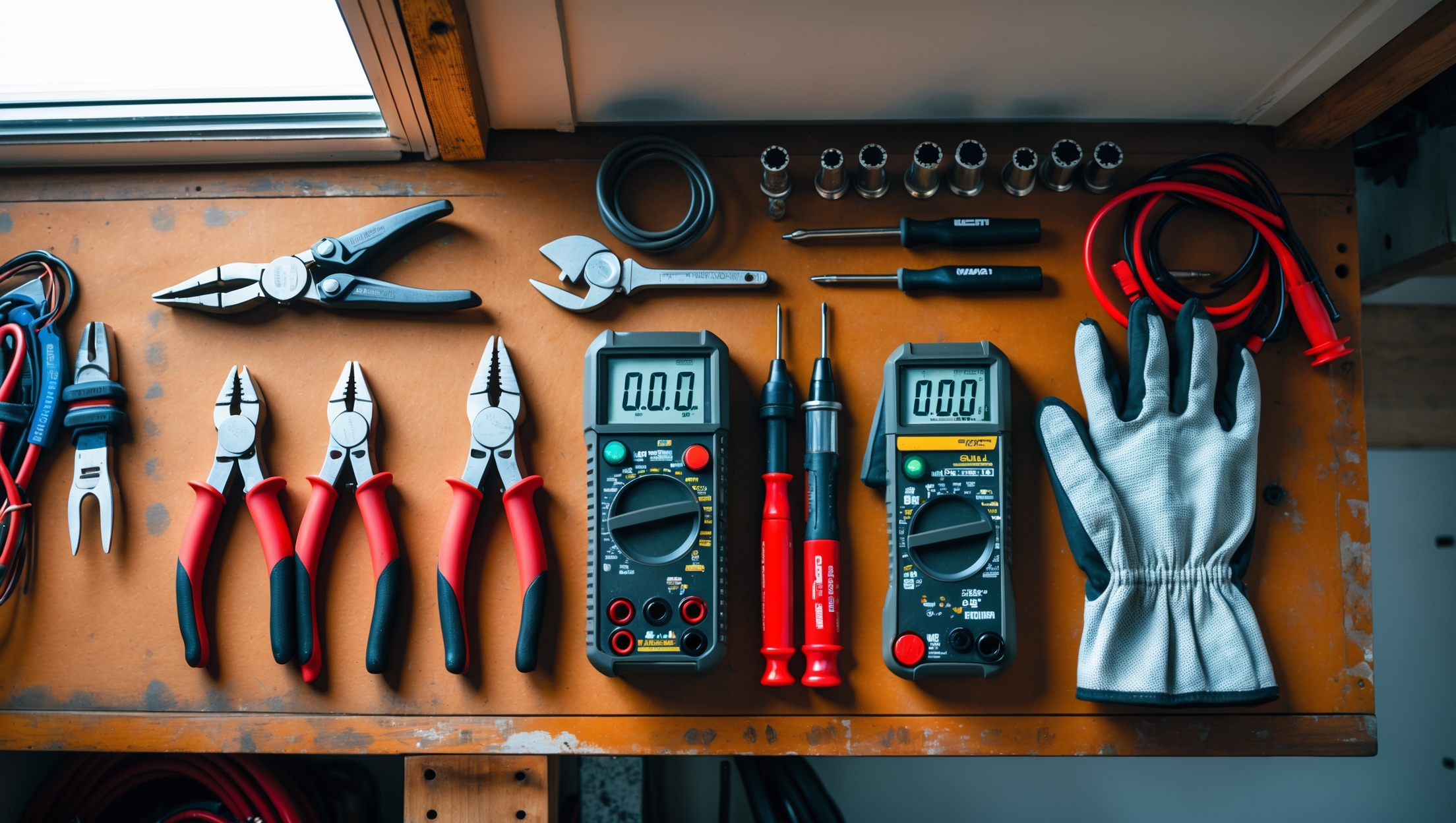
Introduction: Why Every Home Needs an Electrical Maintenance Toolkit
Electrical systems are the backbone of modern homes, powering everything from lighting and appliances to our favorite gadgets. While most homeowners rely on professionals for major upgrades or troubleshooting, there are countless minor electrical tasks—tightening a loose outlet, changing a light fixture, or safely resetting a tripped breaker—that you can manage yourself. The key to handling these safely and efficiently is having the right tools at your fingertips. A well-equipped home electrical maintenance toolkit not only saves time and money but also protects you from potential hazards. In this guide, we’ll walk through the essential tools every homeowner should have, smart investments versus budget buys, practical storage tips, and expert advice on tool maintenance and safety. Whether you’re a DIY enthusiast or simply want to be prepared for everyday electrical fixes, this comprehensive toolkit guide will empower you to manage your home’s electrical needs with confidence and care.
What Makes a Good Home Electrical Toolkit?
Before diving into specific tools, it’s important to understand the qualities that define a practical, reliable electrical toolkit for home use. Unlike a professional electrician’s van stocked with specialized gear, your toolkit should be:
- Comprehensive, but not excessive: Cover the basics and frequent tasks without unnecessary bulk.
- Safe: Prioritize tools with proper insulation and safety certifications.
- Durable: Invest in quality for tools that will last through repeated use.
- Organized: Easy to access, with clear storage to prevent misplaced or damaged tools.
Let’s break down the categories and specific items you’ll need.
Essential Tools for Basic Electrical Maintenance
1. Insulated Screwdrivers
Electrical work starts and ends with screwdrivers. Choose a set that includes both flat-head and Phillips-head options, and ensure they are rated for electrical work (look for VDE or IEC certification). Insulated handles protect you from accidental shocks if you come into contact with live wires.
2. Needle-Nose and Lineman’s Pliers
Needle-nose pliers help with precision work—bending wires, holding small components, or pulling wires through boxes. Lineman’s pliers are crucial for twisting wires together or cutting heavier gauge wires. Insulated versions are a must.
3. Wire Strippers
Stripping insulation from wires is a routine task. A quality wire stripper will have adjustable gauges for different wire sizes and a comfortable grip. Models that combine cutting, crimping, and stripping functions can be especially handy.
4. Voltage Tester
Never assume a wire or outlet is dead. A non-contact voltage tester lets you safely check for the presence of live voltage without touching wires directly. This is a non-negotiable safety tool for any electrical repair.
5. Multimeter
For more advanced troubleshooting, a digital multimeter measures voltage, current, and resistance. Even for basic users, it’s invaluable for checking batteries, verifying circuit continuity, or diagnosing why a circuit isn’t working as expected.
6. Electrical Tape
High-quality electrical tape is essential for safely insulating wire connections, securing loose wires, and providing temporary fixes. Avoid using general-purpose tapes which can degrade or fail under electrical loads.
7. Utility Knife
A retractable utility knife is useful for stripping cable sheathing, trimming insulation, or cutting tape. Always use a sharp blade to avoid damaging wires or creating unsafe nicks.
8. Flashlight or Headlamp
Electrical panels and junction boxes are often in poorly lit areas. A bright, hands-free headlamp or a compact LED flashlight ensures you can work safely and see what you’re doing.
9. Tape Measure
Measuring cable runs, conduit lengths, or ensuring outlet boxes are properly spaced—these are frequent tasks that require a reliable, easy-to-read tape measure. Opt for a compact, lockable model.
10. Circuit Finder or Breaker Identifier
Tracing which breaker controls a specific outlet or switch can be frustrating. A simple circuit finder helps you map your panel safely and efficiently, reducing guesswork and accidental shutoffs.
Smart Add-Ons for Advanced DIYers
11. Wire Fish Tape or Puller
If you ever need to run new wire through walls or conduit, a wire fish tape is indispensable. Choose a length appropriate for your home (typically 25-50 feet) and learn how to use it safely to avoid damaging walls or wires.
12. Outlet and GFCI Tester
These plug-in devices quickly verify if your outlets are wired correctly and if safety features like GFCI are functioning. This is especially useful after replacing outlets or troubleshooting issues in kitchens and bathrooms.
13. Cable Stapler or Clips
Securing cables along baseboards or joists requires proper fasteners. A cable stapler or insulated cable clips hold wires neatly and prevent damage from loose or pinched cables.
14. Compact Drill/Driver
For mounting boxes or drilling pilot holes, a lightweight cordless drill with an adjustable clutch is a time-saver. Always use insulated bits and attachments for electrical work.
Tool Selection: What to Buy New, What to Save On
When assembling your toolkit, not every item requires a premium price tag. Here’s how to prioritize your spending:
- Invest in Safety Tools: Voltage testers, multimeters, and insulated pliers should be from reputable brands with clear safety certifications.
- Don’t Skimp on Wire Strippers and Screwdrivers: Cheap models can slip, strip threads, or even break, increasing your risk of injury or damage.
- Save on Storage and Non-Electrical Accessories: Generic toolboxes, tape measures, and utility knives can be reliable even at budget prices.
Always check for durability—sturdy handles, smooth mechanisms, and replaceable parts are indicators of a tool that will last.
Organizing Your Toolkit for Safety and Efficiency
Tool Storage Options
- Toolbox: Classic, portable, and offers compartmentalized storage for small parts.
- Tool Bag: Soft-sided bags are lightweight and can hold oddly shaped tools or bulkier items.
- Wall-Mounted Pegboard: Ideal for garages or utility rooms, pegboards keep tools visible and accessible.
Label and Inventory Your Kit
Label compartments or use small containers for screws, wire nuts, and fasteners. Keep an inventory list taped inside your toolbox—this helps ensure nothing is missing when you need it most.
Maintenance Tips
- Clean tools after use, especially if exposed to moisture or dust.
- Inspect for wear: replace cracked insulation, dull blades, or loose handles.
- Store in a dry, cool area to prevent rust or corrosion.
Safety Essentials: Gear and Best Practices
Personal Protective Equipment (PPE)
- Insulated Gloves: Use for any work involving open panels or exposed wires.
- Safety Glasses: Protects your eyes from sparks, debris, or accidental wire snips.
- Rubber-Soled Shoes: Reduces risk of grounding yourself and receiving a shock.
Safe Work Habits
- Always turn off power at the breaker and verify with a tester before touching wires.
- Work in dry conditions; never handle electrical gear with wet hands or in damp environments.
- Keep a charged phone nearby in case of emergency, but never work distracted.
- Follow manufacturer instructions for all tools and devices.
Toolkit Additions for Sustainable and Energy-Efficient Homes
Smart Home Tester
If your home has smart switches, outlets, or lighting, a basic network tester or smart device tester can help diagnose connectivity and compatibility issues.
Energy Usage Meter
Plug-in energy meters measure the power consumption of appliances and devices, helping you identify energy hogs and optimize your usage for cost savings.
LED Bulb Tester
With LED lighting now commonplace, an LED tester helps quickly verify if bulbs are operational before installation or after a suspected failure.
Case Study: Assembling a Toolkit on a Budget
Consider Sarah, a first-time homeowner. Her goal: handle minor repairs, replace a few outlets, and install some dimmer switches. With a budget of $100, she focused on these essentials:
- Insulated screwdriver set: $20
- Wire stripper: $15
- Voltage tester: $12
- Needle-nose pliers: $10
- Electrical tape: $4
- Outlet tester: $10
- Basic toolbox: $12
For under $100, Sarah built a safe, functional kit that covered 90% of her anticipated projects. As needs grew, she added a multimeter and a cordless drill, spreading costs over time.
Common Mistakes to Avoid When Building Your Toolkit
- Buying non-insulated tools: Even if cheaper, these increase your risk of electric shock.
- Overlooking tool maintenance: Dull or damaged tools are dangerous and inefficient.
- Ignoring storage: Tools left exposed to moisture or cluttered in a box can rust or break.
- Forgetting safety gear: Gloves and glasses are just as important as pliers or screwdrivers.
- Assuming all tools are the same: Invest in reputable brands for critical safety gear.
Routine Maintenance for Your Tools and Toolkit
Maintaining your toolkit is as critical as assembling it. Here’s a simple maintenance checklist:
- Wipe down tools after every use; remove debris and dust.
- Check batteries in testers and flashlights monthly.
- Sharpen blades and oil moving parts every six months.
- Replace worn electrical tape and inspect PPE every year.
Set a calendar reminder for a biannual toolkit review—this prevents surprise failures during important projects.
Conclusion: Empowerment and Safety Through Preparation
Building a home electrical maintenance toolkit is more than a shopping list—it’s a practical commitment to your household’s safety, efficiency, and self-sufficiency. The right set of tools doesn’t just help you tackle everyday electrical repairs; it also empowers you to spot issues early, avoid unnecessary risks, and make informed decisions about when to DIY and when to call a professional. By investing in quality, prioritizing safety, and keeping your kit organized, you lay the foundation for a safer, more energy-efficient home environment. Remember, electrical work always carries inherent risks, but with the proper preparation and respect for best practices, you can minimize hazards and maximize the value of your toolkit. Whether you’re just starting out or refining your collection over time, use this guide as a blueprint for smart, strategic tool investments. With every outlet replaced, fixture upgraded, or breaker labeled, you’ll gain confidence and peace of mind—one project at a time.
For someone completely new to electrical maintenance, do you have any recommendations for the best way to organize and store these tools to prevent misplacement, especially in a smaller home or apartment setting?
For beginners in a smaller space, a sturdy toolbox with compartments is a smart investment. Choose one with removable trays to separate items like screwdrivers, pliers, and testers. Use small bins or zippered pouches inside for tiny parts such as screws or wire nuts. Store the toolbox in a consistent spot, like a closet or under a sink, so you always know where your tools are. Labeling each tool or tray can also make staying organized much easier.
I’d like to avoid spending too much on tools I might barely use. Could you suggest which items from your essential toolkit list are OK to buy on a budget and which ones really need to be high quality?
For tools you’ll use frequently, like screwdrivers, pliers, and a voltage tester, it’s worth investing in higher quality—they last longer and are safer. Items like wire strippers, tape measures, and utility knives can be bought on a budget, since they aren’t subjected to as much wear and tear. Prioritize quality for anything that directly affects your safety or will get lots of use.
If I’m just starting out and need to put together a beginner’s electrical toolkit, which essential tools should absolutely be bought new for safety rather than trying to borrow or buy used?
For safety, it’s best to buy new a non-contact voltage tester, insulated screwdrivers, and a reliable multimeter. These tools are crucial for your protection when working with electricity, and wear or damage from previous use can compromise their safety features. Items like pliers or wire strippers can sometimes be safely bought used if they’re in excellent condition, but double-check for intact insulation and functionality.
When you talk about balancing smart investments versus budget buys, are there particular tools in the toolkit where it really makes sense to spend more for quality? For a homeowner on a budget, which items would you recommend saving on versus splurging?
It’s usually wise to invest more in tools you’ll use often or that are crucial for safety, like a reliable voltage tester or a sturdy set of screwdrivers. Quality pliers and wire strippers can also last years if you spend a bit more. For items like tape measures or basic utility knives, budget versions often work just fine. Prioritize spending on tools where precision and durability matter most.
You mentioned the importance of quality and durability in tools, but are there any specific brands or features you recommend looking for when buying insulated screwdrivers and pliers for a home toolkit?
When choosing insulated screwdrivers and pliers, look for tools rated to at least 1000V with clear VDE or IEC certification markings. Reputable brands like Wiha, Wera, Klein Tools, and Knipex are known for their quality and safety standards. Features such as ergonomic grips and slip-resistant handles also make them more comfortable and secure during use.
When it comes to safely resetting a tripped breaker or changing a light fixture, are there particular safety certifications or tool features I should look for to avoid electrical hazards at home?
For home electrical work like resetting breakers or changing fixtures, look for tools that are rated for electrical work, such as those with insulated handles marked with a voltage rating (typically up to 1000V). Certifications to consider include UL (Underwriters Laboratories) or IEC (International Electrotechnical Commission) marks, which indicate safety testing. Always turn off power at the breaker before starting any work, and use a voltage tester to confirm circuits are de-energized.
This guide talks about tool maintenance as well as storage. For someone just starting out, what are a few practical steps to keep electrical tools in good shape and organized, especially if space is limited in an apartment?
To keep your tools in good condition and organized in a small apartment, start by wiping them clean after each use to prevent corrosion. Store them in a sturdy toolbox or a portable organizer to keep everything together and save space. Use small bins or drawer dividers for items like screws and connectors. Finally, avoid damp areas to prevent rust, and check tools regularly for any wear or damage.
You mention prioritizing tools with safety certifications for a home electrical toolkit. Are there specific brands or certification marks I should look for to make sure my tools are truly safe for electrical work?
When shopping for electrical tools, look for certification marks like UL (Underwriters Laboratories), CSA (Canadian Standards Association), or ETL (Intertek). These symbols indicate the tools meet safety standards. Brands with a good reputation for electrical safety include Klein Tools, Fluke, Greenlee, and Wiha. Always check for insulation ratings on handles, especially for screwdrivers and pliers, which should specify that they’re rated for up to 1000V.
How do you decide which electrical tools are actually worth splurging on and which ones you can get away with buying budget versions of? Could you give some examples from the toolkit?
It’s smart to invest more in tools you’ll use frequently or where safety and accuracy are critical. For example, splurge on a reliable multimeter, quality wire strippers, and insulated screwdrivers—these ensure both your safety and good performance. On the other hand, for items like basic pliers or a voltage detector, budget versions usually work fine for occasional home use. Prioritizing essential, high-use tools for quality is the best approach.
I’m often overwhelmed by how many tools are on the market. For a parent with young kids and limited storage space, which basics would you prioritize for everyday electrical fixes versus what can wait as a future investment?
If space is tight and you have little ones around, focus on a few essentials: a voltage tester for safety, insulated screwdrivers, needle-nose pliers, wire strippers, and a good flashlight. These cover most quick fixes. Items like a multimeter, circuit tracer, or specialty tools can wait until you tackle more complex projects or have more room. Always store tools out of children’s reach for safety.
I noticed you mentioned prioritizing insulated tools with safety certifications. Are there any specific brands or certifications I should look for as a parent concerned about safety, or will any tool labeled ‘insulated’ do the job?
For safety, look for tools with certifications from recognized organizations like VDE, IEC 60900, or ASTM. Brands such as Klein Tools, Wiha, and Knipex are known for their high safety standards. Not every tool labeled ‘insulated’ meets strict safety criteria, so double-check for these certifications on the tool or packaging before buying, especially if children might be around the toolkit.
The article touches on tool maintenance and storage tips, but I’m wondering about your favorite methods to organize everything so I can quickly find what I need. Do you use a traditional toolbox or have you found wall-mounted solutions more practical for electrical tools at home?
For home electrical tools, I actually prefer a combination of both methods. I keep smaller, frequently used items in a traditional toolbox for portability, but install wall-mounted pegboards and magnetic strips in my workspace for larger tools and those I want visible and within easy reach. This setup lets me grab what I need quickly and keeps everything organized.
If a homeowner mainly deals with basic electrical tasks like changing light fixtures and tightening outlets, are there any specific tool features or brands you would particularly recommend for durability and ease of use?
For basic electrical tasks, look for insulated screwdrivers and pliers from reputable brands like Klein Tools, Wiha, or Milwaukee, as they offer excellent durability and safety. A quality non-contact voltage tester from Fluke or Klein is also handy and user-friendly. Choose tools with comfortable, ergonomic grips to reduce hand fatigue. Investing in these brands ensures reliability and ease of use for most DIY home electrical work.
For someone just starting out, how can I tell if a screwdriver set is really rated for electrical work or just a regular set with plastic handles? Are there specific markings or certifications I should look for to make sure they’re truly insulated for safety?
To ensure a screwdriver set is truly insulated for electrical work, look for a clear voltage rating (such as 1000V) printed on the tool or packaging. Certified insulated screwdrivers usually have markings like “VDE” (Verband der Elektrotechnik) or an IEC 60900 standard symbol. Regular sets with plastic handles don’t provide proper protection—always check for these certifications before using them around electricity.
You talked about balancing a toolkit between smart investments and budget buys. Could you share which tools you really shouldn’t skimp on and which ones are fine to buy at a lower price for a small business owner like me?
For a small business owner, it’s wise to invest in high-quality essentials like a voltage tester, wire strippers, and insulated screwdrivers—these are used frequently and affect both safety and precision. For items like tape measures, utility knives, or basic pliers, more budget-friendly options usually suffice as they’re less critical and easy to replace when worn out.
I noticed you suggest investing in quality tools for long-term durability. Are there certain brands or price ranges you think strike the right balance between affordability and reliability for essential electrical tools?
For essential electrical tools like screwdrivers, wire strippers, and voltage testers, brands such as Klein Tools, Wiha, and Southwire are known for their reliability without being overly expensive. You can usually find quality options in the $15–$40 range per tool. Investing a bit more upfront can save you from frequent replacements and ensure your tools perform safely and accurately over time.
Once I’ve assembled a basic toolkit, what regular maintenance steps do you recommend to keep the tools in good condition and ensure they remain safe for electrical use over time?
To keep your electrical tools in top shape and safe for use, regularly wipe them clean, especially the handles and insulated parts. Store tools in a dry, organized space to prevent rust and damage. Inspect cords and insulation for cracks or wear, and replace any compromised items. Occasionally check that screwdrivers and pliers hold their shape and haven’t loosened. It’s also smart to periodically test your voltage tester or multimeter to ensure they’re working correctly.
You mention practical storage tips for keeping the toolkit organized. Could you share some real examples or setups that work well for homeowners with limited space, like apartment dwellers?
For apartment dwellers, a compact toolbox with divided compartments keeps tools tidy and easy to access. Consider a sturdy plastic tackle box or a soft-sided zippered tool bag that fits on a closet shelf. Wall-mounted pegboards or magnetic strips can also be installed inside a closet or utility area for vertical storage. Using clear bins or labeled pouches for small parts helps prevent clutter.
The article mentions balancing smart investments versus budget buys for a home toolkit. Can you list which tools are really worth spending extra on, and which ones can be safely bought at a lower price point for basic home electrical projects?
For home electrical toolkits, it’s worth spending extra on a reliable multimeter, insulated screwdrivers, and voltage testers since safety and accuracy are crucial. You can usually save on basic items like tape measures, wire strippers, and pliers—just make sure they’re functional and sturdy. Always prioritize quality for anything that impacts safety or involves live circuits.
In the section about smart investments versus budget buys, could you give some examples of which specific electrical tools are worth spending more on, and where it’s actually fine to go with more affordable options?
For electrical work, it’s definitely worth investing more in a high-quality multimeter and reliable wire strippers, since performance and safety are important. Insulated screwdrivers from trusted brands are another smart investment. On the other hand, items like measuring tapes, basic pliers, and utility knives can be more budget-friendly without sacrificing much in terms of function or safety.
When it comes to smart investments versus budget buys, which tools from your list can I safely buy on a budget without compromising safety, and for which items is it really worth paying extra for quality?
For your toolkit, you can safely choose budget options for items like measuring tapes, screwdrivers, and utility knives, as long as they feel sturdy and comfortable. However, it’s definitely worth investing more in quality for tools like voltage testers, wire strippers, and pliers, since these directly impact safety and reliable performance. Prioritize reputable brands for any tool that deals directly with electricity.
You talk about organizing the toolkit for easy access. Do you have any recommendations on storage solutions that can keep tools safe from damage, especially in humid environments like basements or garages?
For humid areas like basements or garages, consider using a sturdy, sealable plastic toolbox or a metal tool chest with a rubber gasket seal. This helps keep moisture out and protects your tools from rust. Adding silica gel packs or small dehumidifiers inside the box can further reduce humidity. Pegboards with hooks are also useful for keeping tools off damp floors, but be sure the area is well-ventilated.
After I assemble the essential tools you recommend, what would be the next steps for learning how to use everything safely? Are there specific resources or hands-on tutorials you suggest for beginners tackling small electrical repairs?
Once you have your toolkit, start by reading the manuals for each tool and familiarizing yourself with basic safety rules, like turning off circuit breakers before any work. Watching beginner-friendly video tutorials on small repairs—such as changing outlets or switches—can be very helpful. Local hardware stores sometimes offer hands-on workshops, and many community colleges have introductory electrical classes for homeowners. Learning gradually and practicing under supervision, if possible, will help you build confidence and stay safe.
When considering smart investments versus budget buys for building this toolkit, which tools do you recommend splurging on for quality, and which ones are acceptable to buy at a lower price?
It’s wise to invest in high-quality tools that you’ll use often and that impact safety, like a reliable multimeter, insulated screwdrivers, and a sturdy wire stripper. Cheaper versions of these can be inaccurate or unsafe. For items like a voltage tester, electrical tape, or a basic utility knife, budget options are usually fine as long as they meet basic standards. Prioritize quality for tools that handle electricity directly.
I get that a home toolkit doesn’t need as many tools as a professional electrician’s setup, but how do I know where to draw the line? For example, are there any semi-specialized tools that actually pay off for DIY homeowners, or should we really just stick to the basics?
It’s smart to find a balance between basics and a few semi-specialized tools. For most DIY homeowners, essentials like screwdrivers, pliers, a voltage tester, and wire strippers are enough. However, investing in a non-contact voltage tester and a circuit breaker finder can really pay off in safety and convenience, even if you only use them occasionally. Skip specialized contractor tools unless you plan to tackle big projects.
You mention investing in quality tools for durability, but for someone with a tight budget, are there any specific items in the toolkit where it’s safe to opt for cheaper brands, and which ones should never be skimped on for safety reasons?
For home electrical work, it’s vital not to skimp on safety gear like insulated screwdrivers, voltage testers, and wire strippers—these should be good quality to ensure protection and accuracy. However, for items like tape measures, basic pliers, or utility knives, budget-friendly brands can work fine as long as they function properly. Prioritize investing in reliable safety-related tools first.
When it comes to insulated screwdrivers, do you recommend any specific brands or certification labels that reliably indicate proper electrical safety for home use?
For safe home electrical work, look for insulated screwdrivers that are certified to the VDE or IEC 60900 standards—these labels mean the tool is tested for electrical safety up to 1000V. Reputable brands like Wiha, Wera, and Klein Tools consistently meet these standards and are widely trusted by professionals and homeowners alike.
For a small business owner like me who isn’t super handy, how often should I check or replace the insulated tools in my home electrical kit to ensure they’re still safe and effective?
For a small business owner, it’s wise to inspect your insulated tools every six months for any cracks, wear, or damage, even if you don’t use them often. If you use them more regularly, check monthly. Replace any tools immediately if you see visible damage or if the insulation feels brittle or loose. Regular checks keep your kit safe and reliable.
For someone who’s completely new to electrical work, how do you tell if a screwdriver or another tool is actually rated for electrical use and what certifications or labels should I be looking for?
To ensure a tool is safe for electrical work, look for tools labeled as “insulated” and check for certifications like VDE, IEC 60900, or ASTM. These markings are often stamped on the handle or packaging. Insulated screwdrivers usually have a thick, brightly colored handle and an insulation rating (like 1000V). Only use tools that clearly show these certifications and ratings when working around electricity.
I noticed that you mention insulated screwdrivers as essential, but I’m not sure how to tell if a set is truly rated for electrical work. Are there labels or certifications I should be looking for when I’m shopping at the hardware store?
When choosing insulated screwdrivers for electrical work, look for tools that are clearly marked with a voltage rating, often up to 1000V, and certified to standards such as VDE (Verband der Elektrotechnik) or IEC 60900. These labels should be printed on the handle or packaging. Avoid generic ‘insulated’ claims without certification, as only officially rated tools have passed the necessary safety tests.
For someone who often does basic repairs but might have to tackle a larger electrical issue in the future, how often should a home toolkit be updated or checked for worn-out or unsafe tools?
It’s a good idea to check your toolkit at least once or twice a year, especially if you use it regularly. Look for cracked handles, frayed cords, rust, or any signs of wear that could make tools unsafe. Replace or repair any damaged items right away. Updating your toolkit with new tools is also smart if you plan to take on more complex electrical projects in the future.
Once you have all the basic electrical tools, do you have any advice on how to store them so they stay organized and protected from damage? Any specific storage solutions or containers you recommend for keeping things easy to access?
After gathering your basic electrical tools, it’s a good idea to use a sturdy tool bag or toolbox with compartments to keep everything organized and easy to find. For small items like screws or wire nuts, a plastic organizer with dividers works well. Wall-mounted pegboards also help for hanging tools, making them visible and accessible. Store everything in a dry area to prevent rust or damage.
You mentioned investing in quality tools that will last through repeated use—are there specific brands or safety certifications I should look for when picking out insulated screwdrivers and voltage testers for a home toolkit?
When choosing insulated screwdrivers and voltage testers, look for brands like Klein Tools, Wiha, or Wera, as they are known for durability and safety. Check for tools rated to at least 1000V and look for certifications such as VDE or IEC 60900, which indicate proper insulation and independent testing. Always verify the tool’s certification markings before purchasing.
You mention investing in durable tools and avoiding unnecessary bulk in the toolkit. Could you give a few examples of tools that a beginner might be tempted to buy but would probably never use for typical home electrical tasks?
Absolutely. Beginners often consider buying specialized tools like wire crimpers, fish tapes, or circuit tracer kits. While these are useful for larger or more complex projects, most basic home electrical tasks—like changing outlets or switches—don’t require them. Focusing on essentials like a quality multimeter, voltage tester, wire strippers, and screwdrivers will cover almost everything you need as a homeowner.
You mention the importance of keeping tools organized and stored clearly to avoid damage or loss. Could you share any recommended toolboxes or storage solutions that work particularly well for electrical tools?
For electrical tools, a toolbox with customizable compartments is especially useful. Look for toolboxes or organizers with padded slots or foam inserts to protect sensitive instruments like multimeters. Stackable storage cases and wall-mounted pegboards also work well for keeping tools visible and accessible. Brands like Klein Tools and Stanley offer toolboxes designed specifically for electricians, featuring reinforced handles, lockable lids, and weather-resistant materials. Choose a solution that fits your tool collection and available workspace.
You mention smart investments versus budget buys for the toolkit. Could you give some examples of tools where it’s really worth spending extra for quality, and others where the budget option is fine for home use?
For your home electrical toolkit, it’s wise to invest more in tools you’ll use often and that impact safety, like a reliable multimeter, insulated screwdrivers, or a quality wire stripper. These tend to last longer and work more precisely. For less critical items such as tape measures, utility knives, or basic pliers, budget versions usually work just fine for most home tasks.
If I have limited space in my apartment, what do you suggest for organizing and storing the toolkit so tools don’t get misplaced or damaged? Any tips for compact storage solutions?
For limited space, consider a sturdy, multi-compartment tool bag or a compact toolbox that fits easily in a closet or under a bed. Use clear plastic pouches or small containers inside to group similar tools together. Magnetic strips or pegboards can be mounted inside a closet door for frequently used items. Labeling each compartment helps keep everything organized and easy to find.
The article talks about smart investments versus budget buys for basic electrical tools. Can you suggest which tools are worth spending more on for durability and safety, and where it’s okay to opt for a less expensive version?
For electrical work, it’s wise to invest more in tools that directly impact safety and precision. Spend extra on a reliable multimeter, insulated screwdrivers, and voltage testers since quality here ensures accurate readings and protection against shocks. For items like wire strippers, pliers, and measuring tapes, budget-friendly versions are okay as long as they’re functional and meet basic safety standards. Prioritize comfort and insulation on any tool you’ll use near live circuits.
When it comes to organizing all these tools, do you have any practical storage suggestions for families with small kids? I’d like to keep everything easy to find but also out of reach for safety.
For families with small kids, a sturdy lockable toolbox or cabinet is a good choice for storing electrical tools. Place it on a high shelf or in a locked closet to keep items out of reach. Tool organizers with compartments help keep everything sorted inside the box, so you can easily find what you need while ensuring safety at home.
When you mentioned organizing the toolkit so that tools are easy to access and not misplaced, do you have suggestions for specific toolbox types or organizers that work best for electrical tools? I’m worried about accidentally mixing things up with my regular DIY tools.
For electrical tools, a compartmentalized toolbox or a tackle box with removable dividers can help keep items organized and separate from your general DIY tools. Some people prefer a dedicated electrician’s tool bag with labeled pockets for pliers, testers, and screwdrivers. Color-coding your electrical tools or using a separate, clearly marked container also reduces the chance of mixing them up with other tools.
If a homeowner is just starting out and only wants to buy a few essential tools to handle the most common electrical fixes, which specific items would you consider non-negotiable to have from the start?
For beginners, the absolute must-have tools are a voltage tester (to check if circuits are live), a pair of insulated screwdrivers (flathead and Phillips), needle-nose pliers, wire strippers, and electrical tape. These basics will let you safely handle common tasks like replacing outlets, switches, or light fixtures. As you gain confidence, you can gradually add more specialized tools to your kit.
You mention organizing tools to prevent misplacement or damage—do you have any specific storage systems or toolboxes you recommend for keeping a home electrical toolkit compact but accessible, especially for people with limited space?
For tight spaces, consider a compact toolbox with removable trays or adjustable dividers to keep small electrical parts sorted. Soft-sided tool bags with multiple pockets can also be hung on hooks or stored in closets, making them easy to access and organize. Stackable plastic bins or wall-mounted pegboards are great if you have a small utility area. Choose storage with clear labeling so you can quickly find what you need without rummaging.
After setting up a basic toolkit as described here, what would be the next step if I want to try small projects like replacing a light fixture or adding a dimmer switch? Is there a specific tool or safety practice I should prioritize before moving on to those tasks?
Once your toolkit is ready, the most important next step for small electrical projects is to get a non-contact voltage tester. This tool lets you safely verify that power is off before touching any wires. You should also always switch off the circuit breaker and double-check with your tester before starting work. If you’re replacing a light fixture or adding a dimmer, having a wire stripper and a good quality screwdriver will make things easier, but safety practices are always the top priority.
You mention investing in durable, insulated screwdrivers for safety. Can you recommend any specific brands or minimum safety certifications to look for when shopping in the US?
Look for screwdrivers that are marked with the ASTM F1505 or IEC 60900 certifications, which indicate they meet safety standards for electrical work. In the US, trusted brands like Klein Tools, Wiha, and Wera offer insulated screwdrivers that electricians frequently use. Make sure any screwdriver is rated for up to 1000 volts and clearly labeled as insulated on both the tool and its packaging.
How do I know if a tool is actually properly insulated and has the right safety certifications for home electrical work? Are there specific markings or ratings I should look for when shopping for screwdrivers or pliers?
When shopping for electrical tools like screwdrivers or pliers, look for handles marked with a voltage rating, typically up to 1000V, and the letters ‘VDE’ or ‘IEC 60900’—these indicate compliance with strict international safety standards. Also, check for a double triangle symbol or an official certification mark. Always avoid tools with damaged or worn insulation, even if they were certified when new.
If I’m living in a small apartment and want to keep my toolkit minimal yet functional, which core items from your list would you prioritize so I’m still prepared for most common electrical issues?
For a small apartment, you can keep your toolkit compact by prioritizing a few essentials: a voltage tester or non-contact tester for safety, a basic set of screwdrivers (flathead and Phillips), needle-nose pliers, wire strippers, and a small adjustable wrench. These core tools will handle most simple repairs like changing outlets, switches, or light fixtures without taking up much space.
If I want to start assembling my toolkit as a student on a tight budget, what are the absolute minimum essentials you’d recommend getting first, and do you have tips for organizing them in a small apartment?
To get started on a tight budget, focus on the basics: a voltage tester, a set of screwdrivers (flathead and Phillips), needle-nose pliers, wire strippers, electrical tape, and a small adjustable wrench. For organizing them in a small apartment, consider a compact tool bag or a sturdy plastic container with dividers. Labeling each section or using small pouches can help keep everything tidy and easy to access.
You mention the importance of proper insulation and safety certifications for tools. Are there specific certifications or standards I should look out for when buying screwdrivers and other electrical tools in the US?
When buying electrical tools in the US, look for certifications like UL (Underwriters Laboratories), ETL (Intertek), or CSA (Canadian Standards Association). Tools specifically rated for electrical work often have an ‘Insulated 1000V’ marking, indicating they’re safe for live circuits up to 1000 volts. Always check packaging or tool handles for these markings and certifications to ensure you’re getting safe, reliable equipment.
The section on tool maintenance caught my attention. How often should tools like insulated screwdrivers or voltage testers be inspected or replaced to make sure they stay reliable and safe for regular use in a small office setting?
For tools like insulated screwdrivers and voltage testers used regularly in a small office, it’s wise to inspect them before each use for visible damage or wear, especially on insulation and tips. A more thorough check every 3–6 months helps catch less obvious issues. Replace any tool that shows cracks, worn insulation, or unreliable readings, as safety can be compromised even by minor defects.
If I’ve just moved into an older house and want to get started on basic electrical maintenance myself, how long should it realistically take to put together a decent toolkit from scratch? Is there a suggested order for purchasing the essential tools you listed?
Putting together a basic electrical maintenance toolkit can usually be done over a weekend if you shop locally, or within a week if you’re ordering online. Start with the essentials: a voltage tester, insulated screwdrivers, wire strippers, and pliers. After these, consider adding a multimeter, electrical tape, and a flashlight. This order lets you handle most basic tasks safely as you build up your toolkit.
Regarding organization, do you have any tips for keeping a small toolkit easily accessible for frequent tasks versus long-term storage for less-used tools? Sometimes I end up misplacing an essential item right when I need it most.
To keep your frequently used tools handy, consider using a portable toolbox or a wall-mounted organizer near your main work area. For less-used tools, store them in labeled bins or drawers in a dedicated spot. Regularly return tools to their place after use, and do a quick inventory every few months so essentials don’t get misplaced.
You mentioned investing in quality insulated screwdrivers and checking for safety certifications. Are there particular brands or certification markings that are more recognized in the US for home electrical use?
For home electrical work in the US, look for screwdrivers with UL (Underwriters Laboratories) or ETL (Intertek) certification marks, as these indicate the tools meet safety standards. Well-recognized brands that offer quality insulated screwdrivers include Klein Tools, Wiha, and Wera. Always check the tool’s handle or packaging for the certification mark and voltage rating to ensure safety during electrical projects.
I noticed you suggested making sure tools are organized and stored properly. Do you have any recommendations for affordable storage solutions that keep everything safe and accessible, especially in a smaller apartment where space is limited?
For a smaller apartment, consider a sturdy tool bag or a compact toolbox with adjustable compartments. Stackable plastic bins or drawer organizers can also maximize vertical space on shelves or in closets. Magnetic strips or pegboards mounted inside a closet door work well for keeping tools accessible but out of sight. Choose solutions that fit your available space and allow you to easily see and reach your tools when needed.
You mention smart investments versus budget buys—could you give some examples of which tools are really worth spending extra on, and where it’s okay to save a bit without compromising safety or usefulness?
Spending extra on a quality multimeter and insulated screwdrivers is wise, since accuracy and safety are crucial for electrical work. Reputable brands last longer and keep you safer. For items like a wire stripper, electrical tape, or pliers, budget options are usually fine as long as they meet safety standards. Always check for safety certifications, even on budget tools.
I see the article recommends not going overboard with too many tools. As someone with a pretty tight budget, which essential items would you prioritize if you could only start with three or four tools for basic electrical maintenance tasks?
If you’re starting out on a budget, focus on three or four core tools: a good-quality multimeter for basic electrical testing, insulated screwdrivers for safe work on outlets and fixtures, a voltage tester for checking live wires, and a pair of wire strippers for handling wires safely. These will cover most simple troubleshooting and repair tasks at home without overspending.
When you mention smart investments versus budget buys, are there certain tools in the toolkit where it really makes a difference to pay more, and others where a cheaper option is just as good for basic home use?
For basic home electrical work, it’s worthwhile to invest more in tools like a quality multimeter and insulated screwdrivers, as accuracy and safety matter most there. On the other hand, simpler tools like tape measures or wire strippers can be cheaper brands without much impact. Prioritize durability and safety features for anything that interacts directly with electricity.
Once I have all the essential tools organized, how often should I check or replace them to make sure they remain safe and effective for everyday electrical fixes around the house?
It’s a good idea to inspect your electrical tools every few months for signs of wear, damage, or rust. Pay special attention to insulated handles and moving parts. Replace any tool that shows cracks, fraying, or loose connections immediately. If you use them frequently, check monthly; for occasional use, every 3–6 months should be enough to keep everything safe and reliable.
As a parent with curious kids around, I’m especially concerned about storage. Do you have tips for keeping the electrical toolkit both organized and out of reach of little hands, especially things like insulated screwdrivers?
Keeping your toolkit organized and safely out of reach is important with kids at home. Consider using a lockable toolbox or cabinet for all your electrical tools, especially insulated screwdrivers and other sharp items. Store the toolbox on a high shelf or in a secure closet whenever it’s not in use. Label everything clearly and always return tools to their proper place after each project to avoid leaving them out unintentionally.
If my toolkit is mainly for quick fixes like tightening outlets or replacing light fixtures, would you suggest a different set of essentials than what’s listed for someone doing more in-depth DIY projects?
For quick fixes like tightening outlets or replacing light fixtures, you can keep your toolkit simpler than what’s suggested for in-depth projects. Essentials would be a quality screwdriver set, voltage tester, needle-nose pliers, wire stripper, and a flashlight. You likely won’t need advanced tools like circuit tracers, multimeters, or specialty wire cutters unless you plan to tackle more complex electrical work.
How do you decide which tools are worth investing a bit more money in versus which ones are fine as budget buys? Any examples of where you’ve seen cheaper tools actually cause problems during electrical repairs?
When building your electrical toolkit, it’s wise to invest more in tools that you’ll use often and that impact safety, like voltage testers, wire strippers, and screwdrivers. Higher-quality versions are more accurate and durable. For example, cheap wire strippers can damage wires or slip, leading to poor connections or even shocks. Budget-friendly pliers or tape measures are usually fine, since errors won’t compromise safety or work quality as much.
When putting together my own electrical toolkit at home, I sometimes struggle to decide between investing in higher-quality insulated screwdrivers versus saving money with budget sets. How much of a difference does the brand or insulation certification actually make for routine home tasks like swapping outlets or tightening fixtures?
For routine home electrical tasks like replacing outlets or tightening fixtures, the main priority should be safety. Insulated screwdrivers with proper certification (such as VDE or IEC) offer reliable protection against electrical shock, which budget sets may not always guarantee. While a trusted brand often means better quality and durability, the key is ensuring the insulation meets safety standards, not just the brand name. Investing a bit more in certified tools is worthwhile for your safety, even for basic jobs.
The article mentions organizing tools to prevent damage and misplacement. Do you have any advice on compact storage solutions suitable for someone with limited workspace, like a small shop or home office?
For limited spaces, consider a sturdy toolbox with removable trays or a stackable tool chest that fits under a desk or in a closet. Wall-mounted pegboards or magnetic strips can also save surface area and keep tools visible. Multi-compartment organizers or drawer inserts help separate small items like screws and connectors, reducing clutter and making everything easy to find.
You covered the basics for a home toolkit, but what about storage? Do you have any suggestions for organizing electrical tools so they’re out of reach of young kids but still easy for adults to grab when needed?
For safe and convenient storage, consider using a lockable toolbox or cabinet mounted higher up on a wall—well above a child’s reach. Toolboxes with secure latches work well, and wall-mounted pegboards with locking covers let you organize tools visibly while keeping them secure. Always store sharp or powered tools separately and check that the storage location is dry and away from curious little hands.
This guide is helpful for someone new like me, but I’m a little nervous about doing anything beyond changing a light fixture. Are there any beginner-friendly resources or checklists you recommend so I can be sure I’m using the toolkit safely and not missing any important steps during common repairs?
It’s completely normal to feel cautious when starting out. For beginners, using a simple safety checklist—like always turning off the circuit breaker before any repair, double-checking for live wires with a voltage tester, and using insulated tools—can help build confidence. Many toolkit brands include basic how-to guides, and local hardware stores sometimes offer introductory workshops. Take your time, follow each step carefully, and don’t hesitate to ask for advice if something seems unclear.
If my home is mostly wired with older outlets and fixtures, are there any special tools or safety features I should consider adding to the basic toolkit listed in your article?
For homes with older wiring and fixtures, it’s a good idea to add a non-contact voltage tester and a GFCI outlet tester to your toolkit. These help you quickly and safely check for live wires and ensure outlets are wired correctly. Insulated screwdrivers and electrical gloves offer extra protection when working with potentially outdated or brittle wiring. Always turn off power at the breaker before beginning any work for added safety.
You mention investing in quality for some tools. Are there certain items in a basic home electrical toolkit where it’s okay to go with budget versions, or should I always opt for the higher-end brands for safety reasons?
It’s wise to invest in quality for any tool used directly on live circuits, like voltage testers, insulated screwdrivers, and wire strippers, since safety and accuracy are critical. For items with less safety impact, such as tape measures or basic pliers, budget versions can work fine for occasional home use. Prioritize recognized brands for tools that protect you from electric shock.
You mention investing in quality tools for durability, but are there certain types of home electrical tools where it really makes sense to spend more, versus others where budget options will be just as safe and effective?
It’s wise to invest more in tools that you’ll use frequently and that play a key role in safety—like multimeters, insulated screwdrivers, and wire strippers. High-quality versions are usually more accurate and safer. For less critical items like measuring tapes or basic pliers, budget options can work just fine as long as they meet safety standards and feel sturdy in use.
When you mention prioritizing tools with proper insulation and safety certifications, are there specific certification marks or brands that you’d recommend looking for in the US? I’ve seen a lot of options, but it’s a bit overwhelming to figure out which ones are truly up to code.
In the US, look for tools with insulation rated to at least 1000V and carrying certifications like UL (Underwriters Laboratories) or ASTM (American Society for Testing and Materials). These marks indicate compliance with safety standards. Brands like Klein Tools, Wiha, and Ideal are known for their quality and safety certifications in electrical tools. Always double-check packaging or product details for these marks before buying.
How do you recommend organizing and storing your toolkit to make sure tools don’t get misplaced or damaged, especially if you don’t have a garage or a lot of storage space?
If space is tight and you don’t have a garage, try using a sturdy, portable toolbox with compartments or removable trays to keep everything sorted and easy to find. Wall-mounted pegboards or over-the-door organizers are also good options for apartments. Labeling each section or tool spot can help ensure things go back to the right place, reducing the chance of misplacing or damaging your tools.
I noticed you recommend having a toolkit that’s comprehensive but not excessive. How do you decide which tools are truly necessary to keep at home versus ones you can skip or borrow when needed?
When deciding which tools to keep at home, focus on those needed for common tasks like tightening screws, testing outlets, or stripping wires—think screwdrivers, pliers, voltage testers, and wire strippers. More specialized tools, such as conduit benders or circuit tracers, are better borrowed or rented as needed since most homeowners rarely use them. Start with essentials, then add tools if you find you need them more often.
What should I do if I’m not sure whether an outlet issue is something I can safely handle with this toolkit, versus when I definitely need to call in a professional electrician?
If you’re ever unsure about the safety of handling an outlet issue, it’s best to err on the side of caution and call a professional. Signs you should call an electrician include visible damage, burning smells, sparking, frequent tripping of breakers, or if the outlet is warm or buzzing. For simple issues like a loose plate or replacing a faceplate, your toolkit is sufficient, but anything involving wiring or unexplained power loss should be left to an expert.
When you mention organizing the toolkit for easy access and preventing damage, do you have any specific storage solutions or products you’d recommend for families with kids and limited space?
For families with kids and limited space, consider a sturdy lockable toolbox or a wall-mounted cabinet that can be kept out of children’s reach. Stackable toolboxes with compartments help keep tools sorted and prevent damage. Portable tool bags with zippers are also a good option if you need to store the kit in a closet or high shelf. Always ensure the storage solution has a secure closure to keep tools safely away from little hands.
I’d love to hear your advice on organizing and storing electrical tools to prevent damage and confusion. What are some practical storage solutions you’d recommend for a DIY homeowner with limited garage space?
For limited garage space, consider a sturdy tool bag or compact toolbox with labeled compartments to keep your electrical tools organized. Magnetic strips or pegboards on a wall can store smaller items like screwdrivers and pliers, freeing up shelf space. Stackable plastic bins with clear labels are also helpful for grouping related items, like testers or wire nuts. Always keep tools dry and in a dedicated spot to prevent misplacement and damage.
You mentioned that tool insulation and safety certifications are vital for a reliable toolkit. Are there any specific certifications or markings homeowners should look for on screwdrivers and other hand tools to ensure they’re safe for electrical work?
Yes, when selecting screwdrivers and hand tools for electrical work, look for tools marked with the VDE or IEC 60900 certification. These markings indicate that the tool has been tested for electrical safety, usually up to 1000 volts. The handle or shaft may also display a double triangle symbol, showing it’s insulated for electrical use. Always check these certifications before using any tool on live circuits.
You mention organizing tools for easy access and to prevent them from getting damaged. Do you have any tips or examples for storage solutions that work well in a small home or apartment where space is limited?
For small homes or apartments, consider using wall-mounted pegboards or magnetic strips to keep tools visible and off surfaces. A sturdy toolbox with compartments can fit under a bed or in a closet. Stackable bins or clear containers also help keep everything organized and easy to find, even when space is tight.
Could you offer some first steps for someone who is new to DIY electrical fixes and a bit nervous? For basic things like resetting breakers or tightening outlets, are there particular safety checks I absolutely shouldn’t skip?
If you’re just starting out, always turn off power at the circuit breaker before touching any outlet or switch, and use a non-contact voltage tester to double-check that wires are dead. For resetting breakers, make sure your hands are dry and stand on a dry surface. When tightening outlets or switches, never force tools or overtighten screws, and only use insulated screwdrivers. If something looks damaged or you feel unsure, it’s safest to call a professional.
Could you provide some tips or examples on how to organize and store these tools to prevent damage and make them easy to access? I have a small workspace and worry about things getting lost or mixed up with my other tools.
For a small workspace, try using a sturdy toolbox with compartments or a portable organizer case to keep each tool in its own section. Magnetic strips or pegboards on the wall can hold frequently used tools within easy reach. Label each compartment or hook to prevent mix-ups, and consider keeping electrical tools separate from general-purpose ones. Make it a habit to return each tool to its spot after use to avoid clutter and lost items.
If I want to organize my electrical toolkit efficiently, do you have recommendations for storage solutions that fit well in a small apartment? Should I be looking for a certain type of toolbox or organizer for these kinds of tools?
For a small apartment, consider a compact, sturdy toolbox with adjustable compartments to keep your tools sorted and accessible. Stackable plastic organizers or a soft-sided tool bag with multiple pockets can also save space. Magnetic strips for screwdrivers and wall-mounted pegboards (if you have the wall space) are great for keeping things tidy. Choose a storage option that fits in your closet or under a bed to maximize your living area.
As a small business owner who sometimes needs to address minor electrical issues at my shop, could you clarify what makes a screwdriver set ‘rated for electrical work’? Are there specific certifications or labeling I should look for to ensure the tools are truly safe?
A screwdriver set rated for electrical work will specifically have insulated handles designed to protect against electric shock, usually tested up to 1000 volts AC. Look for markings like ‘VDE’ or ‘IEC 60900’ on the tool or packaging—these indicate the screwdrivers meet strict international safety standards. Never use regular metal-handled screwdrivers for electrical tasks, as they lack this vital insulation.
When it comes to organizing and storing these electrical tools, do you have any practical suggestions for storage solutions that keep everything accessible but also prevent damage or loss over time?
A sturdy toolbox with adjustable compartments is a great way to keep electrical tools organized and protected from damage. For smaller items like screws and connectors, consider using clear plastic organizers with labeled sections. Pegboards or wall-mounted racks can keep frequently used tools visible and within easy reach. Try to return each tool to its designated spot after use to avoid loss and maintain order over time.
After putting together the basic toolkit you suggest, what’s the best way to actually organize and store these tools so they stay in good condition and are easy to grab during a quick repair? Any tips for toolkit storage in small spaces?
Once you have your basic toolkit, using a sturdy tool bag or a compact toolbox with compartments works well for both organization and protection. For tight spaces, consider a wall-mounted pegboard or a small portable toolbox that fits in a closet or under a shelf. Group similar tools together and use pouches or magnetic strips for smaller items like screws and testers to keep everything tidy and accessible.
Once I have my home electrical toolkit assembled, do you have any advice for organizing and storing the tools to keep them in good condition over time, especially in a small space or an apartment setting?
Keeping your electrical tools organized in a small space is definitely possible. Use a sturdy toolbox or a portable organizer with compartments to keep tools separated and easy to find. Wall-mounted pegboards or hanging racks can save space if allowed in your apartment. Store your toolkit in a dry, cool area to prevent rust, and wipe tools clean before putting them away. Labeling compartments or pouches can also make it easier to grab the right tool quickly.
For homeowners just starting out, what’s the most practical way to organize and store these electrical tools so they remain easily accessible and in good working condition over time?
A sturdy toolbox or portable organizer with separate compartments is a practical choice for beginners. It keeps small items like screwdrivers, testers, and wire cutters sorted and easy to find. For larger tools, consider wall-mounted pegboards or labeled bins in a designated spot like a garage or utility closet. Always store tools in a dry area to prevent rust, and check them periodically for wear or damage.
I’m curious about your tips on organizing the toolkit. Do you have any storage solutions that work particularly well in a tight workspace or for people who need to move tools between locations?
For tight workspaces or if you need portability, a sturdy tool bag or compact toolbox with multiple compartments is a great choice. Modular organizers with clear lids help you quickly spot what you need, and magnetic strips or pegboards can keep small essentials tidy if you have a wall to spare. Stackable bins also make it easy to grab just what you need for a specific job.
When building a toolkit for my business location, are there any different or additional tools I should consider compared to a regular home toolkit—especially for frequent minor fixes or if I have several employees using the kit?
For a business location, investing in more durable, professional-grade tools is wise, since they’ll experience more frequent use. Consider adding duplicate essentials like screwdrivers and pliers, so multiple employees can work simultaneously. Labeling or color-coding tools helps with organization and accountability. You might also want lockout/tagout devices for electrical safety and a toolbox or cabinet with a lock to secure everything. Regularly inspect and maintain the kit to ensure all tools remain in good condition.
You mention separating smart investments from budget buys for the toolkit. How do I know when it’s worth spending more versus saving, especially for things like voltage testers or wire strippers?
For tools that impact safety or accuracy, like voltage testers, it’s wise to invest in reliable, higher-quality options—they last longer and help prevent hazardous mistakes. With wire strippers, mid-range models often work well unless you’ll use them frequently; then, a sturdier model pays off. For less critical items, budget versions can be fine. Think about how often you’ll use each tool and the risks if it fails.
If I want to expand beyond just the essential tools listed and handle slightly more advanced tasks—like replacing a breaker or installing a new circuit—what additional tools would you suggest adding to a home electrical toolkit?
For more advanced electrical work like replacing breakers or installing new circuits, it’s wise to add a few specialized tools to your toolkit. Consider a voltage tester, wire stripper/cutter with multiple gauge settings, fish tape for pulling wires, a torque screwdriver (to tighten breaker terminals accurately), a knockout punch set for metal boxes, and insulated screwdrivers. Also, a multimeter with advanced functions, such as measuring amperage and continuity, will be helpful. Always remember to use appropriate safety gear, such as insulated gloves and safety glasses.
Could you share more about which tools are really worth investing extra money in, versus the ones where a budget option will still be safe and reliable for home electrical maintenance?
For home electrical maintenance, it’s worth investing extra in a quality multimeter and insulated screwdrivers since accuracy and safety matter most with these tools. Wire strippers, pliers, and voltage testers can be reliable even at lower price points as long as they meet safety standards. Always check for proper insulation and certifications regardless of brand or price.
You mention the importance of having insulated screwdrivers and tools with safety certifications. Are there specific brands or certifications I should look for when buying these tools to make sure I’m getting something both safe and reliable?
When shopping for insulated tools, look for certifications like VDE (Verband der Elektrotechnik), IEC 60900, or ASTM. These labels indicate the tools have been tested for electrical safety. Reputable brands include Wiha, Klein Tools, and Wera, all of which offer high-quality, certified insulated screwdrivers and pliers. Always check the voltage rating on the tool—usually 1000V for home use—to be sure it meets your needs.
Can you elaborate on which tools in the toolkit are worth splurging on versus which ones are fine to buy on a budget? For example, would a higher-end voltage tester make a noticeable difference for typical household repairs?
For your toolkit, it’s smart to invest more in critical safety tools like a high-quality voltage tester and a reliable multimeter—they offer better accuracy and durability, which is important for safety and long-term use. Items like screwdrivers, pliers, and wire strippers are usually fine to buy at a mid-range price. Budget brands often work well for these, as long as they’re comfortable and sturdy.
The article mentions prioritizing safety and getting tools with proper insulation and safety certifications. Are there any specific certification marks or brands you recommend looking for when shopping for insulated screwdrivers and other essential electrical tools?
When shopping for insulated screwdrivers and electrical tools, look for certification marks like VDE (Verband der Elektrotechnik) and IEC (International Electrotechnical Commission), both of which ensure tools meet strict safety standards for electrical work. Brands such as Wiha, Wera, Klein Tools, and Knipex are well-regarded for their quality and typically carry these certifications. Always check the tool handles for certification logos and voltage ratings to confirm they offer proper protection.
You mention the importance of insulated screwdrivers and tools with safety certifications. Are there specific brands or certifications I should look for to make sure the tools are truly safe for home electrical work?
For home electrical work, look for tools that are certified to the IEC 60900 standard or have a VDE (Verband der Elektrotechnik) certification, as these indicate proper insulation and safety for electrical tasks. Reputable brands like Wiha, Klein Tools, and Wera often produce high-quality insulated screwdrivers and pliers with clear certification markings. Always check the tool or packaging for certification details to ensure safe use.
As a small business owner, I sometimes handle quick repairs at my shop. Would this toolkit approach be sufficient for light commercial electrical maintenance, or should I consider extra tools beyond what’s listed for homes?
The toolkit in the article is a solid foundation for basic electrical tasks, but for light commercial maintenance, you may want to add a few extras. Consider investing in a clamp meter, a circuit tracer, and a lockout/tagout kit for safety. Some commercial wiring and fixtures might also require heavier-duty tools or specialized screwdrivers. Think about the specific systems in your shop and adjust your toolkit accordingly.
If I live in an older house with a mix of modern and outdated wiring, are there any extra tools or safety gear I should add to the home electrical maintenance kit you outlined, or will the essentials cover most scenarios?
In older homes with a mix of wiring types, it’s wise to add a non-contact voltage tester if you don’t already have one, as it helps identify live wires without direct contact. Insulated gloves and safety goggles are also extra precautions worth including. If your wiring is especially outdated, a circuit tracer can help you map circuits safely. These additions will help address the unique risks that come with older electrical systems.
The article covers a lot of essential tools, but once I have everything in place, what’s the best way to actually keep my toolkit organized so nothing gets lost, especially if I don’t have a dedicated workspace?
To keep your toolkit organized without a dedicated workspace, try using a sturdy toolbox or a tool bag with compartments. Group similar tools together—like pliers, screwdrivers, or testers—in smaller pouches or organizers. Label sections if possible, and always return each tool to its spot after use. Periodically check and tidy up your kit, so it’s easy to spot if something’s missing.
Can you give some examples of which tools in the list are smart investments versus budget buys? I want to avoid overspending but also don’t want to risk getting low quality tools for important tasks.
For essential tools you’ll use often—like a voltage tester, wire stripper, and quality screwdrivers—it’s smart to invest a bit more in reliable, well-made brands, since these affect both safety and accuracy. For items used less frequently, such as fish tapes or basic pliers, budget-friendly versions should be fine. Prioritize durability and safety for anything that interacts directly with live electricity.
The guide brings up organizing and storage for tools to avoid damage and loss. Do you have suggestions for space-efficient storage solutions that work well in smaller homes or apartments, especially for people who don’t have a dedicated workshop area?
Absolutely, tool organization in small spaces can be a challenge. Consider a sturdy toolbox or a portable tool bag that fits under a bed or in a closet. Wall-mounted pegboards or magnetic strips work well for keeping tools visible and tidy on limited wall space. Stackable plastic bins or drawer organizers can help sort smaller items like screws and wire connectors. The key is to keep everything together and easily accessible, even if you don’t have a dedicated workshop.
For homeowners with limited space, what kind of storage solutions do you recommend to keep electrical tools organized and easy to access, especially if we’re only dealing with a basic toolkit rather than a large collection?
For a basic toolkit and limited space, consider using a sturdy toolbox with compartments or a small tool bag that fits easily on a shelf. Wall-mounted pegboards are also helpful for hanging commonly used tools and keeping them visible. Drawer organizers or stackable storage bins can keep small items like screws and testers sorted. Choose solutions that keep everything in one place and make it easy to grab what you need quickly.
I noticed you mentioned prioritizing tools with insulation and safety certifications. Are there any specific safety certifications or markings I should look for on tools when shopping at hardware stores in the US?
When shopping for electrical tools in the US, look for tools marked with ‘UL’ (Underwriters Laboratories) or ‘ETL’ (Intertek) certifications. For insulated hand tools, the ‘1000V’ marking and a double triangle symbol indicate that the tool is rated for electrical work. Tools compliant with OSHA or ANSI standards are also good choices for safety.
As a small business owner who occasionally needs to troubleshoot electrical issues at my shop, I’m curious which tools from your list you’d recommend prioritizing if I’m on a limited budget. Are there any that are safe to get as budget versions and others that I should always buy higher quality?
For your needs, I’d prioritize a reliable multimeter, insulated screwdrivers, wire strippers, and a voltage tester since these are essential for most troubleshooting tasks. For safety-related tools like voltage testers and insulated screwdrivers, invest in good quality brands. With items like wire strippers or pliers, budget versions are generally fine if used occasionally. Avoid cutting corners on anything that directly impacts electrical safety.
When you mention investing in quality tools for durability in a home electrical toolkit, which specific brands or certifications should I look for to make sure the screwdrivers and pliers are actually safe for electrical work?
For electrical work, look for screwdrivers and pliers that are VDE certified or labeled as IEC 60900 compliant—these indicate insulation tested up to 1000V. Reputable brands include Wiha, Knipex, Klein Tools, and Wera. Always check that the handles are clearly marked for electrical safety and avoid generic or uncertified tools for this purpose.
You talked about ensuring tools are properly insulated and have safety certifications. Is there a specific certification label or rating I should look for in the US to make sure a tool is actually safe for electrical work?
In the US, you should look for tools marked with the ‘UL’ (Underwriters Laboratories) or ‘ETL’ (Intertek) certification labels. These indicate the tool has been tested for safety standards. For electrical work, make sure the tool handles are clearly labeled as ‘VDE’ or rated for at least 1000 volts—these ratings confirm proper insulation for electrical safety.
I’m curious about your thoughts on smart investments versus budget buys. For someone just starting to assemble their toolkit, which tools do you recommend splurging on and where is it okay to go with a cheaper option?
When starting out, it’s smart to invest a bit more in tools you’ll use frequently and that impact safety, like a reliable voltage tester and insulated screwdrivers. These are worth splurging on for accuracy and durability. For items like measuring tapes, utility knives, or wire strippers, budget options generally do the job just fine. As you gain experience, you can upgrade or expand your toolkit as needed.
Are there any beginner-friendly resources or tips for safely using insulated screwdrivers and other essential tools you mentioned? I’m always worried I’ll miss something important about safe handling when working around electricity.
It’s smart to focus on safety with insulated tools. Always double-check that your screwdriver is rated for the voltage you’ll be working with, and never use damaged tools. When working, turn off the circuit at the breaker, confirm it’s off with a tester, and use only one hand when possible to reduce risk. Many manufacturers include safety guides with their tools, and videos from reputable electrical safety organizations can be helpful for beginners.
The article talks about keeping the toolkit organized for easier access. Do you recommend any particular storage solutions to prevent tools from getting lost or damaged, especially if someone has limited space in their home?
For limited space, consider a sturdy toolbox with compartments or a portable tool bag that has multiple pockets. Wall-mounted pegboards are also great if you have a small area in a garage or closet—just hang the most-used tools for easy access. Drawer organizers and small storage bins can keep smaller items, like screws and testers, from getting lost. This way, everything has its place and stays protected.
This guide talks about smart investments versus budget buys for toolkit essentials. Are there any tools where going for the cheaper option is totally fine, or should I invest in quality across the board to avoid safety risks?
For tools like tape measures, utility knives, and screwdrivers, budget-friendly options are usually fine as long as they’re sturdy and comfortable to use. However, for anything involving electricity—like voltage testers, wire strippers, or pliers—it’s worth investing in quality for safety and durability. Always avoid cutting costs on tools that are essential for safety or that will see heavy use.
You talk about organized storage for tools to prevent damage. Do you have specific tips or container recommendations for keeping a small home toolkit organized and easy to access, especially in a limited space like a closet or utility shelf?
For a small home toolkit in tight spaces, consider a sturdy plastic toolbox with adjustable compartments or a soft-sided tool bag with pockets. Stackable clear bins can help with visibility and save shelf space. Use magnetic strips or pegboards on closet doors for quick-grab items like screwdrivers or pliers. Label each section or container so you can quickly find what you need.
If my home’s wiring is pretty old, are there extra tools or precautions I should include in my maintenance toolkit beyond what’s listed here, just to be safe?
With older wiring, it’s wise to add a non-contact voltage tester and a circuit breaker finder to your toolkit for safer troubleshooting. Insulated gloves and safety goggles are also recommended for added protection. Before working on any circuits, always shut off power at the main panel and double-check with your voltage tester to confirm it’s off. Consider consulting a licensed electrician if you find brittle wires or outdated components.
The article talks about organizing the toolkit for easy access. Do you have any practical suggestions for storing tools safely in a home with young kids around? I want to make sure nothing dangerous is left out.
Keeping tools out of reach of young children is essential. Consider using a lockable toolbox or cabinet to store all electrical tools and accessories securely. Place sharp or hazardous items on higher shelves if possible. Always return tools to the storage unit immediately after use, and keep the storage area in a location that kids can’t easily access, like a locked closet or garage.
Could you clarify which toolkit items are must-haves for renters who want to handle only basic maintenance like outlet or switch plate changes? I want to avoid overspending on specialized tools since I can’t do major upgrades in my place.
For renters focusing on basic tasks like changing outlets or switch plates, your toolkit can stay simple. Must-haves include a flathead and Phillips screwdriver, a voltage tester for safety, needle-nose pliers, a utility knife, and a small flashlight. These handle most minor fixes. Skip more specialized tools like wire strippers or circuit testers since major electrical work isn’t allowed in rentals.
As a small business owner, I often have employees handle minor electrical tasks at our location. Would the toolkit you describe work well in a business setting, or are there different tools or extra precautions we should consider?
The toolkit described in the article is a solid foundation for minor electrical tasks, even in a business setting. However, for workplaces, it’s wise to invest in higher-quality, durable tools and ensure you have items like lockout/tagout devices for added safety. Be sure all employees using the toolkit are trained in basic electrical safety and know when to call a licensed electrician for more complex issues.
I noticed you mentioned prioritizing insulated tools with proper safety certifications. How can I check if a tool meets these safety standards when buying online or from a local store?
When buying insulated tools, look for clear labeling on the packaging or product description indicating compliance with international standards, such as IEC 60900 or ASTM. Certified tools often have markings like a double triangle or voltage rating stamped on them. For online purchases, check product images or the manufacturer’s details. In stores, ask staff or inspect the tool for these marks to ensure proper certification.
Could you give some advice on how often I should check or replace the tools in my electrical toolkit, especially if I only use them a handful of times per year?
If you use your electrical tools only a few times per year, it’s a good idea to inspect them at least once annually. Check for any signs of wear, rust, or damage, especially on insulated handles and cutting edges. Replace tools immediately if you notice cracks in insulation or corrosion. Even infrequently used tools can degrade over time, so storing them in a dry, organized place also helps extend their lifespan.
I noticed you talked about smart investments versus budget buys. Which tools in the kit can I safely go cheaper on, and which ones are absolutely worth spending more money for better quality or safety?
In your toolkit, items like screwdrivers, tape measures, and utility knives can usually be budget buys since basic models work well for most jobs. However, invest in high-quality voltage testers, wire strippers, and pliers—these tools are essential for safety and precision, so better quality is worth the cost. Extension cords and multimeters should also be good quality for safety reasons.
When looking for insulated screwdrivers, how do I know if a particular set is genuinely rated for electrical work? Are there certifications or markings I should specifically look for to ensure safety and compliance at home?
To ensure your insulated screwdrivers are safe for electrical work, look for markings like ‘VDE’ or ‘IEC 60900’ on the tools or packaging. These indicate compliance with international safety standards for electrical use. Also, check for a voltage rating, usually 1000V, clearly printed on the handle. Avoid unmarked or generic screwdrivers, as they may not provide proper protection.
You mention organizing and storing tools properly to avoid loss or damage. Do you have recommendations for toolboxes or storage systems that work particularly well for keeping electrical tools secure and easy to find at home?
For electrical tools at home, a toolbox with adjustable compartments is really useful for organizing small items like screws and wire nuts. Consider a sturdy plastic or metal toolbox for portability. Wall-mounted pegboards or drawer organizers work well for keeping tools visible and accessible in a garage or utility room. If you use power tools, a lockable cabinet adds extra security. Labeling compartments or drawers also helps you quickly find what you need.
The article suggests keeping a toolkit organized and not overly bulky. How do you strike a balance between having enough tools for common electrical problems versus overloading your kit? Do you have an example of what you actually keep in yours day to day?
To keep your toolkit practical, focus on core essentials like a voltage tester, wire strippers, screwdrivers (flat and Phillips), needle-nose pliers, electrical tape, and a small flashlight. Avoid specialty tools you rarely use. I keep just these basics and a couple of spare outlet covers in my kit, which handles most routine repairs without making the kit too heavy or cluttered.
I noticed you mentioned prioritizing tools with proper insulation and safety certifications. Are there specific safety certifications or labels I should look for when buying insulated screwdrivers and other tools for basic electrical maintenance at home?
When shopping for insulated tools like screwdrivers for home electrical work, look for certifications such as the VDE (Verband der Elektrotechnik) mark and the IEC 60900 standard. These labels show the tool is tested for electrical safety up to 1000V. Also, check for a double triangle symbol, which indicates insulation. Choosing tools with these certifications helps ensure you’re well protected during electrical tasks.
After I assemble all the suggested tools, what’s the best way to keep them organized and accessible? Do you recommend any specific types of storage cases or systems for a home toolkit?
Once you have all your tools, keeping them organized is key for safety and efficiency. A sturdy toolbox with compartments works well for most homeowners, as it keeps hand tools and small parts separated and easy to find. For larger collections, a rolling tool chest or a wall-mounted pegboard system can make tools more visible and accessible. Choose a storage solution that fits your available space and makes it easy to grab the tools you use most often.
When it comes to insulated screwdrivers, the article mentions ensuring they are properly rated for electrical work. Are there specific certifications or markings that homeowners should look for to confirm a tool is safe for basic electrical maintenance?
Yes, when choosing insulated screwdrivers for electrical work at home, look for certification markings such as VDE (Verband der Elektrotechnik) or IEC 60900. These labels indicate the tool has been independently tested for safety up to 1000 volts. Also, check for a voltage rating clearly marked on the handle, which shows the tool meets the standard for electrical insulation.
You talked about prioritizing safety with tools that have proper insulation and certifications. Are there specific safety markings or standards I should look for when shopping for insulated screwdrivers or pliers intended for home use?
When shopping for insulated screwdrivers or pliers, look for tools that are marked with the VDE or IEC 60900 certification. These markings indicate the tools have been tested for safe use with live electrical circuits up to 1000V AC. The handles are usually marked with the voltage rating and the relevant safety standard. Always check the packaging or tool itself for these markings before purchasing.
You mention it’s important to prioritize safety with insulated and certified tools. For someone starting out, is buying individually certified tools better, or are pre-assembled home electrical toolkits at big box stores usually safe enough for basic projects?
Pre-assembled toolkits from reputable big box stores are generally safe for basic home electrical projects, as they often include commonly used insulated and certified tools. However, it’s a good idea to check for certification markings like UL or VDE on each tool before buying. If you want more control over quality or need tools for specific tasks, purchasing them individually can be worthwhile.
Your article mentions investing in quality for durability, but do you have any recommendations for when it makes sense to buy a budget tool versus splurging on a premium one? I’m just getting started and don’t want to overspend.
If you’re just starting out, it’s smart to prioritize premium quality for tools you’ll use frequently, like screwdrivers, pliers, and a voltage tester. These see the most action and need to be reliable. For rarely used specialty items, such as wire strippers or fish tape, a budget version is often fine unless you plan on heavy use. As your skills grow, you can upgrade the essentials over time.
If I’m putting together a starter kit for basic electrical fixes, how much time should I expect to spend learning how to actually use all these tools safely? Are there specific skills or safety checks I should focus on first as a beginner?
Expect to spend a few hours initially learning how to use basic electrical tools safely—reading manuals, watching tutorials, and practicing. As a beginner, focus on identifying live wires with a voltage tester, safely turning off circuit breakers, and checking that circuits are de-energized before starting work. Always use insulated tools and never work on energized systems. Regularly double-check your safety gear and workspace before starting any repair.
After assembling a basic toolkit as suggested, what would be the next recommended step if I want to handle more than just routine maintenance—like minor wiring changes? Would additional training or specific tools be necessary in that case?
Once you have your basic toolkit, moving on to minor wiring changes does require both extra tools and some additional knowledge. You’ll want to add tools like a voltage tester, wire strippers, fish tape, and possibly a circuit tracer. It’s also very important to study up on electrical safety and local electrical codes, so consider taking a hands-on workshop or online course before attempting wiring changes yourself.
How often should I check or replace the tools in my home electrical toolkit to make sure they stay safe and reliable? Do you have any tips for routine maintenance, especially for someone new to DIY electrical work?
It’s a good idea to inspect your electrical tools every few months, especially before starting any project. Look for cracks, worn insulation, and loose parts. Replace tools that show damage or excessive wear. For basic maintenance, wipe tools clean after use, store them in a dry place, and check batteries in testers regularly. If you’re new to DIY electrical work, always read the manufacturer’s safety instructions and consider labeling your tools for easy access.
The article talks about being prepared for everyday electrical fixes. For someone who has never done electrical maintenance before, is there a particular order or timeframe you suggest for gradually building up a complete toolkit?
If you’re just starting out, focus on essentials like screwdrivers, a voltage tester, and insulated pliers. Add items like wire strippers, a multimeter, and electrical tape as you gain experience and handle more tasks. There’s no strict timeline—start with basics, then expand your toolkit with each new project or as your confidence grows.
You talked about the difference between smart investments and budget buys for an electrical toolkit. Are there any specific tools where splurging makes a big safety or quality difference, versus others where cheaper options are just as good?
Splurging on a high-quality voltage tester and a reliable multimeter is definitely worthwhile because accuracy and safety are critical when working with electricity. Insulated screwdrivers from reputable brands also add an extra layer of safety. For items like wire strippers, pliers, or measuring tapes, budget versions usually perform just as well as pricier ones, as long as they feel sturdy and comfortable to use.
I see you touched on the importance of organizing the toolkit. Do you have tips or examples of storage solutions that work well in a small home or apartment, especially if space is really limited?
For small homes or apartments, compact toolboxes with removable trays are great for maximizing storage. A sturdy plastic tote or stackable bins can fit under beds or in closets. Wall-mounted pegboards or magnetic strips inside a closet door are also handy for hanging smaller tools without taking up floor space. Look for multi-compartment organizers to keep everything sorted and easy to find.
You talked about tool organization and storage as part of a good toolkit. Can you share any specific storage solutions or systems that help keep everything accessible and safe, especially in smaller homes or apartments?
For smaller homes or apartments, compact toolboxes with customizable compartments work well for keeping tools organized and easy to find. Wall-mounted pegboards or magnetic strips can save floor space while keeping frequently used tools within reach. Stackable bins or clear plastic drawers also help maximize storage in closets or under beds. Always label sections or containers, so you can quickly grab what you need and ensure sharp or electrical items are safely stored away from children.
For someone starting from scratch, how much time and money does it typically take to put together a reliable home electrical maintenance toolkit with all the essentials you listed?
Starting from scratch, assembling a reliable home electrical maintenance toolkit with all the essentials from the article usually costs between $100 and $200, depending on tool quality and any sales you find. Shopping at major hardware stores or online can help you compare prices. Expect to spend about 2 to 4 hours researching, shopping, and organizing your toolkit, especially if you’re new to these tools.
If I want to build my toolkit on a budget, which tools would you recommend prioritizing first, and are there any safe budget-friendly brands you trust for basic electrical maintenance?
For a budget-friendly electrical toolkit, start with essentials like a voltage tester, wire strippers, insulated screwdrivers, pliers, and a tape measure. These cover most basic tasks safely. Brands like Klein Tools, Stanley, and Southwire offer reliable, affordable options for beginners. You might also find good value in local hardware store brands—just check that tools are rated for electrical use and have proper insulation.
If I want my kids to help with basic electrical tasks around the house, are there any particular safety features or tool brands you’d recommend for family-friendly use?
When involving kids in electrical tasks, look for tools with insulated handles rated to at least 1000V and non-slip grips for safety. Brands like Klein, Wiha, and Stanley offer quality insulated options. Also, consider tools with locking mechanisms or blunt tips to reduce accidental injury. Always supervise closely and teach them to turn off power at the breaker before starting any task.
After organizing a basic electrical toolkit, what’s the best way to store and maintain these tools so that they stay safe and functional, especially if I don’t use them very often?
To keep your electrical tools in good condition, store them in a dry, cool place—like a sturdy toolbox or storage cabinet—away from moisture and dust. Wipe them clean after each use, and check periodically for rust or damage. Organize your toolkit so each tool has a designated spot, and keep batteries or test equipment out of direct sunlight. This helps ensure everything stays safe, functional, and ready for your next project.
I noticed you suggest investing in quality insulated screwdrivers. Do you have any recommendations for brands that strike a good balance between safety certification and affordability for basic home electrical work?
For basic home electrical work, brands like Klein Tools, Wiha, and Wera are well-regarded for their insulated screwdrivers. These brands typically meet international safety standards such as VDE or IEC 60900, ensuring proper insulation. While Wiha and Wera might be slightly higher in price, their entry-level sets are still affordable and durable. Klein Tools is often easier to find in the US and combines solid safety features with good value.
You mention organizing and storing tools clearly to prevent loss or damage. Do you have tips on practical, space-efficient storage solutions for a small home office or shop setting where space is limited?
For limited spaces, consider wall-mounted pegboards to hang frequently used tools, which keeps them visible and accessible. Stackable bins or drawer organizers work well for smaller items like screws and connectors. Magnetic strips are great for metal tools and save drawer space. Also, try compact toolboxes or rolling carts that fit under desks or in closets for easy storage and mobility.
Once I’ve put together this toolkit, what general maintenance or inspection should I perform on my tools over time to make sure they stay safe and effective for electrical work?
To keep your electrical tools safe and effective, regularly inspect them for damage like frayed cords, loose handles, or rust. Clean tools after each use, making sure they’re dry and free of debris. Check insulation on handles for cracks, and test tools like voltage testers to ensure they function properly. Store everything in a dry, organized place to prevent moisture damage or accidental drops.
If I’m just starting out and only want to tackle the most common household electrical tasks like changing light fixtures or resetting breakers, which three tools would you consider absolutely essential for a beginner’s kit?
For the most common household electrical tasks like changing light fixtures or resetting breakers, you’ll definitely want a non-contact voltage tester to safely check for live wires, a basic set of insulated screwdrivers for removing and installing fixtures, and a pair of needle-nose pliers for gripping or bending wires. These three tools will cover most beginner-level jobs safely and efficiently.
You mention the importance of choosing tools with proper insulation and safety certifications. Are there specific brands or certification symbols that homeowners should look for when selecting insulated screwdrivers or pliers for their toolkit?
When selecting insulated screwdrivers or pliers, look for tools that are VDE or IEC 60900 certified—these markings are usually printed or molded onto the tool handles. Reputable brands like Wiha, Knipex, and Klein Tools are known for quality insulated tools designed for electrical safety. Always check that the insulation is rated for up to 1000 volts to ensure adequate protection for home electrical work.
I noticed you mentioned the importance of insulated screwdrivers rated for electrical work. Are there any specific certifications or markings homeowners should look for to ensure their screwdrivers are truly safe for electrical use?
When choosing insulated screwdrivers for electrical work, look for markings such as the VDE (Verband der Elektrotechnik) or IEC 60900 certification. These indicate the tool has been tested for electrical safety up to a certain voltage, usually 1000V. Also, check for a double triangle symbol or a 1000V marking on the handle, which confirms suitability for electrical tasks.
As a small business owner who occasionally handles minor electrical repairs in my shop, I’m curious about the smart investment versus budget buy section you mentioned. Are there specific tools where it’s worth splurging, and others that can safely be lower-cost options?
For a small business owner like you, it’s wise to invest more in tools that see regular use and impact safety, such as a quality voltage tester, reliable wire strippers, and sturdy screwdrivers. Items like tape measures, basic pliers, or a simple flashlight can safely be budget buys if used less frequently. Prioritize durability and accuracy for tools directly involved in diagnosing or handling live circuits.
For someone who is a little intimidated by electrical work, could you suggest which tasks from your article are safe for a beginner to try and which ones should absolutely be left to a professional? I’d rather not take unnecessary risks around the kids.
Absolutely, safety is the top priority, especially with kids around. Beginners can safely handle tasks like replacing light bulbs, resetting circuit breakers, and changing outlet covers, provided the power is off. More advanced work—like rewiring outlets, replacing circuit breakers, or fixing exposed wiring—should be left to a licensed electrician. Always turn off power at the breaker and use a voltage tester before touching anything.
As a small business owner, I need to manage both home and office spaces. Could you clarify if the toolkit recommendations you list here are also suitable for maintaining light commercial spaces, or should I look for more heavy-duty versions of these tools?
The toolkit outlined in the article is ideal for home use and light tasks, so it can certainly cover basic maintenance needs in small office settings. However, if your commercial space has more demanding electrical systems or frequent maintenance needs, you might want to consider sturdier, professional-grade tools for longevity and added safety. For most light commercial environments, though, these recommended tools should be sufficient.
You mention the importance of having tools with proper insulation and safety certifications for home electrical work. Could you specify what certifications or markings I should look for on tools to ensure they’re truly safe for electrical tasks?
When choosing tools for electrical work, look for the VDE (Verband der Elektrotechnik) and IEC (International Electrotechnical Commission) markings—both indicate strict safety testing. Also, ensure the tools are rated for 1000V AC or 1500V DC, commonly marked as ‘1000V’ or a double triangle symbol. These certifications mean the tools have insulation designed to protect you during electrical tasks.
the focus on safety in your toolkit recommendations. Are there specific brands or certifications I should look for when choosing insulated screwdrivers or voltage testers for home use?
When choosing insulated screwdrivers or voltage testers, look for tools that are rated to at least 1000V and carry the VDE or IEC 60900 certification. Brands like Wiha, Wera, and Klein Tools are known for meeting these safety standards. Always check for clear insulation markings and test tools regularly to ensure continued safety.
I’m wondering, when it comes to insulated screwdrivers for a home toolkit, do you recommend buying individual tools or a set? Are there specific safety certifications I should look for to make sure they’re really safe for electrical tasks?
For most home toolkits, a set of insulated screwdrivers is usually a better value and ensures you have the main sizes you’ll need. When shopping, look for tools marked with certifications like VDE or IEC 60900—these indicate the screwdrivers are tested for safe electrical work up to certain voltages. Always check these markings on the handle to be sure they’re genuinely safe for electrical tasks.
If someone is on a tight budget, which tools would you say are absolute must-haves right away, and which ones could a beginner hold off on buying until later as they encounter more advanced electrical tasks?
If you’re on a tight budget, start with a voltage tester, wire strippers, insulated screwdrivers, and a basic set of pliers. These cover most simple home electrical jobs like replacing outlets or switches. Tools like a multimeter, fish tape, or circuit tracer can be added later as you tackle more complex projects. Begin with the essentials and build your kit as your skills and needs grow.
Your article talks about smart investments versus budget buys for electrical tools. Which tools do you think are really worth splurging on, and where is it safe to save money without sacrificing safety?
Investing in a high-quality multimeter and voltage tester is definitely worth it, since accuracy and reliability are crucial for safety. Good wire strippers and insulated screwdrivers are also smart buys because they get frequent use and need to hold up over time. For items like tape measures, pliers, or basic hand tools, it’s usually safe to go with more affordable but reputable brands, as long as they meet safety standards.
You mention the importance of tools having proper insulation and safety certifications. Are there particular certifications or labeling standards homeowners should look for to ensure their screwdrivers and pliers are truly safe for electrical work?
Yes, homeowners should look for tools marked with the VDE (Verband der Elektrotechnik) certification or labeled as IEC 60900 compliant, which means they are tested for safe use up to 1000 volts. Tools may also carry an official double triangle symbol, indicating insulation standards. Always check for these markings on screwdrivers and pliers before using them for electrical work.
As a small business owner who sometimes has to handle minor electrical repairs at my storefront, are there any specific tools you would recommend adding to the basic home toolkit for a commercial setting, or is the homeowner list in your article sufficient?
For a small business setting, most homeowner tools listed in the article—like screwdrivers, voltage testers, and pliers—are a solid foundation. However, you might want to add a label maker for clear panel identification, a circuit breaker finder for larger electrical panels, and a lockout/tagout kit to safely manage electrical work when the store is open. These additions help ensure safety and efficiency in a commercial environment.
Once I have all the recommended tools gathered, what’s the best way to store and organize them so I’m not wasting time searching when something needs fixing, especially since I don’t have a lot of garage space?
Since garage space is limited, consider a sturdy tool bag or a compact toolbox with compartments. Organize tools by function—keep screwdrivers, pliers, and testers together. Use small bins or pouches for items like screws and connectors. Wall-mounted pegboards or shelves are also great if you have a bit of wall space. Label everything so you can find what you need quickly.
After assembling the essential toolkit, do you have suggestions for a basic routine to maintain and check the condition of these tools over time? I’m curious how often safety inspections or replacements should be done for home use.
It’s a good idea to inspect your toolkit every three to six months. Wipe tools clean after each use and look for signs of rust, loose handles, or damaged insulation on electrical tools. Replace any tools that have cracks or excessive wear, especially screwdrivers and pliers used for electrical work. Store everything in a dry place to prevent corrosion, and periodically check batteries in testers or meters to be sure they’re working properly.
If a homeowner is starting from scratch, about how much time and money should they expect to invest in putting together all the basic tools you recommend for reliable home electrical maintenance?
For a homeowner starting from scratch, gathering all the basic tools recommended in the article could take a few hours, especially if you shop locally or do some comparison online. In terms of cost, expect to spend between $100 to $200 for quality essentials like screwdrivers, pliers, a voltage tester, wire strippers, and a multimeter. Prices can vary depending on brands and where you shop, but this range should cover reliable tools for most home electrical tasks.
You mention smart investments versus budget buys when choosing tools for a home electrical kit. Could you share which specific tools are worth splurging on for quality and which ones are okay to buy cheaper without sacrificing safety or durability?
For your home electrical toolkit, it’s wise to invest more in a high-quality multimeter and reliable wire strippers—these tools are used often and accuracy is crucial. A sturdy voltage tester is another smart splurge. On the other hand, basic hand tools like screwdrivers, pliers, and tape measures can be bought from reputable budget brands as long as they’re rated for electrical work and feel solid in your hand.
When putting together a toolkit for small repairs, how do you suggest organizing and storing everything so that tools don’t get damaged or lost, especially in a smaller home or apartment?
For small spaces, consider using a sturdy toolbox or a portable organizer with compartments. Group similar tools together, like screwdrivers or pliers, and keep loose items such as screws in small containers or labeled pouches. Store the kit in an easily accessible spot, like a closet shelf or under a sink, so you can quickly grab what you need without misplacing tools.
If I’m planning to add small upgrades like swapping out light fixtures or adding dimmer switches, would the toolkit outlined cover those tasks completely? Or are there additional tools or testers I should consider picking up beyond the basics?
The toolkit described in the article should cover most of the basics for swapping out light fixtures and installing dimmer switches, such as screwdrivers, wire strippers, and a voltage tester. However, for added safety and convenience, you might want to include a non-contact voltage tester and a wire nut assortment. If your upgrades involve dealing with different wire gauges or crowded boxes, a compact flashlight and a pair of needle-nose pliers can also be helpful.
Could you clarify what specific safety certifications or labels I should look for on insulated screwdrivers and other basic tools to ensure they’re truly safe for electrical work around the home?
When choosing insulated screwdrivers and other tools for electrical work, look for tools marked with the VDE (Verband der Elektrotechnik) and/or IEC 60900 certifications. These labels indicate the tool has been tested for safe use up to 1000 volts. Also check for a double triangle symbol, which is another sign of proper insulation. Always avoid tools without these certifications for electrical tasks.
For homeowners who want to avoid overbuying, how do you decide which tools are actually essential versus those that are more of a nice-to-have? If you’re on a tight budget, is there a minimum starter list you’d recommend?
When working with a tight budget, stick to the basics: a voltage tester, insulated screwdriver set, wire stripper, needle-nose pliers, and electrical tape. These cover most minor home electrical tasks safely. Tools like circuit tracers or multimeters are helpful but not essential for basic maintenance. Start with the essentials, then add more specialized tools if you find you need them later.
I’m curious about budget versus smart investments when assembling this toolkit. For a college student living off-campus, which tools should I absolutely not cheap out on, and where is it okay to go with more affordable options?
For core safety tools like a voltage tester, insulated screwdriver set, and wire strippers, it’s wise not to go for the cheapest options—reliable brands ensure safety and accuracy. For items like tape measures, basic pliers, or a utility knife, it’s usually fine to choose more affordable versions. Prioritize spending on anything that directly protects you from electrical hazards.
When you mention investing in quality tools that will last, do you have specific brands or certifications you recommend for insulated screwdrivers or voltage testers for US homeowners? I’ve seen a lot of mixed reviews online and want to make sure I’m getting something both safe and durable.
For insulated screwdrivers, look for brands like Klein Tools and Wiha, both known for safety and durability. For voltage testers, Fluke and Klein Tools are reliable choices widely used by professionals. Make sure the tools are rated for 1000V and carry certifications like UL (Underwriters Laboratories) or meet IEC 60900 standards, which indicate proper insulation and testing for electrical safety. These certifications help ensure the tools are both safe and long-lasting for home electrical work.
For organizing the toolkit, do you have advice on preferred storage solutions that keep everything both safe and easy to find, especially in smaller apartments where space is limited?
For small apartments, a sturdy toolbox with compartments or a stackable tool organizer works well for keeping tools safe and sorted. Consider wall-mounted pegboards or magnetic strips if you have free wall space—they’re space-saving and make frequently used tools easy to grab. A portable, soft-sided tool bag can also tuck neatly into closets and makes it easy to move your toolkit around.
If I’m organizing this toolkit for my teenager who’s just starting to help around the house, are there any specific safety certifications or features I should absolutely not skip when buying these tools?
When buying tools for your teenager, look for items with an insulated handle rated for electrical work, usually marked with a VDE or ASTM certification. These safety features help protect against electric shock. Also, choose tools with non-slip grips and make sure each tool is clearly labeled for its voltage rating. Avoid generic or unbranded tools, as they might not meet safety standards.
You mention prioritizing tools with proper insulation and safety certifications for a home electrical toolkit. Are there specific brands or certification labels I should look for when shopping to ensure the tools are truly safe for electrical work?
When shopping for electrical tools, look for insulation ratings like VDE, IEC 60900, or ASTM standards, which confirm the tool is safe for live electrical work. Brands such as Klein Tools, Wiha, and Knipex are known for high-quality, insulated tools. Always check for markings like ‘1000V’ or certification symbols on the handles to ensure proper protection.
When looking for insulated screwdrivers, what safety certifications or labeling should I specifically look for to make sure they’re actually rated for electrical work? I’ve seen a lot of different markings at hardware stores and want to be sure I’m picking a tool that’s truly protective.
Look for insulated screwdrivers that have a clear VDE or IEC 60900 certification marking. These indicate the tool has been tested for electrical safety up to 1000V AC. Also, check for a double triangle symbol or a 1000V marking on the handle. Avoid tools that simply say ‘insulated’ without these certifications—proper labeling means they’ve passed rigorous safety standards for electrical work.
For someone just getting started who wants to gradually build up their toolkit, what would you say are the top three must-have tools to buy first for handling the most common home electrical fixes?
For beginners, the top three tools to start your home electrical toolkit are a quality multimeter for safe voltage testing, a set of insulated screwdrivers for working on outlets and fixtures, and a wire stripper for handling wiring tasks. These cover the basics for most repairs and installations, and you can add more specialized tools as your confidence grows.
For someone who’s just starting out, how long does it typically take to assemble a complete electrical maintenance toolkit as you describe? Are there any common beginner mistakes to avoid when first organizing and storing these tools at home?
Assembling a basic electrical maintenance toolkit usually takes a few days to a week, depending on how quickly you gather the recommended tools and any delivery times. Many beginners make the mistake of buying cheap, low-quality tools or skipping proper storage altogether. It’s important to invest in a sturdy toolbox and organize tools by type or frequency of use, so you can find what you need quickly and keep everything in good condition.
If someone is just starting out and only wants to handle really basic electrical tasks like changing outlets or light fixtures, which tools are truly essential versus optional according to your guide? Would you recommend buying a pre-made kit or building one piece by piece?
For basic tasks like changing outlets or light fixtures, the essentials are a voltage tester, a set of screwdrivers (flathead and Phillips), needle-nose pliers, wire strippers, and electrical tape. Optional but helpful items include a circuit finder and a small flashlight. Building your kit piece by piece often ensures you get better quality tools and just what you need, rather than extras that come in many pre-made kits.
I’m curious about tool maintenance. How often should I check or replace basic electrical tools like insulated screwdrivers or voltage testers to make sure they stay safe to use?
It’s important to inspect your basic electrical tools before each use for any visible damage, wear, or cracks, especially on insulation. For insulated screwdrivers and voltage testers, a thorough monthly check is a good habit. Replace tools immediately if you notice any damage, compromised insulation, or if voltage testers start giving inconsistent readings. Regular cleaning and proper storage also help keep them in good condition.
You mentioned prioritizing tools with proper insulation and safety certifications when building a home electrical toolkit. Are there specific certifications or ratings I should look for in the US to make sure my tools are genuinely safe for household electrical work?
Absolutely, when buying tools for electrical work in the US, look for those rated with the UL (Underwriters Laboratories) or ETL (Intertek) certification marks, which indicate independent safety testing. For hand tools like pliers or screwdrivers, check for a voltage rating—typically marked as ‘1000V’—and an ASTM F1505 or IEC 60900 stamp, confirming they meet standards for insulated hand tools. These indicators help ensure your tools are designed for safe household electrical work.
You mention the importance of safety certifications for insulated screwdrivers and other tools. Are there specific certifications or brands you recommend looking for when buying tools for the toolkit, especially for someone who’s totally new to electrical work?
When shopping for insulated tools, especially screwdrivers, look for certifications like VDE (Verband der Elektrotechnik) or IEC 60900. These indicate the tool is tested for electrical safety. Brands such as Wiha, Wera, and Klein Tools are well-regarded for quality and safety. Always check the tool’s labeling or packaging for certification marks to ensure you’re getting genuine protection.
Could you give some advice on how to tell if a tool is properly insulated and meets safety certifications when buying in-store or online? I want to make sure my toolkit doesn’t include anything that could put me at risk.
To check if a tool is properly insulated and meets safety certifications, look for markings like VDE, IEC, or ASTM on the tool or its packaging—these indicate compliance with recognized safety standards. The insulation should cover all metal parts except the working end and feel securely attached. Online, review product descriptions and zoom in on photos to spot certification symbols. If in doubt, ask the retailer or choose reputable brands known for electrical safety.
After putting together this toolkit, do you have any recommendations for learning how to actually use the tools safely, especially for someone who hasn’t done much electrical work before?
It’s wise to focus on safety first, especially if you’re new to electrical work. Consider starting with beginner-friendly tutorials or videos that demonstrate basic tool use and electrical concepts. Many community centers or local hardware stores offer introductory workshops on electrical safety. Before tackling any project, always read the manuals for each tool and never work on live circuits. If you ever feel unsure, don’t hesitate to consult a licensed electrician.
I’m interested in the smart investments versus budget buys you referenced. Could you provide some examples of electrical tools where spending more really pays off, and others where a budget option is usually sufficient for basic home maintenance?
Spending more on tools like a quality digital multimeter or voltage tester is a smart investment because accuracy and safety are crucial in electrical work. Similarly, insulated screwdrivers from reputable brands offer better protection and durability. For basic tasks, budget wire strippers, tape measures, and utility knives are usually sufficient and can be replaced more frequently without much cost. Prioritizing safety-related tools for investment is always a good approach.
Could you give some examples of when it makes sense to invest in higher-quality tools versus going for the budget options? I’m trying to balance safety without overspending as a beginner.
Choosing when to invest in higher-quality tools depends on use and safety. For essentials like voltage testers, wire strippers, and screwdrivers, it’s wise to opt for reliable brands since these are used often and safety is key. For items you’ll use rarely, like fish tapes or specialty pliers, budget versions are usually fine. Always prioritize quality for anything related to safety or frequent use.
I noticed you mention investing in quality tools for durability, but as someone just starting out, how do I know which tools I really shouldn’t skimp on versus ones where a budget pick is fine? Any brands you recommend for beginners?
When starting out, prioritize quality for tools that get heavy or frequent use—like screwdrivers, wire strippers, and pliers. These need to be reliable and comfortable, so brands like Klein Tools and Stanley are solid choices. For items like a voltage tester or tape measure, budget options are usually fine. Build up your kit over time as you learn which tools you reach for most.
Could you elaborate on which tools from the essential list are worth investing more money in, and where it’s okay to go with a more budget-friendly option? I’m trying to prioritize my spending as I build my kit.
For your toolkit, it’s smart to invest more in tools you’ll use frequently and that impact safety, like a reliable multimeter, a sturdy wire stripper, and insulated screwdrivers. Quality versions last longer and work better. For less critical items, such as a utility knife or basic tape measure, budget-friendly options are usually fine. Prioritize spending on tools crucial for accuracy and protection.
How do I know when it’s worth investing in higher-end insulated screwdrivers or pliers versus just picking up a budget set for basic home repairs? Are there specific brands or safety certifications I should look for as a non-professional?
If you’re mostly doing simple tasks like tightening screws or changing outlets, a budget set can work, but higher-end insulated tools are worth the investment if you want extra durability and better safety features. For safety, look for tools rated with the IEC 60900 or VDE certification, which means they’re tested for electrical work. Well-known brands like Wiha, Klein Tools, and Wera are trusted for quality insulated tools, even for non-professionals.
You mentioned the importance of insulation and safety certifications for screwdrivers and other tools. Are there specific certifications or markings I should look for when picking these up in US stores to make sure they’re actually rated for electrical work?
When choosing tools for electrical work in the US, look for screwdrivers and pliers marked with ‘1000V’ and the double triangle symbol, which indicate they’re insulated for up to 1000 volts. Also, check for certifications from organizations like UL (Underwriters Laboratories) or ASTM. The packaging or tool handle should clearly display these markings to confirm they’re safe for electrical tasks.
When you talk about storing the toolkit to prevent misplaced or damaged tools, do you have recommendations for families with young kids who are curious? I want things easily accessible but also have a safe spot away from little hands.
For families with young children, it’s a good idea to use a lockable toolbox or cabinet to store your electrical tools. This keeps everything organized and accessible for adults while ensuring kids can’t reach sharp or hazardous items. Consider storing the kit on a high shelf or in a closet with a childproof lock. Label your toolkit clearly so adults can quickly find what they need, but always lock it up after each use.
Under the section about organizing the toolkit, do you have any recommendations for affordable storage solutions that keep tools both visible and safe from damage? Space is a bit limited in my home, so compact suggestions would be helpful.
For limited spaces, consider a sturdy plastic toolbox with compartments or a soft-sided tool bag that has internal pockets. These keep tools separated and visible, while protecting them from knocks. A wall-mounted pegboard is another compact option—hang only the essentials and use hooks to keep everything in sight. Stackable storage bins or drawer organizers can also slide into small closets or under beds.
I noticed you mentioned choosing tools with proper insulation and safety certifications—are there specific brands or certifications I should look for to make sure my screwdrivers and pliers are actually safe for electrical work around the house?
When choosing screwdrivers and pliers for electrical work, look for tools marked with the VDE or IEC 60900 certifications—these indicate they’re tested for safe use up to 1000V. Reputable brands that commonly meet these standards include Wiha, Klein Tools, and Knipex. Always check for clear labeling on the handle showing voltage ratings and certification logos before purchasing.
I noticed you talk about investing in durable tools versus budget options. Could you give examples of which tools are worth splurging on and which ones can be safely bought as cheaper versions for basic home electrical fixes?
For home electrical work, it’s smart to invest more in tools like a quality multimeter and insulated screwdrivers, since safety and accuracy are crucial. Pliers and wire strippers are also worth getting from reputable brands because they get heavy use. On the other hand, items like tape measures, basic utility knives, or a small flashlight can be bought at lower prices without much trouble for most basic tasks.
The article talks about investing in quality tools that will last, but I’m on a tight budget. Are there certain tools where it makes sense to splurge a bit more, and others where budget options are still safe and reliable?
Splurging on tools like a voltage tester, wire stripper, and a sturdy screwdriver set is wise, since reliability and safety are crucial for these. For items like measuring tape, utility knives, or basic pliers, budget-friendly versions are usually just fine if you check reviews for safety and durability. Prioritize quality on anything directly involved with live electrical work.
When deciding between investing in high-end insulated screwdrivers and sticking with budget options, where do you think it’s most important for a DIY homeowner to spend a little extra versus save? Any personal experiences with tools that didn’t hold up?
For tasks involving electricity, it’s wise to spend extra on high-quality insulated screwdrivers, since they provide both safety and durability. Cheaper screwdrivers can strip easily or lose insulation after limited use, which isn’t worth the risk. I’ve seen budget sets develop loose tips or cracked handles, making precise work difficult. For items like voltage testers or standard pliers, mid-range options often perform just as well, so you can save there. Prioritize spending where safety is directly involved.
If I’m just starting out and only have time to tackle one or two basic projects, like tightening outlets or replacing a light fixture, which specific tools from your list should I prioritize buying first?
For your first basic projects, prioritize getting a good-quality screwdriver set (both flathead and Phillips) and a voltage tester. These two tools will let you safely tighten outlets and replace light fixtures. If your budget allows, a pair of needle-nose pliers can also be handy for bending or holding wires.
I noticed you recommend investing in durable, insulated tools for safety. Do you have specific brands or certifications I should look for when buying screwdrivers and pliers for a home electrical toolkit?
When shopping for screwdrivers and pliers for electrical work, look for tools marked with the VDE or IEC 60900 certifications—these indicate they’re tested for up to 1000V safety. Trusted brands include Klein Tools, Wiha, Knipex, and Wera. Each offers insulated hand tools designed specifically for electrical projects, ensuring both durability and protection.
As a small business owner, I sometimes have to do minor electrical fixes at my shop. Would the same toolkit you recommend for homeowners cover the basics for a workplace setting too, or are there extra tools I should consider?
The toolkit recommended for homeowners will definitely cover most basic electrical fixes in a small business setting—think screwdrivers, voltage tester, wire strippers, and pliers. However, for a workplace, you might also want to add lockout/tagout devices for safety, a label maker for wiring, and possibly a circuit tracer if your shop has more complex wiring. Safety gear like insulated gloves is always a good extra precaution too.
I’m a bit unsure about organizing everything since my space is limited. Could you share some practical storage tips for keeping these tools accessible and in good shape, especially if I don’t have a dedicated workshop area?
To keep your tools organized in a small space, try using a sturdy toolbox with compartments or a portable tool bag that fits easily in a closet or under a shelf. Pegboards with hooks can be mounted on the inside of a closet door for hanging hand tools. Store electrical testers and delicate items in labeled plastic containers. Always wipe tools clean before storing and keep everything dry to prevent rust.
Could you give more detail on how to organize the toolkit so tools are easy to find and stay in good condition? Are there storage solutions or tips you’d suggest for someone with limited space?
To keep your toolkit organized and tools in good condition, consider a sturdy toolbox with compartments or a tool bag with pockets for smaller items. Use labeled pouches or small containers for things like screws and fuses. Magnetic strips work well for holding metal tools if you’re short on space. Hanging a pegboard on a wall can also help keep tools visible and accessible without taking up much room.
You mention investing in quality tools that will last. Are there certain brands or specific tools that you’ve found to hold up best, especially for someone who might only use them occasionally for basic home electrical projects?
For occasional home electrical work, look for brands like Klein Tools and Wiha for screwdrivers and pliers—they’re known for durability and comfort. For multimeters, Fluke is very reliable, though UNI-T offers good value for lighter use. Even if you don’t use them often, investing in these reputable brands means your tools will stay in good condition and work safely when you need them.
Once I’ve put together the basic toolkit you described, are there simple safety tests or routine checks I should perform regularly to make sure my tools stay in good working order and continue to protect me during minor electrical work?
Absolutely, it’s smart to regularly check your tools for safety. Inspect insulated handles for cracks or wear, make sure screwdrivers and pliers aren’t rusty, and test voltage testers on a known live circuit to confirm they’re working properly. Also, wipe tools clean after use and store them in a dry place to prevent moisture damage. These simple checks help your toolkit stay reliable and safe for electrical tasks.
If I have a small apartment with limited space, what storage tips do you recommend for keeping electrical tools organized and easily accessible? Do you suggest a particular type of case or organizer, especially if I only need to store a handful of essential tools?
For a small apartment, a compact tool bag or a hard-shell case with customizable dividers works well for organizing essential electrical tools. Look for organizers that fit easily on a closet shelf or under your bed. Hanging a pegboard inside a closet door or using a wall-mounted tool rack can also save space and keep items visible and accessible. Choose an organizer just big enough for your most-used tools to avoid clutter.
When you mention investing in quality for durability, do you have recommendations for specific brands or certifications to look for when choosing insulated screwdrivers and voltage testers? I want to avoid buying tools that wear out quickly or might not be truly safe for electrical work.
For insulated screwdrivers and voltage testers, look for tools marked with the VDE or IEC 60900 certifications—these indicate they’ve been tested for electrical safety. Trusted brands include Wiha, Wera, Klein Tools, and Fluke; they’re well-known for durability and safety. Always check that screwdrivers are rated for at least 1000V. Investing in certified tools from reputable brands helps ensure both longevity and reliable protection.
If I’m just starting out and want to handle things like changing light fixtures and outlets, besides the insulated screwdrivers you mention, what are the top three safety features I should look for in any beginner electrical tool?
When choosing beginner electrical tools, prioritize tools with non-slip, insulated grips for shock protection, clear voltage ratings stamped on the tool (usually 1000V for home use), and a robust build with no exposed metal except at the working end. These features help ensure your safety while working on tasks like changing light fixtures or outlets.
I noticed you suggested prioritizing tools with insulation and safety certifications. Could you provide some tips on how to identify these certifications or any specific brands that are known for home electrical safety?
To identify safety-certified tools, look for markings like VDE, IEC 60900, or ASTM labels, which indicate they meet insulation and electrical safety standards. Well-known brands such as Klein Tools, Wiha, and Knipex are often recognized for their quality insulated tools. When shopping, check the handle for certification stamps and make sure the packaging mentions the voltage rating, commonly 1000V for home use.
I see you mention the importance of insulated screwdrivers and tools with safety certifications. Is there a specific certification or rating I should look for when buying these tools to make sure they’re actually safe for electrical work around the house?
When shopping for insulated tools for electrical work, look for certifications like the VDE (Verband der Elektrotechnik) mark or the IEC 60900 standard. These indicate the tools have been tested for electrical safety, usually up to 1000 volts. You may also see a double triangle symbol, which is another good sign of proper insulation. Always check these markings before buying to ensure your tools meet safety standards.
I see that you suggest investing in quality tools for durability, but are there any particular brands or budget-friendly kits you recommend for beginners who don’t want to overspend on their first home electrical maintenance toolkit?
For beginners, brands like Klein Tools, Stanley, and Craftsman offer reliable quality without being too expensive. You might also find value kits from Amazon Basics or Apollo Tools, which cover essentials like screwdrivers, pliers, and voltage testers. These kits are budget-friendly and suitable for most home electrical tasks, giving you a solid start without overspending.
When deciding between smart investments and budget buys for your toolkit, which tools do you really notice a difference in quality for everyday home use? For example, is it worth spending extra on a multimeter, or would a mid-range one be fine?
For everyday home electrical work, investing more in tools like a multimeter does make a difference—higher-quality models usually offer better safety, accuracy, and durability. For hand tools such as screwdrivers, pliers, and wire strippers, spending a bit more can mean better comfort and longevity. However, for items like basic voltage testers or utility knives, a mid-range or budget option often works just fine.
You mention the importance of investing in quality tools that will last. Are there any particular brands or certifications I should look for when choosing insulated screwdrivers and other essential tools for electrical maintenance?
When choosing insulated screwdrivers and other tools for electrical work, look for brands like Wiha, Klein Tools, and Wera, which are well-known for quality and safety. It’s important to ensure tools are VDE certified or marked with IEC 60900—these certifications mean the tools are tested for use up to 1000V and meet strict safety standards. Investing in these certified and reputable brands helps ensure both durability and your protection.
When you mention organizing toolkit storage to prevent misplaced or damaged tools, do you have any recommendations for storage solutions that work well in smaller apartments or limited spaces? Are there particular organizer brands or DIY methods you suggest?
For smaller apartments, compact toolboxes with customizable compartments or wall-mounted pegboards are effective for keeping tools organized and accessible. Brands like Stanley and DeWalt offer sturdy, stackable toolboxes that fit easily in closets. If you prefer DIY, you can repurpose over-the-door shoe organizers for hand tools or use magnetic strips on walls for metal tools. Choose solutions that maximize vertical space and can be tucked away neatly when not in use.
Once I’ve gathered all the essential tools listed, how often should they be checked or maintained to ensure they’re still safe and effective, and what’s the best way to store them to keep everything organized and ready for quick use?
It’s a good idea to check your electrical tools every few months, or before each major project, to ensure they’re in good working condition. Look for signs of wear, damaged cords, or rust, and clean them as needed. For storage, use a sturdy toolbox or a wall-mounted organizer in a dry area, grouping similar tools together so everything is easy to find and access when you need it.
The article talks about making smart investments versus budget buys for tools. Could you give some examples of when it’s really worth spending more on a tool for electrical work, and when a cheaper option is okay?
For electrical work, it’s wise to invest more in tools that impact your safety and accuracy, like voltage testers, multimeters, and insulated screwdrivers—quality here means better reliability and protection. For items like wire strippers or basic pliers, budget options can work if you only do occasional jobs, but they’ll wear out faster. Prioritize spending on tools you’ll use often or that play a critical safety role.
I have young kids at home, so I’m especially interested in keeping everything organized and safe. Could you share more about effective storage tips or products that help prevent accidental access to electrical tools by children?
To keep electrical tools out of children’s reach, consider using a lockable toolbox or cabinet. Wall-mounted cabinets with locks are a good option, or look for toolboxes with combination or key locks. Always store sharp or hazardous items, like screwdrivers or voltage testers, securely after each use. Placing your toolkit on a high shelf in a locked garage or utility room adds another layer of safety.
You mention smart investments versus budget buys for electrical tools—are there certain tools where you recommend splurging on higher quality instead of opting for a lower-cost option? How do you balance cost and durability when building your toolkit?
Splurging on a high-quality multimeter and insulated screwdrivers is definitely worthwhile, as these are used often and are crucial for safety and accuracy. For items like wire strippers, pliers, or utility knives, mid-range options can be fine. The key is to prioritize durability and safety for anything that deals directly with live circuits, while for tools used less frequently, it’s fine to save a bit. Always check reviews and look for solid guarantees when investing more.
What would be the best way to organize and store all these electrical tools to keep them easily accessible but also prevent damage, especially if I have limited space at home?
To organize electrical tools in limited space, use a sturdy toolbox with removable trays or compartments to separate smaller items like screwdrivers, pliers, and testers. Wall-mounted pegboards are also great for keeping essential tools visible and accessible. For added protection, use foam inserts or pouches for delicate instruments such as voltage testers. If space is tight, stackable bins or drawer organizers can help maximize storage while keeping everything easy to find and in good condition.
When investing in insulated screwdrivers and other safety-rated tools, is there a certain certification I should look for in the US, or are there particular brands that consistently meet these standards for home use?
In the US, it’s important to look for tools that are rated to the ASTM F1505 or IEC 60900 standards for insulated hand tools. These certifications ensure the tools are safe up to 1000V. Popular and reliable brands for home use include Klein Tools, Wiha, and Knipex. Always check for the certification label or marking on the tool before purchasing.
I’m curious about the smart investments versus budget buys you mentioned. For someone just starting out, which tools should I definitely buy higher quality, and where is it reasonable to save some money without risking safety or performance?
For beginners, it’s wise to invest in high-quality tools that you’ll use most often and that affect safety—like a reliable voltage tester, insulated screwdrivers, and wire strippers. These tools need to be accurate and durable. For less critical items, such as a measuring tape or basic pliers, budget-friendly options are usually sufficient as long as they’re sturdy. Always avoid very cheap tools for anything involving live electricity.
When putting together a basic home electrical toolkit, how do you decide when to splurge on high-end insulated screwdrivers versus picking budget-friendly options? Are there specific brands or certifications I should look for to ensure they’re truly safe for electrical work?
For home electrical work, it’s a good idea to invest in at least one set of high-quality insulated screwdrivers, especially for tasks involving live circuits. Look for tools certified to standards like IEC 60900 or VDE, which ensure proper insulation and safety. Well-known brands such as Wiha, Klein, and Wera are highly regarded for their insulated tools. With these certifications and brands, you can be confident the tools are tested for electrical safety.
The article covers a solid list of essentials, but what would you suggest for someone setting up their first toolkit who isn’t very experienced? Are there any beginner-friendly kits or a recommended sequence for building up a collection?
For beginners, starting with a pre-assembled electrical toolkit can be helpful, as these often include insulated screwdrivers, wire strippers, voltage testers, and pliers—essential and safe for most home tasks. As you gain confidence, you can add specialized tools like a multimeter or fish tape. Begin with the basics, practice safe habits, and expand your toolkit gradually as your skills grow.
When you mention investing in quality insulated screwdrivers and other tools, are there specific brands or certifications you recommend for safety, especially for someone who isn’t very experienced with electrical work?
For safety, look for tools that are certified to meet standards like IEC 60900 or ASTM F1505, which indicate proper insulation for electrical work. Brands such as Wiha, Klein Tools, and Wera are well regarded for their insulated screwdrivers. These tools are designed to protect against electric shock up to certain voltages, making them a smart choice if you’re not very experienced.
You mention the importance of tools with proper insulation and safety certifications. Are there any specific brands or certifications you recommend looking for when buying insulated screwdrivers or pliers for home use?
Look for tools that meet the IEC 60900 or ASTM F1505 insulation standards—these certifications indicate the tools are tested for electrical safety. For brands, options like Wiha, Klein Tools, and Wera are well-known for quality insulated hand tools suitable for home use. Always check for the voltage rating (typically 1000V for home tools) clearly marked on the tool handle.
Once I’ve got all the basic tools together, what’s the best way to keep them organized and easily accessible, especially if I’m short on space? Do you have any practical storage suggestions that work in smaller homes or apartments?
For small spaces, a sturdy tool bag or a portable toolbox with compartments is a great way to keep your tools organized and accessible. Wall-mounted pegboards or magnetic strips can also save space and make grabbing tools easy. Consider using clear storage bins or drawer organizers for smaller items like screws and wire connectors. Store your kit in a closet or under a bed to maximize your available space.
I’m curious about your thoughts on budget versus smart investments. For a homeowner who only does occasional electrical fixes, which tools in the toolkit are worth spending more on, and where is it okay to save?
For occasional electrical work, it’s smart to invest a bit more in safety-related tools like a reliable voltage tester and insulated screwdrivers—these help protect you from electrical shocks. Pliers and wire strippers are also worth buying in decent quality for durability. For items like measuring tape or basic screwdrivers, budget options usually work fine if they’re not used heavily. Prioritize spending where safety and precision matter most.
For someone starting from scratch, about how long does it usually take to assemble a complete home electrical toolkit with all the essentials described here? Should I expect to build it over several trips, or is it realistic to get everything in one go?
If you’re starting from zero, you can gather most of the essential tools in a single shopping trip, especially if you visit a well-stocked hardware store. However, some people prefer to build their toolkit over time, picking up higher-quality tools as needed for specific projects. Either approach works—the key is to ensure you have the core items before tackling any electrical jobs.
I’m curious about your advice on smart investments versus budget buys for tools. Which specific electrical tools are really worth spending extra on, and are there any where a cheaper version is just as good for homeowners?
For electrical work at home, it’s wise to spend extra on a quality multimeter and non-contact voltage tester—these are crucial for safety and accuracy, and reliable brands can make a real difference. For tools like wire strippers, screwdrivers, and pliers, many budget-friendly options work well for light or occasional use, as long as they feel sturdy and comfortable in your hand.
I’m pretty new to DIY electrical stuff. Once I’ve got all the essential tools you listed, what’s a good way to organize and store them so I can find things easily and keep everything in good condition?
Once you have your essential tools, consider using a sturdy toolbox or a tool bag with compartments to keep everything organized. Sort tools by category, such as pliers, screwdrivers, meters, and small parts, using pouches or dividers. Labeling sections or containers can also help you quickly find what you need. Store your kit somewhere dry and easily accessible to prevent rust or damage.
You mention the importance of insulation and safety certifications for tools in a home electrical toolkit. Are there specific brands or certifications I should look for to ensure the tools I buy are actually safe for residential electrical work?
When shopping for electrical tools, look for certifications like VDE, IEC, or ASTM, which indicate the tools meet recognized safety standards. Brands such as Klein Tools, Wiha, and Fluke are known for quality insulated tools suitable for residential electrical work. Insulation ratings should be up to 1000 volts, and handles should be clearly labeled for electrical use to ensure safety.
I noticed you talked about balancing comprehensiveness without unnecessary bulk. If space is really tight, which three tools would you consider absolutely non-negotiable for basic electrical maintenance around the house?
If you’re working with minimal space, the top three essentials for basic home electrical maintenance would be a voltage tester for safely checking live wires, a quality set of insulated screwdrivers for outlets and fixtures, and a pair of needle-nose pliers for gripping, bending, and cutting wires. These cover most routine electrical tasks while keeping your toolkit simple and compact.
If I’m completely new to electrical work and just want to handle the most basic home repairs, which three tools should I absolutely prioritize from your essential list to get started?
For basic home electrical repairs, start with a non-contact voltage tester to safely check if wires are live, a set of insulated screwdrivers for removing and installing outlet or switch covers, and a wire stripper for cutting and preparing wires. These three tools will let you tackle simple jobs while keeping safety in mind.
You mention organizing tools to prevent misplacement—do you have any advice on specific storage solutions or cases that work well in homes with curious young kids around?
For homes with young kids, lockable toolboxes or wall-mounted cabinets with childproof locks are great options. Choose sturdy containers that keep sharp or hazardous tools out of reach. Clear bins with latches also help you see contents easily while keeping them secure. Always store the toolkit in a high or locked place to minimize any risk.
When you mention smart investments versus budget buys in a toolkit, could you give a few examples of tools where it really pays off to spend more, versus others where a basic version will do for occasional home use?
For home electrical toolkits, investing more in a reliable multimeter and insulated screwdrivers is wise—they last longer and are safer for electrical work. On the other hand, basic versions of wire strippers, tape measures, or utility knives usually work fine for occasional use. Prioritize quality for safety-related items, but you can save on simpler, non-electrical tools.
The article mentions balancing between smart investments and budget buys when building a toolkit. Could you give examples of which tools are worth spending more money on, and where it’s okay to go with a cheaper option for a homeowner?
For tools like a multimeter, voltage tester, or wire strippers, it’s worth investing a bit more in quality and safety features, since you’ll use them often and reliability is important. On the other hand, items like a tape measure, basic screwdrivers, or a utility knife can usually be bought on a budget without much risk. Prioritize durability and safety for anything that comes in direct contact with electricity.
When deciding between smart investments and budget buys for tools, which items really need to be higher quality, and which can I safely purchase at a lower price without compromising safety or performance?
For your toolkit, prioritize higher quality for essential safety-related tools like voltage testers, wire strippers, and insulated screwdrivers—these need to be reliable and durable. Items like measuring tapes, basic pliers, and utility knives can usually be bought at budget prices without much risk. Always check tool reviews and certifications to ensure safety, regardless of price.
I’m curious about the difference between smart investments and budget buys when it comes to insulated screwdrivers or other essential tools. Are there certain tools where it’s definitely worth spending more, and others where going cheaper is fine for occasional home use?
For insulated screwdrivers and other safety-related tools, it’s worth investing in higher quality and reputable brands to ensure proper insulation and durability—your safety depends on it. For less critical items like tape measures or voltage testers used only occasionally, budget options can work fine. Always prioritize spending more on tools that protect you from electrical hazards or that see frequent use.
I noticed you mention prioritizing tools with proper insulation and safety certifications. For someone on a tight budget, are there specific brands or certification markers I should look for to ensure safety without overspending?
For budget-friendly insulated tools, look for brands like Stanley, Klein Tools, or Wiha—they often offer quality at reasonable prices. Check for certifications such as VDE or IEC 60900, which indicate the tools are tested for electrical safety. Prioritize buying a few essential insulated pieces rather than complete sets, focusing on items you’ll use most often, like screwdrivers and pliers.
I love the idea of being prepared for minor electrical fixes, but how often should I check and maintain the tools in my home electrical kit to make sure they’re safe and effective for use?
It’s wise to check and maintain your electrical tools every three to six months. During these checks, look for any rust, frayed wires, worn insulation, or loose parts. Test battery-powered items to ensure they’re charged and working. Keeping your tools clean, dry, and stored properly helps extend their lifespan and keeps them safe for use.
If I already have some basic household tools, how much additional investment and time should I expect to build out a properly equipped electrical maintenance kit for my business? Any tips to avoid doubling up on items I don’t need?
If you already own basic tools like screwdrivers, pliers, and a tape measure, you’ll mainly need to invest in electrical-specific tools such as a voltage tester, wire strippers, insulated gloves, and possibly a multimeter. Expect to spend $100–$250, depending on quality and brands. To avoid duplicates, list what you have, and compare it to an electrical toolkit checklist before buying. Prioritize multi-functional tools to cover more tasks without extra purchases.
How do you decide which tools are worth splurging on versus which budget options are just fine for occasional home electrical work? Are there certain brands or features that really make a difference in durability or safety?
For occasional home electrical work, it’s smart to invest a bit more in tools that directly impact safety and accuracy, like voltage testers, multimeters, and wire strippers. Reliable brands like Klein Tools, Fluke, and Southwire are known for durability and safety features such as insulated grips and clear readings. For less critical items like screwdrivers or measuring tapes, budget options are usually sufficient. Always look for safety certifications, especially when working with electricity.
I rent an apartment and don’t have much storage space. Which of the essential tools listed would you say are absolutely necessary for someone like me who only needs to handle very minor electrical tasks?
For a renter with limited space and only minor electrical needs, stick to the basics: a non-contact voltage tester for safely checking live wires, a small flathead and Phillips screwdriver, needle-nose pliers, and a roll of electrical tape. These few items will handle simple tasks like tightening outlet screws or replacing switch plates without taking up much room.
The article talks about smart investments versus budget buys for toolkit essentials. Could you suggest where it’s okay to save money and when it’s important to spend more, especially for someone just starting to build their toolkit?
For basic hand tools like screwdrivers, pliers, and tape measures, it’s usually fine to choose reliable budget options when you’re starting out. However, invest more in essentials like a quality voltage tester and wire stripper, since safety and accuracy matter most for electrical work. Sturdy insulated tools are also worth spending a bit extra on to ensure protection.
For homeowners just starting out, how do you suggest balancing between investing in high-quality insulated tools versus sticking with budget options? Are there certain tools where it’s worth spending more upfront for safety or durability?
For basic electrical tasks, it’s smart to invest in high-quality insulated screwdrivers and pliers since these tools come into direct contact with wiring and offer critical safety protection. For items like tape measures or utility knives, budget options work fine. Prioritize spending more on tools where insulation and reliability really matter, and gradually upgrade other tools as your needs grow.
You mention the importance of tools with proper insulation and safety certifications. Are there specific certifications or safety markings I should look for when shopping for insulated screwdrivers or other electrical tools for home use?
When shopping for insulated screwdrivers and other electrical tools, look for certifications like VDE (Verband der Elektrotechnik) and IEC 60900. Tools marked with VDE have been tested for electrical safety, often up to 1000 volts. You should also see a double triangle symbol on the handle, which means the tool is insulated for electrical work. These markings help ensure the tools meet international safety standards.
Once I’ve put together an electrical toolkit following your tips, what regular maintenance or checks should I do on the tools themselves to keep them safe and effective over time? Are there warning signs that a tool needs to be replaced?
After assembling your toolkit, regularly inspect tools for signs of wear, such as frayed cords, rust, loose handles, or cracked insulation on grips. Clean tools after use and store them in a dry, safe place. Test voltage testers or meters to ensure accuracy before each use. If you notice any damage, unusual smells, or inconsistent performance, it’s time to repair or replace the tool to maintain both safety and effectiveness.
Your article discusses organizing the toolkit for easy access and preventing damaged tools. Do you have suggestions for compact storage options that work well in a small business or apartment setting where space is limited?
For small spaces like apartments or compact business areas, a sturdy toolbox with adjustable compartments works well for organizing tools without taking up much room. Wall-mounted pegboards or magnetic strips can help keep frequently used tools accessible and off counters. Stackable storage bins or drawer organizers also maximize vertical space and prevent tool damage. Consider foldable or rolling tool carts if you need mobility and flexibility.
After assembling a basic toolkit, what steps would you recommend for someone to learn how to safely use each tool, especially for those with little experience doing their own electrical repairs?
Once you have your toolkit, start by reading the user manuals or instructions for each tool, paying attention to safety tips. Watch reputable video tutorials focused on beginner electrical work, and practice using the tools on simple, safe projects like changing batteries or tightening screws. Always turn off the power before working on electrical systems, and consider taking a basic home electrical safety course to build your confidence and skills.
Could you provide more details on how to best organize and store a home electrical toolkit so tools don’t get misplaced or damaged over time? Any tips for people with limited storage space in apartments or dorms?
To keep your electrical toolkit organized and in good condition, use a sturdy tool bag or box with compartments for each tool. Label sections for items like screwdrivers, testers, or wire strippers. Magnetic strips or small bins help with tiny parts. For limited space, consider a portable tool roll or compact organizer that fits in a closet or under a bed. Always dry tools before storage and check periodically for missing pieces.
For organizing all these electrical tools, do you recommend a soft tool bag, a hard case, or something else for home use? I tend to grab my toolkit on the go for little fixes around the house and want to keep things easy to find.
For home use and frequent grab-and-go fixes, a soft tool bag is often the most practical choice. They’re lightweight, have lots of pockets for organizing smaller electrical tools, and are easy to carry from room to room. If you have some delicate meters or want extra protection, consider a compact hard case just for those items, while keeping the rest in your soft bag.
When you talk about making smart investments versus budget buys for toolkit items, can you give examples of which tools are really worth splurging on and which ones you can safely get as cheaper versions?
It’s usually smart to invest more in tools you’ll use often and that impact safety or accuracy, like a quality multimeter or a reliable voltage tester. Pliers, wire strippers, and screwdrivers that get frequent use are also worth spending a bit more on for durability. On the other hand, items like a basic tape measure, utility knife, or electrical tape can often be purchased as budget versions without much risk or loss in performance.
The guide talks about balancing comprehensive coverage with not making the toolkit excessive. Could you give examples of tools that might seem useful but are often unnecessary for typical home electrical maintenance, so I can avoid overbuying?
Absolutely. Some tools that look handy but usually aren’t needed for standard home electrical work include specialty wire crimpers, conduit benders, megohmmeters, or advanced multimeters with industrial features. Unless you’re doing more complex projects, stick to basic screwdrivers, pliers, a voltage tester, simple wire strippers, and a standard multimeter. This covers most household tasks without cluttering your kit or overspending.
When it comes to organizing these tools to keep them accessible and safe, do you recommend a particular type of storage system or toolbox, especially for homes with limited space?
For homes with limited space, a compact, multi-compartment toolbox or a wall-mounted organizer works well. Stackable plastic toolboxes can be stored in closets or under beds, while hanging pegboards or magnetic strips keep tools visible but off surfaces. Choose a system that keeps your most-used items within easy reach and allows you to quickly see what’s available.
I’m interested in the section on smart investments versus budget buys. Are there certain tools in your recommended toolkit where it’s totally fine to go for a budget model, and others where spending extra is really worth it from a safety or durability standpoint?
For basic hand tools like screwdrivers and pliers, budget models often work well if you check for solid construction and comfortable grips. However, it’s wise to invest more in tools where quality affects safety and accuracy, such as voltage testers, multimeters, and wire strippers. Higher-end versions of these provide more reliable readings and better insulation, which are crucial for electrical work.
You mentioned investing in quality, insulated screwdrivers for safety. Are there any specific brands or certification marks I should look out for to make sure I’m choosing genuinely safe tools for electrical work at home?
For home electrical work, look for screwdrivers certified to standards like IEC 60900 or marked with the double triangle symbol, which means they’re rated for electrical safety. Trusted brands include Wiha, Wera, Klein Tools, and VDE-certified options in general. Always check that the insulation is rated for at least 1000V and that the certification mark is visible on the tool itself.
I noticed the article talks about smart investments versus budget buys for toolkit essentials. Could you provide examples of which tools are truly worth splurging on versus which budget options are generally reliable enough for occasional home use?
High-quality multimeters and wire strippers are definitely worth investing in, as they’re used often and accuracy matters for safety. A reliable voltage tester is another smart splurge. For items like screwdrivers, pliers, and tape measures, budget-friendly versions usually work fine for occasional home use, as long as they feel sturdy and comfortable in your hand.
Once I’ve got my basic electrical toolkit set up, what are some practical tips for organizing and storing everything so I don’t lose track of small parts or risk damaging the insulated tools over time?
To keep your toolkit organized and tools safe, use a sturdy toolbox with separate compartments for small parts like screws and connectors. Consider small plastic containers or sectioned organizers for these items. For insulated tools, store them in a dry place and avoid stacking heavy items on top to prevent damage. Regularly clean and check your tools, and label each compartment or container so you can easily find what you need.
My toolkit is limited on space, so when you talk about being comprehensive but not excessive, which specific tools would you consider absolutely non-negotiable for basic electrical fixes in an apartment versus for a larger house?
For an apartment, focus on a voltage tester, insulated screwdriver set, wire strippers, needle-nose pliers, and electrical tape. These cover basic fixes safely in smaller spaces. For a house, add a multimeter, non-contact voltage detector, circuit finder, and a small flashlight for tricky spots. These extras handle broader tasks and more complex wiring usually found in larger homes. Keep your toolkit compact by choosing multi-use tools where possible.
If I’m just starting out and need to assemble a basic toolkit quickly for urgent electrical tasks, which essential tools from your list would you recommend purchasing first before expanding the kit over time?
For urgent electrical tasks, start with these essentials: a voltage tester or multimeter to safely check circuits, insulated screwdrivers, needle-nose pliers, wire strippers, and electrical tape. These tools will cover most basic repairs and troubleshooting. Once you’ve handled immediate needs, consider adding a utility knife, non-contact voltage tester, and a headlamp to expand your toolkit.
I noticed you suggest balancing a toolkit between comprehensive and not excessive. Could you give a more detailed list of which tools are smart investments versus those where budget options are fine for minor but frequent electrical repairs?
For frequent minor electrical repairs, it’s smart to invest in a quality multimeter, insulated screwdrivers, wire strippers, and voltage testers, since these are used often and safety matters. For items like tape measures, utility knives, or basic pliers, budget options are usually sufficient. Save on less critical tools but don’t compromise on tools that directly impact safety or precision.
Could you elaborate more on what kind of insulation or safety certifications homeowners should look for when selecting insulated screwdrivers and other tools? Are there particular labels or standards that indicate a tool is truly safe for electrical work?
When choosing insulated screwdrivers or other electrical tools, look for markings like ‘VDE’ (Verband der Elektrotechnik) or ‘IEC 60900’, which certify tools for electrical safety. Tools rated for 1000V are usually marked with a double triangle symbol and the voltage rating. Always check for these certifications and verify that the insulation fully covers any part of the tool that could contact live wires.
When you mention investing in quality tools for durability, are there any specific brands or certifications you recommend for insulated screwdrivers and voltage testers that balance safety and affordability for homeowners?
For insulated screwdrivers, look for VDE-certified tools, as this standard ensures electrical safety up to 1,000 volts. Brands like Wiha, Wera, and Klein Tools are reputable and often balance quality with affordability. For voltage testers, consider models from Fluke, Klein, or Southwire, and check for certifications such as CE or UL. Always verify the tool’s voltage rating and read user reviews to ensure reliability and safety.
Could you clarify which tools are truly essential for a home toolkit versus what might be considered extra or only useful for advanced DIYers? I want to avoid overbuying but still be well-prepared for common electrical fixes.
For essential electrical work at home, focus on a basic toolkit: a voltage tester, insulated screwdrivers, needle-nose pliers, wire strippers, and electrical tape. These cover most common tasks like changing outlets or light switches. Extras like a multimeter, circuit tracer, or specialty pliers are great for advanced diagnostics but aren’t usually needed for routine fixes. Start with the essentials and add tools only as your projects grow in complexity.
After reading about the essential tools for home maintenance, I’m wondering what’s the best way to get comfortable using these tools safely if I have little to no prior experience with electrical work?
If you’re just starting out, it’s wise to familiarize yourself with each tool by reading the user manuals and watching demonstration videos online. Practice basic tasks like stripping wire or tightening outlets with the power turned off. Always make sure the circuit is de-energized before starting any work, and consider taking a beginner safety workshop or class to build confidence and learn proper techniques.
I noticed you mention the importance of storage in keeping tools organized and in good condition. Do you have any recommendations for compact or space-saving storage solutions for people with limited space, like apartment dwellers?
For apartment dwellers with limited space, consider using a sturdy tool bag, a portable toolbox, or a stackable organizer with removable trays. Pegboards attached to closet walls or the back of doors can also work well for hanging tools. Magnetic strips and small drawer units can help keep smaller items tidy without taking up much space.
As a small business owner who sometimes needs to troubleshoot minor electrical issues at my shop, would this toolkit guide apply equally to commercial spaces, or are there additional tools I should consider for business settings?
The toolkit guide focuses on home use, but many of the basic tools—like testers, screwdrivers, and pliers—are equally useful in a small commercial setting. However, for business spaces, you might also consider a voltage detector rated for higher voltages, lockout/tagout devices for safety, and perhaps a label maker for circuit identification. Always ensure your tools comply with any workplace safety regulations that apply to your shop.
When it comes to choosing insulated screwdrivers for a home toolkit, is there a specific voltage rating or safety certification I should look out for to make sure they’re genuinely safe for household electrical work?
When selecting insulated screwdrivers for home electrical work, look for tools rated up to 1000 volts, which is standard for household use. The screwdrivers should also carry a safety certification, such as the VDE (Verband der Elektrotechnik) mark or the IEC 60900 standard. These certifications ensure the insulation has been tested and the tools are safe for electrical tasks.
When you mention investing in tools with proper insulation and safety certifications, are there any specific markings or brands you recommend looking for to ensure they’re truly safe for household electrical work?
Look for tools marked with the VDE or IEC 60900 certification, which indicate they’ve been tested for electrical safety. The handles should be clearly labeled with the voltage rating, often up to 1000V for household work. Brands like Klein Tools, Wiha, and Knipex are known for their quality insulated hand tools. Always check for undamaged insulation and official certification symbols before using any tool on electrical systems.
I’m curious about the smart investments versus budget buys you referenced. For someone just starting to assemble an electrical toolkit, which specific tools are really worth splurging on, and which can be lower-cost without compromising safety?
For beginners, it’s smart to invest more in a quality multimeter and insulated screwdrivers since accuracy and safety are crucial. These tend to last longer and offer better protection. Items like wire strippers, tape, and pliers can be budget buys from reputable brands, as long as they meet safety standards. Always check for certification labels even on lower-cost tools to ensure they’re safe to use for electrical work.
I’m curious about smart investments versus budget buys for electrical tools. Are there any specific tools where spending more really makes a difference in safety or durability, and others where it’s okay to go with a cheaper version for occasional home use?
For home electrical work, it’s worth investing more in safety-critical tools like a reliable voltage tester, insulated screwdrivers, and wire strippers—these are used frequently and quality matters for safety and durability. For items like a basic tape measure or utility knife, budget versions are usually fine if you only use them occasionally. Prioritize spending on tools that directly protect you or are essential for accurate work.
You talk about the importance of tool organization and storage. Do you have any tips for keeping a home electrical toolkit organized, especially when sharing space with other household tools?
Keeping your electrical toolkit organized in a shared space can be easier with a few strategies. Use a dedicated toolbox or tote just for electrical tools, and label it clearly. Consider small containers or divided sections inside the box for things like wire nuts and testers. Wall-mounted pegboards or magnetic strips can help keep frequently used tools visible and accessible. Regularly returning items to their spot after each use will help prevent mix-ups with other household tools.
You mention choosing tools with insulation and safety certifications. Are there any specific brands or certifications homeowners should look for when picking out insulated screwdrivers and other basic electrical tools?
When shopping for insulated electrical tools, look for certifications like VDE (Verband der Elektrotechnik) and IEC 60900, which indicate the tools are tested for electrical safety standards. Trusted brands such as Wiha, Klein Tools, and Wera offer insulated screwdrivers and pliers that meet these certifications. Always check the tool’s packaging or markings to confirm it’s rated for at least 1000V and displays appropriate certification symbols.