

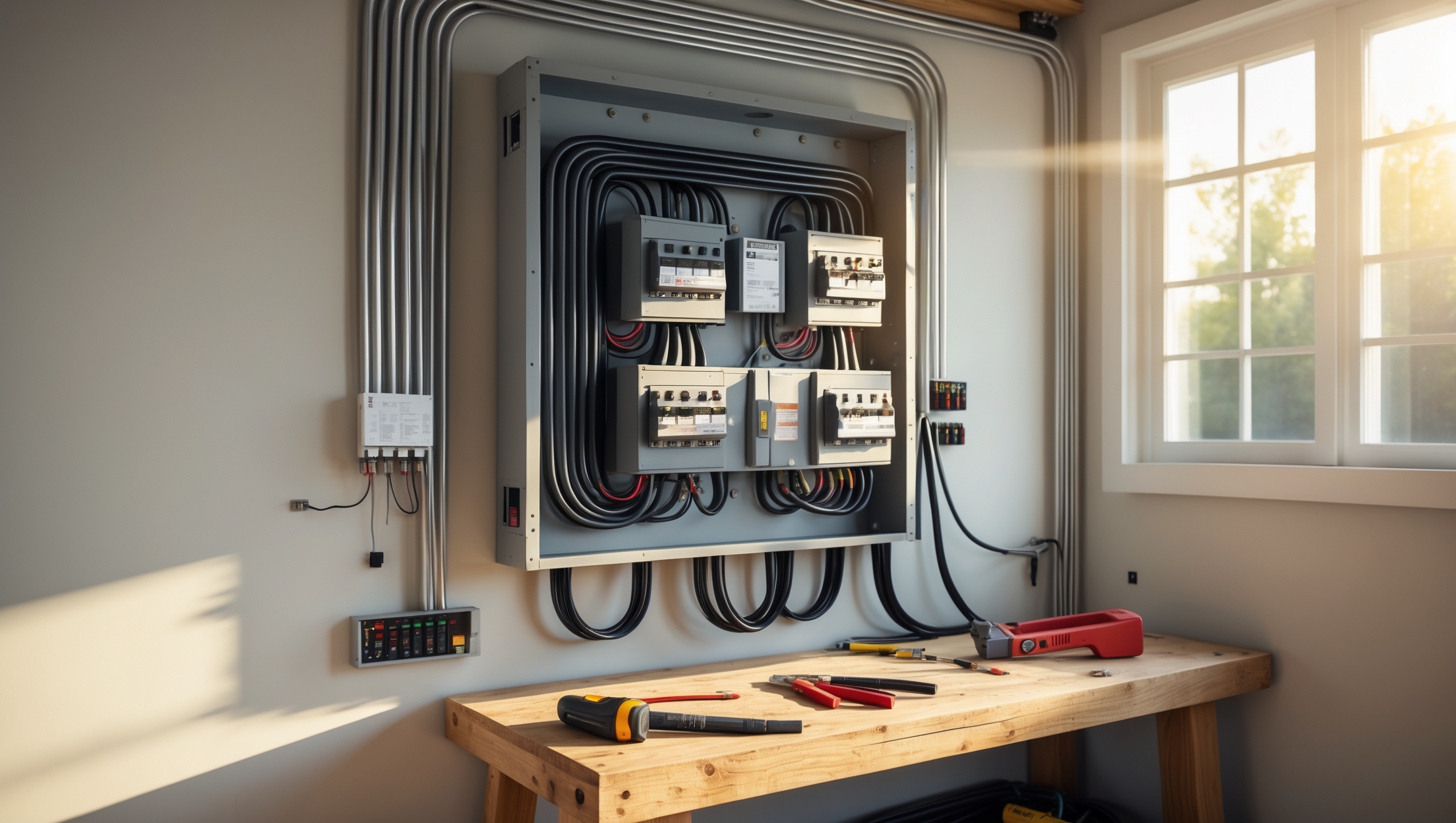
Introduction: Why and When You Need an Electrical Subpanel
As modern homes expand their electrical needs—think additions, workshops, home offices, or EV chargers—your main service panel may no longer provide enough circuits or capacity. Instead of a costly full panel replacement, an electrical subpanel can be a practical, code-compliant solution for safely distributing power to new parts of your property. However, installing a subpanel is far from simple DIY territory. It involves critical safety steps, careful planning, budgeting, and proper permitting to avoid expensive mistakes or hazardous outcomes. In this comprehensive guide, we’ll walk you through every aspect of subpanel installation: understanding when a subpanel makes sense, planning and budgeting, step-by-step setup, avoiding common pitfalls, and ensuring your project meets all safety and code requirements. Whether you’re a seasoned DIYer or working with a licensed electrician, you’ll find actionable insights to make your subpanel project safe, efficient, and cost-effective.
Understanding Electrical Subpanels: Purpose and Benefits
What Is an Electrical Subpanel?
An electrical subpanel, often called a distribution panel or breaker box, is a smaller service panel that receives power from your main panel and distributes it to a specific area or set of circuits in your home. It contains its own set of breakers and is typically used to serve detached garages, workshops, home additions, or high-demand areas like kitchens or home theaters.
When Is a Subpanel Necessary?
- Insufficient breaker space: Your main panel is full, but you need additional circuits.
- Remote locations: Supplying power to a distant outbuilding, garage, or addition.
- Dedicated loads: Large appliances, EV chargers, or workshops with specific electrical needs.
- Organizational improvements: Segregating circuits for easier troubleshooting and maintenance.
Benefits of a Subpanel
- Flexibility: Adds more circuits without overhauling your main panel.
- Safety: Reduces circuit overcrowding and risk of overloads.
- Convenience: Localizes control over specific areas, making maintenance easier.
- Future-proofing: Eases future expansions or renovations.
Planning Your Subpanel Installation: Budgeting and Cost Breakdown
Key Factors Affecting Project Cost
- Panel size (amperage): Common subpanel ratings are 60A, 100A, or 125A. Larger panels and higher amperage cost more.
- Distance from main panel: Longer wire runs require more materials and labor.
- Wiring type: Copper is more expensive than aluminum but preferred for safety and longevity.
- Permit fees: Local code often requires permits and inspections.
- Labor: DIY reduces costs, but hiring a licensed electrician is often required by code.
- Additional upgrades: Grounding rods, GFCI/AFCI breakers, conduit, or trenching for detached structures.
Typical Cost Breakdown (2024 Estimates)
- Subpanel (100A): $80–$200
- Breakers: $8–$25 each (quantity depends on anticipated circuits)
- Wire and conduit: $2–$6 per foot for copper, less for aluminum; conduit adds $1–$3 per foot
- Grounding rods/hardware: $20–$50
- Permit fees: $50–$300 (varies widely)
- Electrician labor: $65–$120/hour; typical installation 6–12 hours ($400–$1,200+)
- Total typical range: $500–$2,500 (DIY may save labor, but most codes require a licensed electrician for connections and inspection sign-off)
Where to Save and Where to Invest
- Invest in quality: Use name-brand panels, breakers, and copper wiring for reliability and safety.
- Save on prep: Do your own demolition, trenching, or mounting under electrical supervision.
- Never cut corners on permits or inspections: Non-compliance can void insurance and create hazards.
Compliance, Permits, and Inspection Essentials
Understanding Local Codes and NEC Requirements
Electrical codes are strictly enforced for subpanel installs. The National Electrical Code (NEC) sets minimum standards, but your local authority may have stricter requirements. Key compliance considerations include:
- Proper panel rating: Subpanel must match or exceed the calculated load.
- Dedicated neutral and ground bars: In subpanels, neutral and ground must not be bonded (connected) together—unlike main service panels.
- Wire gauge: Must match amperage and distance (e.g., 100A subpanel at 100 feet requires #2 AWG copper or #1/0 aluminum).
- Conduit and protection: Outdoor or buried runs need proper conduit and burial depth (typically 18–24 inches for PVC).
- Grounding: Detached structures require their own ground rods, connected to the subpanel’s ground bar.
Permit and Inspection Process
- Apply for permit: Submit a plan showing panel location, load calculation, and wiring method to your local building department.
- Rough-in inspection: Inspector checks wire routing, conduit, and panel mounting before connections are made.
- Final inspection: Inspector checks completed work, tests grounding, and verifies labeling.
- Approval: Do not energize circuits until you receive approval. Insurance may be voided if you skip this step.
Step-by-Step Subpanel Installation Guide
Step 1: Plan the Subpanel Location and Circuit Layout
- Choose a dry, accessible wall with space for panel clearance (minimum 36″ in front, 30″ wide).
- Map out which circuits will be moved or added to the subpanel.
- Ensure proximity to the main panel for simpler wiring, if possible.
Step 2: Select the Right Subpanel and Materials
- Choose a panel with adequate amperage and breaker slots for future expansion.
- Purchase compatible breakers, appropriately sized feeder wire (see NEC tables), conduit, connectors, and grounding hardware.
Step 3: Shut Off Power and Confirm Safety
- Turn off power at the main breaker before any work begins.
- Use a non-contact voltage tester to confirm zero voltage at all panel bus bars and wires.
Step 4: Mount the Subpanel
- Secure the panel using lag bolts into wall studs.
- Ensure the panel is level and accessible for wiring and labeling.
Step 5: Run Feeder Wire and Conduit
- Install conduit between main and subpanel (surface-mount or buried for detached structures).
- Pull appropriately sized feeder cable (e.g., four-wire: two hots, neutral, ground) through conduit.
- Use pulling lubricant for long or complex runs.
Step 6: Wire the Subpanel
- Connect feeder wires: hots to main lugs, neutral to isolated neutral bar, ground to separate ground bar.
- For detached structures, install ground rods and connect to subpanel ground bar with #6 copper wire.
- Install breakers and connect branch circuits as planned.
- Clearly label all breakers and circuits.
Step 7: Connect Feeder to Main Panel
- Install a new double-pole breaker in the main panel sized for the subpanel amperage.
- Connect feeder hots to breaker, neutral to main panel neutral bar, and ground to ground bar.
Step 8: Inspection and Energizing
- Schedule final inspection. Do not close walls or energize until approved.
- Once passed, turn on main breaker, then subpanel breaker, and test all circuits with a voltage tester and plug-in devices.
Common Mistakes and How to Avoid Them
- Bonding neutral and ground in subpanel: Creates shock risk and code violation. Always isolate them.
- Undersized feeder wire: Causes voltage drop, overheating, and safety hazards. Follow ampacity and distance charts diligently.
- Improper grounding: Skipping ground rods in detached structures or loose ground connections can be dangerous.
- Insufficient breaker sizing: Oversized breakers won’t protect circuits; undersized may nuisance trip.
- Neglecting permits: Skipping permits or inspections risks failed insurance claims and resale issues.
- Poor labeling: Unlabeled panels create confusion during maintenance or emergencies.
- Overloading the subpanel: Calculate loads carefully; never exceed 80% of panel rating for continuous loads.
Maintenance, Testing, and Safety Best Practices
Routine Checks
- Visually inspect subpanel annually for signs of corrosion, rodent damage, or overheating.
- Tighten all terminal screws and check for discoloration or burnt smells.
- Test GFCI and AFCI breakers monthly if installed.
- Keep panel area clear—no storage within 3 feet.
Testing Procedures
- Use a voltage tester or multimeter to check proper voltage at panel lugs and outlets.
- Trip and reset breakers to ensure functionality.
- Test ground continuity at outlets using a plug-in tester.
Safety Reminders
- Never work on panels energized—always shut off power and confirm with a tester.
- Wear insulated gloves and safety glasses during inspection or maintenance.
- Contact a licensed electrician for any overheating, corrosion, or wiring concerns.
Conclusion: Making Your Subpanel Project a Success
Installing an electrical subpanel is a strategic upgrade that adds flexibility, capacity, and safety to your home’s electrical system. While the process involves careful planning, precise execution, and adherence to strict code requirements, the benefits often outweigh the costs and challenges—especially if your home is growing or your main panel is maxed out. Remember, the most common pitfalls—such as improper neutral/ground separation, undersized wiring, or skipping permits—can lead to safety hazards, inspection failures, or expensive rework. By following a structured approach to budgeting, obtaining the proper permits, and respecting both the National Electrical Code and local regulations, you ensure your project is safe, insurable, and future-ready. For most homeowners, collaborating with a licensed electrician is the smart move, especially for final connections and inspection sign-off. But with the knowledge and checklists provided here, you’ll be empowered to manage the process confidently, avoid costly mistakes, and achieve a reliable, code-compliant upgrade that enhances your home’s value and safety for years to come.
If I want to install a subpanel specifically to power a detached garage that’s about 100 feet from my house, does the distance affect what type or size of subpanel I need to get, or just the wire gauge required?
The distance to your detached garage mainly affects the wire gauge, not the type or size of the subpanel itself. Over a 100-foot run, you’ll need to use a thicker wire to prevent voltage drop—often one or two sizes larger than you’d use for shorter distances. The actual subpanel size should match your garage’s expected electrical load.
You mention budgeting essentials for subpanel projects. Could you give a realistic ballpark estimate of how much it might cost to have a licensed electrician install a subpanel for a home addition, including parts and labor?
For a typical home addition, hiring a licensed electrician to install a subpanel usually costs between $1,000 and $2,500. This estimate includes both parts (such as the subpanel itself, breakers, and wiring) and labor. Factors like panel size, the distance from the main panel, and any required upgrades can affect the final price, so getting a few quotes is a good idea.
The article mentions that installing a subpanel is far from simple DIY territory. How can someone tell whether their project is simple enough to do themselves versus when they really need a licensed electrician?
To decide if your subpanel project is DIY-friendly, consider your experience with electrical work, the complexity of your home’s wiring, and local code requirements. If the job involves heavy wiring changes, upgrading your main panel, or understanding advanced load calculations, a licensed electrician is best. Also, if local law requires permits or inspections, professional help is essential for safety and compliance.
I’m considering a subpanel for our detached garage, but I’m worried about whether my current main panel can actually support the extra load. Does your guide cover how to calculate if my existing service is enough before starting installation?
Yes, the guide does explain how to calculate your main panel’s capacity before you install a subpanel. It covers assessing your current electrical load, adding in the garage’s projected needs, and comparing the total to your main panel’s rating. This helps you determine if an upgrade is needed or if your existing setup is sufficient.
If I’m adding a subpanel specifically for an EV charger in my garage, are there unique code requirements I should be aware of that don’t apply to other types of loads, or is the process pretty standard?
When installing a subpanel for an EV charger, there are some unique code requirements to consider. EV chargers often require dedicated circuits and specific breaker sizes based on their amperage. You may also need to follow local codes regarding GFCI protection and wiring methods for garages. While much of the subpanel process is standard, always check your charger’s installation manual and consult your local electrical code for any EV-specific mandates.
When budgeting for a subpanel installation, do the costs typically come more from the panel itself or from running the feeder wires, especially when the subpanel is for an outbuilding like a detached garage? I’m trying to plan for both material and labor expenses.
When installing a subpanel in an outbuilding like a detached garage, the cost of running feeder wires usually makes up a larger portion of the budget than the panel itself, especially if the distance is significant. Trenching, conduit, and lengthy wiring add both material and labor costs. The subpanel itself is relatively affordable by comparison, so planning for the wiring run and associated labor is key for your budget.
The article mentions that installing a subpanel requires permits and careful budgeting. Could you give more detail on what typical permitting costs and timeframes look like in most US areas, and if there are any budget items homeowners often forget to include?
Permitting costs for a subpanel installation vary by location, but typically range from $50 to $300. Approval times can be as quick as a few days, or up to two weeks in busier areas. Homeowners often overlook costs like travel wire, conduit, grounding rods, labeling materials, and fees for final inspection. Also, if your main panel needs upgrades to accommodate the subpanel, this can add to the budget. Always check with your local building department for exact requirements and timelines.
If my main panel is almost full but not completely maxed out, is it safer to install a subpanel now, or wait until I actually run out of space? Any issues or savings with doing it sooner versus later?
Installing a subpanel now can make future expansions easier and help prevent overloading your main panel. It also allows you to plan circuits efficiently, potentially saving on labor costs if you’re already doing electrical work. However, if you don’t anticipate adding circuits soon, it’s fine to wait until you need more space. Just keep in mind that prices for materials and labor could rise over time.
If I want to install a subpanel specifically to accommodate a new EV charger in my garage, do I need to make any adjustments for the higher power requirements, or is a standard subpanel installation sufficient?
To install a subpanel for an EV charger, you’ll likely need to account for higher power demands than a standard subpanel setup. Start by checking the charger’s amperage requirements and ensure the subpanel, breaker, and feeder wires are rated appropriately. You may need a higher-amp subpanel and thicker gauge wiring, plus an electrician should verify your main service can handle the extra load. These adjustments help ensure safe, reliable operation for your EV charger.
The article mentions careful budgeting as part of subpanel installation. Can you give a ballpark estimate for total costs, including permits and electrician labor, when adding a subpanel for an EV charger in a detached garage?
For installing a subpanel in a detached garage specifically for an EV charger, the total cost generally ranges from $1,500 to $3,000. This estimate includes permits, electrician labor, wiring, the subpanel itself, and related materials. Costs can vary by region and the distance from your main panel to the garage, so getting quotes from local electricians is always a good idea.
Could you clarify whether installing a subpanel in a detached garage requires a different grounding setup compared to a subpanel in a home addition? I want to make sure I’m following the right safety and code requirements for each scenario.
Yes, installing a subpanel in a detached garage does require a different grounding setup compared to a home addition. For a detached garage, you must install a separate grounding electrode system (like a ground rod) at the garage itself, and keep the neutral and ground bars isolated in the subpanel. In a home addition, the subpanel typically shares the home’s grounding system, and again, neutral and ground must remain separate in the subpanel. Always check your local electrical codes for specific requirements.
When budgeting for a subpanel installation, how much should I expect to spend on materials versus labor if I hire a licensed electrician, especially for a setup with EV charging in mind?
For a subpanel installation designed to support EV charging, you can expect material costs (including the subpanel, breaker, wiring, and conduit) to range from $300 to $800 depending on specifications. Labor costs for a licensed electrician typically range from $500 to $1,500, with higher amounts for complex jobs or longer wire runs. EV charging setups may require heavier gauge wire and higher-capacity breakers, which can increase both material and labor expenses.
If I want to use a subpanel to power a detached workshop, how do I determine the correct size for the subpanel and feeder wires, especially if I might add more equipment in the future?
To choose the right size for your subpanel and feeder wires, first list all the equipment and tools you plan to use now and consider any future additions. Calculate the total amperage those might draw, then size your subpanel to handle at least 25% more capacity for expansion. For feeder wires, select a gauge that matches your subpanel’s amperage rating and the distance to the workshop to prevent voltage drop. Consulting the National Electrical Code tables or a licensed electrician is recommended to ensure safety and compliance.
When adding a subpanel for high-demand appliances like EV chargers, is there a recommended distance limit between the main panel and the subpanel to avoid voltage drop or other issues? How do you decide if a location is too far away?
When installing a subpanel for high-demand appliances like EV chargers, there isn’t a strict distance limit, but longer wire runs can lead to voltage drop and reduced performance. Generally, if the subpanel is more than 50–100 feet from the main panel, you may need to use thicker gauge wire to compensate. Measure the distance, estimate the total load, and consult wire size charts to ensure voltage drop stays below 3%. If you’re unsure, a licensed electrician can help determine the best wire size for your setup.
When budgeting for a subpanel, are there any hidden costs that homeowners often overlook, like upgrading the main panel or unexpected electrical work? I want to plan ahead for any surprise expenses.
Absolutely, hidden costs can catch homeowners off guard. Commonly overlooked expenses include needing to upgrade your main panel if it can’t support the new subpanel, running longer wire than expected, correcting outdated wiring, or addressing code violations discovered during installation. Also, permits, inspection fees, and sometimes drywall repair may add to your budget. Factoring in a contingency fund can help manage these surprises.
The article talks about budgeting for subpanel installation. What are some unexpected costs that might come up besides the obvious materials and electrician fees? For example, can upgrading my main service become necessary even if I’m just adding a subpanel?
Yes, upgrading your main service can sometimes become necessary, especially if your current panel can’t handle the extra load from the new subpanel. Unexpected costs might also include permit fees, repairs to walls or drywall after wiring, and possible upgrades to grounding or bonding if your existing system is outdated. Sometimes, utilities may charge for meter upgrades or service entrance changes if your electrical demand increases.
Can you explain more about the permitting and inspection process for subpanel installations? For someone who wants to do part of the work themselves but hire a professional for the final hookup, what steps can be done DIY versus what absolutely needs a licensed electrician?
For subpanel installations, you usually need to pull a permit before starting any work. You can handle tasks like mounting the subpanel, running conduit, or pulling cable, but any connections to the main panel or live electrical work must be done by a licensed electrician. After installation, a city or county inspector checks the work before the system is energized. Always check your local regulations, as requirements can vary.
You mention permitting and code requirements for subpanel installation. Could you explain what kind of permits are typically needed and whether there are any common code violations people run into during DIY installations?
For most subpanel installations, you’ll usually need an electrical permit from your local building department. Sometimes an inspection is also required after installation. Common code violations include improper bonding or grounding, using the wrong wire size, overloading circuits, and failing to separate neutral and ground in the subpanel. Always check your local codes, as requirements can vary by area.
For someone who’s fairly handy but not a licensed electrician, what are the key safety steps where hiring a professional becomes absolutely necessary during a subpanel installation?
For a handy person, you can often handle planning, mounting the subpanel, and running conduit. However, when it comes to connecting the subpanel to your main service panel, working inside the main panel, or making the final power connections, it’s crucial to hire a licensed electrician. These steps involve live wires and code compliance, so professional help is important for safety and ensuring your installation passes inspection.
The article warns that subpanel installation is beyond basic DIY projects. If I’ve swapped out breakers before but never added a new panel, what specific skills or knowledge areas would I need to safely tackle this, or should I always hire a pro?
Swapping breakers is less complex than installing a new subpanel, which involves understanding load calculations, proper wire sizing, grounding, bonding, and adherence to local codes. You’ll need to safely route and connect feeder wires, manage panel grounding, and ensure correct amperage. If you’re not confident in these areas or local regulations, hiring a licensed electrician is safest to avoid code violations or hazards.
If my main panel still technically has room for one or two more breakers, is it better to install a subpanel now for a future home office and EV charger, or wait until I’ve actually maxed out my main panel’s capacity?
Since your main panel still has space, you don’t need to rush into installing a subpanel just yet. However, if you know you’ll be adding high-demand circuits like an EV charger and a home office soon, planning ahead with a subpanel could save time and disruption later. Either approach works, but installing a subpanel now can make future additions simpler and keep your wiring organized.
The guide talks about budgeting for a subpanel installation, but I’m curious about what the biggest unexpected expenses might be. For example, are there common cost overruns when running power to a detached garage or outbuilding, especially with new code requirements?
Some of the most common unexpected expenses when running power to a detached garage or outbuilding include trenching costs, especially if the distance is long or the soil is rocky. Upgrading your main panel to handle the extra load is another possibility. New code requirements might also require more expensive wiring (like underground-rated cable), deeper trenches, or additional grounding rods, all of which can add to the final bill. Permits and inspections may also cost more than anticipated.
When budgeting for a subpanel, what are some unexpected costs that often catch small business owners by surprise, especially when dealing with outbuildings or detached garages?
Some unexpected costs that often surprise small business owners include trenching and running conduit for wiring to outbuildings or garages, which can be labor-intensive and costly. Upgrading the main service panel to handle the added load is another common expense. Permit fees, inspection costs, and any needed repairs to landscaping or pavement after installation can also add up. It’s wise to set aside a contingency fund for these possibilities when budgeting.
When planning for a subpanel to support a new EV charger and a workshop, how do you recommend estimating the total amperage needed, especially if both might be used simultaneously? Are there common calculation mistakes to avoid during the budgeting phase?
To estimate total amperage, add the maximum current draw of your EV charger to the peak load of your workshop equipment, assuming they could run at the same time. Check each device’s amperage ratings and consider future additions. A common mistake is underestimating the load or forgetting to include lighting and outlets. Always size your subpanel for a margin above your calculated needs to avoid overloading and costly upgrades later.
The budgeting essentials section sounds helpful, but I’m not sure what unexpected costs might come up with permits or electrician fees. For someone with zero electrical experience, would hiring everything out significantly increase the overall subpanel installation budget compared to a DIY approach?
Hiring a licensed electrician for all aspects of your subpanel installation will definitely increase your overall costs compared to doing it yourself, often doubling or even tripling expenses. Expect to pay for permits, labor, and potentially extra fees if upgrades to your existing panel or wiring are needed. However, for someone with no electrical experience, hiring a pro is much safer and ensures everything is up to code, potentially saving you from costly mistakes or rework.
When budgeting for a subpanel installation, what unexpected costs should a homeowner watch out for besides the obvious parts and labor? For example, do permit fees or possible upgrades to the main panel often end up adding significantly to the total price?
Apart from parts and labor, homeowners should be prepared for permit fees, which can vary by location and sometimes be substantial. It’s also common to discover that the existing main panel needs upgrades or repairs to safely handle the additional subpanel. Other possible costs include hiring an electrician for code compliance, unforeseen wiring issues, and patching walls after installation. These can all affect your final budget.
In your guide, you mention that permitting is an essential part of installing an electrical subpanel. Can you clarify at what point in the process homeowners should apply for permits, and are there specific inspections required before connecting the subpanel to the main service panel?
Homeowners should apply for permits before beginning any electrical work, ideally right after planning the project and before purchasing materials. Most local codes require an inspection of the rough-in wiring—before the subpanel is connected to the main service. A final inspection is typically needed after all connections are completed to ensure everything meets code and is safely installed.
When planning to install a subpanel for a detached garage, does the distance from the main panel affect the type or size of wiring I need to use, and are there any special code requirements to keep in mind for longer runs?
Yes, the distance between your main panel and a detached garage subpanel does affect your wiring choices. Longer runs may require larger gauge wire to account for voltage drop and maintain safe operation. National Electrical Code generally recommends keeping voltage drop under 3%. For detached structures, you’ll also need to run four wires (two hots, one neutral, one ground) and may need to bury the cable at a certain depth depending on the wiring type and local codes. Always check with your local building authority for specific requirements.
I understand installing a subpanel can help with organizing circuits for easier maintenance. Could you elaborate on what common pitfalls small business owners should be aware of during installation, especially if working with a contractor instead of DIY?
When working with a contractor to install a subpanel, small business owners should watch for a few common pitfalls. Ensure the contractor pulls the proper permits and schedules inspections, as skipping these steps can cause code violations. Verify the panel’s capacity matches your current and future electrical needs to avoid overloads. Poor labeling of circuits can lead to confusion down the line, so request clear labels. Also, double-check that grounding and bonding are done correctly for safety. Open communication with your contractor about all these points will help ensure a smooth installation.
Could you clarify how permitting requirements differ for subpanel installations in a detached garage compared to a workshop inside the main house? I want to be sure I’m following local codes depending on the building type.
Permitting requirements often differ between detached garages and workshops inside the main house. For a detached garage, you’ll likely need a separate permit, and there may be stricter rules about running underground feeders, grounding, and distance from the main service. For a workshop within the main house, the process is usually simpler since it’s within the same structure, but permits are still typically required. Always check with your local building department, as requirements vary widely by location.
In the budgeting section, do you include the cost of running new wiring to a remote outbuilding, or is that generally considered a separate expense from the subpanel itself? I’m trying to get an accurate estimate for my workshop.
In the budgeting section, the main focus is usually on the subpanel itself, including the panel, breakers, and immediate installation. The cost of running new wiring to a remote outbuilding is typically considered a separate expense, since it can vary widely based on distance, trenching needs, and wire type. For a precise estimate for your workshop, be sure to factor in both the subpanel and the wiring run as distinct budget items.
Can you give a ballpark estimate for the total cost of a typical subpanel installation, including permits and materials? I want to budget realistically before talking to electricians.
A typical subpanel installation usually costs between $500 and $2,000 in total. This estimate covers materials (like the subpanel itself, breakers, and wiring), permits, and basic labor. The price can vary based on panel size, amperage, local permit fees, and any challenges specific to your home’s layout. It’s wise to get detailed quotes from a few electricians to get a more precise figure for your situation.
For budgeting, about how much should I set aside for hiring a licensed electrician just to check my work if I do most of the installation myself? I want to DIY as much as possible but also stay safe and legal.
If you handle most of the subpanel installation yourself and only need a licensed electrician to inspect your work and ensure it meets code, you should budget around $100 to $300 for a simple inspection. Costs may be higher if the electrician needs to correct any issues or if your area has higher rates. It’s a good idea to call a few local electricians for quotes based on your specific needs.
When it comes to budgeting for a subpanel, what are the main cost factors to consider beyond just the panel and breakers? For example, how much should someone expect to spend on wiring, conduit, and possible upgrades to the main service panel?
Beyond the panel and breakers, key cost factors for a subpanel installation include wiring (which can run $1-$4 per foot, depending on type), conduit (often $0.50-$2 per foot), labor, and any permits needed. Costs rise if your main service panel needs upgrades, which can range from a few hundred dollars for minor work to $1,000 or more for major upgrades. Always get quotes based on your home’s specifics to budget accurately.
When budgeting for a subpanel installation in a detached garage, what are some hidden costs or permitting fees that homeowners often overlook? I want to avoid surprise expenses as the article mentions common pitfalls.
Homeowners often miss costs like local permitting fees, which vary by area and can add up quickly. You might also need to upgrade your main panel or pay extra for trenching and conduit if the garage is far from the house. Inspection fees, GFCI protection requirements, and utility marking services are other expenses people frequently overlook. Planning for these can help you avoid unexpected charges.
If my main panel is technically full but a few older breakers are rarely used, would it still make sense to install a subpanel, or is there another way to add just a couple of circuits safely without doing a complete upgrade?
If your main panel is full, but you only need to add a couple of circuits, there are a few alternatives before installing a full subpanel. Look into tandem (or piggyback) breakers if your panel supports them, which can double up circuits in one slot. However, not all panels allow this, so check your panel’s compatibility. If that’s not an option or if you need more circuits in the future, a subpanel is a safe and flexible solution without needing a full service upgrade.
Are there any typical hidden costs people run into when budgeting for a subpanel installation, like permits or unexpected upgrades to wiring or grounding? Trying to get an accurate idea of the total expense before getting started.
Absolutely, there are a few hidden costs that can catch people off guard during subpanel installation. Permit fees are often required by local authorities and can vary in price. Unexpected upgrades are another common expense—installers might find that your existing wiring or grounding doesn’t meet code, requiring additional materials and labor. You might also encounter extra costs for trenching if you need to run wire a long distance, or for upgrading the main service panel if it can’t handle the added load. It’s wise to budget for these possibilities to avoid surprises.
You mentioned budgeting as an important step. Can you give a rough breakdown of the main costs involved in a typical subpanel installation for a home addition, including permits, materials, and any professional inspections, so I can plan accordingly?
Certainly! For a typical subpanel installation, expect permit fees to range from $50 to $200, depending on your area. Materials like the subpanel itself, breakers, wire, conduit, and mounting hardware usually come to $200–$500. Labor for a licensed electrician can run $500–$1,500. Professional inspections, if not included with the permit, might add $50–$150. Always allow a little extra for unexpected expenses.
When planning a subpanel for a detached garage or outbuilding, does the guide recommend running feeders underground versus overhead, and are there specific code requirements or pitfalls to be aware of for either method?
The guide discusses both underground and overhead feeder options for detached structures. Underground feeders are often recommended for safety and aesthetics, but either method is acceptable as long as you follow local electrical codes. Key requirements include using properly rated cable, maintaining minimum burial depths for underground runs, and ensuring adequate clearance for overhead lines. Watch for pitfalls like improper conduit choice, inadequate grounding, or failing to call for utility location marking before digging.
The article mentions permitting and code requirements, but do those vary a lot between states or even cities? As a homeowner, how do I find out exactly what permits or inspections I need before I start the subpanel install?
Permitting and code requirements can definitely vary between states, counties, and even cities. To find out exactly what you need, contact your local building or permitting office—they can tell you about required permits, inspections, and any local codes you must follow. You can usually find contact info on your city or county’s official website, or by calling your local government offices directly.
When budgeting for a subpanel, what are some unexpected costs that often catch people off guard, especially for detached buildings like garages or workshops? Does trenching or specific wiring type usually add a lot to the overall price?
For detached buildings like garages or workshops, trenching can significantly increase your costs, especially if you need to dig through tough soil or concrete. The wiring type matters, too—outdoor-rated or underground feeder cable (UF-B or similar) is more expensive than standard indoor wire. Extra costs can also come from permits, hiring an electrician, and installing a proper grounding system or additional breakers. Planning for these upfront can help you avoid surprises.
You mention permitting as an important step—are there any tips for streamlining the permit process or common mistakes business owners make that could delay approval when adding a subpanel to a commercial property?
To help streamline the permitting process, make sure your application is complete and includes an accurate electrical plan showing the proposed subpanel location, load calculations, and all relevant details. Common mistakes that cause delays include missing documentation, unclear diagrams, not specifying load requirements, or failing to follow local code updates. Double-check requirements with your local building department beforehand and provide any requested specs or labels to avoid back-and-forth.
You mentioned budgeting as part of the planning process. Can you give a rough estimate of the main costs involved in installing a subpanel for a home office, including permits, wiring, and the panel itself? I’m trying to see if this is within my DIY budget.
For a typical home office subpanel installation, costs can vary based on your location and specific needs. The subpanel itself usually ranges from $50 to $150. Wiring and breakers might add another $100 to $300, depending on length and amperage. Permits can cost anywhere from $50 to $200. If you already have the necessary tools and do the work yourself, your total might be between $200 and $650. Always check local codes and consider professional help for safety.
The article talks about budgeting for a subpanel installation, but do the costs differ much between using a subpanel for a detached garage versus a home addition? Are there extra expenses I should plan for depending on the location?
Yes, the costs can vary significantly depending on the location. Installing a subpanel in a detached garage often requires running longer wiring underground or overhead, which adds to material and labor costs. For a home addition, wiring is usually shorter and may be simpler. Extra expenses for a detached garage include trenching, conduit, possibly higher amperage, and permits. Always factor in these site-specific needs when budgeting.
Could you share some common budgeting mistakes people make when adding a subpanel for dedicated loads like an EV charger, and how to avoid unexpected costs during the process?
People often underestimate the total cost by not accounting for upgrades to the main service panel, longer wire runs, or the need for permits and inspections. Another mistake is overlooking the price of higher-capacity breakers or conduit suitable for EV chargers. To avoid surprises, get a detailed estimate, check if your main panel has enough capacity, and include all material and labor costs, plus a contingency for unexpected findings during installation.
If I’m planning to add an EV charger and a basement workshop, is it better to install one larger subpanel or separate smaller ones for each area? I’m trying to understand the benefits and drawbacks mentioned around flexibility and organization.
Installing one larger subpanel is usually more flexible and cost-effective, especially if both the EV charger and workshop are in the same general area. A single subpanel simplifies wiring, makes future expansions easier, and keeps everything organized in one place. However, separate smaller subpanels might offer better circuit separation if the areas are far apart, but this increases installation complexity and cost. For most home setups, a larger, well-sized subpanel is the preferred choice for both flexibility and organization.
If my main panel is getting full but still has a couple of open slots, how do I decide whether to add a subpanel now or wait until those are used up? Is there an efficiency or future-proofing benefit to installing one sooner?
If you anticipate needing more circuits soon—for renovations, new appliances, or a workshop—installing a subpanel now can save future hassle and keep your system organized. Otherwise, you can wait until the main panel is full. There’s no efficiency difference in daily operation, but planning ahead with a subpanel can make future upgrades simpler and reduce downtime later.
If I’m thinking about installing a subpanel for a new home office and possibly an EV charger in the future, how much extra capacity should I plan for now to avoid having to upgrade again soon?
When sizing your subpanel, add up the expected load from your home office equipment and the potential EV charger. Most EV chargers require at least a 40-50 amp circuit. Consider a subpanel with at least 100 amps to handle both current needs and future expansion, as this provides enough capacity without requiring another upgrade soon. Always consult with a licensed electrician to confirm your final panel size.
You said that installing a subpanel isn’t simple DIY territory. For someone with basic wiring experience, what are the biggest safety or code mistakes to watch for during installation, especially for a home addition? Are there any beginner mistakes that could lead to failed inspections?
Some of the most common mistakes include not using the correct size wire or breaker for the subpanel, forgetting to separate neutral and ground wires in the new panel, and failing to properly bond or isolate the subpanel as required by code. Beginners often overlook securing all cables and making sure all connections are tight, which can be flagged during inspection. Double-checking local code requirements, labeling circuits clearly, and verifying all grounding and bonding are essential to avoid failed inspections.
The guide mentions critical safety steps and permitting—do you have any advice on streamlining the permit process for a business owner who might not have a dedicated electrician on staff? Are there common mistakes to avoid when applying for subpanel permits?
For business owners without an in-house electrician, streamlining the permit process often starts with contacting your local building department early to clarify specific requirements. Prepare detailed plans and a clear description of the work to minimize back-and-forth. Common mistakes include submitting incomplete forms, omitting load calculations, or neglecting to specify the panel’s location. Double-check all documentation and, if possible, consult with a licensed electrician for review before applying to avoid unnecessary delays.
Could you give a ballpark idea of what kind of budgeting surprises might come up when adding a subpanel for a detached garage, like unexpected costs that people often overlook?
When adding a subpanel for a detached garage, people often overlook costs like trenching for wiring, upgrading the main panel or service if it can’t handle the extra load, and local permit or inspection fees. Weatherproofing materials, extra conduit for long distances, and hiring a licensed electrician can also add to the budget. It’s wise to set aside a contingency fund for any surprises uncovered during installation.
When planning for a subpanel installation in a detached garage, does the article’s step-by-step process cover whether a separate grounding rod is needed for the subpanel, or is it always tied back to the main panel’s ground? I want to make sure I’m meeting code requirements.
The article does address grounding for a subpanel in a detached garage. It explains that, according to code, you generally need to install a separate grounding rod at the detached structure and connect it to the subpanel’s ground bar. The subpanel should also have its neutral and ground bars isolated, with only the main panel having a bonded neutral-ground connection. This helps ensure your installation meets electrical code requirements.
You mention that an electrical subpanel is a solution when the main panel is full or for remote locations. How do I determine if my current main panel has enough capacity left for a subpanel, or if an upgrade is unavoidable?
To check if your main panel can support a subpanel, first look at the main breaker’s amperage rating and compare it with the total amperage of all existing and planned circuits. Review the panel’s available breaker slots and the load calculation (sum of all circuit loads). If your panel is near its capacity or lacks space for another breaker, an upgrade may be needed. Consulting a licensed electrician for an accurate load calculation is recommended before proceeding.
You mention budgeting essentials for subpanel installation. Can you break down what the major cost factors are, including any hidden expenses like permits or upgrades to the main service panel that homeowners often overlook?
Absolutely. The major cost factors for subpanel installation include the price of the subpanel itself, wiring, breakers, and labor for a licensed electrician. Hidden expenses can include permit fees, which vary by location, and possible upgrades to your main service panel if it lacks capacity for the new subpanel. Homeowners also sometimes overlook costs for additional grounding, conduit, or repairs if existing wiring is outdated or not up to code.
When budgeting for a subpanel, what hidden costs should I watch out for, like permitting fees or necessary upgrades to the main service panel, especially in older homes?
When budgeting for a subpanel, be sure to consider permitting fees, which vary by location. In older homes, you may also need to upgrade your main service panel or wiring to meet current code, which can add significant cost. Unexpected expenses might include hiring an electrician for code compliance, repairing wall damage, or updating grounding and bonding systems. It’s smart to get a detailed estimate after an electrician inspects your existing setup.
When you talk about installing a subpanel for remote locations like a detached garage or workshop, how do you determine the right size subpanel to meet future needs? Is there a risk of undersizing if I only look at my current requirements?
Sizing a subpanel for a detached garage or workshop involves adding up the expected loads, including lighting, outlets, and any equipment you might use now or in the future. It’s wise to factor in possible upgrades or new tools so you don’t outgrow your panel. Relying solely on current needs can lead to undersizing, which might require costly changes later. Aim for a little extra capacity to keep your options open.
Could you give more detail on the budgeting aspect you mentioned? Specifically, what are the unexpected costs people run into with subpanel installations, like permitting fees or upgrades to the main panel?
When budgeting for a subpanel installation, people often overlook certain costs beyond just the subpanel and wiring. Permitting fees can vary depending on your local regulations, and you might be required to upgrade your main panel if it doesn’t have enough capacity for the new subpanel. Other unexpected expenses can include hiring an electrician for code compliance, purchasing additional breakers or grounding equipment, and potential repairs to walls or finishes after installation.
If I’m planning to add a subpanel mainly for a home office and EV charger in my garage, are there specific code requirements I should be aware of that are different from just adding standard circuits to my main panel?
Yes, there are specific code requirements for subpanels, especially when powering an EV charger and a home office. You’ll need to ensure the subpanel has proper grounding and a separate neutral bus bar, and that wire sizes are correct for the load and distance. Local codes may require dedicated circuits for the EV charger and GFCI/AFCI protection for the office. Always check with your local permitting office for exact requirements before starting.
When budgeting for a subpanel, are there any hidden costs beyond the panel and breakers themselves? For example, should I anticipate extra expenses with conduit runs, grounding rods, or possible utility fees if I’m installing one in a detached garage?
Yes, there can be hidden costs when installing a subpanel, especially in a detached garage. Besides the panel and breakers, you may need to budget for conduit and wire runs—which can be significant over long distances—plus grounding rods, clamps, and bonding materials. Trenching for underground wiring is another possible expense. In some cases, your local utility or permitting office may charge inspection or connection fees. It’s smart to get a detailed quote up front and check local code requirements.
When budgeting for a subpanel installation, do you have any advice on the main cost drivers, especially regarding wiring distance for detached garages or outbuildings? I’m trying to estimate the difference between running a shorter feeder versus a long one across the yard.
Wiring distance is a major cost driver when installing a subpanel, especially for detached garages or outbuildings. The longer the feeder run, the more you’ll spend on wire and conduit, and you may need thicker cable to prevent voltage drop. This increases both material and labor costs. Underground installations add costs for trenching and conduit, too. Shorter runs are usually less expensive, so if possible, minimizing the distance will help keep your budget in check.
The article mentions that installing a subpanel isn’t simple DIY territory. For someone planning to tackle most of the work but hire an electrician for the final hookup, what critical steps absolutely require a licensed professional to stay code-compliant and safe?
If you’re handling most of the subpanel installation yourself, it’s essential that a licensed electrician manages the final connection of the subpanel to the main service panel. This includes making the live electrical connections, ensuring proper grounding and bonding, and performing the final inspection. These steps are critical for code compliance and safety, as mistakes here can pose serious hazards or fail inspection.
How do I know if my main panel actually has enough capacity to safely support a subpanel, especially if I’m planning to run high-demand appliances like an EV charger or a home workshop?
To determine if your main panel can safely support a subpanel for high-demand appliances, you’ll need to check its amperage rating (usually listed inside the panel door) and calculate your total household electrical load, including the new appliances. If your combined load approaches or exceeds 80% of the main panel’s capacity, it’s wise to consult a licensed electrician for a detailed load calculation before installing a subpanel.
Can you go into more detail about budgeting for a subpanel installation? For example, what are the main cost differences between hiring a licensed electrician versus tackling most of the prep work myself as a DIYer?
Budgeting for a subpanel installation mainly depends on labor and material costs. Hiring a licensed electrician typically costs more because it includes professional labor, expertise, and permits. If you do the prep work yourself—like clearing the area, purchasing materials, or running conduit—you could save on labor, but you’ll still need an electrician for the final wiring and inspection. The main cost difference is labor: electricians charge by the hour, so the less prep they do, the lower your final bill. However, always factor in safety and code compliance to avoid costly mistakes.
Can you elaborate on the specific permitting process involved when installing a subpanel for a kitchen remodel? I know code compliance is critical, and I want to be sure I’m not missing any steps before starting the installation.
When installing a subpanel for a kitchen remodel, you’ll usually need to apply for an electrical permit from your local building department before any work begins. Submit detailed plans showing the proposed subpanel location, load calculations, and wiring diagrams. After approval, inspections are generally required both before and after installation to ensure code compliance. Always check your city or county’s specific requirements, as processes can vary, and be prepared to provide documentation or meet with inspectors as needed.
When budgeting for a subpanel installation, how much of the total cost usually goes toward permitting compared to materials and labor? Are there any surprise fees that are easy to overlook during the planning process?
Permit fees for a subpanel installation are often a smaller portion of the total cost—usually between 5% and 15%, depending on your local regulations. Most of your budget will go toward materials and labor. Surprise fees that people sometimes miss include inspection charges, utility company fees for service upgrades, or costs to bring existing electrical work up to code. It’s wise to ask your installer for a detailed estimate that covers all of these potential expenses.
The guide talks about budgeting for a subpanel project. Can you break down which parts of the installation are the most expensive and where DIYers could potentially save money, assuming they’re working with a licensed electrician for the final hookup?
The most expensive parts of subpanel installation are usually the subpanel itself, circuit breakers, and the cost of running new wiring or conduit—especially if long distances or difficult access are involved. Labor for the final hookup by a licensed electrician is another significant cost. DIYers can often save by mounting the subpanel, drilling holes, routing and securing conduit or cable, and labeling circuits, as long as any actual connections are left for the electrician.
I saw that running a subpanel can be more cost-effective than replacing the entire main panel, but how much should I realistically budget for a typical subpanel project in a detached garage, including both parts and labor costs? Are there any hidden expenses I should look out for?
For a typical subpanel installation in a detached garage, you can generally expect to budget between $1,000 and $2,500, depending on factors like the distance from the main panel and available amperage. This estimate includes parts, wiring, conduit, and labor. Hidden expenses can include trenching for underground wiring, permit fees, or unexpected upgrades to your existing electrical system if it doesn’t meet code. It’s wise to get a few quotes from licensed electricians to avoid surprises.
When budgeting for a subpanel, what are the typical costs I should expect beyond just the panel itself, like wiring or labor? Are there any hidden expenses homeowners often overlook that can add up quickly?
Beyond the subpanel itself, you should budget for wiring (including the feeder cable and breakers), conduit, connectors, and mounting hardware. Labor costs can be significant, especially if the installation requires fishing wires through finished walls or working with older electrical systems. Homeowners often overlook permit fees, potential upgrades to the main panel, and costs for patching or repairing drywall after the installation. These extras can add up quickly, so it’s wise to get a detailed quote from your electrician upfront.
You mentioned budgeting essentials for subpanel projects, but how much should I realistically expect to spend if I hire a licensed electrician versus doing part of the work myself? Are there any hidden costs that commonly catch homeowners off guard?
If you hire a licensed electrician for a subpanel installation, costs typically range from $1,000 to $2,500 depending on panel size, complexity, and local rates. Doing some prep work yourself, like clearing spaces or running conduit, may reduce labor fees. Watch for hidden costs such as permit fees, upgrades to your main service, unexpected wiring repairs, and charges for extra materials. Always get a detailed quote before starting.
Regarding budgeting for an electrical subpanel, could you give a ballpark range for total project costs if I’m adding a subpanel for a detached garage? Are there specific components or permits that tend to push the price up more than others?
For a detached garage, installing an electrical subpanel typically costs between $800 and $2,500, depending on factors like panel size, distance from your main panel, and labor rates. Key expenses include the subpanel itself, wiring (especially if you need underground conduit), breakers, and hiring a licensed electrician. Permits can add $50 to $300, depending on your local requirements. Trenching for underground cable and upgrading your main service, if needed, are the most common costs that push the price higher.
When planning to add a subpanel for a new EV charger in my garage, how do I determine if my existing main panel has enough capacity to safely handle the extra load, or if I should consider other upgrades first?
To determine if your main panel can handle the extra load from an EV charger, start by checking the panel’s amperage rating—usually listed on the door or main breaker. Next, add up the amperages of all existing circuits and compare your total expected usage (including the new charger) to the panel’s rating. It’s wise to use the National Electrical Code’s load calculation method or consult a licensed electrician, as they can help ensure you won’t overload the system or need an upgrade.
If my main panel is getting close to capacity but not completely full yet, is it better to wait until it’s maxed out before adding a subpanel, or are there advantages to installing one proactively?
Installing a subpanel before your main panel is completely full can actually be a smart move. It helps you avoid overloading circuits, makes future electrical additions easier, and can simplify organization of new wiring. Proactive installation also means you can plan the work at your convenience, rather than rushing if you suddenly need extra capacity.
The article mentions budgeting essentials for subpanel installation. Can you give an idea of what unexpected costs might pop up during this process, especially for a detached garage project?
When installing a subpanel for a detached garage, unexpected costs can include trenching or boring for underground cable, upgrading your main panel if it doesn’t have enough capacity, or dealing with permitting fees. You might also face extra costs for longer wire runs, unexpected soil conditions, or hiring a licensed electrician if local codes require it. It’s wise to add a contingency to your budget for these possibilities.
I noticed you discussed budgeting essentials, but could you break down the main cost drivers for a DIY subpanel installation versus hiring an electrician? I’m trying to determine which parts of the process are realistic to do myself to save money without compromising safety.
For a DIY subpanel installation, major cost factors include the subpanel itself, wiring, breakers, conduit, and safety equipment. When hiring an electrician, labor becomes the biggest cost, but you also pay for expertise and peace of mind. Homeowners often handle tasks like mounting the panel and running conduit, but all electrical connections, panel tie-ins, and code compliance checks should be left to a licensed electrician to ensure safety and meet local regulations.
I’m planning an addition to my home and am considering whether to upgrade my main panel or add a subpanel as discussed here. Are there specific situations where a complete panel upgrade actually makes more sense than adding a subpanel, especially in terms of future expandability and cost?
A full main panel upgrade is usually the better choice if your existing panel is outdated, near capacity, or doesn’t support modern safety features. Upgrading increases your overall electrical capacity and is more future-proof if you expect further additions or major new appliances. Adding a subpanel is often cheaper short-term, but if the main panel can’t handle the total load, a full upgrade is safer and more cost-effective in the long run.
If my main panel is almost full but not quite there yet, would it make more sense to add a subpanel now for future flexibility, or just wait until I absolutely need more circuits? Curious how to decide the best timing based on the guide’s advice.
If your main panel is nearly full, adding a subpanel now can offer more flexibility, especially if you anticipate adding new appliances or circuits soon. The article suggests considering future needs and convenience—installing a subpanel proactively can help avoid rushed upgrades later. However, if you don’t expect to need more circuits in the near future, it’s reasonable to wait. Reviewing your plans and balancing upfront costs with long-term convenience can help you decide the best timing.
Could you provide more detail about the typical permitting process and any common inspection issues people run into during subpanel installations? I want to avoid budget surprises and delays due to code violations as mentioned in your guide.
The permitting process usually starts with submitting detailed plans to your local building department, including a diagram of your existing and new electrical layout. After approval, you can begin work. Inspectors often check for proper wire sizing, grounding, and secure mounting of the subpanel. Common issues include missing bonding jumpers, overloaded circuits, or inadequate labeling. To avoid budget surprises, factor in permit fees and possible reinspection costs if you need to correct violations. Double-check your work against local codes before calling for inspection.
The article mentions budgeting essentials for subpanel projects. Could you provide a ballpark cost breakdown for both hiring a licensed electrician versus doing some of the prep work myself?
Hiring a licensed electrician for a subpanel installation generally costs between $1,000 and $2,500, depending on complexity and local rates. This usually includes materials, permits, and labor. If you handle some prep work like clearing the installation area or running conduit, you might lower costs by a few hundred dollars, possibly bringing the total closer to $800–$1,500. Always check local code requirements before starting any DIY prep.
When budgeting for a subpanel installation, are there significant cost differences between running power out to a detached garage versus just putting a subpanel in a basement addition? I’m trying to plan for both scenarios and want to avoid any surprise expenses.
Yes, there are notable cost differences between the two scenarios. Running power to a detached garage usually costs more because you’ll need to trench and install conduit underground, which involves extra labor and materials. Distance from the main panel, possible permit fees, and the need for weatherproof equipment can add to the expense. Installing a subpanel in a basement addition is generally less expensive since wiring can be run through existing walls and spaces inside the home. Be sure to factor in these elements when planning your budget.
For someone with a full main panel who wants to add circuits in a distant outbuilding, how do you determine if a subpanel is more practical than just running a few dedicated circuits from the main panel?
When your main panel is full, running extra circuits can be difficult or impossible, especially over long distances. A subpanel is usually more practical in this situation: it gives you a local distribution point in the outbuilding, simplifies wiring, and allows future expansion. It also avoids overloading your main panel with additional wires. If you need several new circuits or anticipate more in the future, a subpanel is the better choice.
If I want to install a subpanel for a detached garage, how do I figure out how many amps the subpanel should be rated for? Are there any common mistakes people make when sizing the subpanel for projects like this?
To figure out the right amp rating for your garage subpanel, start by listing all the electrical loads you expect to use—lights, outlets, power tools, maybe an EV charger or HVAC. Add up their total expected amperage, then choose a subpanel with a slightly higher rating for future needs or safety (typically 60–100 amps for garages). A common mistake is underestimating future power needs or not accounting for large equipment, which can lead to an overloaded panel down the road.
For budgeting, do you have ballpark estimates on what a licensed electrician typically charges for installing a subpanel in an existing house versus a new addition? I want to get a realistic idea before deciding whether to DIY or hire out.
For an existing house, hiring a licensed electrician to install a subpanel usually ranges from $1,000 to $2,500, depending on complexity, materials, and local rates. For a new addition, costs may be lower, sometimes between $800 and $1,800, since access and wiring are often easier. Always factor in permit fees and possible upgrades to your main panel. Getting a few quotes in your area will clarify what’s most realistic for your project.
If you’re adding a subpanel to serve a kitchen remodel, do you need to completely separate the neutral and ground wires in the new panel? The article mentions code requirements, but I’m not clear on how to handle this part when upgrading circuits.
When adding a subpanel for a kitchen remodel, you do need to keep the neutral and ground wires separate in the new subpanel. The neutral bus bar should not be bonded to the panel or to the ground bar; only the main panel should bond neutral and ground. In your subpanel, install separate bus bars if needed and ensure ground and neutral wires remain isolated, meeting electrical code requirements.
I see you mention that installing a subpanel isn’t really a simple DIY job. What are the absolute must-do safety steps or code requirements that people often miss when trying to do this themselves?
Some common safety steps and code requirements that DIYers often overlook include properly grounding and bonding the subpanel, ensuring the neutral and ground bars are kept separate in the subpanel, and using the correct gauge wire for the load and distance. Many also forget to fully turn off all power at the main panel before working and to secure all wires and conduit per local code. Always check local codes, as requirements can vary by area.
When budgeting for a subpanel installation, what are some hidden costs that homeowners might overlook, such as upgrades to the main panel or unexpected wiring needs? A rough breakdown of typical expenses would be really helpful.
Homeowners often miss hidden costs like upgrading the main panel if it can’t handle the additional load, installing new breakers, or running longer or more complex wiring paths. Other expenses might include permits, inspection fees, and potential upgrades to grounding or bonding. Roughly, labor can be $500–$1,500, materials $200–$500, permits $50–$200, and unexpected upgrades might add another $300–$1,000, depending on your home’s setup.
When budgeting for a subpanel installation on a detached garage or workshop, are there specific costs that tend to surprise homeowners, like permits or upgrades to the main panel? I want to be sure I account for everything before starting.
Homeowners are often surprised by costs like permit fees, trenching for underground wiring, and possible upgrades to the main panel if it doesn’t support the subpanel’s load. You might also encounter extra charges for longer wire runs, weatherproof materials, and grounding rods required for detached buildings. Getting a detailed quote from your electrician and checking local code requirements can help you avoid unexpected expenses.
When budgeting for a subpanel installation, what are the main cost drivers I should be aware of, beyond just the panel itself? For example, how much should I factor in for permits and possible upgrades to my main service if needed?
When budgeting for a subpanel installation, major cost drivers include labor charges, wiring, breakers, conduit, and any modifications to your home’s electrical system. Permits usually range from $50 to $200, depending on your location. If your main service needs an upgrade to handle the extra load, costs can rise substantially—often $1,000 or more—so it’s important to consult an electrician for an accurate assessment. Always build in a buffer for unforeseen expenses.
I’m planning to add a workshop in my backyard, and my main panel is already full. The article mentions using a subpanel for remote locations and dedicated loads, but how do I figure out what size subpanel I actually need for things like heavy power tools?
To determine the subpanel size, start by making a list of all the tools and equipment you plan to use in your workshop. Check the amperage and voltage requirements for each item, then add up their expected loads, factoring in whether they’ll be running at the same time. Choose a subpanel with enough amperage to safely handle your peak usage, plus some extra capacity for future needs. A 60-amp or 100-amp subpanel is common for workshops, but your total calculated load will guide your final choice.
You mentioned budgeting as an essential part of subpanel installation. Could you provide a general cost breakdown for the major components and permits involved in adding a subpanel to a home workshop, assuming typical requirements?
Certainly! For a home workshop, the main costs usually include the subpanel itself ($50–$150), circuit breakers ($5–$20 each), wiring and conduit ($100–$300, depending on distance), and mounting hardware ($20–$50). Labor by a licensed electrician can add $300–$800. Permits are typically $50–$200, depending on your area. So, overall, a typical installation might run anywhere from $500 to $1,500, depending on complexity and local prices.
For someone who’s not an electrician, how can I tell if my main panel is actually out of space or capacity for more circuits before I start planning a subpanel project?
To check if your main panel is full, first look inside and count the number of breaker slots—if all are occupied with breakers, you’re likely out of physical space. Even if there’s room, you should also check the panel’s amperage rating (often marked on the panel door or label) and add up the amperages of the existing breakers. If you’re unsure or the math seems confusing, it’s safest to have a licensed electrician confirm your panel’s capacity before proceeding with a subpanel.
When budgeting for a subpanel, what are the most common surprise costs that pop up aside from the panel and breakers themselves? I’m trying to avoid going over my budget and wondering if things like permit fees or wiring usually end up costing more than expected.
Besides the panel and breakers, unexpected costs often include permit fees, which can vary by location, and the price of wire, especially if your subpanel is far from the main panel. Hiring a licensed electrician for final inspection or connections may also add to your expenses. Sometimes, extra grounding materials or conduit are needed if existing conditions aren’t suitable. Factoring in these items can help you stay within budget.
You mentioned budgeting essentials but I didn’t see any ballpark estimates for what it typically costs to have a licensed electrician install a subpanel. What’s a reasonable range I should expect for this kind of project in the US, including permits and materials?
A typical subpanel installation by a licensed electrician in the US generally costs between $1,000 and $2,500. This range includes permits, materials, and labor. The final price depends on factors like your location, the size of the subpanel, wiring complexity, and distance from the main panel. Always get a few itemized quotes from local electricians for the most accurate estimate.
You mention subpanels are a good way to add capacity without replacing the main panel. When budgeting for this, what are some typical hidden costs that DIYers might not expect, like permits or specific wiring requirements?
When budgeting for a subpanel installation, DIYers often overlook costs like electrical permits, which can vary by location. You may also need to upgrade or run new feeder cables, purchase extra breakers, and buy grounding rods or bus bars if required by code. Unexpected expenses can come from the need to correct existing wiring or make space in the main panel for the new connection.
In the section about budgeting for a subpanel installation, could you give some insight into the main cost drivers besides just the panel and breakers themselves? For example, how much should I expect to budget for permits, wiring runs, or hiring a professional electrician?
Beyond the panel and breakers, the main costs include permits, wiring, labor, and sometimes upgrades to your main service. Permits can range from $50 to $300 depending on your area. Wiring costs depend on distance and complexity, often adding $100 to $500 or more. Hiring a licensed electrician is typically the largest expense, with labor usually running $500 to $1,500. Unexpected costs can arise if your main panel needs upgrading or if additional code requirements are triggered, so it’s wise to factor in a contingency.
When budgeting for a subpanel installation, how much should I expect permit fees or inspection costs to add to the total project price? I’m planning to have a licensed electrician do the work, but I want to avoid surprises.
Permit and inspection fees for a subpanel installation can vary depending on your location and local regulations, but you can generally expect to pay anywhere from $50 to $350 for these services. Some cities charge a flat rate, while others base the cost on project size or electrical load. It’s a good idea to ask your electrician if permit and inspection fees are included in their quote or if they’ll need to be paid separately.
When budgeting for a subpanel installation, what are some costs that homeowners often forget about beyond just the panel and breakers, like permits or heavier gauge wire for longer runs to a remote garage?
Homeowners often overlook several costs when budgeting for a subpanel installation. Besides the panel and breakers, permits and inspection fees can add up. If the subpanel is far from the main service, you may need heavier gauge wire, which is more expensive. Additional conduit, trenching for underground runs, labor, and even upgrades to your main panel if it’s undersized are common extra expenses. It’s a good idea to factor in all these possibilities during planning.
You mentioned budgeting essentials, but what are some hidden costs I should be prepared for besides the materials and electrician fees, like permits or upgrades to the main panel?
It’s wise to prepare for potential hidden costs. Beyond materials and electrician fees, you may need to budget for permits, which can vary by location. Sometimes, local codes require upgrades to your main panel or service entrance if it’s outdated or not up to capacity. Unexpected repairs, such as fixing old wiring discovered during installation, or additional grounding or bonding work, can also add to the total cost.
If my main panel is currently full but I am only planning to add a single dedicated circuit for an EV charger, would it be more practical to install a subpanel or are there alternatives I should consider?
If your main panel is full and you only need one new dedicated circuit, a subpanel can work, but there are alternatives. You might consider using tandem (or ‘piggyback’) breakers if your panel allows them, which can make space for the new circuit. If that’s not possible, a small subpanel is a practical solution for adding your EV charger and offers flexibility for future circuits.
In the budgeting essentials section, do you cover the typical costs for permits and inspections when installing a subpanel, or does that vary a lot depending on where you live? I’m trying to figure out if most of the expense is materials or the legal stuff.
In the budgeting essentials section, we provide a general range for permit and inspection costs, but emphasize that these fees can vary quite a bit based on your location and local regulations. Usually, materials and labor make up the largest portion of the total expense, but legal requirements like permits and inspections can still be significant, especially in areas with higher fees.
The article mentions budgeting essentials—can you provide a ballpark figure for what homeowners should expect to spend on typical permits and inspections when adding a subpanel, particularly in regions where costs can vary widely?
Permit and inspection fees for adding a subpanel typically range from $50 to $300, depending on your location and local regulations. In some areas, major cities or regions with stricter codes may charge toward the higher end or even slightly above. It’s a good idea to call your local building department for the most accurate estimate specific to your address.
When running a subpanel to a detached garage, does the guide recommend using a ground rod or bonding the neutral and ground bars in the subpanel, or are there different rules for outbuildings compared to additions inside the main house?
For a detached garage, the guide recommends installing a separate ground rod at the garage and keeping the neutral and ground bars isolated in the subpanel. You should not bond the neutral and ground in the subpanel for outbuildings. This is different from some interior additions, where grounding is handled at the main panel. Always check local codes for specific requirements.
If I want to use a subpanel for a detached garage and also for a future home office addition, is it better to install one larger subpanel now or add separate smaller subpanels for each? Are there any pros and cons to combining them?
Combining circuits for both your detached garage and future home office into one larger subpanel can be convenient and potentially more cost-effective, as it reduces wiring runs and panel costs. However, separate subpanels offer more flexibility and can help isolate issues or future upgrades. If the locations are close together, a single larger subpanel is usually practical, but make sure it has enough capacity for both current and future needs. Always consider local code requirements and consult a licensed electrician before deciding.
If I want to add an EV charger in my garage and my main panel is already full, roughly how much should I budget for a subpanel installation, including possible permitting fees?
For adding an EV charger when your main panel is full, budgeting for a subpanel installation is wise. Typically, the total cost—including materials, labor, and necessary permitting fees—ranges from $1,000 to $2,500. Costs depend on your local permit requirements, panel size, and electrician rates. It’s best to get a few quotes from licensed electricians in your area for a more precise estimate.
I’m planning an addition to my shop and considering a subpanel, but how do I determine if my existing main panel really can’t handle the extra circuits, or if it’s just a matter of reorganizing what I already have?
To figure out if your main panel can handle more circuits, first check its amperage rating—usually listed on the door or main breaker. Add up the amperage of all existing and planned circuits, including the new addition. If you’re close to or exceeding the panel’s limit, you’ll need a subpanel. Sometimes, reorganizing circuits can free up space, but this won’t increase your total available amperage. If you’re unsure, a licensed electrician can perform a load calculation to confirm your panel’s capacity.